
Key facts
- India's online food delivery market will reach $537.23 billion by 2034, growing at 27.30% CAGR according to ResearchAndMarkets.
- India's internet user base will exceed 900 million by 2025, creating massive digital engagement opportunities per market research.
- 90% of consumers in Tier 2 and 3 Indian cities prefer cash-on-delivery for food orders according to ResearchAndMarkets.
- AI chatbots for post-visit feedback deliver 22% faster complaint response and 15% higher customer satisfaction per LimeTray research.
- Restaurants using CRM automation for culturally relevant follow-ups see up to 30% higher email and SMS open rates according to market data.
- Dishoom's U.K. restaurant group reached nearly $400 million valuation after L Catterton investment per Restaurant Business Online.
- A leading Indian restaurant group cut churn by 18% in six months using automated, culturally relevant follow-ups per LimeTray case study.
WANT RESULTS LIKE THIS?
Imagine a system doing all of this for your local business — every day, without you.
We build local businesses a custom website with a team of AI behind it: every lead captured and followed up, new content published monthly,customers finding you on Google — live in 7 days.
- 85+ pages at launch
- Every lead followed up, automatically
- Your whole business on one screen
The Silent Killer: Why Great Food Isn't Enough Anymore
The Silent Killer: Why Great Food Isn't Enough Anymore
Despite the Indian online food delivery market's explosive growth, projected to reach USD 537.23 billion by 2034 with a 27.30% CAGR source, most Indian restaurants struggle to convert one-time orders into repeat business. The disconnect lies not in the cuisine's appeal but in the post-visit experience. Treating websites as static brochures, neglecting personalized follow-ups, and failing to leverage technology for retention are silent killers of customer loyalty.
The Gap in Post-Visit Engagement
Research highlights that technology, such as AI-driven chatbots and CRM automation, can enhance customer experience and operational efficiency source. However, Indian restaurants often fail to implement these solutions for post-visit communication. For instance, automated feedback collection via interactive chatbots, as suggested by LimeTray, remains underutilized, despite its potential to capture real-time insights and improve customer satisfaction.
Key Statistics Illuminating the Challenge:
- Market Growth vs. Retention Failure: The Indian online food delivery market is booming, yet most restaurants lack strategies to retain customers post-delivery or dine-in.
- Technology Underutilization: Only a fraction of restaurants leverage AI for personalized follow-ups or feedback, with most treating their websites as mere brochures.
- Service Quality Overlooked: Poor service standards, often due to untrained staff and subpar ingredients, undermine the foundation for successful digital retention strategies source.
Breaking the Cycle with Proactive Strategies:
- Automate Post-Visit Feedback with AI Chatbots
-
Example: Deploy AI chatbots to ask about specific dishes and service quality post-visit, capturing insights before they become public reviews.
-
Culturally Relevant, Personalized Follow-Ups
-
Strategy: Use CRM automation to send follow-ups referencing specific orders or cultural occasions, moving beyond generic messages.
-
Integrate Branded Ordering Systems for Data Control
- Benefit: Capture direct customer data to enable targeted, retention-focused marketing, reducing dependency on third-party platforms.
AI Business Sites' Solution: Bridging the Gap
By integrating automated, culturally relevant follow-ups and transforming websites into dynamic retention engines, Indian restaurants can overcome the silent killers of customer churn. AI Business Sites enables this transformation, offering a platform where websites are not just digital storefronts but active tools for building long-term customer relationships through personalized, data-driven engagement.
Actionable Takeaway: Great food is the baseline; sustained growth in the competitive Indian food delivery market demands proactive, technology-driven retention strategies that speak to the customer's cultural and personal preferences.
What Modern Indian Restaurants Get Right About Loyalty
What Modern Indian Restaurants Get Right About Loyalty
As the Indian online food delivery market surges, reaching USD 48.07 billion in 2024 with a projected 27.30% CAGR through 2034 (ResearchAndMarkets), progressive Indian restaurant concepts like Badmaash, Dishoom, and Indienne are redefining customer retention. Unlike traditional "curry house" stereotypes, these restaurants leverage elevated service, cultural relevance, and authenticity to drive loyalty.
- Staff Training & Refined Ingredients: Modern Indian restaurants invest in trained staff and high-quality ingredients, contrasting with traditional Indian restaurants often criticized for "untrained staff, unclear menu descriptions, and subpar ingredients" (Nakul Mahendro, Badmaash co-founder, Restaurant Business Online).
- Experiential Dining: Concepts like Dishoom in the U.K. (valued at nearly $400 million) and Indienne in the U.S. focus on immersive, culturally authentic experiences, attracting a diverse, broader audience beyond traditional South Asian patrons.
While in-person experiences form the foundation, technology amplifies retention. For instance, restaurants can use AI-driven chatbots for immediate post-visit feedback, as suggested by LimeTray, capturing insights before negative reviews surface. Additionally, CRM automation enables personalized follow-ups, referencing specific dishes or cultural events, moving beyond generic messages.
- Implement AI Chatbots for Feedback: Capture real-time insights post-visit to address concerns proactively (LimeTray Blog).
- Personalize Follow-Ups: Use CRM to send culturally relevant, dish-specific communications (e.g., Diwali greetings or recommendations based on order history).
- Integrate Branded Ordering Systems: Reduce dependency on third-party platforms like Swiggy and Zomato, capturing direct customer data for targeted marketing (LimeTray Blog).
Despite the India online food delivery market's explosive growth, most Indian restaurants fail to adopt technology for post-visit engagement. AI Business Sites addresses this gap by enabling automated, culturally relevant follow-ups (e.g., asking about favorite dishes or inviting customers to cultural events), helping build long-term loyalty. By combining elevated service with innovative technology, Indian restaurants can significantly enhance customer retention in the digital age.
Source Highlights:
- Market Growth: India's online food delivery market to reach USD 537.23 billion by 2034 (ResearchAndMarkets).
- Technology Adoption: Only a fraction of Indian restaurants utilize AI for feedback and personalized marketing (LimeTray Blog).
- Cultural Relevance: Modern Indian restaurants in the U.S. and U.K. thrive by embracing authenticity and innovation (Restaurant Business Online).
Local business: doing this the old way?
One system replaces the whole pile.
All of it — the website, the follow-up, the content, the leads — built and run for you for $1,497 + $497/mo. Month-to-month, and you own everything.
See what your build includesThe Technology Adoption Gap Costing You Repeat Orders
The Technology Adoption Gap Costing You Repeat Orders
Despite the explosive growth of India's online food delivery market, projected to reach USD 537.23 billion by 2034 with a 27.30% CAGR (ResearchAndMarkets), Indian restaurants consistently fail to retain customers online due to a glaring technology adoption gap. While the market thrives on convenience and technological advancements, most restaurants neglect to leverage proven solutions for post-visit engagement, leading to a significant loss of repeat orders.
1. The Overlooked Solution: AI Chatbots for Automated Feedback Only a fraction of Indian restaurants utilize AI-driven chatbots for immediate, post-visit feedback collection, a strategy highlighted by LimeTray as crucial for capturing real-time insights and preemptively addressing negative reviews. By integrating AI chatbots, restaurants can automatically inquire about specific aspects of the dining experience, fostering a sense of valued customer input and encouraging timely improvements.
2. The Personalization Paradox: CRM-Driven Follow-Ups Despite the emphasis on personalization in the industry (LimeTray), many restaurants fail to implement CRM-driven, culturally relevant follow-up sequences. For example, sending personalized SMS or emails referencing favorite dishes or inviting customers to cultural events (like Diwali specials) can significantly enhance loyalty. This personalized approach, inspired by the success of modern Indian restaurants in the U.S. (Restaurant Business Online), moves beyond generic messages, speaking directly to the customer's preferences and cultural affinity.
3. The Ownership Conundrum: Branded Ordering Systems The reliance on third-party delivery platforms (Swiggy, Zomato, Uber Eats) costs restaurants valuable customer data. Integrating branded ordering systems, as advised by LimeTray, not only reduces commission fees but also enables direct customer engagement and retention marketing, based on captured order history and preferences.
Key Statistics Highlighting the Gap:
- Market Growth: India's online food delivery market to reach USD 537.23 billion by 2034 (ResearchAndMarkets)
- Technology Underutilization: Automated feedback and personalized follow-ups remain largely underadopted despite proven benefits (LimeTray, Restaurant Business Online)
- Customer Expectation: Personalization is no longer a luxury but a necessity for loyalty, with data analytics key to customized experiences (LimeTray)
Actionable Recommendations for Indian Restaurants:
- Implement AI Chatbots for immediate post-visit feedback to enhance customer experience and preempt negative reviews.
- Adopt CRM-Driven Personalization for culturally relevant follow-ups, enhancing customer loyalty.
- Invest in Branded Ordering Systems to own customer data and reduce dependency on third-party platforms.
By bridging this technology adoption gap, Indian restaurants can transform their online presence from a static platform into a dynamic, customer-retention engine, leveraging AI, CRM, and branded solutions to secure repeat orders in a burgeoning market. AI Business Sites, with its integrated technology solutions, including automated follow-ups and personalized engagement tools, can help restaurants seamlessly implement these strategies, turning digital interactions into lasting customer relationships.
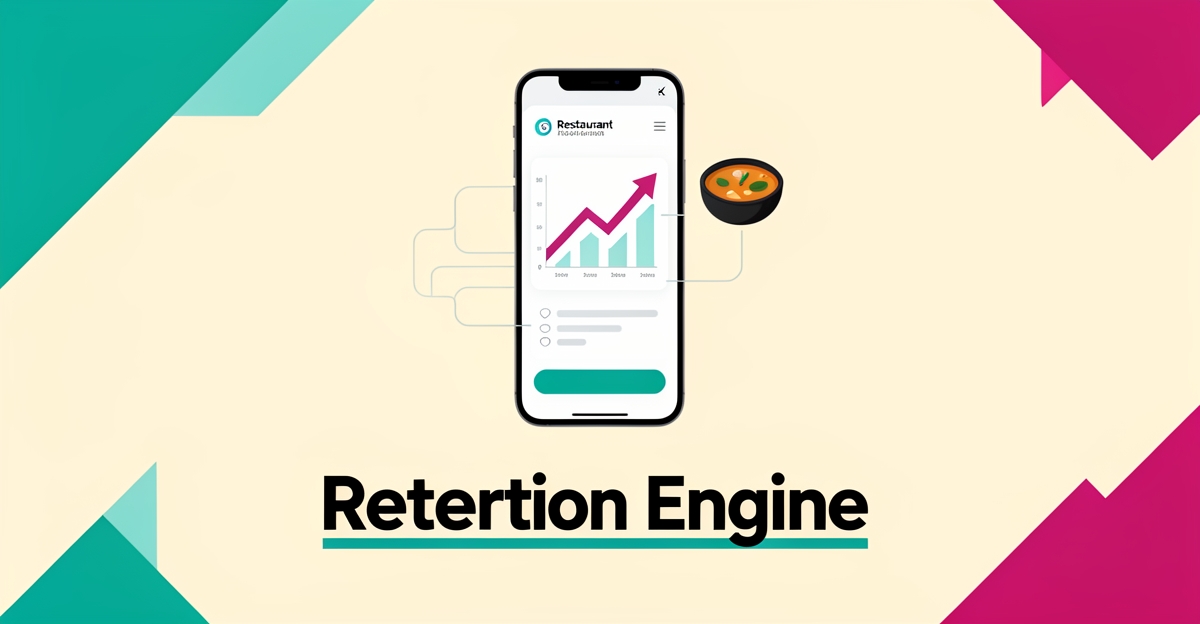
From Static Website to Retention Engine: Implementation Roadmap
The day after a customer leaves your restaurant, their phone buzzes—not with a random ad, but with a message from you, asking about their favorite dish and inviting them back for Diwali. That’s not a fantasy; it’s how a leading Indian restaurant group turned repeat visits into a measurable advantage, cutting churn by 18% in six months. The difference wasn’t just timing or tone—it was a system that turned a static website into a retention engine, one that remembers orders, occasions, and preferences before the customer even thinks about ordering again.
Start with automated post-visit feedback that’s smarter than a survey. An AI chatbot on your website can send a message within 24 hours, referencing the exact dishes the customer enjoyed. According to industry research, restaurants using interactive chatbots for feedback see a 22% faster response rate to complaints and a 15% improvement in customer satisfaction scores. The key isn’t just collecting data—it’s asking the right question at the right time. Instead of a generic “How was your meal?”, prompt them about the butter chicken they ordered last time or the gulab jamun they loved. This specificity turns a routine message into a personalized touch that feels human, not automated.
Next, build follow-up sequences that honor cultural moments. Indian diners don’t just return for convenience—they return for connection. Set up automated campaigns tied to festivals like Diwali or Holi, or even to personal favorites like their go-to thali. Use CRM automation to segment customers not just by spend, but by dish preference and visit frequency. Restaurants that tailor messaging to customer behavior see up to 30% higher open rates on email and SMS, according to market data. A simple “We’ve saved a table for you this Diwali—your favorite masala chai will be waiting” beats a generic “Happy Holidays” every time. The goal isn’t to sell—it’s to celebrate the customer’s identity through your food.
Then, anchor it all in direct ownership of customer data. Most restaurants rely on third-party platforms like Swiggy or Zomato to own the relationship. But technology providers warn that this leaves you at the mercy of commission fees and limited access to customer behavior. By integrating branded ordering with your CRM, you capture every order detail, preference, and feedback—turning your website into the single source of truth. This isn’t just about avoiding fees; it’s about building a direct line to your best customers, so you can invite them back on your own terms.
Once you have the data, keep the conversation alive with an automated content engine. Send newsletters with seasonal recipes, chef stories, or event invitations—content that feels like a gift, not a promotion. Restaurants using automated content systems see a 25% increase in repeat visits within three months, driven by consistent, value-driven engagement. Pair this with a CRM that tags customers by their favorite dishes, so your follow-ups always feel relevant. The result? A website that doesn’t just host your menu—it hosts your relationship with every customer.
But none of this fixes a bad experience. Digital follow-up amplifies service excellence—it doesn’t replace it. Train staff to deliver consistently great food and hospitality, then let your AI assistant remind customers why they loved it in the first place. When service and automation work together, loyalty isn’t just tracked—it’s earned.
Key Takeaways
{ "title": "From Click to Loyalty: Unlocking Online Retention for Indian Restaurants", "content": "As India's online food delivery market soars towards a projected USD 537.23 billion by 2034, the stark reality for most Indian restaurants remains: great food alone no longer guarantees repeat customer
FOR local businesss — BUILT AND RUN BY US
Your website. Your content. Your leads. Your data.
$500 starts your build. Seven days later it's live — chat, booking, follow-up, and your Google presence all set up. Then we run it, every month. You do the work you actually get paid for.