
Key facts
- The ice rink management software market is valued at USD 382.5 million in 2024 and projected to reach USD 1,016.8 million by 2033, growing at 11.6% CAGR according to market research
- 42% of admissions at modernized rinks are now processed through digital channels, up from 22% pre-2020 per industry analysis
- Standalone rinks generate $380K–$550K annually while integrated Family Entertainment Centers pull $1.2M–$3.5M by diversifying offerings research shows
- Private events generate 3–5x more revenue than public skating sessions according to market data
- Rink operators juggle 10+ specialized tools with critical integration gaps — scheduling lacks POS, POS lacks scheduling, booking lacks maintenance tracking industry review confirms
- Professional management using unified technology reduces labor costs by up to 15% and utility expenses by up to 30% expert analysis indicates
- The average rink uses approximately 520 kWh of electricity, and sustainability measures can cut operating costs by up to 30% trends report reveals
WANT RESULTS LIKE THIS?
Imagine a system doing all of this for your local business — every day, without you.
We build local businesses a custom website with a team of AI behind it: every lead captured and followed up, new content published monthly,customers finding you on Google — live in 7 days.
- 85+ pages at launch
- Every lead followed up, automatically
- Your whole business on one screen
The Broken Software Stack: Why 10 Tools Can’t Run Your Rink
Ice rink operators juggle 10+ specialized tools just to keep their business running—scheduling software here, a POS system there, another for league management, and yet another for bookings. Each tool does one thing well, but none of them talk to each other. Meanwhile, staff waste hours manually copying data between systems, leads slip through cracks, and revenue drains from missed private events and inefficient follow-ups. The result? A broken stack that costs more than it saves.
The cost of this fragmentation isn’t just time—it’s money. Standalone rinks average $380K–$550K/year in revenue, while integrated Family Entertainment Centers (FECs) pull in $1.2M–$3.5M/year by diversifying offerings like arcades, food service, and retail. Yet, even the most advanced rinks struggle to maximize these revenue streams because their tools don’t work together. A rink using five separate subscriptions—each costing $300–$800/month—spends $1,500–$4,000/month just on software alone. Add in the hidden costs of manual data entry, lost leads from slow responses, and missed private event bookings, and the total quickly eclipses $20K/year in avoidable expenses.
The problem runs deeper than subscriptions. Specialized tools have critical gaps that force rink owners to fill the void with spreadsheets, workarounds, or even more tools. Scheduling software like Skedda or RinkDirector can’t handle POS or retail sales. POS systems like Lightspeed or Square lack ice-time scheduling or league management. Booking platforms such as Rezdy or FareHarbor focus on reservations but ignore rink maintenance or equipment tracking. League tools like TeamSideline don’t track facility inventory or utilization. The result? Data silos where a booking system doesn’t know a customer’s purchase history, or a POS sale isn’t reflected in the rink’s revenue reports. No wonder 42% of admissions at modernized rinks are now processed digitally—operators are desperate for a way to streamline operations, but the tools they’re forced to use are stuck in the past.
The true cost of this broken stack becomes clear when you look at what’s slipping through the cracks:
- Private events, which generate 3–5x more revenue than public skating, often go unbooked because staff can’t efficiently coordinate scheduling, deposits, and follow-ups across multiple systems.
- Leads from digital channels—now 42% of admissions—aren’t followed up on fast enough because responses are siloed in different tools.
- Manual data entry between scheduling, POS, and CRM systems burns hours each week, distracting staff from revenue-generating work.
- Revenue leakage from missed maintenance alerts, unoptimized ice schedules, or unnoticed high-margin add-ons like birthday parties or STEM programs adds up to tens of thousands per year.
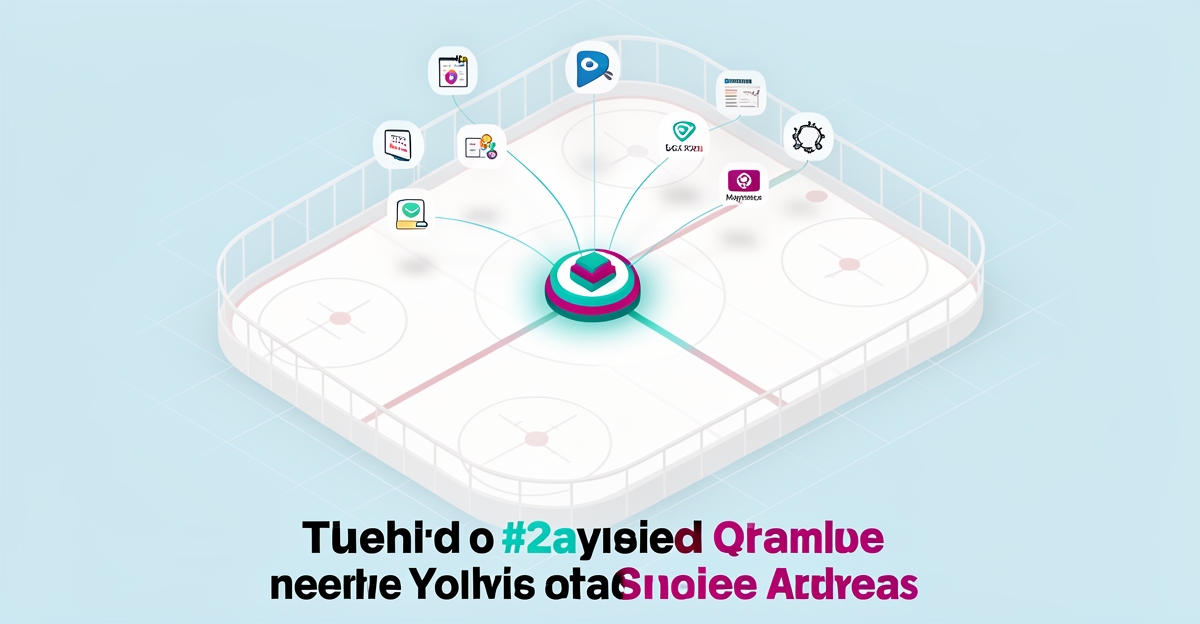
For rink owners tired of duct-taping together tools that don’t communicate, an all-in-one website and operations platform offers a way out. Instead of managing five subscriptions that don’t talk to each other, a single system handles bookings, CRM, automated follow-ups, content generation, and even lead capture—all from one place. That means fewer headaches, more time for growth, and revenue that stops slipping through the cracks.
How One Platform Handles Everything a Rink Needs
Ice skating rinks today operate in a landscape where digital tools are essential but fragmented. According to industry analysis, rink managers typically juggle 10+ separate systems for scheduling, point-of-sale, bookings, league management, and retail — each with critical gaps that force manual workarounds. This disconnect creates data silos, increases administrative burden, and limits the ability to act on insights in real time.
An all-in-one website and operations platform eliminates this complexity by unifying core functions into a single system. Instead of switching between scheduling software, a POS terminal, and a CRM, rink staff manage ice-time bookings, skate rentals, concession sales, and customer follow-ups from one dashboard. For example, when a customer books a private party online, the system automatically captures their details, triggers a personalized confirmation email, adds them to a marketing segment for future promotions, and logs the revenue — all without manual entry. This end-to-end flow reduces errors and ensures no lead or transaction falls through the cracks.
Beyond operations, the platform drives revenue by enabling rinks to capitalize on high-margin opportunities. As noted in market research, private events generate 3–5 times more revenue than public skating sessions, yet many rinks struggle to capture this potential due to slow follow-ups or disorganized booking processes. With automated workflows, the platform can instantly respond to event inquiries, send deposit requests, and nurture leads with targeted content — turning interest into booked revenue. Additionally, built-in content generation creates SEO-optimized pages for services like "birthday party packages" or "corporate team building," helping rinks rank locally and attract qualified traffic without ongoing agency costs.
By consolidating tools, rinks also reduce overhead. The research shows standalone rinks earn $380K–$550K annually, while integrated facilities with diversified revenue streams reach $1.2M–$3.5M (DataIntelo). An all-in-one platform supports this shift by making it easier to manage add-ons like skate sharpening, pro shop sales, or STEM programs — all tracked in the same system. With one login, one subscription, and one source of truth, rink owners spend less time managing software and more time growing their business.
From Bookings to Birthday Parties: Automating Your High-Margin Revenue
For ice rink operators, the real profit isn't in public skating sessions—it's in private events, STEM programs, and seasonal promotions that deliver 3–5x the revenue of standard admissions. These high-margin opportunities are where automation transforms passive interest into booked revenue without adding to your daily workload.
Private events like birthday parties and corporate outings generate the highest returns, yet many rinks lose them to slow follow-up or disorganized scheduling. An integrated system captures every inquiry—whether from your website, phone, or social media—and instantly sends a personalized response with available dates and pricing. Automated workflows then nurture these leads: sending deposit reminders, collecting waivers, and triggering post-event feedback requests—all without manual intervention. This ensures no opportunity slips through the cracks while freeing you to focus on delivering exceptional experiences.
STEM programs and educational outings represent another powerful revenue stream, with some rinks generating over $100,000 annually from these offerings alone. Automation simplifies the entire lifecycle: from promoting programs via AI-generated blog posts and newsletters to managing registrations, tracking attendance, and following up with schools for repeat bookings. By tagging leads based on interest—such as "school field trip" or "corporate STEM workshop"—your CRM automatically routes them to the right nurture sequence, turning one-time inquiries into recurring revenue.
Seasonal promotions—like holiday skate parties or summer learn-to-skate camps—also benefit from coordinated automation. Instead of juggling separate tools for email campaigns, scheduling, and payment processing, a single platform handles everything: launching promotion-specific landing pages, capturing registrations, sending automated reminders, and updating your calendar in real time. When a promotion ends, the system archives the data and prepares insights for next year’s planning—turning seasonal spikes into predictable, scalable income.
By consolidating booking, CRM, content, email, and scheduling into one system, your website doesn’t just take reservations—it actively grows your most profitable revenue streams. You stop managing tools and start maximizing what they deliver: more booked events, higher attendance, and stronger customer relationships—all running smoothly behind the scenes.
Local business: doing this the old way?
One system replaces the whole pile.
All of it — the website, the follow-up, the content, the leads — built and run for you for $1,497 + $497/mo. Month-to-month, and you own everything.
See what your build includesThree Steps to Consolidate Your Rink’s Software in 30 Days
Switching from 10+ tools to one platform doesn’t have to be a months-long headache. With the right approach, you can consolidate your rink’s software stack in just 30 days—reducing costs, cutting data silos, and freeing up time for what matters most. The key is to move methodically, prioritize what breaks first, and measure success with rink-specific metrics that actually impact your bottom line.
Start by auditing your current stack. Most rinks use scheduling tools, POS systems, booking platforms, league management software, and email marketing tools that don’t talk to each other. According to a recent review, the ice rink management software market is highly fragmented, with each tool covering only part of the workflow and critical integration gaps across the board. This creates manual work, duplicate data entry, and missed revenue opportunities—especially when leads slip through the cracks during busy seasons. Before migrating, document which tools handle bookings, customer communication, retail sales, league registrations, and staff scheduling, then identify the ones causing the most friction. Prioritize replacing the tools that slow down daily operations first.
Next, migrate your data with a phased rollout. Begin with your customer data—bookings, contact info, and payment history—since this feeds your CRM and automated follow-ups. A single system that tracks every interaction from web chat to phone calls and emails ensures nothing falls through the cracks. According to industry research, digital booking adoption among modernized rinks has surged to 42% of admissions, meaning your customers expect seamless online experiences. Use this transition to clean up duplicate records and standardize fields across platforms. Then, gradually move to unified scheduling, POS, and league management within the same system to eliminate manual transfers. This phased approach minimizes downtime and lets your team adjust without disruption.
Finally, measure impact with rink-specific KPIs. Track booking conversion rates before and after the switch to see if your new system captures more leads. Monitor labor hours saved by automating follow-ups and reducing data entry—professional managers report up to 15% cost savings with advanced scheduling tools. Watch your private event revenue too, since these bookings generate 3–5x more profit than public skating. Set up dashboards in your new platform to track metrics like repeat customer rates, digital channel adoption, and revenue per customer. Within 30 days, you’ll have a clear picture of what’s working—and where your rink’s new all-in-one system delivers real value.
The Hidden Cost of Doing Nothing (And How to Justify the Switch)
Most rink operators don't ignore fragmented software because it works — they ignore it because fixing it feels overwhelming. But every month you wait, the gap between what you're spending and what you're losing widens.
The ice rink management software market is valued at USD 382.5 million in 2024 and projected to reach USD 1,016.8 million by 2033, growing at an 11.6% CAGR — yet industry analysis confirms the landscape remains fractured across 10+ specialized tools. Scheduling platforms lack POS. POS systems lack ice-time management. Booking tools can't track maintenance. None of them talk to each other.
That fragmentation has a price tag. Research shows standalone rinks generate $380K–$550K annually, while integrated facilities with diversified revenue streams pull $1.2M–$3.5M. Private events alone deliver 3–5x the margin of public sessions. Meanwhile, professional management companies using unified technology reduce labor costs by up to 15% and cut utility expenses by as much as 30% through energy-efficient ice systems and smarter scheduling.
The cost of doing nothing isn't abstract. It shows up in:
- Missed private event bookings because leads fall through disconnected systems
- Staff hours wasted manually syncing schedules, waivers, and payments across platforms
- Utility waste from refrigeration systems that can't coordinate with occupancy data
- Marketing dollars spent driving traffic to a website that can't convert or follow up
AI Business Sites replaces that entire stack — website, booking, CRM, automation, content, newsletter, analytics, and project management — with one platform at $800/month. No integration projects. No duct tape. Just a system where a birthday party inquiry triggers an instant quote, a deposit request, a calendar hold, and a follow-up sequence — automatically.
Frequently Asked Questions
How much time do ice rink staff waste managing multiple software tools?
What's the real cost of using 5 separate software subscriptions?
Why can't my current scheduling or POS system handle private events by itself?
How much revenue do private events generate compared to public skating?
Is one platform really enough to handle all my rink's needs?
How can an all-in-one platform help me book more private events?
From Fragmented Tools to Focused Growth
Running an ice rink shouldn’t mean wrestling with ten different tools just to keep the lights on and the ice smooth. As we’ve seen, the real cost of fragmentation isn’t just in software subscriptions—it’s in missed private events, slow follow-ups, and staff hours lost to manual data entry. An all-in-one website and operations platform changes that by unifying bookings, CRM, automation, and content into one system that works as hard as you do. The result? More time to focus on what matters: delivering great experiences, growing high-margin revenue like birthday parties and STEM programs, and building stronger connections with your community. If you’re ready to stop managing software and start growing your rink, the next step is simple—see how AI Business Sites can help you consolidate your stack and reclaim your time.
FOR local businesss — BUILT AND RUN BY US
Your website. Your content. Your leads. Your data.
$500 starts your build. Seven days later it's live — chat, booking, follow-up, and your Google presence all set up. Then we run it, every month. You do the work you actually get paid for.