
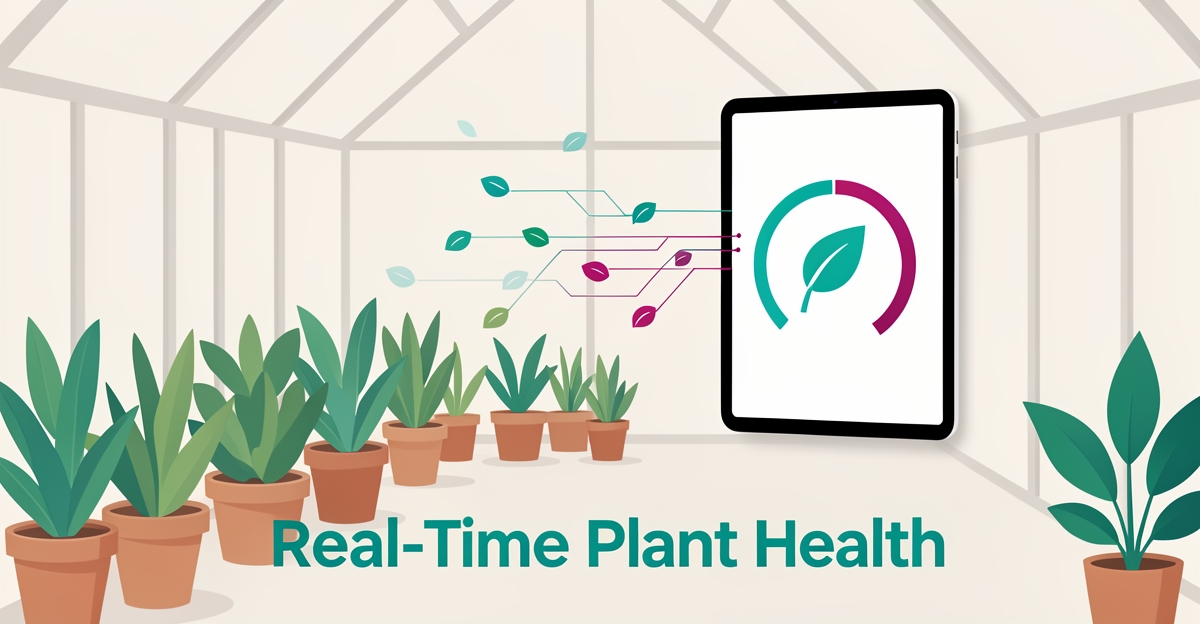
Key facts
- Greenhouse websites with static content create a trust gap, failing to deliver real-time plant health updates as shown by UC Davis research.
- AI spectrometry can assess leaf nutrition in versus weeks for lab tests.
- Commercial biosensors monitor up to 8 plants per hectare in real-time according to Vivent Biosignals.
- Real-time monitoring reduces resource waste by up to 30% as per Vivent Biosignals.
- Deep learning models detect plant disease with up to 98.32% accuracy in peer-reviewed research.
WANT RESULTS LIKE THIS?
Imagine a system doing all of this for your local business — every day, without you.
We build local businesses a custom website with a team of AI behind it: every lead captured and followed up, new content published monthly,customers finding you on Google — live in 7 days.
- 85+ pages at launch
- Every lead followed up, automatically
- Your whole business on one screen
The Trust Gap: Why Static Greenhouse Websites Fail Customers
Most greenhouse websites still rely on static displays of plant health—snapshots of yesterday’s growth conditions that customers scroll past before deciding whether to buy. Research shows this one-size-fits-all approach creates an immediate trust gap: when customers expect to see current, reliable data before making purchasing decisions, a static website can’t deliver the confidence they’re looking for.
Customers today want to know the exact health status of the plants they’re considering, not a vague promise from a generic image carousel. A study from the University of California, Davis found that real-time nutritional insights can be delivered in as little as five seconds using AI spectrometry, compared to weeks for traditional lab tests—yet most greenhouse sites still offer no better than weekly updates embedded in a brochure-style page. That leaves shoppers guessing whether the “healthy” tag on a basil plant is still accurate or already outdated.
Static content also fails to reflect the advanced monitoring technologies now available to greenhouse operators. Commercial biosensors can track plant health across roughly eight plants per hectare in real time, allowing growers to adjust care routines before visible symptoms appear. Yet these capabilities rarely translate to the customer-facing website, reinforcing the perception that the greenhouse is operating on outdated methods instead of cutting-edge science.
- Outdated snapshots erode trust faster than they build it
- Customers expect to see current plant conditions—not yesterday’s data disguised as today’s
- Static pages can’t show the five-second nutritional insights that today’s buyers demand
- Technologies like commercial biosensors already enable real-time monitoring across eight plants per hectare
Greenhouses that bridge this gap don’t just update their content—they redesign how visitors experience plant health. The best greenhouse websites treat plant data as a living feed, not a fixed showcase, giving customers the transparency they crave and setting the business apart from competitors stuck in the static past.
What Real-Time Plant Health Data Actually Looks Like
Real-time plant health updates aren’t just a nice-to-have—they’re becoming essential for greenhouse websites that want to stand out in a crowded market. The science behind these systems is no longer experimental; it’s proven in fields from commercial greenhouses to research labs, delivering accuracy and speed that static websites simply can’t match.
A UC Davis study demonstrates that AI-powered spectrometry can assess leaf nutrition in just five seconds—compared to weeks for traditional lab testing. This isn’t just a time saver; it’s a game-changer for operations where even a 24-hour delay in detecting nutrient stress can lead to crop loss. The same research highlights how immediate insights allow growers to adjust irrigation, fertilizer, or lighting in real time, directly reducing resource waste by up to 30% according to Vivent Biosignals.
At the heart of these systems are three core technologies, each playing a distinct role in transforming raw data into actionable insights:
- Biosensors that continuously monitor plant vital signs like water uptake, chlorophyll levels, and sap flow, feeding data directly into monitoring platforms.
- AI spectrometry that scans leaf and stem samples with near-instant results, detecting nutritional deficits or disease biomarkers before visible symptoms appear.
- Deep learning models trained on millions of plant images, achieving up to 98.32% accuracy in identifying early-stage disease outbreaks in peer-reviewed research.
What does this look like in practice? A commercial tomato grower might integrate a network of biosensors—about eight per hectare—to track water and nutrient flow through stems and leaves. Each sensor updates the greenhouse’s backend every few minutes, where AI spectrometry cross-references the data against ideal growth curves. When a leaf’s nitrogen level drops below threshold, the system flags the plant, triggers an automated alert to the grower’s dashboard, and even suggests corrective nutrient blends—all before the deficiency becomes visible to the human eye.
For greenhouse websites, this translates into dynamic content that doesn’t just tell visitors about plant health—it shows it in real time. Instead of static charts or last-season reports, customers can see live nutrient levels, stress indicators, or disease risk scores updated hourly. That level of transparency builds trust and justifies premium pricing, especially for B2B buyers or high-value specialty crops.
Even small-scale operations can benefit. With sensor density recommendations as low as eight plants per hectare, even urban or vertical farms can deploy cost-effective monitoring without overwhelming infrastructure. The result? Data-driven stories that update automatically—like “This basil crop is thriving thanks to optimized potassium levels detected this morning”—are now possible at scale.
AI Business Sites websites go beyond static displays by integrating these data streams into content that updates daily. Every page can reflect real-time plant health insights, turning your website from a digital brochure into a living dashboard—without requiring manual updates.
Local business: doing this the old way?
One system replaces the whole pile.
All of it — the website, the follow-up, the content, the leads — built and run for you for $1,497 + $497/mo. Month-to-month, and you own everything.
See what your build includesHow to Integrate Real-Time Updates Without a Tech Overhaul
Real-time plant health updates don’t require a full tech rebuild—or even a developer. Greenhouse owners can start small and scale fast by tapping into existing tools and letting AI handle the heavy lifting. The key is working with data you already have or can easily collect, then displaying it in a way that builds trust without overwhelming your website. Here’s how to integrate dynamic updates seamlessly, even if your current site feels stuck in the past.
Start by pulling plant health metrics from the sensors or systems you’re already using. Most greenhouses already track temperature, humidity, and soil moisture—often with tools that sync to cloud dashboards. Instead of manually updating your website, connect those data feeds directly to your site’s content engine. An AI-powered content system can translate raw sensor readings into clear, readable updates like “Tomatoes in Zone 3 are showing elevated stress levels today—consider reducing light exposure.” That one line replaces a static “current conditions” paragraph with something customers actually need.
Weather data is another untapped resource. Pairing local weather forecasts with plant responses can surface actionable insights, such as “High winds expected—secure hanging baskets and check for damage.” Research shows that AI spectrometry can assess leaf nutrition in as little as five seconds—a fraction of the time lab tests take—making it ideal for quick, science-backed updates. Even hobbyist-grade tools can now deliver plant-specific alerts, not just ambient environmental data. With AI tools that analyze crop health in real time, greenhouse owners can move from guesswork to precision monitoring without a full digital transformation.
The real magic happens when you combine these data sources with AI-generated content. Your website should do more than display numbers—it should explain what they mean. For example, instead of listing “pH: 6.2”, show “Your lettuce is slightly acidic—this could slow nutrient uptake by up to 15%.” That kind of transparency builds credibility. AI Business Sites’ platform can auto-generate these updates daily, pulling from live sensor feeds and turning technical data into customer-friendly messages. No manual writing required.
Here’s how to get started in three phases:
- Phase 1: Data Export – Most modern greenhouse sensors (like those from biosensor providers) offer API access or CSV exports. Set up a scheduled export to a cloud folder or Google Sheet—no code needed.
- Phase 2: AI Content Mapping – Use a simple rules engine to map sensor values to plant health messages. For instance: *“Soil moisture below 30% → ‘Drought stress detected—water now to avoid wilting.’”*
- Phase 3: Live Site Integration – Embed the AI content system into your site’s backend. The AI can auto-publish updates to a dedicated “Plant Health” page or even replace static blocks on your homepage—no developer required.
You don’t need to overhaul your site to add real-time value. A lightweight integration leveraging existing tools and AI can turn stale pages into dynamic hubs that customers rely on. And since deep learning models now detect plant disease with up to 98% accuracy, your updates can go beyond basic metrics to include early warning signs—adding another layer of trust. The result? A website that doesn’t just look modern—it works like a living dashboard for your customers.
3 Ways Real-Time Updates Boost SEO and Customer Trust
Real-time plant health updates do more than inform—they strengthen your SEO and build the kind of trust that turns browsers into buyers. When your greenhouse website shows fresh, data-backed insights instead of static snapshots, Google takes notice. Pages with real-time updates signal freshness to search engines, which can lift your rankings in local and organic results. According to recent research, deep learning models can detect plant disease with up to 98.32% accuracy, giving you authoritative data to feature prominently on your site. That kind of precision isn’t just impressive—it’s exactly the kind of real-time performance that search algorithms reward.
The same dynamic content that boosts rankings also reassures customers. Visitors who see live health metrics trust your expertise more than pages with last month’s numbers. A UC Davis study found that instant nutritional insights help growers make faster, more confident decisions—something your website can mirror by displaying sensor-fed data directly on product pages or in blog updates. When customers can track plant conditions in real time, they associate your brand with transparency and reliability, two qualities that drive conversions and repeat visits.
Here’s how to turn real-time plant health data into measurable SEO gains and customer trust:
- Optimize for local search with live location pages. Embed real-time plant health widgets on your “serving [City]” pages, pairing your service area with data-backed care tips. This builds topical authority around “[City] greenhouse care” and keeps those pages fresh in Google’s eyes. AI Business Sites can auto-generate these pages at scale and link them to your blog and service sections, reinforcing your local cluster.
- Create evergreen content that stays current. Publish blog posts like “How to Read Your Tomato Plant’s Nutrient Levels Today” and update them automatically with the latest sensor data. According to AgTech research, biosensors can assess leaf nutrition in just 5 seconds—faster than lab tests—so your content stays accurate and timely without manual rewrites.
- Turn FAQs into live guides. Answer common questions with dynamically updated sections that pull from your greenhouse’s API, such as “Are my peppers nutrient-deficient this week?” These pages rank for voice and long-tail searches while demonstrating your technical edge.
The result is a website that works for you—ranking higher, earning trust, and freeing you from the cycle of manual updates.
Frequently Asked Questions
Why do most greenhouse websites fail to build customer trust?
How quickly can AI spectrometry assess leaf nutrition compared to traditional lab tests?
What is the typical sensor density for real-time monitoring in commercial greenhouses?
Can small-scale greenhouses benefit from real-time plant health monitoring?
How accurate are deep learning models in detecting early-stage plant diseases?
What is the potential resource savings with real-time monitoring?
Turn Your Greenhouse Website Into a Live Plant Health Dashboard—Before Your Customers Notice It’s Missing
The gap between what customers expect and what most greenhouse websites deliver is widening. Static snapshots of yesterday’s plant conditions no longer cut it when buyers demand real-time transparency to make purchasing decisions. Technologies like AI spectrometry and commercial biosensors now provide plant health insights in seconds—yet these capabilities rarely make it to customer-facing websites. Greenhouses that bridge this divide don’t just update their content; they redesign how visitors experience plant health by treating data as a living feed rather than a fixed showcase. For growers ready to move beyond outdated brochure-style pages, the first step is simple: connect your existing sensor data to a system that turns raw readings into customer-friendly updates. Whether it’s live nutrient levels, stress indicators, or disease risk scores, these dynamic insights build the trust that drives conversions and justifies premium pricing. The best part? You don’t need a tech overhaul to get started. With AI-powered platforms like AI Business Sites, your website can automatically transform static snapshots into a real-time dashboard—helping customers see the health of your plants as clearly as you do. Start small, scale fast, and let your website work for you, not the other way around.
FOR local businesss — BUILT AND RUN BY US
Your website. Your content. Your leads. Your data.
$500 starts your build. Seven days later it's live — chat, booking, follow-up, and your Google presence all set up. Then we run it, every month. You do the work you actually get paid for.