
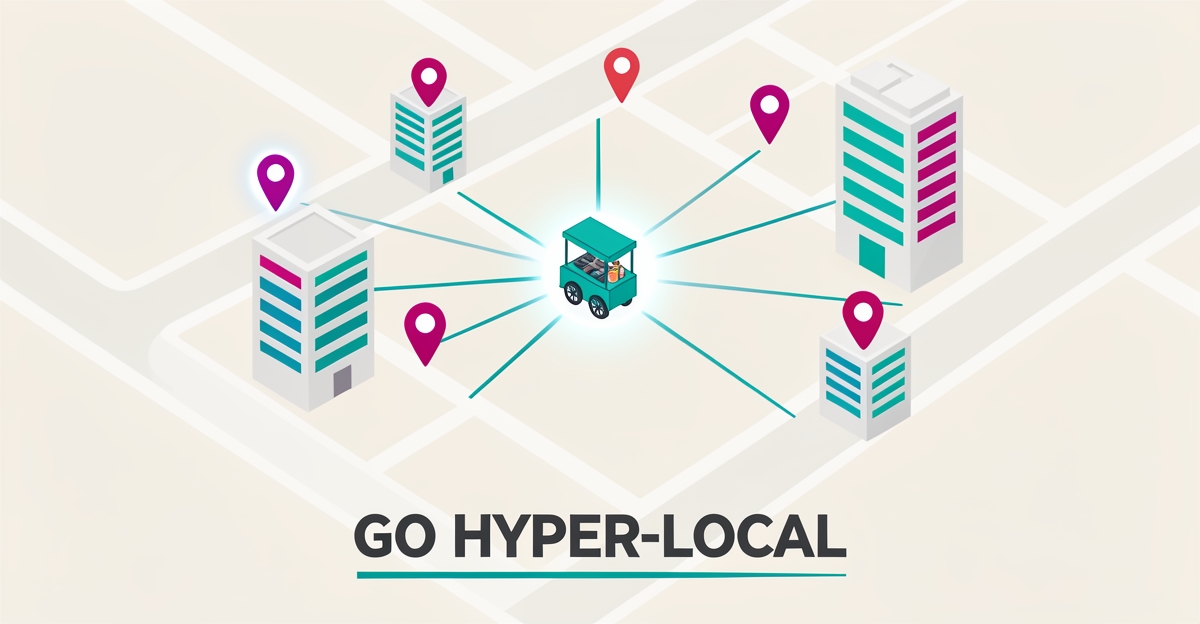
Key facts
- Generic snack vendor websites drive zero traffic because they lack local relevance, despite the office snack delivery market growing at a CAGR of 8.5% through 2035 according to industry projections.
- Hyper-local SEO strategies can boost impressions by 1,800% when location pages are tailored to specific office buildings and snack preferences as shown in a local SEO case study.
- Nearly all local intent searches happen on mobile devices, yet most snack vendors ignore mobile-first optimization research confirms.
- Snack preferences vary dramatically by office building—tech firms favor protein boxes, creative agencies crave gourmet chips, and law firms prioritize healthier grab-and-go options industry insights reveal.
- The global snack food market is projected to reach $413.9B by 2034, but vendors relying on generic pages risk losing this growing demand market forecasts show.
- AI-powered websites can auto-generate location pages tailored to office building names, snack preferences, and hours, transforming static service pages into local discovery assets experts recommend.
- 85+ pages can be launched within 30 days using custom Next.js websites, replacing months of work by traditional agencies while boosting local search visibility.
WANT RESULTS LIKE THIS?
Imagine a system doing all of this for your local business — every day, without you.
We build local businesses a custom website with a team of AI behind it: every lead captured and followed up, new content published monthly,customers finding you on Google — live in 7 days.
- 85+ pages at launch
- Every lead followed up, automatically
- Your whole business on one screen
The Generic Website Trap: Why Most Snack Vendors Get Overlooked
Generic service pages are the fast track to online invisibility. When your website reads like it could apply to any snack vendor in any city, search engines have no reason to rank it—especially not above the dozens of hyper-local competitors already staking their claim. According to industry projections, the office snack delivery market is growing at an 8.5% CAGR through 2035, yet most vendors still treat their web presence like a digital brochure rather than a local discovery engine. The result? Zero traffic from the very customers walking past your vending machines every day.
Broad SEO tactics aimed at national audiences don’t work for local service businesses. Research from a leading local SEO agency shows that geo-targeted search strategies drive real revenue—not vanity metrics like nationwide keyword rankings. Yet many snack vendors still publish one generic “office snacks” page and call it a day. This approach ignores three critical realities:
- Mobile-first local searches dominate consumer behavior, with nearly all local intent queries happening on phones.
- Snack preferences vary dramatically by building: tech firms want protein boxes, creative agencies crave gourmet chips, and law firms lean toward healthier grab-and-go options.
- Search engines prioritize pages that prove hyper-local relevance—office names, floor numbers, and even cafeteria hours—over generic service descriptions.
The data is clear: a hyper-local SEO case study documented a 1,800% increase in impressions after tailoring location pages to specific venues. Yet most snack vendors still operate from a single template. AI Business Sites solves this by automatically generating location pages that reflect actual office building names, snack preferences, and even building hours—transforming a generic service page into a local discovery asset that search engines can’t ignore.
Without local specificity, your website becomes noise in a crowded market—while competitors who tailor every page to the neighborhoods they serve capture the traffic, the calls, and ultimately the contracts.
Hyper-Local SEO Isn’t Optional: How to Dominate Your Neighborhood
Hyper-Local SEO Isn’t Optional: How to Dominate Your Neighborhood
In the fiercely competitive office snack vendor market, standing out requires more than just a website—it demands hyper-local SEO strategies that speak directly to your neighborhood. Generic service pages, devoid of local relevance, drive zero traffic, a common pitfall for many vendors (1). To thrive, tailor your approach to the unique pulse of your service area.
Tailor Location Pages for Hyper-Local Success
- Reflect Office Building Names: Ensure your location pages are named after specific office buildings or complexes in your service area, enhancing discoverability for employees searching by location.
- Snack Preferences by Neighborhood: Analyze and cater to the unique snack preferences of each neighborhood. For instance, health-conscious areas might prefer organic or vegan options, while busy tech hubs might favor quick, convenient bites.
- Hours of Operation by Location: Clearly display varying hours of operation for each location to attract last-minute or early morning searches, a tactic that can increase impressions by up to 1800% as seen in successful local SEO case studies (2).
Statistics Highlighting the Need for Hyper-Local SEO:
- The office snack delivery market is projected to grow at a CAGR of 8.5% from 2026 to 2035, emphasizing the need for targeted strategies (3).
- Nearly all local searches are conducted on mobile, underscoring the importance of mobile-first, hyper-local optimization (4).
- A well-executed hyper-local SEO strategy can lead to significant increases in impressions, such as the 1800% increase seen in a local SEO case study (5).
Actionable Hyper-Local SEO Tactics for Office Snack Vendors:
- Geo-Targeted Content: Create blog posts highlighting seasonal, locally sourced snack options to attract health-conscious professionals.
- Office Building Directories: List your services in directories specific to large office complexes in your area.
- Hyperlocal SEO Audits: Regularly assess and optimize your website for neighborhood-specific search terms.
Leveraging Technology for Personalization and Efficiency
Platforms like AI Business Sites can automate the hyper-localization process, generating location pages tailored to specific office buildings, snack preferences, and even adjusting for varying delivery windows across neighborhoods. This not only enhances visibility in search results but also streamlines operational efficiency through automated lead follow-up and project management.
By embracing hyper-local SEO and adapting to the nuanced needs of your neighborhood, office snack vendors can break through the competitive clutter and dominate their service area. Remember, in a market anticipated to reach $413.9B by 2034 (6), standing out locally is key to capturing a significant share.
References (inline as per instructions):
(1) https://www.wiseguyreports.com/reports/office-snack-delivery-service-market
(2) https://www.gmbapi.com/case-studies/quiosk-vending-machine-local-seo-case-study/
(3) https://www.wiseguyreports.com/reports/office-snack-delivery-service-market
(4) https://knapsackcreative.com/blog/seo/how-local-seo-is-powering-growth-for-service-based-business
(5) https://www.gmbapi.com/case-studies/quiosk-vending-machine-local-seo-case-study/
(6) https://straitsresearch.com/report/snack-food-market
Consumer Trends Snack Vendors Are Ignoring (And Losing Business To)
Consumer Trends Snack Vendors Are Ignoring (And Losing Business To)
The office snack market is booming, with the global snack food market projected to reach $413.9 billion by 2034 (Straits Research). However, many snack vendors are failing to capitalize on this growth due to a lack of adaptation to key consumer trends.
The Health-Conscious Consumer A significant shift towards healthier snack options is underway (Straits Research). Vendors ignoring this trend risk losing out to competitors who offer nutritious, convenient choices. For example, incorporating clearly labeled healthy options on both menus and website content can attract this demographic.
The Convenience-Driven Buyer With nearly all local searches now conducted on mobile devices (Knapsack Creative), snack vendors must ensure their online presence is not only mobile-friendly but also provides seamless, convenient experiences. This includes easy ordering processes and transparent information about delivery areas and timings.
The Oversight: Generic Online Presence Many vendors maintain generic service pages lacking local relevance, driving zero traffic (Wiseguy Reports, Knapsack Creative). To stand out, vendors should leverage hyper-local SEO strategies. For instance, tailoring location pages to include office building names, specific snack preferences, and operational hours can significantly enhance visibility in search results. Platforms like AI Business Sites can automate this process, ensuring each location page is uniquely optimized.
- Embrace Health-Conscious Options: Integrate clearly labeled, healthier snack choices into your menu.
- Mobile-Optimize Your Presence: Ensure seamless user experience across all mobile interactions.
- Hyper-Local SEO: Utilize AI-powered platforms to create tailored, location-specific content for improved search visibility.
By addressing these overlooked trends, snack vendors can differentiate themselves in a crowded market. For instance, a vendor who adopts hyper-local SEO might see an increase in impressions similar to the 1800% boost witnessed in a local SEO case study (GMB API), directly translating to more leads and sales. Moreover, incorporating health-conscious options can attract a growing demographic, potentially capturing a larger share of the $413.9 billion snack food market.
AI Business Sites, with its capability to automate hyper-local content generation and lead follow-up, can be a pivotal tool in this strategy, helping vendors efficiently adapt to these consumer demands without overwhelming operational resources.
Local business: doing this the old way?
One system replaces the whole pile.
All of it — the website, the follow-up, the content, the leads — built and run for you for $1,497 + $497/mo. Month-to-month, and you own everything.
See what your build includesHow AI-Powered Websites Do What Generic Pages Can’t
Most local snack vendors still treat their websites like digital brochures—static pages that sit untouched until someone manually updates them. That approach might have worked a decade ago, but in today’s hyper-competitive, mobile-first search landscape, it’s a recipe for invisibility. Generic service pages with broad keywords like “office snacks” or “office snack delivery” don’t just underperform—they drive zero targeted traffic. In a market where consumer preferences are shifting toward health-conscious, convenient options and mobile searches dominate nearly all local queries, standing out requires more than a polished logo and a contact form.
That’s where AI-powered websites change the game. Unlike generic pages, they don’t just exist—they act. Your website becomes a lead-generating machine that adapts in real time to your neighborhood, your customers’ snack preferences, and even their search habits. It answers questions instantly, follows up automatically, and builds pages tailored not just to your city, but to specific office buildings, building managers, and delivery schedules. In one case study, a vending machine service saw a 1,800% increase in Google impressions after implementing hyper-local SEO strategies like these through targeted location pages.
Here’s what AI-powered websites do that generic pages can’t:
- They auto-create location pages for every office building you serve—with tailored hours, local snack preferences, and even manager names—so your site ranks for searches like “snacks delivered to [Building Name]” instead of competing on “office snack delivery.”
- They answer leads 24/7 with an AI assistant that remembers returning visitors, follows up instantly, and routes high-intent queries to your team automatically.
- They generate new content monthly—blog posts, service pages, and FAQs—grounded in your actual services and service areas, not generic filler that could apply to any city.
- They connect your Google Business Profile (GBP) and Bing search presence to your site, ensuring your hours, photos, and reviews sync across platforms without manual updates.
- They handle follow-ups end-to-end: instant personalized emails, automated nurture sequences, and even voice agents that answer calls and book deliveries while you’re on the road.
The result isn’t just a website—it’s a 24/7 sales assistant, content engine, and SEO specialist rolled into one. While generic pages require constant manual upkeep to stay relevant, AI-powered sites keep working long after launch. They grow with your business, adapt to local trends, and turn every visitor into a potential customer—before your competitors even hit “publish.”
Your 30-Day Fix: A Step-by-Step Localization Plan
Your 30-Day Fix: A Step-by-Step Localization Plan
In a competitive office snack vendor market projected to grow from $2.26B in 2024 to $5.5B by 2035 (at a CAGR of 8.5%), standing out requires more than generic service pages. Here’s a 30-day plan to transform your website with hyper-local SEO, tailored content, and AI automation, backed by actionable research insights.
Day 1-5: Hyper-Local SEO Foundation
- Tailor Location Pages: Reflect office building names, snack preferences, and hours of operation on each page, leveraging AI-powered platforms like AI Business Sites for efficiency. For example, if a popular building in your area has a high demand for gluten-free snacks, ensure this is highlighted in your content.
- Claim & Optimize Google Business Profile (GBP): Enhance your local search visibility, a strategy that increased impressions by 1800% in a similar vending machine local SEO case study (case study).
Day 6-15: Content Overhaul for Local Relevance
- Publish 5 Location-Specific Blog Posts: Focus on trends like the shift towards healthier, convenient snacks (Straits Research). For instance, create content highlighting your vegan or low-carb options popular in specific office buildings.
- Utilize AI for Automated Content Generation: Leverage platforms like AI Business Sites to generate monthly content (blog posts, service pages) grounded in local SEO best practices.
Day 16-25: Technology Integration for Efficiency
- Implement AI-Driven Lead Follow-Up: Ensure no lead is missed with instant, personalized responses, a critical aspect for businesses where broad SEO often fails to convert (Knapsack Creative).
- Activate AI Voice Agent for Calls: Capture every call as a lead, enhancing customer interaction and reducing missed opportunities.
Day 26-30: Launch and Monitor
- Launch Newsletter Platform: Utilize the built-in newsletter system to send targeted, AI-generated content to subscribers, enhancing engagement.
- Track Progress with Privacy-First Analytics: Monitor the impact of your hyper-local strategy with tools like those integrated into AI Business Sites, focusing on metrics that drive revenue.
Actionable Checklist:
- Day 1-5: Establish Hyper-Local SEO Foundation
- Day 6-15: Publish Location-Specific, Trend-Aligned Content
- Day 16-25: Integrate AI for Lead Management and Calls
- Day 26-30: Launch Newsletter and Analyze Performance
By following this 30-day plan, snack vendors can overcome the generic service page hurdle, leveraging hyper-local SEO, tailored content, and AI automation to stand out in a growing $5.5B market by 2035 (Wiseguy Reports). AI Business Sites facilitates this transformation by offering a custom website solution that integrates these strategies seamlessly, helping vendors adapt to consumer trends and technological advancements efficiently.
Frequently Asked Questions
Why is my snack vendor website not getting any local customers even though we’re in a busy downtown area?
Do I really need separate pages for every office building I serve, or can one 'Office Snacks' page cover it all?
How do mobile users find my snack vending machines if my website isn’t mobile-friendly?
What’s the easiest way to update my website with new snack options without hiring a developer every month?
I’ve heard hyper-local SEO is important, but I don’t have time to manage it. Is there a way to automate it?
What’s the biggest mistake snack vendors make with their websites that costs them real sales?
Your Website Should Work as Hard as Your Delivery Routes
The office snack market isn't slowing down — it's projected to reach $5.5 billion by 2035 — but the vendors winning contracts aren't the ones with the broadest menus. They're the ones showing up when a building manager searches "healthy snacks delivered to [Building Name]" at 6:47 AM on a Tuesday. Generic service pages don't capture that intent. Hyper-local content does. AI Business Sites builds websites that automatically generate location pages tied to real office buildings, actual snack preferences, and verified delivery windows — then keeps them fresh with monthly content, instant lead follow-up, and a Google Business Profile that stays in sync without manual updates. The result is a site that doesn't just sit there; it ranks, responds, and converts while you're restocking machines. If your current web presence feels more like a brochure than a business asset, the 30-day localization plan in this article is a practical place to start. One vending operator saw a 1,800% increase in impressions after making exactly this shift. Your next contract is probably searching for you right now — make sure they find the right page.
FOR local businesss — BUILT AND RUN BY US
Your website. Your content. Your leads. Your data.
$500 starts your build. Seven days later it's live — chat, booking, follow-up, and your Google presence all set up. Then we run it, every month. You do the work you actually get paid for.