
Key facts
- Heavy-duty repair labor rates rose $9 since 2023 to $134 per hour according to industry data
- Top-performing shops achieve 11-20% net profit margins in heavy-duty repair per recent industry reports
- 31% of shop owners don't pay themselves a salary, indicating financial strain based on industry survey
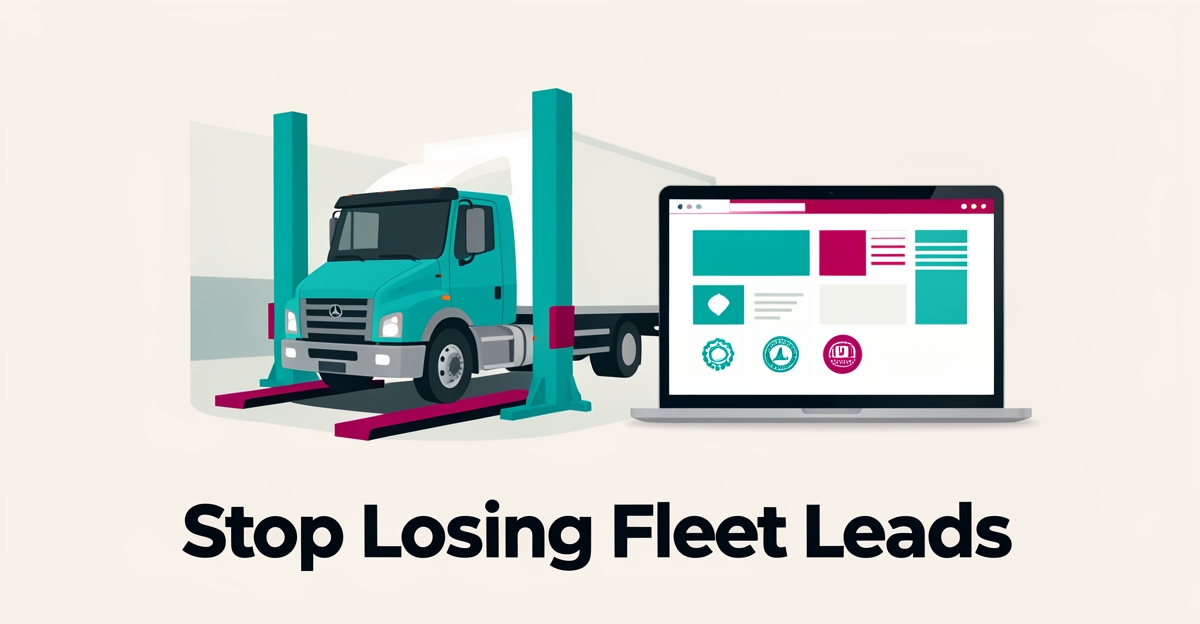
- Fleet managers evaluate frame rack capacity, measuring systems, and paint booth specs—not consumer services per conversion optimization research
- Most businesses lose leads due to slow response times—automated workflows close this gap per lead response best practices
- Custom websites highlighting OEM certifications and service areas convert commercial fleet leads supported by industry economics
- Heavy-duty repair shops saw a 14.3% employee increase from 2024–2025 per workforce trends data
WANT RESULTS LIKE THIS?
Imagine a system doing all of this for your local business — every day, without you.
We build local businesses a custom website with a team of AI behind it: every lead captured and followed up, new content published monthly,customers finding you on Google — live in 7 days.
- 85+ pages at launch
- Every lead followed up, automatically
- Your whole business on one screen
The Hidden Cost of Generic Auto Body Websites
The Hidden Cost of Generic Auto Body Websites
As heavy-duty truck repair labor rates surge to $134 per hour (a $9 increase since 2023) and top shops achieve impressive 11-20% net margins, a glaring disconnect persists: most frame shops rely on generic, consumer-focused auto body website templates. These templates often highlight oil changes and brake repairs, utterly missing the mark for commercial fleet managers seeking frame-pulling capacity, equipment specs, OEM certifications, and service-area coverage.
Misaligned with Commercial Buyer Needs
Fleet managers evaluating repair services don't search for "brake repair near me." Instead, they seek:
- Equipment Specifications: Details on frame racks, measuring systems, and paint booth capacities.
- OEM Certifications: Evidence of authorized service for specific truck manufacturers (e.g., Freightliner, Volvo).
- Service-Area Coverage: Clear information on territories served, especially for multi-depot fleets.
Generic templates fail to address these critical evaluation criteria, leading to missed opportunities for lucrative heavy-duty contracts.
The Revenue Gap
- Labor Rate Increase: Heavy-duty repair labor rates have risen by $9 since 2023, to $134 per hour source.
- Top Shop Margins: High-performing shops achieve 11-20% net profit margins, underscoring the potential for growth with targeted marketing source.
- Conversion Failures: Generic websites neglect to reduce hesitation and make the next step obvious for urgent commercial needs, a key conversion principle source.
The Solution: Custom, Heavy-Duty Focused Design
AI Business Sites crafts websites that bridge this gap by:
- Highlighting specialized equipment and certifications
- Providing clear service-area information tailored to fleet operations
- Implementing urgent-action design principles to reduce hesitation
By aligning online presence with the specific needs of commercial fleet managers, frame shops can capitalize on the lucrative heavy-duty repair market and close the revenue gap left by generic auto body website templates.
Key Takeaways:
- Generic auto body templates miss critical commercial fleet evaluation criteria.
- Heavy-duty repair labor rates and margins justify targeted investment in custom website design.
- Custom, heavy-duty focused websites can significantly improve conversion rates for commercial leads.
Action for Frame Shops: Invest in a custom website that speaks directly to the needs of commercial fleet managers, highlighting your shop's unique heavy-duty repair capabilities and streamlining the conversion process for these high-value clients.
What Fleet Managers Actually Look For (And Don't Find)
Fleet managers don't browse websites the way car owners do. They follow a structured procurement path — Problem > Service > Proof > Action — searching for terms like "heavy duty frame repair [city]" and "fleet maintenance contract [region]" that generic auto body sites never target. According to conversion research, truck repair homepages must reduce hesitation and make the next step obvious for urgent commercial needs, yet most frame shop sites still lead with consumer-focused service menus and vague "contact us" buttons.
The trust signals that close commercial deals look nothing like ASE badges. Fleet buyers evaluate frame rack capacity specs, measuring system brands (like Car-O-Liner or Chief), paint booth dimensions rated for tractor-trailers, and DOT inspection credentials — proof the shop can handle their equipment without outsourcing. They want to see fleet client logos they recognize and structural certifications from OEMs like Freightliner, Volvo, or Peterbilt. Research confirms critical conversion elements include clear service-area details and trust signals such as photos, testimonials, and certifications that speak directly to commercial capacity.
- Frame rack pulling capacity (tons) and bed length specs
- 3D measuring system brand and calibration records
- Paint booth dimensions rated for Class 7–8 trucks
- Fleet client logos with verifiable references
- DOT inspection authorization and OEM structural certifications
Shops showcasing this specificity win contracts. The heavy-duty repair market supports 11–20% net profit margins for top performers, with labor rates climbing to $134/hour — a $9 increase since 2023. Yet 31% of shop owners still don't pay themselves a salary, suggesting the gap between capability and commercial capture is real. AI Business Sites builds custom websites around these exact procurement signals, with automated follow-up workflows that respond to fleet leads in minutes — not hours — because speed-to-lead data shows most businesses lose commercial opportunities simply by being slow to reply.
Local business: doing this the old way?
One system replaces the whole pile.
All of it — the website, the follow-up, the content, the leads — built and run for you for $1,497 + $497/mo. Month-to-month, and you own everything.
See what your build includesSpeed-to-Lead: Why Commercial Inquiries Die in the Inbox
Speed-to-Lead: Why Commercial Inquiries Die in the Inbox
The heavy-duty truck repair industry is booming, with labor rates rising by $9 since 2023 to $134 per hour, and top-performing shops achieving net profit margins of 11-20% source. However, frame shop websites often fail to capitalize on this growth due to a critical oversight: sluggish response times to commercial inquiries.
Operational Pressures Amplify the Problem 31% of shop owners don't pay themselves a salary, and 36% lack apprenticeship programs, indicating financial and operational strains source. These pressures make efficient digital response systems crucial. Yet, most businesses lose leads simply by being slow to reply source. Commercial leads, in particular, require immediate attention, as fleet managers need prompt confirmation of capacity, such as whether a shop can handle three trucks on a Tuesday, not just a generic "we'll call you" auto-response.
The Workflow Difference | Consumer Lead | Commercial (Fleet Manager) Lead | | --- | --- | | Seeks an appointment for a personal vehicle | Needs immediate capacity confirmation for multiple vehicles | | Responds well to generic auto-responders | Requires personalized, capability-focused responses | | Typically involves a single vehicle repair | Often involves contractual, high-volume service agreements |
Why Generic Auto-Responder Fail
- Lack of Personalization: Generic responses fail to address the fleet manager's urgent need for capacity and service specifics.
- Delayed Human Follow-Up: Manual response processes cannot compete with the immediacy expected in commercial procurement.
Solution: Instant, Capability-Focused Responses AI-driven websites can bridge this gap by:
- Instantly Responding with capacity confirmation and estimator routing.
- Automating Workflows to ensure leads receive professional, personalized follow-ups without delay.
- Integrating with Backend Operations to ensure accuracy in capacity promises.
At AI Business Sites, custom-built websites for heavy-duty repair shops are designed to address these challenges, ensuring that commercial inquiries receive the swift, tailored responses they demand, backed by automated workflows that convert leads into customers efficiently.
Key Statistics Highlighting the Need for Speed:
- 9% nationwide increase in labor rates across the heavy-duty repair industry, emphasizing the value of efficient lead conversion source.
- 31% of shop owners not paying themselves a salary, underscoring the financial imperative of maximizing lead potential source.
- Most businesses lose leads due to slow response, a gap instantly closed with automated, personalized follow-ups source.
Building a Website That Sells Heavy-Duty Work
Building a Website That Sells Heavy-Duty Work
The shift from a mere 'web presence' to a 'commercial lead engine' is crucial for frame shops aiming to capture lucrative heavy-duty truck leads. A custom-built website, tailored to the unique needs of heavy-duty repair services, can significantly boost lead conversion. Here's how to implement such a platform:
From Web Presence to Commercial Lead Engine
-
Custom Service Pages: Dedicate pages to structural repair, fleet contracts, and DOT inspections, highlighting equipment specs and certifications. For example, a page for "Heavy-Duty Frame Repair" could include photos of your frame rack, capacity details, and OEM certifications (e.g., Freightliner, Volvo), directly addressing fleet managers' evaluation criteria.
-
Location Pages: Create separate pages for each terminal or depot served, enhancing local SEO. Ensure each page includes service-area details and fleet-specific keywords (e.g., "Heavy-Duty Truck Repair in [City]" or "Fleet Maintenance Contracts [Region]").
-
Equipment Gallery: Showcase specialized gear with specs, building trust with potential commercial clients. Include photos of your frame machines, measuring systems, and paint booths, alongside testimonials from existing fleet clients.
-
Schema Markup: Implement schema for commercial services and service areas to improve search visibility. Use schema types like
"Service"and"LocalBusiness"to highlight your shop's commercial capabilities in search results. -
Instant Automated Response: Set up instant, personalized follow-ups with fields for truck count, urgency, and service type. For instance, an auto-response could acknowledge a fleet manager's inquiry with, "Thank you for contacting us. An estimator will review your [X truck, urgent] [Service Type] request within the hour."
Grounded in Research, Built for Conversion
-
Industry Economics: Heavy-duty repair shops achieve net profit margins of 11-20% source, necessitating websites that cater to high-value, commercial leads. According to a recent industry report, labor rates have risen to $134/hr, emphasizing the need for efficient, specialized service presentation source.
-
Conversion Killers: Avoid generic templates and ensure clear, above-fold contact/forms and trust signals (photos, testimonials, certifications) as highlighted by conversion optimization experts source.
-
Speed-to-Lead: Instant, personalized responses are critical, as slow follow-ups often result in lost leads source.
Actionable Implementation
- Problem-Service-Proof-Action Homepage Structure to address urgent commercial needs.
- Deploy Fleet-Specific Lead Workflows with capacity checks and estimator routing.
- Optimize for Commercial Local SEO with location pages and fleet keywords.
By shifting focus towards a commercial lead engine, frame shops can effectively capture and convert heavy-duty truck leads, standing out in a competitive market with a website that truly sells. AI Business Sites crafts such bespoke solutions, integrating the backend automation needed to manage leads, follow-ups, and content, ensuring the website works as an integral part of the business operations.
Frequently Asked Questions
Why do generic auto body websites fail to attract heavy-duty truck repair leads?
What specific information do fleet managers look for on a frame shop's website?
How important is response time when converting commercial truck repair leads?
What labor rate and profit margin trends justify investing in a custom heavy-duty repair website?
Can a custom website really help my frame shop get more fleet maintenance contracts?
What website features actually improve conversion for heavy-duty truck leads?
Key Takeaways
{ "title": "Close the Heavy-Duty Conversion Gap: Transform Your Shop's Online Presence", "content": "The disconnect between generic auto body websites and the specialized needs of heavy-duty truck fleet managers is clear. Frame and collision shops miss out on lucrative contracts due to websites
FOR local businesss — BUILT AND RUN BY US
Your website. Your content. Your leads. Your data.
$500 starts your build. Seven days later it's live — chat, booking, follow-up, and your Google presence all set up. Then we run it, every month. You do the work you actually get paid for.