
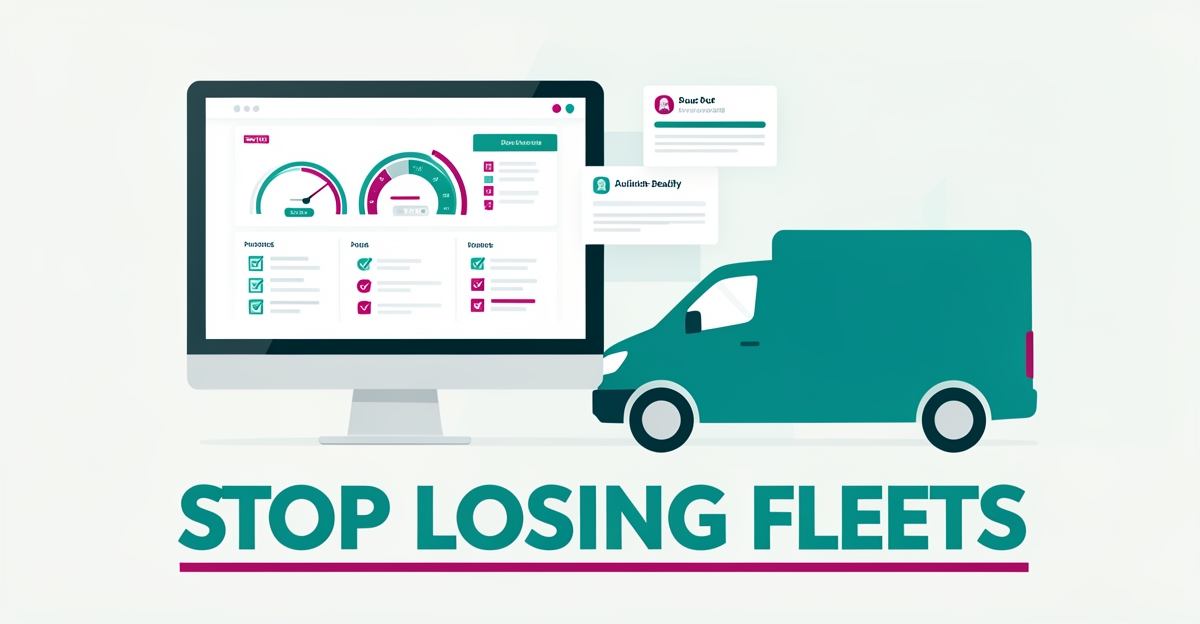
Key facts
- Fleet Response manages a portfolio of 500,000+ vehicles across 5,000+ U.S. network shops requiring strict vendor qualifications.
- Vendors must carry $1M Garage Keepers Liability Insurance plus I-CAR training and ASE certification to join Fleet Response as a network shop.
- The U.S. vehicle fleet reached 286 million vehicles in operation with an average age of 12.6 years in 2024 driving repair demand.
- Nearly 85% of the U.S. vehicle fleet is 4+ years old, creating expanding collision repair needs as vehicles age.
- The auto care industry is projected to reach $617.3 billion by 2027 with 5.7% growth in 2024 despite volume declines.
- Repair order revenue grew 5.2% year-over-year in 2024 while volume dropped 1.7% showing pricing power.
- Generic body shop websites lack automated project tracking, instant document generation, and compliance credential displays that fleet procurement requires.
WANT RESULTS LIKE THIS?
Imagine a system doing all of this for your local business — every day, without you.
We build local businesses a custom website with a team of AI behind it: every lead captured and followed up, new content published monthly,customers finding you on Google — live in 7 days.
- 85+ pages at launch
- Every lead followed up, automatically
- Your whole business on one screen
The Fleet Manager Procurement Gap
Fleet managers evaluate repair vendors through a lens of strict compliance and structured procurement processes, seeking transparency, credibility, and efficiency. To qualify for contracts with networks like Fleet Response (managing over 500,000 vehicles), vendors must meet stringent requirements: $1M Garage Keepers Liability Insurance, I-CAR training, ASE certification, and standardized documentation (Corporate Data Forms, Process and Procedure forms) (Fleet Response, n.d.). However, generic consumer-facing body shop websites fail to address these needs, creating an immediate trust deficit.
These websites, designed for consumer engagement with features like service lists and testimonials, neglect the B2B functionality fleet managers demand. For instance, they lack:
- Automated project status tracking for real-time visibility
- Instant document generation for compliant workflows (estimates, invoices, completion certificates)
- Prominent display of certifications and insurance compliance
This oversight is critical given the $617.3 billion auto care industry projection by 2027 (Matrix CMG, 2024), where fleet repair services play a significant role, driven by an aging vehicle fleet (average age 12.6 years in 2024) (Matrix CMG, 2024).
Fleet managers, guided by networks like Fleet Response, prioritize vendors who can demonstrate professionalism and compliance upfront. Generic websites fail to surface the necessary credentials, forcing fleet managers into a time-consuming verification process or leading them to prefer vendors with obviously compliant digital presences. Cox Automotive's insights on strong pricing power in fixed operations (Cox Automotive, 2024) highlight the financial stakes, where trust and efficiency directly impact revenue.
To convert fleet managers, collision repair websites must pivot towards B2B functionality:
- Compliance at First Sight: Prominently display certifications, insurance, and a link to detailed compliance documents.
- Transparent Project Management: Offer client-facing portals for real-time project updates.
- Efficient Documentation: Generate fleet-compliant documents instantly from project data.
By addressing the procurement gap with targeted website functionality, repair shops can build the professional credibility required to secure recurring commercial contracts, aligning with the industry's growth trajectory and the specific needs of fleet managers.
Note: The lack of direct research on fleet manager website evaluation criteria and B2B website conversion rates in collision repair underscores the inferred nature of these recommendations, based on vendor network requirements and industry trends.
What Fleet Networks Actually Require from Vendors
Fleet managers don’t shop for repairs the way consumers do. They operate in compliance-driven procurement ecosystems where every step—from vendor qualification to project completion—must meet strict documentation and transparency standards. When evaluating collision repair vendors, they rely on networks like Fleet Response’s 5,000+ U.S. shops, which enforce rigorous benchmarks: $1 million Garage Keepers Liability Insurance coverage, I-CAR training, ASE certification, and dedicated vendor coordinators to manage relationships and ensure accurate cost reporting and fair payment terms. These aren’t optional checkboxes—they’re the baseline for even being considered.
Yet most fleet collision repair websites are built as digital brochures for individual consumers, not as professional portals that mirror the structured procurement process fleet managers use. They lack real-time project visibility, instant document generation, and audit-ready communication trails—features that would align with the vendor qualification standards Fleet Response outlines. Without these capabilities, a website becomes just another barrier to trust instead of a tool that accelerates vendor approval.
Fleet managers need three core functions that generic body shop sites can’t deliver:
- Real-time project visibility. A client-facing portal that shows repair status, estimate updates, and photo documentation at every stage mirrors the dedicated coordinator model Fleet Response uses to manage its network.
- Instant document generation. Fleet procurement requires formal documentation—estimates, supplements, completion certificates, invoices—delivered instantly and branded to the business. Websites that can’t auto-generate these documents force fleet managers to chase down vendors for missing paperwork.
- Audit-ready communication trails. In regulated procurement environments, every interaction—chat, email, approval, document sharing—must be captured in a unified timeline. Generic contact forms can’t provide this level of compliance documentation.
The gap isn’t just functional—it’s professional. A site that automatically tracks project status and provides instant document generation doesn’t just streamline workflows; it builds the kind of credibility fleet managers require to justify awarding recurring commercial contracts. For a vendor competing in a $617 billion aftermarket industry where the average vehicle age is 12.6 years and nearly 85% of the fleet is 4+ years old, that credibility isn’t optional. It’s the difference between being a vendor in the network and being ignored.
The Business Case for B2B-Ready Repair Websites
The aftermarket is expanding rapidly, with 286 million vehicles in operation and an average age of 12.6 years — meaning nearly 85% of the fleet is 4+ years old and increasingly likely to need collision repair. This aging vehicle base, combined with elevated new vehicle prices driving more repairs over replacements, is projected to push the auto care industry to $617.3 billion by 2027. Even as repair order volume declines slightly, revenue per repair order is growing 5.2% year-over-year, signaling strong pricing power and untapped revenue potential in fleet repair.
Fleet managers, however, don’t buy repairs based on marketing brochures — they buy based on vendor qualification. Networks like Fleet Response require shops to meet strict B2B standards: $1M Garage Keepers Liability Insurance, I-CAR training, ASE certification, and standardized documentation like Corporate Data Forms and Process and Procedure sheets. These aren’t optional extras; they’re non-negotiable prerequisites for inclusion in a fleet vendor network that manages over 500,000 vehicles nationwide. A website that buries these credentials in an “About Us” page or omits them entirely fails the first test of credibility.
What fleet managers truly need is a website that functions as a live vendor qualification asset — one that reduces procurement friction by delivering compliance readiness on demand. This means automated display of current certifications and insurance, real-time project status tracking visible to fleet contacts, and instant generation of branded estimates, supplements, and completion certificates. When a fleet manager can log in and see repair progress, download a supplement, or approve an estimate without chasing emails or making phone calls, the shop stops being a vendor and becomes a trusted partner. That shift — from lead capture to contract retention — is where sustainable fleet repair revenue is won.
Local business: doing this the old way?
One system replaces the whole pile.
All of it — the website, the follow-up, the content, the leads — built and run for you for $1,497 + $497/mo. Month-to-month, and you own everything.
See what your build includesWebsite Functionality That Wins Recurring Fleet Contracts
A fleet manager’s decision to award a recurring commercial contract hinges on one thing: professional credibility. Yet most collision repair websites read like consumer brochures—bright photos, vague service lists, and no proof of compliance. Fleet procurement networks like Fleet Response don’t just prefer vendors that can instantly display credentials, track projects in real time, and generate compliant documents on demand. They require it. A website that automates these capabilities doesn’t just look professional—it is the vendor qualification asset that wins recurring contracts.
The U.S. fleet repair market is expanding, with 286 million vehicles in operation and an average age of 12.6 years driving demand for reliable service partners. Yet vendors that can’t present $1M Garage Keepers Liability Insurance, I-CAR training, or ASE certification—or prove real-time project status with audit trails—are automatically disqualified from consideration by structured procurement teams. According to Fleet Response, their vendor onboarding process requires Corporate Data Forms, Process and Procedure documentation, and current insurance certificates, reflecting a formal, compliance-driven approach that most generic websites ignore.
A high-converting fleet collision repair website must mirror the rigor of fleet procurement workflows. Start with a Fleet Vendor Credentials section that auto-displays current certifications, insurance certificates, and compliance documents in one place. This isn’t just branding—it’s a procurement requirement. Fleet Response prefers—and often mandates—I-CAR training and ASE certification for network shops, and failure to present these credentials in a standardized, accessible format creates an immediate trust gap.
Next, deploy a client-facing project portal with real-time status updates, photo documentation, and embedded approval workflows. Fleet managers don’t have time for phone tag or delayed emails. They need transparent visibility into repair progress, damage photos, and approval gates. A portal that mirrors the proactive vendor coordination Fleet Response provides—via dedicated coordinators like Edwin Castro—builds the kind of operational trust that converts one-time repairs into recurring contracts.
The third critical capability is instant document generation from project data. Fleet procurement requires standardized estimates, supplements, completion certificates, and invoices—all branded, accurate, and audit-ready. A website that automatically generates these documents eliminates manual errors and administrative friction, positioning the vendor as a seamless, professional partner. AI Business Sites’ platform already supports this: proposals, quotes, and PDFs are generated in real time, branded to the business, and delivered instantly to fleet clients.
Finally, integrate unified communication timelines with audit trails. Fleet managers operate in regulated environments where every interaction must be documented. A website that captures chat logs, email threads, approvals, and document versions in a single, timestamped history provides the compliance record that generic contact forms cannot. This isn’t just customer service—it’s risk mitigation and vendor qualification.
For fleet managers, a website isn’t a marketing asset. It’s a procurement tool. When your site auto-displays compliance credentials, tracks projects in real time, generates compliant documents instantly, and archives every communication with an audit trail, you’re not just answering a bid request—you’re proving you’re the vendor they can trust with their entire fleet.
From Static Brochure to Qualification Accelerator
Fleet managers don’t browse repair shop websites for photos or testimonials — they evaluate vendors against strict procurement standards that generic sites ignore. According to Fleet Response, their network of 5,000+ U.S. shops requires $1M Garage Keepers Liability Insurance, I-CAR training, and ASE certification as non-negotiable benchmarks for vendor approval. Yet most collision repair websites still function as static consumer brochures, highlighting cosmetic repairs and customer reviews while omitting the compliance documentation fleet managers need to initiate contracts. This mismatch explains why even shops with strong local reputations struggle to convert fleet inquiries into recurring commercial work — their websites fail to act as credible qualification tools in a B2B procurement process.
The solution isn’t more marketing copy — it’s transforming the website into a live credential that speaks directly to fleet procurement workflows. Leading with compliance readiness — such as displaying current insurance certificates, certification badges, and standardized forms like Corporate Data Sheets — immediately signals professional credibility. Embedding four core B2B functionalities — automated project tracking, instant document generation, two-way communication with audit trails, and client-facing approval portals — turns the site from a passive lead trap into an active qualification accelerator. Fleet managers gain real-time visibility into repair status, cost updates, and approval steps without chasing calls or emails, directly addressing the transparency emphasized by Fleet Response as critical to vendor trust.
Most importantly, the website must update itself as credentials evolve — renewing insurance, adding certifications, or completing training — so it always reflects current compliance status. This eliminates the manual back-and-forth that stalls vendor onboarding and positions the site as a dynamic qualification asset rather than a stale brochure. While no public studies directly measure fleet collision repair website conversion rates — a notable gap in the research — the alignment between fleet network requirements and these website capabilities creates a strong industry signal. By treating the site as a living credential that updates automatically, repair shops shift from chasing leads to being pre-qualified for fleet work before the first conversation even begins. AI Business Sites enables this shift by embedding these functionalities directly into the website’s core, turning compliance from a hurdle into a competitive advantage.
Frequently Asked Questions
What specific credentials do fleet managers require from collision repair vendors before awarding contracts?
Why do generic body shop websites fail to convert fleet managers into recurring contracts?
How large is the fleet repair market opportunity for collision shops that can meet procurement standards?
What website features actually prove professional credibility to fleet procurement teams?
Is there research proving these website features increase fleet contract conversion rates?
How does repair order revenue growth affect the business case for fleet-focused website upgrades?
Key Takeaways
{ "title": "Unlock the Fleet Contract Advantage: Transform Your Website into a Qualification Powerhouse", "content": "The disconnect between generic body shop websites and the stringent procurement needs of fleet managers is clear. To capitalize on the $617.3 billion auto care industry projection by
FOR local businesss — BUILT AND RUN BY US
Your website. Your content. Your leads. Your data.
$500 starts your build. Seven days later it's live — chat, booking, follow-up, and your Google presence all set up. Then we run it, every month. You do the work you actually get paid for.