
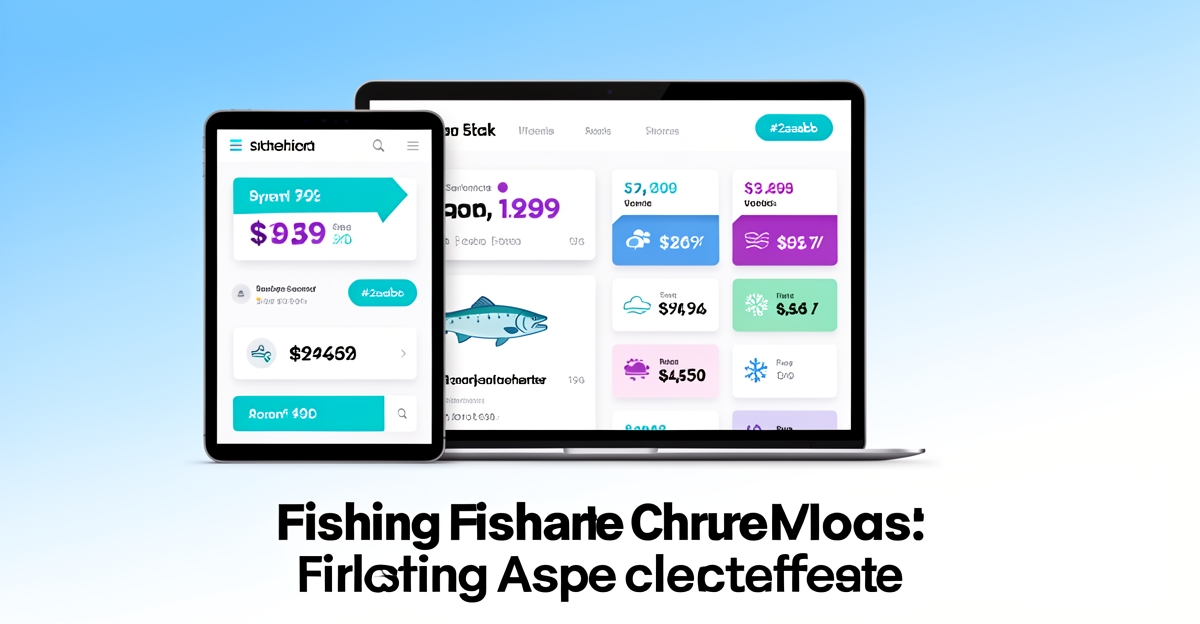
Key facts
- The global fishing charter market is projected to reach $15 billion by 2035, growing at a 3.9% CAGR from 2026-2035 according to market research.
- Generic booking systems cover only about 50% of what a real charter operation requires, leaving dynamic variables like weather windows and crew schedules to manual workarounds per industry experts.
- 87% of global travelers prefer leaving space in their itineraries for unexpected local discoveries, demanding flexibility that static charter websites cannot provide per travel behavior research.
- Dynamic pricing rules tested in boat rentals raise prices by 20% when only 3 spots remain and offer 10% early-booking discounts 30 days in advance per FareHarbor case studies.
- Charter websites must load under 3.5 seconds and offer robust filtering to retain visitors, or they lose potential clients within 60 seconds per web design best practices.
- North America's fishing charter market alone is growing from $4 billion in 2024 to $6 billion by 2035, driven by demand for personalized experiences per market research.
- 71% of Americans are actively budgeting for travel in 2026, making transparent, weather-driven pricing essential for charter conversions per travel trend data.
WANT RESULTS LIKE THIS?
Imagine a system doing all of this for your local business — every day, without you.
We build local businesses a custom website with a team of AI behind it: every lead captured and followed up, new content published monthly,customers finding you on Google — live in 7 days.
- 85+ pages at launch
- Every lead followed up, automatically
- Your whole business on one screen
The Static Website Problem: Why Most Charter Sites Fail to Show Seasonal Options
Most fishing charter websites operate like digital brochures—fixed, unchanging, and blind to the rhythms of the water. Built on generic e-commerce platforms designed for selling products with set prices, they struggle to reflect the negotiated, variable nature of charter pricing that shifts with weather, crew availability, and seasonal demand. As a result, seasonal itineraries and real-time pricing adjustments are often missing or outdated, leaving anglers searching in vain for timely options. Industry experts note that standard booking systems typically cover only about half of what a real charter operation requires, with the other half—including dynamic variables like weather windows and route specifics—demanding custom development from the outset.
This architectural mismatch creates a critical gap between what anglers seek and what websites deliver. Modern travelers expect transparency and flexibility, with 87% preferring to leave space in their plans for unexpected discoveries and 71% actively budgeting for travel in 2026, according to travel behavior research. Yet static sites fail to adapt, displaying generic packages that don’t reflect peak-season opportunities like summer salmon runs or off-season incentives for winter bottom fishing. Without dynamic updates, charter businesses miss chances to adjust pricing based on real-time demand—such as raising rates when only a few spots remain or offering early-booking discounts—strategies proven effective in adjacent sectors like boat rentals, where dynamic pricing rules have been shown to optimize revenue by aligning prices with availability and timing.
The consequence is more than just missed bookings—it’s eroded trust. When visitors can’t quickly find seasonally relevant options within 60 seconds, they leave, and poor filtering is cited as one of the fastest ways to lose a potential client. Web design best practices emphasize that pages must load under 3.5 seconds and offer intuitive navigation to retain users seeking timely information. For fishing charters, where success hinges on matching the right trip to the right conditions, a static website isn’t just inconvenient—it’s a barrier to capturing seasonal demand in a market projected to grow to $15 billion by 2035. Market research confirms this steady expansion, underscoring the revenue at stake when websites fail to mirror the fluid reality of life on the water.
How Dynamic Pricing and Seasonal Content Drive Real Revenue Growth
How Dynamic Pricing and Seasonal Content Drive Real Revenue Growth
Fishing charter websites often miss out on seasonal revenue opportunities due to their static nature, unable to adjust to demand fluctuations or weather conditions. However, by embracing dynamic pricing and seasonal content strategies, charter operators can capture lost revenue and align with traveler expectations for transparency and flexibility.
Research from adjacent sectors like boat rentals highlights the effectiveness of two primary dynamic pricing models: capacity-based and time-based pricing. Capacity-based pricing adjusts rates based on remaining inventory, such as raising prices by 20% when only 3 spots remain on a charter (FareHarbor). Time-based pricing incentivizes early bookings or maximizes last-minute revenue, for example, offering a 10% discount for bookings made 30 days in advance. These strategies can be directly applied to fishing charters to optimize revenue during peak and off-seasons.
Seasonal Content Clusters powered by AI can dynamically update offerings based on seasonal patterns and weather forecasts. For instance, AI can automatically adjust itinerary suggestions and pricing in real-time based on weather forecasts, ensuring transparency and flexibility for travelers. This approach meets the demand for "structured speed" and personalized experiences, where 87% of global respondents prefer leaving space in their itineraries for unexpected discoveries (Ezus.io).
- Implement Dynamic Pricing Rules: Adjust prices based on demand and availability to capitalize on peak seasons and fill off-season slots.
- Develop Seasonal Content Clusters: Create and dynamically update destination-based content that showcases seasonal itineraries and weather-dependent options.
- Optimize for Speed and Filtering: Ensure websites load under 3.5 seconds and feature robust filtering to facilitate quick discovery of seasonal charters (StudiosMPL).
By adopting these strategies, fishing charter websites can transform from static brochures into dynamic, revenue-driving platforms. AI Business Sites can help charter operators achieve this transformation by building custom, AI-powered websites that integrate dynamic pricing, seasonal content updates, and seamless user experience, ensuring no more missed seasonal opportunities.
Local business: doing this the old way?
One system replaces the whole pile.
All of it — the website, the follow-up, the content, the leads — built and run for you for $1,497 + $497/mo. Month-to-month, and you own everything.
See what your build includesBuilding a Charter Website That Updates Itself: AI-Powered Seasonal Itineraries and Weather-Driven Pricing
Most charter websites treat bookings like product purchases — fixed price, instant checkout, done. But a fishing charter isn't a commodity; it's a negotiated experience shaped by weather windows, crew schedules, and seasonal fish patterns that change weekly. Standard platforms cover only about 50% of what a real charter operation requires, leaving the other half — dynamic pricing, weather-dependent itineraries, route-specific logistics — to manual workarounds that never quite catch up.
The global fishing charter market is growing fast, valued at USD 10.19 billion in 2025 and projected to reach USD 15 billion by 2035 at a 3.9% CAGR, with North America alone expanding from USD 4 billion to USD 6 billion over the same period. Private charters lead this growth, driven by demand for personalized experiences and tailored itineraries that static websites simply cannot deliver. Major platforms like FishingBooker and GetMyBoat are already investing in real-time availability APIs and dynamic pricing engines, while individual operators using generic templates miss the same revenue opportunities.
A custom-developed system replaces static templates with an integrated brochure, booking engine, and operations platform that updates itself. Instead of manually rewriting seasonal pages every quarter, the site pulls real-time weather data, adjusts itinerary suggestions based on forecast windows, and applies capacity-based or time-based pricing rules automatically — raising rates by 20% when only three spots remain, offering 10% early-booking discounts 30 days out, and filling off-season slots without undercutting fixed costs. AI handles the mechanical updates: rewriting descriptions, shifting availability, recalculating prices — while the captain retains final say on weather calls and safety margins.
- Real-time weather integration that adjusts displayed itineraries and pricing based on forecast windows
- Dynamic pricing rules — capacity-based and time-based — that optimize revenue across peak and off-season periods
- AI-assisted content updates that rewrite seasonal descriptions, swap photography, and restructure internal links without manual editing
- Robust filtering by species, trip length, price range, and weather suitability so visitors find relevant options in under 60 seconds
- Automated internal linking that connects new seasonal pages to existing service and location content for local SEO
This is the approach AI Business Sites builds into every charter website — not as an add-on, but as the core architecture. The site becomes a living operations tool that reflects what's actually bookable today, not what was true when the developer last touched the code.
Frequently Asked Questions
Why doesn't my current booking system show my seasonal trips or weather-based pricing?
Can I actually increase my revenue by changing my prices based on demand?
Will a more complex, dynamic website slow down my page load times?
Do anglers actually care if the itinerary is flexible or fixed?
Is the fishing charter market growing enough to justify investing in a custom AI website?
What happens if my website is hard to navigate or the filters don't work?
Key Takeaways
{ "title": "Hooked on Opportunity: Transforming Fishing Charter Websites for Seasonal Success", "content": "The fishing charter industry's reliance on static websites has left a significant revenue gap, particularly in showcasing seasonal itineraries and weather-driven pricing. As the market gro
FOR local businesss — BUILT AND RUN BY US
Your website. Your content. Your leads. Your data.
$500 starts your build. Seven days later it's live — chat, booking, follow-up, and your Google presence all set up. Then we run it, every month. You do the work you actually get paid for.