
Key facts
- Agritourism weddings surged from 2% in 2009 to 20% of U.S. weddings in 2022 according to White Hutchinson research
- 89% of couples use smartphones for wedding planning per BFI industry data
- 80-95% of venue leads come through email or website forms according to BFI Guide
- Visual appeal now outweighs traditional practical considerations for venue selection notes Nick from Country House Weddings
- Static websites frozen in summer fail couples planning winter or spring weddings
- AI-powered sites auto-rotate seasonal galleries and update weather-sensitive descriptions in real time
- Authentic, real-life setup photos build more trust than staged photoshoots per BFI marketing guide
WANT RESULTS LIKE THIS?
Imagine a system doing all of this for your local business — every day, without you.
We build local businesses a custom website with a team of AI behind it: every lead captured and followed up, new content published monthly,customers finding you on Google — live in 7 days.
- 85+ pages at launch
- Every lead followed up, automatically
- Your whole business on one screen
The Trust Gap: What Couples Really See vs. What Websites Show
The Trust Gap: What Couples Really See vs. What Websites Show
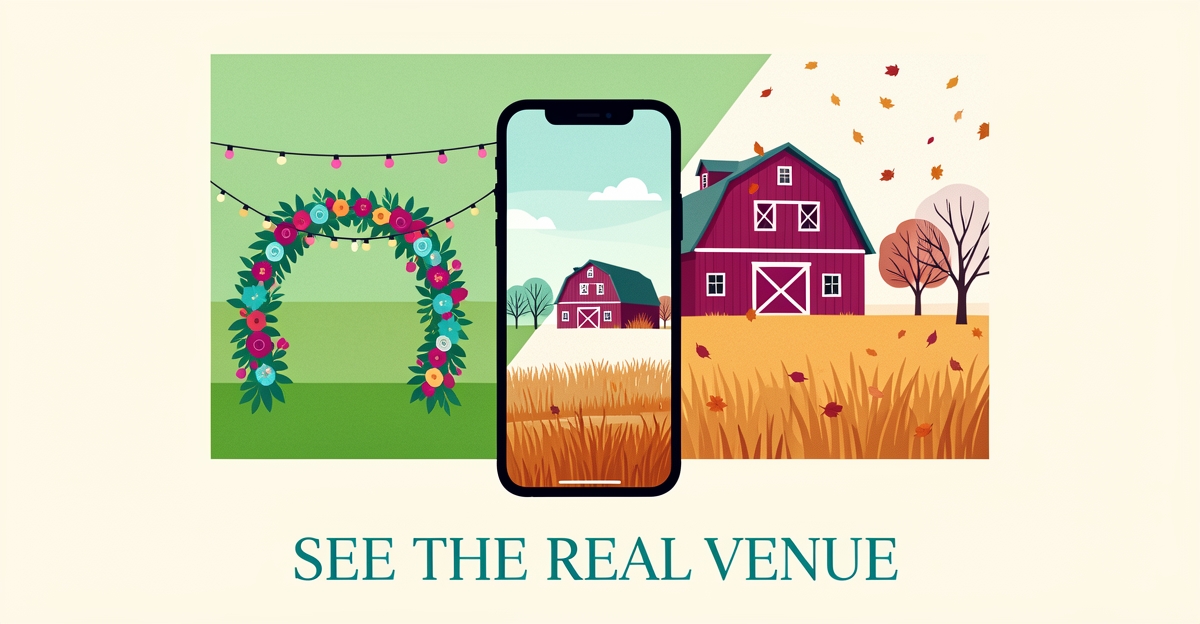
Imagine discovering your dream farm wedding venue online, only to arrive and find a stark disconnect between the curated website and the actual, seasonal beauty of the venue. This phenomenon, known as the trust gap, is a common pitfall for farm wedding websites, deterring potential couples. According to industry research (BFI Guide), showcasing real-life, seasonal setups is crucial for building trust with couples.
Couples today prioritize experiential and authentic venues, with 20% of U.S. weddings in 2022 opting for agritourism venues, up from just 2% in 2009 (White Hutchinson Study). However, many websites fail to capture the essence of their venue across different seasons and in real, non-staged settings. Nick from Country House Weddings (County Wedding News) emphasizes, "Visual appeal has become as important as, if not more than, traditional practical considerations," highlighting the need for authentic, high-quality photography.
To close this trust gap, farm wedding venues can take the following steps:
- Seasonal Photography: Showcase the venue in all seasons to manage expectations.
- Real-Life Setups: Highlight actual wedding layouts and events, not just staged photoshoots.
- Leverage AI for Dynamic Content: Utilize AI to generate content that reflects the venue’s current state and couples’ preferences, as suggested by Orlando Diggs from EverBridal (EverBridal Strategies).
AI-powered websites, like those designed by AI Business Sites, can automatically update content based on seasonal changes and couple interactions, ensuring the online experience closely mirrors the on-site one. This not only builds trust but also enhances the overall user experience, a key factor since 89% of couples use smartphones for wedding planning (BFI Guide).
By focusing on authenticity, seasonal relevance, and leveraging technology like AI for dynamic content generation, farm wedding venues can effectively bridge the trust gap, attracting more couples who see a genuine reflection of what they will experience on their special day.
Why Static Photos Hurt Conversions: Mobile, Seasonal, and Real-Life Gaps
Couples planning farm weddings increasingly turn to their smartphones for venue research, making mobile experience a critical factor in conversion. With 89% of couples using smartphones for wedding planning, static, generic photos fail to meet the expectations of users who expect fast-loading, visually rich content that works seamlessly on small screens. When images don’t adapt or load slowly, engagement drops—especially since 80-95% of leads contact venues via email or website forms, meaning a poor mobile experience directly impacts lead generation.
Seasonal variability further exposes the limitations of outdated imagery. A barn photographed in peak summer bloom tells an incomplete story to a couple planning a winter or spring wedding. Real-life setups across seasons—showing how the space handles rain, snow, or golden-hour light—build trust by validating what couples will actually experience. As noted by industry experts, showcasing venues in different seasons and authentic conditions is essential for helping couples envision their day and feel confident in their choice.
- Mobile-optimized visuals that load quickly and display clearly on all devices
- Seasonal photo galleries reflecting real-world conditions throughout the year
- Authentic setups featuring actual decor, lighting, and weather scenarios
- Content that updates regularly to mirror the venue’s current state
AI Business Sites helps farm venues close these gaps by integrating dynamic, context-aware content that reflects real-time conditions and seasonal changes—ensuring the website shows couples not just a idealized version, but the real, tangible experience they can expect. This approach aligns with the growing demand for experiential, authentic venues where visual appeal often outweighs traditional practical considerations, as highlighted by experts who emphasize the need for websites to validate venues through high-quality, truthful imagery.
Local business: doing this the old way?
One system replaces the whole pile.
All of it — the website, the follow-up, the content, the leads — built and run for you for $1,497 + $497/mo. Month-to-month, and you own everything.
See what your build includesAI-Powered Fix: Dynamic Content That Reflects Your Actual Barn
The gap between what a farm wedding website shows and what a couple actually experiences comes down to one thing: static content trying to sell a living, breathing venue. Barns change with the light, the season, and the weather — but most websites stay frozen in July. That disconnect erodes trust before a couple ever schedules a tour.
Research shows that 20% of U.S. weddings now take place at agritourism venues, up from just 2% in 2009, making authentic representation more critical than ever. Couples aren't browsing listings; they're hunting for a feeling. With 89% of couples using smartphones for wedding planning, the first impression happens on a small screen, often at 10 p.m. after work. If the photos don't match the reality — muddy paths in spring, golden light in October, heaters glowing in a December barn — the inquiry never comes.
- Seasonal photo galleries that auto-rotate based on the current month
- Weather-sensitive descriptions that highlight heated floors in winter or open-air cocktail spaces in summer
- Real-time capacity layouts showing how the barn flexes for 80 guests versus 200
- Vendor-curated setup photos from actual weddings held last weekend
This is where AI-powered content generation shifts from novelty to necessity. Instead of manually updating pages every season, an AI content engine can research, write, and publish locally grounded updates automatically — new blog posts, refreshed service pages, and location-specific guides that reflect what the venue actually looks like right now. AI Business Sites builds this capability directly into the website, so every new page is automatically linked to relevant existing content, strengthening the topical clusters Google rewards. The result isn't just fresher copy; it's a digital presence that breathes with the barn, validating the venue digitally through the high-quality, context-aware content couples now expect.
Frequently Asked Questions
Why do farm wedding websites often feel misleading when I visit the venue in person?
How important is mobile optimization for farm wedding venue websites?
What kind of photos should farm wedding venues show to build trust with couples?
Can AI really help keep a farm wedding website up to date with seasonal changes?
Is it worth investing in dynamic content for a farm wedding website if we already have nice photos?
Key Takeaways
{
"title": "Bridging the Trust Gap: Elevate Your Farm Wedding Venue’s Online Presence",
"content": "As the wedding industry continues to shift towards experiential and authentic venues, with 20% of U.S. weddings now opting for agritourism venues ( FOR local businesss — BUILT AND RUN BY US $500 starts your build. Seven days later it's live — chat, booking, follow-up, and your Google presence all set up. Then we run it, every month. You do the work you actually get paid for.Your website. Your content. Your leads. Your data.