
Key facts
- 94% of patients prioritize convenient appointment times when seeking endocrinology care according to patient preference data
- 77% of patients consider online appointment booking important for their healthcare experience based on recent surveys
- Patients lose trust when treatment pathways aren't clearly displayed on endocrinology websites, creating confusion about care journeys as noted in healthcare UX analysis
- Unclear test result timelines on medical websites make patients feel neglected and erode confidence in providers per healthcare communication studies
- Displaying HIPAA, GDPR, and AHPRA compliance badges reassures patients about data security on medical websites recommended by healthcare digital experts
- AI-driven UX tools can optimize treatment pathway presentation to make complex information easily accessible and understandable according to healthcare marketing research
- Structured content modeled after Cleveland Clinic's case studies builds patient trust through transparency and logical flow as used by leading medical institutions
WANT RESULTS LIKE THIS?
Imagine a system doing all of this for your local business — every day, without you.
We build local businesses a custom website with a team of AI behind it: every lead captured and followed up, new content published monthly,customers finding you on Google — live in 7 days.
- 85+ pages at launch
- Every lead followed up, automatically
- Your whole business on one screen
The Trust Gap: How Missing Treatment Pathways Undermines Patient Confidence
Patients seeking endocrinology care are increasingly digital-savvy, with 77% prioritizing online appointment booking and 94% valuing convenient appointment timings source. Yet, many endocrinology websites fail to meet these expectations by hiding or not clearly displaying treatment pathways, test result timelines, and expected outcomes, leading to a significant trust gap.
This lack of transparency can confuse patients and erode confidence in the practice. For instance, a patient awaiting test results might feel neglected if the website doesn’t provide a clear timeline for when these will be available or how to access them. Similarly, the absence of detailed treatment pathways can leave patients uncertain about their care process, comparing unfavorably to more transparent competitors.
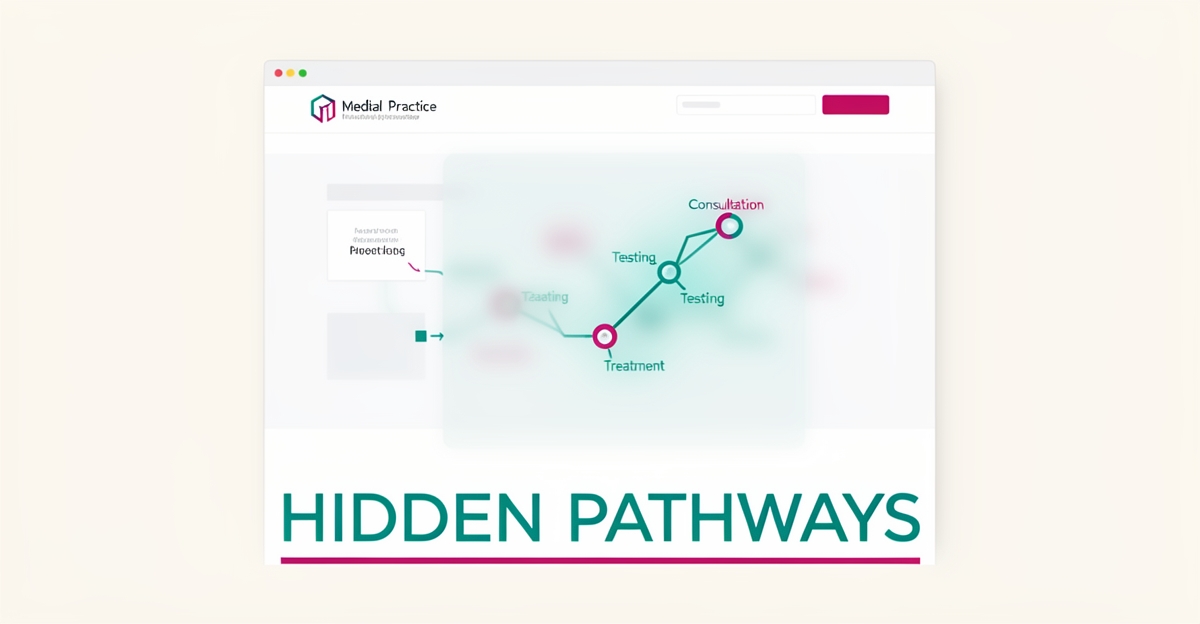
- Invisible Treatment Pathways: Patients cannot find clear, step-by-step explanations of their potential care journeys.
- Unclear Test Result Timelines: Lack of information on when and how test results will be communicated.
- Unmet Expectations for Digital Convenience: Failure to offer online tools for appointment booking and scheduling, contrary to patient preferences source.
AI-driven UX/UI tools can play a pivotal role in addressing these shortcomings by ensuring endocrinology websites are structured to prioritize patient needs. For example, AI marketing strategies can optimize the presentation of treatment pathways and test result information, making it easily accessible and understandable source. Moreover, SEO optimization for relevant keywords (e.g., "endocrinology treatment pathways") can improve the website's visibility among potential patients seeking transparent care providers.
Displaying compliance badges for HIPAA, GDPR, and AHPRA on the website can further reassure patients about the security of their data source. By leveraging AI to ensure consistent, patient-centric design and maintaining up-to-date content, endocrinology practices can significantly reduce the trust gap, enhancing patient confidence and loyalty.
For practices looking to improve, platforms like AI Business Sites offer a solution by creating structured, SEO-optimized pages that make treatment pathways and patient information easy to find and understand, naturally enhancing patient trust and practice visibility.
Why Structured Content Builds Trust: Insights from Healthcare Digital Best Practices
Leading medical institutions like Cleveland Clinic have long used structured, case-study formats to translate complex clinical reasoning into clear, teachable narratives — a model that builds trust through transparency and logic rather than jargon. When patients encounter that same clarity on a practice website, they perceive competence before they ever book an appointment. Research shows 94% of patients prioritize convenient appointment times and 77% value online booking, but those features only convert when the surrounding content helps them understand what comes next.
- Step-by-step treatment pathways that mirror clinical decision trees
- Expected timelines for test results and follow-up milestones
- Condition-specific FAQs written in plain language, not medical shorthand
- Visual cues that guide navigation without overwhelming the reader
AI-driven UX tools now make it practical to replicate this structure at scale — organizing service pages, condition pages, and location pages into topical clusters that both patients and search engines can follow. AI Business Sites applies this principle by generating content that links related treatments, tests, and timelines automatically, so a patient reading about thyroid nodules immediately sees the pathway to biopsy, results, and next steps without hunting across disconnected pages. That internal coherence signals authority to Google and reassurance to the person reading at 11 p.m. with a new diagnosis.
The same automation that structures content also keeps it current — outdated pages erode trust faster than missing ones, and manual updates rarely keep pace with evolving guidelines. When the website itself maintains those connections, the practice gains a search-optimized foundation that compounds over time, turning clinical expertise into patient confidence one clear pathway at a time.
Local business: doing this the old way?
One system replaces the whole pile.
All of it — the website, the follow-up, the content, the leads — built and run for you for $1,497 + $497/mo. Month-to-month, and you own everything.
See what your build includesFrom Problem to Patient-Ready: Implementing Clear Treatment Pathways on Your Endocrinology Site
From Problem to Patient-Ready: Implementing Clear Treatment Pathways on Your Endocrinology Site
Patients seeking endocrinology care often face a maze of unclear treatment options, test result explanations, and ambiguous next steps, eroding trust in healthcare providers. A study on patient preferences highlights that 94% prioritize convenient appointment times and 77% consider online appointment booking important source, underscoring the need for transparency and ease of navigation on endocrinology websites.
- Timeline Visualization: Break down complex treatment pathways into easily digestible, visual timelines. This approach, akin to structured case study presentations valued in professional medical settings source, helps patients understand their journey.
- Test Result Explanations: Offer clear, accessible explanations of test results directly on the website, leveraging AI to ensure content is both SEO-optimized for terms like "endocrinology test result timelines" and compliant with healthcare regulations.
-
Next-Step Guidance: Provide actionable next steps after each treatment phase, ensuring patients always know what to expect. AI-driven UX/UI tools can significantly enhance this process by personalizing the patient's navigation experience source.
-
Automated Content: Utilize AI Business Sites' automated content generation to create and update treatment pathway pages, ensuring consistency and reducing maintenance burdens.
- Internal Linking for SEO: Leverage the platform's automatic internal linking feature to connect relevant service pages, enhancing topical authority and search rankings for endocrinology-specific keywords.
- Compliance and Trust:
- Display HIPAA, GDPR, and AHPRA compliance badges prominently to reassure patients of data security source.
- Ensure all AI-generated content adheres to the latest healthcare guidelines, maintaining trust and authority.
- Use structured, behavior-driven design to improve conversions and patient engagement, as highlighted by marketing experts source.
By transforming endocrinology websites from static information hubs into dynamic, patient-ready platforms, healthcare providers can significantly boost trust and conversion rates. AI Business Sites facilitates this transformation by streamlining the creation of clear, SEO-optimized treatment pathways, thereby enhancing the overall patient experience.
Key Statistic Highlight: A recent study source emphasizes the importance of digital convenience in healthcare, aligning with the solution provided by AI Business Sites.
AI Business Sites' approach not only improves patient trust through transparency but also consolidates numerous business tools into one platform, reducing the complexity and cost associated with managing separate subscriptions for website management, CRM, content generation, and more. This consolidation is particularly beneficial for small businesses, as highlighted in the business context, allowing them to focus on patient care rather than technology management.
Bold Highlight: Clear treatment pathways and transparent communication are key to building patient trust in endocrinology practices.
Bold Highlight: AI-driven website design can significantly enhance patient navigation and trust.
Bold Highlight: Compliance badges and structured content are crucial for reinforcing credibility.
Frequently Asked Questions
Why do so many endocrinology websites make it hard to find treatment pathways and test result timelines?
How does hiding treatment pathways actually affect patient trust?
Can AI really help organize treatment pathways on a medical website without creating compliance risks?
What specific information should an endocrinology website include to close the trust gap?
Is it worth investing in a website that automatically updates treatment pathways and internal links over time?
Do compliance badges like HIPAA and GDPR actually make patients trust a medical website more?
How Endocrinology Practices Can Close the Digital Trust Gap—Starting Today
Most endocrinology websites unintentionally create uncertainty by hiding treatment pathways, test timelines, or clear next steps—precisely when patients need confidence the most. For a field where trust is the foundation of care, this digital opacity can mean the difference between a booked appointment and a lost patient. The solution isn’t just adding more pages; it’s structuring the information patients crave—step-by-step pathways, realistic timelines for results, and plain-language explanations—into a navigation experience that feels intuitive, not clinical. When practices mirror the clarity of leading medical institutions like Cleveland Clinic with structured, case-study formats, patients arrive already reassured by what they’ve seen online. But keeping that content updated and interconnected demands more than a manual refresh—it requires a system that evolves with guidelines and patient needs without adding to your workload. Platforms like AI Business Sites automate the creation of structured, SEO-optimized pathways, ensuring every patient interaction—from their first Google search to their follow-up booking—feels guided, secure, and seamless. If your website still leaves treatment journeys buried in jargon or disjointed pages, it’s not just missing opportunities; it’s risking trust. Start by auditing your site for one missing pathway or timeline, then let automation handle the rest.
FOR local businesss — BUILT AND RUN BY US
Your website. Your content. Your leads. Your data.
$500 starts your build. Seven days later it's live — chat, booking, follow-up, and your Google presence all set up. Then we run it, every month. You do the work you actually get paid for.