
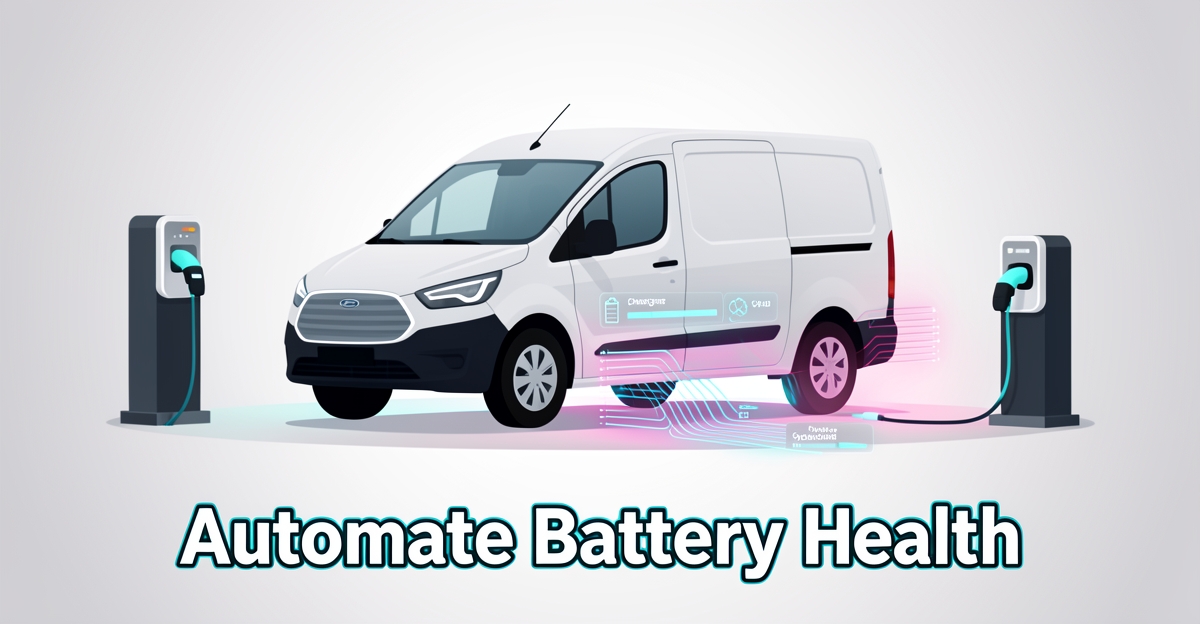
Key facts
- The battery represents up to 40% of an EV's total cost according to SafetyCulture's fleet management guide
- Predictive battery health analytics can reduce unexpected vehicle downtime by up to 31% per industry benchmarks cited by Dataintelo
- The EV fleet management market is projected to grow from USD 9.10 billion in 2025 to USD 32.25 billion by 2030 at a 22.7% CAGR according to MarketsandMarkets
- Cloud-based platforms dominate fleet management with 63.4-67.8% market share per SNS Insider and Dataintelo research
- The services segment — including managed charging and AI-powered predictive maintenance — is the fastest-growing component at 23.6% CAGR per MarketsandMarkets
- Commercial vehicle fleets are growing at 30.8% CAGR driven by high utilization and regulatory mandates
- Digital asset registers with automated reminders are recommended to ensure EV maintenance schedules are strictly met per SafetyCulture's operational guide
WANT RESULTS LIKE THIS?
Imagine a system doing all of this for your local business — every day, without you.
We build local businesses a custom website with a team of AI behind it: every lead captured and followed up, new content published monthly,customers finding you on Google — live in 7 days.
- 85+ pages at launch
- Every lead followed up, automatically
- Your whole business on one screen
The Battery Degradation Crisis Undermining Fleet Reliability
Battery degradation isn't just a maintenance line item — it's the single largest cost center in any electric fleet. The battery represents up to 40% of an EV's total cost, and neglecting it "will degrade the part prematurely, which means costly replacements that could cripple the fleet's efficiency" according to SafetyCulture's fleet management guide. For consultants managing high-utilization commercial fleets, this creates a fiscal cliff: current EV lifespans are estimated at just 8-12 years, "largely dictated by battery longevity and overall system health."
The market data confirms the urgency. Battery degradation is explicitly identified as a key market restraint, with "intensive utilization and frequent rapid charging accelerate[ing] cell wear, potentially compromising operational reliability and driving range." Meanwhile, the commercial vehicle segment — where utilization is highest — is growing at a staggering 30.8% CAGR. These fleets run fixed routes, charge rapidly, and rack up cycles faster than any predictive model based on consumer driving patterns can accommodate.
Reactive maintenance fails this reality. "Reactive repairs are costly because these unexpected events require significant unbudgeted expenses and cause disruptions," notes SafetyCulture. The alternative — predictive battery health analytics — can reduce unexpected vehicle downtime by up to 31% according to industry benchmarks. But predictive insights only create value when they trigger action automatically.
- Battery health checks scheduled by calendar intervals miss degradation accelerated by rapid charging
- Manual follow-up systems create gaps when consultants manage multiple client locations
- Telematics data without automated scheduling leaves insights stranded in dashboards
- Compliance reporting demands audit-ready maintenance records, not scattered spreadsheets
The services segment — including managed charging, battery health monitoring, and AI-powered predictive maintenance — is now the fastest-growing component at 23.6% CAGR, driven by demand for managed services that handle complex technology ecosystems. Cloud-based platforms dominate at 63.4-67.8% market share precisely because they enable "real-time data access and automatic scaling — ideal for automated scheduling systems."
AI Business Sites builds custom websites that embed this automation directly into the consultant's client-facing platform. The website captures fleet telematics, applies degradation models, and schedules health checks before capacity loss becomes operational risk — turning battery uncertainty into a managed service with consistent delivery across every location.
Why Manual Scheduling Fails Multi-Location Fleet Operations
Why Manual Scheduling Fails Multi-Location Fleet Operations
As the electric vehicle (EV) fleet market surges from 40 million units in 2024 to over 120 million by 2030, the inefficiencies of manual scheduling for battery health checks become starkly apparent. Manual processes fail to keep pace with the scale and complexity of modern EV fleets, leading to missed follow-ups, inconsistent service delivery across locations, and a lack of real-time telematics integration, ultimately causing unexpected downtime.
The Gap in Current Consultant Practices
Manual scheduling struggles to address the nuances of EV battery health, where predictive analytics can reduce unexpected downtime by up to 31% (Dataintelo). Without automated systems, consultants must manually track battery degradation across multiple locations, a task prone to human error and overwhelmed by the sheer growth rate of the EV fleet market, projected to reach USD 32.25 billion by 2030 (MarketsandMarkets).
Consequences of Manual Scheduling
- Missed Follow-Ups: Overlooked battery health checks due to manual tracking limitations, exacerbating the 40% of vehicle cost attributed to batteries (SafetyCulture).
- Inconsistent Service: Variability in scheduling across different locations compromises the quality of service, impacting client satisfaction and retention.
- Lack of Real-Time Integration: Inability to leverage telematics data in real-time for proactive scheduling, contrary to the 23.6% CAGR growth of the services segment emphasizing predictive maintenance (MarketsandMarkets).
The Scalability Challenge
With the EV fleet management market's 22.7% CAGR (MarketsandMarkets) and the dominance of cloud-based platforms (63.4-67.8% market share) (SNS Insider, Dataintelo), manual scheduling is increasingly obsolete. Cloud-native solutions offer the scalability and real-time data access needed for multi-location fleet management, a capability manual processes cannot match.
Key Statistics Highlighting the Need for Automation
- EV Fleet Growth: From 40 million units (2024) to over 120 million units (2030) (Dataintelo).
- Predictive Maintenance Impact: Reduces downtime by up to 31% (Dataintelo).
- Cloud Deployment Dominance: 63.4-67.8% of the fleet management market (SNS Insider, Dataintelo).
Actionable Insight for Electric Fleet Consultants
To bridge this gap, consultants should adopt cloud-based, AI-driven websites that automatically schedule battery health checks based on telematics data and predictive analytics. This approach ensures consistency across locations, reduces downtime, and positions consultants to capitalize on the shifting market dynamics favoring outcome-oriented, managed services (MarketsandMarkets).
Immediate Recommendations for Consultants
- Migrate to Cloud-Native Platforms: For real-time data synchronization and scalability.
- Embed Predictive Analytics: Into scheduling workflows to anticipate battery health issues.
- Offer Automated Scheduling as a Managed Service: Differentiate with proactive, outcome-based solutions.
By transitioning from manual to automated scheduling through smart, integrated website solutions, electric fleet consultants can not only keep pace with the burgeoning EV market but also lead in delivering efficient, scalable, and data-driven fleet management services.
Local business: doing this the old way?
One system replaces the whole pile.
All of it — the website, the follow-up, the content, the leads — built and run for you for $1,497 + $497/mo. Month-to-month, and you own everything.
See what your build includesHow Cloud-Native Websites Enable Automated Battery Health Scheduling
How Cloud-Native Websites Enable Automated Battery Health Scheduling
The electric vehicle (EV) fleet management market's explosive growth, projected to reach USD 32.25 billion by 2030 with a 22.7% CAGR, underscores the need for innovative management solutions. At the heart of this growth is the challenge of battery degradation, identified as a key market restraint. Cloud-native websites, with their real-time data access and automatic scaling, are poised to revolutionize battery health scheduling for electric fleet consultants.
Leveraging Cloud Architecture for Real-Time Scheduling
Cloud-based platforms dominate the market with a 63.4-67.8% share, growing at a 15.32% CAGR. This dominance is due to their ability to enable real-time data synchronization, ideal for integrating with telematics to automatically schedule battery health checks based on charging cycles and degradation predictions. For example, a cloud-native website can analyze a fleet's telematics data to identify vehicles nearing critical battery degradation thresholds, automatically booking maintenance appointments to prevent downtime.
Key Capabilities of Cloud-Native Websites for EV Fleets
- AI-Driven Predictive Maintenance: Embedded AI analyzes charging patterns and state-of-charge data to predict optimal health check intervals, reducing unexpected downtime by up to 31% (Dataintelo).
- Natural Language Fleet Queries: Consultants can query fleet status conversationally, streamlining operations.
- Automated Audit-Ready Reporting: Compliance reports for emissions standards and carbon reporting are generated automatically, ensuring regulatory adherence.
Actionable Implementation
- Build on Cloud-Native Architecture: Utilize platforms like Next.js/React on cloud infrastructure for multi-location consistency.
- Integrate AI-Predictive Maintenance: Embed analytics to schedule checks before issues arise.
- Offer as a Managed Service: Package automated scheduling as a tiered service with guaranteed intervals and compliance reporting.
- Ensure Compliance Reporting: Auto-generate audit-ready reports for regulated fleets.
Example in Practice
A logistics company with a fleet of 500 EVs can use a cloud-native website to track battery health in real-time. When the AI predicts a vehicle's battery will degrade below operational thresholds in 6 months, it automatically schedules a maintenance check, ensuring the vehicle remains operational and reducing potential downtime costs.
By embracing cloud-native websites with integrated automated battery health scheduling, electric fleet consultants can differentiate their services, reduce client downtime, and capitalize on the shifting market landscape towards outcome-oriented, managed solutions.
Statistics Highlighting the Need:
- Battery Degradation Impact: Represents up to 40% of EV cost (SafetyCulture).
- Predictive Maintenance Benefit: Reduces downtime by up to 31% (Dataintelo).
- Cloud Dominance: 63.4-67.8% market share, growing at 15.32% CAGR (SNS Insider, Dataintelo).
Sources (inline as per guidelines):
- According to SNS Insider, cloud deployment leads with approximately 63.40% of fleet management market revenues.
- A Dataintelo report highlights predictive maintenance reducing downtime by up to 31%.
- SafetyCulture emphasizes battery degradation's significant cost impact.
Turning Automated Scheduling Into a Managed Service Revenue Stream
The services segment is growing at 23.6% CAGR — the fastest component in EV fleet management — as providers shift from hardware sales toward recurring, outcome-oriented revenue streams. For electric fleet consultants, this market shift creates a clear opening: package automated battery health scheduling as a managed service tier rather than a one-time software feature. Clients don't just need reminders; they need guaranteed check intervals, proactive degradation alerts, and audit-ready compliance reporting that satisfies emissions standards and carbon reporting obligations.
- Guaranteed battery health check intervals tied to telematics data and charging cycles
- Proactive alerts when degradation trends cross predictive thresholds
- Automated compliance reports for emissions standards and CO2 reduction targets
- Multi-location service consistency through cloud-native architecture
Cloud deployment now commands 63.4% of fleet management market revenue and grows at 15.32% CAGR, enabling the real-time data access and automatic scaling that managed services require. AI Business Sites builds custom websites on cloud-native Next.js architecture — the same stack used by Netflix and Shopify — so consultants can synchronize battery health data, appointment scheduling, and service records across every client location from a single platform. The AI assistant embedded in each site handles the busywork: tagging vehicles by risk tier, triggering follow-up sequences, and alerting consultants only when human judgment is needed.
Predictive battery analytics reduce unexpected downtime by up to 31% according to industry benchmarks, and commercial fleets — growing at 30.8% CAGR — face the highest utilization pressure. By embedding predictive maintenance directly into the website's scheduling engine, consultants deliver measurable outcomes: longer vehicle life, fewer unbudgeted replacements, and compliance documentation that's always audit-ready. That's the managed service model the market is rewarding.
Frequently Asked Questions
Why is battery degradation such a significant concern for electric fleet consultants?
How does manual scheduling fail in managing battery health for multi-location electric fleets?
What benefits does predictive battery health analytics offer for electric fleets?
Why are cloud-native websites ideal for automated battery health scheduling in electric fleets?
How can electric fleet consultants leverage automated scheduling as a managed service?
What is the projected growth of the electric vehicle fleet management market, and why is battery health critical?
Revolutionize EV Fleet Management: Automate for Success
As the electric vehicle fleet market surges, battery degradation remains the Achilles' heel of operational efficiency, accounting for up to 40% of an EV's total cost. The shift towards outcome-oriented managed services, coupled with the dominance of cloud-based platforms, presents a clear opportunity for electric fleet consultants. By integrating AI-powered websites that automatically schedule battery health checks, consultants can reduce downtime by up to 31%, ensure multi-location consistency, and deliver actionable compliance reports. Next Step: Transition from manual inefficiencies to a cloud-native, automated solution. Discover how a custom-built website can transform your EV fleet management services into a scalable, client-centric operation.
FOR local businesss — BUILT AND RUN BY US
Your website. Your content. Your leads. Your data.
$500 starts your build. Seven days later it's live — chat, booking, follow-up, and your Google presence all set up. Then we run it, every month. You do the work you actually get paid for.