
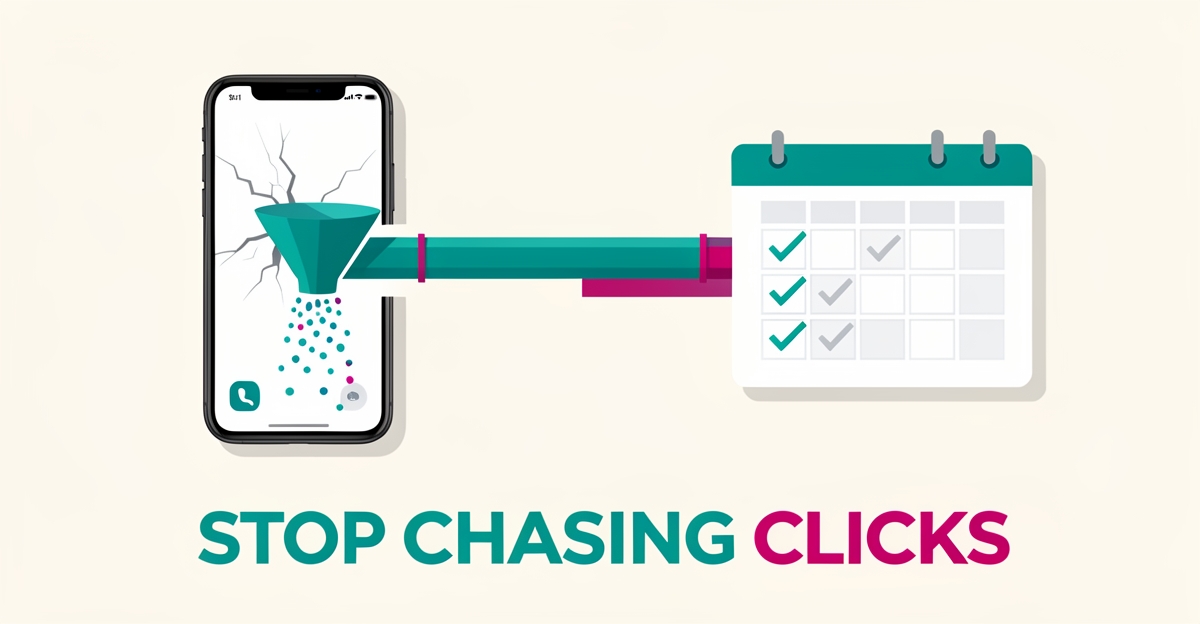
Key facts
- Businesses waste budgets on 'tire-kickers' when using ineffective lead generation approaches according to industry research
- Google Local Services Ads cost $6 to $50+ per lead, ensuring businesses only pay for qualified prospects per lead generation data
- Businesses with under 30 reviews are largely invisible for high-intent emergency queries per local SEO case studies
- Five new reviews per month can outperform 50 reviews from two years ago in local search visibility per SEO research
- Correcting primary business category improves rankings by 3.4 positions on average within 45 days per Flento.io data
- Integrated platforms with pay-per-lead models eliminate wasted spend on unqualified clicks per industry analysis
- AI-powered automation engages leads immediately, even at off-hours, preventing losses to competitors per lead generation research
WANT RESULTS LIKE THIS?
Imagine a system doing all of this for your local business — every day, without you.
We build local businesses a custom website with a team of AI behind it: every lead captured and followed up, new content published monthly,customers finding you on Google — live in 7 days.
- 85+ pages at launch
- Every lead followed up, automatically
- Your whole business on one screen
The DIY Trap: Why Tile Cleaning Apps Don't Deliver Leads
Many tile cleaning business owners assume that downloading a DIY app or building a basic website will automatically generate local leads, but this approach rarely delivers sustainable results. The reality is that fragmented tools often waste time and budget by attracting unqualified prospects who either ghost after initial contact or aren’t a good fit for the service offered. Without precision targeting and verification systems, businesses end up chasing leads that never convert into booked jobs.
Research shows that ineffective lead generation methods cause companies to lose money on "tire-kickers, wrong-fit prospects, or people who ghost after the first conversation" simply because the tools lack the ability to filter for genuine intent. DIY apps typically operate in isolation, meaning there’s no connection between marketing efforts and operational follow-up, which prevents businesses from tracking which activities actually drive revenue. As a result, owners invest in tools that generate clicks or form submissions but fail to close the loop into paying customers.
What works instead is an integrated system that combines lead capture with automated engagement and business management—something DIY solutions can’t replicate. Platforms that unify communication channels, apply AI-powered instant responses, and sync with CRM functions ensure no lead falls through the cracks due to delayed replies or scattered messages. For local service businesses, this means shifting from piecemeal fixes to a cohesive approach where the website doesn’t just exist—it actively works to convert visitors into appointments while reducing manual effort. AI Business Sites delivers this by building custom websites that include built-in lead automation, unified messaging, and ongoing content generation—all designed to run the business behind the scenes so owners can focus on service delivery.
What Actually Generates Local Leads: Integrated Platforms with Trust Signals
What Actually Generates Local Leads: Integrated Platforms with Trust Signals
The myth that a DIY website or app can magically attract local leads has been debunked by recent research. For local service businesses, especially in sectors like tile cleaning, the key to generating reliable leads lies in leveraging integrated platforms equipped with pay-per-lead models, trust signals (such as Google Guaranteed), AI-powered 24/7 response capabilities, unified communications, and holistic conversion rate optimization.
The Power of Integrated Platforms
Unlike DIY approaches, integrated platforms offer a cohesive solution that streamlines lead generation and follow-up. For instance, platforms with pay-per-lead models (like Google Local Services Ads, costing $6 to $50+ per lead) ensure businesses only pay for qualified leads, eliminating wasteful spending on unconverted clicks. The Google Guaranteed badge further enhances credibility, significantly influencing consumer trust and decision-making.
Immediate Response and Unified Communications: Crucial for Lead Retention
Research emphasizes the importance of immediate response capabilities. AI-powered automation engages leads immediately, even at off-hours, preventing losses to competitors. Unified communications systems consolidate messages from various channels (email, text, Facebook, etc.) into one inbox, ensuring no lead falls through the cracks. For example, a tile cleaning service using such a system can respond to a late-night inquiry about emergency cleaning services, scheduling an appointment on the spot.
Conversion Rate Optimization (CRO) Over Traffic Generation
Merely driving traffic is insufficient; CRO analyzes the entire customer journey to identify and resolve friction points, leading to higher conversion rates. This approach is particularly effective for local services, where direct, actionable leads are paramount.
Systematic Local SEO Fundamentals
- Correct Service-Specific Categories: Ensure your Google Business Profile (GBP) category is precise (e.g., "Tile Cleaning Service" instead of "Cleaning Services").
- Fix NAP Inconsistencies: Maintain consistent Name, Address, Phone Number across all directories.
- Build Review Velocity: Aim for at least 5 new reviews/month to enhance Local Pack visibility, especially for high-intent queries.
Case Study Insights
Local SEO case studies (e.g., Flento.io) demonstrate that systematic approaches yield measurable results:
- A residential HVAC service achieved top 3 Local Pack placement in 8/12 target zip codes within 120 days, with a 312% increase in inbound leads from Google.
- Applying these principles to a tile cleaning business could similarly boost visibility and lead generation.
Actionable Recommendations for Local Service Businesses
- Invest in Integrated Platforms with pay-per-lead models and trust signals (e.g., Google Guaranteed) for targeted, high-quality leads.
- Prioritize Immediate Response and unified communications to capture and retain leads effectively.
- Focus on CRO to optimize the customer journey from click to conversion.
By adopting these strategies, local service businesses, including those in the tile cleaning sector, can shift from ineffective DIY methods to a proven, integrated approach that generates, retains, and converts high-quality leads.
About AI Business Sites: As a custom website company, AI Business Sites offers integrated solutions that combine powerful websites with AI-driven business operations platforms, designed to automate lead generation, follow-up, and conversion processes seamlessly.
The Local SEO Foundation: Four Fixes That Move the Needle
Most local businesses don't need more clever tactics — they need the fundamentals executed in the right order. Flento's analysis of five verified case studies reveals the same pattern across restaurants, dentistry, HVAC, salons, and law firms: four specific fixes drive measurable ranking improvements, while everything else is noise.
- Service-specific category selection — switching from generic to precise categories moves rankings 3.4 positions on average within 45 days
- NAP consistency across data aggregators — citation cleanup takes 4–8 weeks to propagate but suppresses rankings until resolved
- Review velocity crossing the ~30-review threshold — businesses below this benchmark are largely invisible for high-intent emergency queries
- Website-GBP alignment — schema markup and location pages take 6–12 weeks to impact rankings but compound over time
The sequencing matters. A Chicago Italian restaurant jumped from position 12 to 2 in Google Maps within 90 days after correcting its primary category and cleaning up citations. A Houston dental practice moved from position 9 to 2 in 60 days, with appointment requests rising 140% as reviews grew from 22 to 61. An HVAC company in Phoenix achieved top-3 Local Pack placement in 8 of 12 target zip codes over 120 days, with inbound leads increasing 312% and "Emergency AC repair" visibility jumping from zero to 340 monthly impressions.
These aren't isolated wins. Semrush confirms that relevance (accurate categories), distance, and prominence (reviews, authority) remain the three core GBP ranking factors, and that review velocity — the rate of new reviews — matters more than total count. Five new reviews per month can outperform 50 reviews from two years ago.
Industry research shows the same principle applies to lead generation: businesses waste budgets on "tire-kickers, wrong-fit prospects, or people who ghost after the first conversation" when they skip foundational work. The fix isn't more tools — it's getting the basics right, in sequence, and letting them compound.
Local business: doing this the old way?
One system replaces the whole pile.
All of it — the website, the follow-up, the content, the leads — built and run for you for $1,497 + $497/mo. Month-to-month, and you own everything.
See what your build includesFrom Clicks to Booked Jobs: Closing the Loop Between Marketing and Operations
The disconnect between lead capture and business operations is a silent killer for local service businesses. While DIY tile cleaning apps promise easy lead generation, they often fail to deliver booked jobs due to a lack of integration with operational workflows. The key to success lies in a smart, integrated platform that seamlessly connects marketing efforts with operational capabilities, enabling closed-loop tracking of profitable job generation.
The Integration Imperative According to industry research, integration between marketing and operations is crucial for identifying which channels generate profitable jobs, not just leads. This involves more than just capturing leads; it requires automated follow-up, online booking capabilities, and a unified inbox to prevent leads from slipping through the cracks. For instance, unified communications systems can consolidate messages from email, text, Facebook, and other channels into one place, ensuring no lead is overlooked.
Automating the Lead-to-Job Pipeline
- Instant Automated Follow-Up: Immediate response to leads, especially those generated outside business hours, significantly reduces the likelihood of losing potential customers to competitors. AI-powered automation can engage leads instantly, as seen in platforms like AI Business Sites, where an AI assistant responds to inquiries and books appointments seamlessly.
- Online Booking Without Friction: Integrating online booking tools directly into the website and marketing materials allows potential customers to commit to a service instantly, capturing their interest while it's strongest.
- Unified Inboxes for Visibility: Centralizing all lead interactions (web chat, phone calls, emails, etc.) provides a clear overview of the sales pipeline, ensuring timely interventions and minimizing missed opportunities.
Data-Driven Insights
- Pay-Per-Lead Efficiency: Models like Google Local Services Ads, costing between $6 to $50+ per lead, ensure businesses only pay for engaged, potential customers, eliminating wasteful spending on unqualified clicks (Clicks Geek).
- Conversion Rate Optimization (CRO) Over Traffic: Focusing on the entire customer journey, as advocated by Clicks Geek, often yields better results than merely increasing website traffic, highlighting the importance of post-click experiences.
- Local SEO Fundamentals: Correcting primary business categories and ensuring NAP (Name, Address, Phone Number) consistency across directories can improve local search rankings by up to 3 positions within 45 days for service-specific queries (Flento.io).
Actionable Takeaway
For local service businesses, especially those in the tile cleaning sector, the path to booked jobs involves more than just capturing leads. It demands a cohesive strategy that:
- Invests in integrated platforms with pay-per-lead models and trust signals (e.g., Google Guaranteed).
- Prioritizes immediate, automated response capabilities and unified communications.
- Focuses on conversion rate optimization to identify and address friction points in the customer journey.
By embracing this integrated approach, local businesses can effectively close the loop between marketing and operations, ensuring that every click has the potential to become a booked job. AI Business Sites, for example, offers a complete solution that automates follow-ups, enables online scheduling, and unifies lead management, demonstrating how integrated platforms can drive tangible business outcomes.
The future of local service lead generation isn’t about more leads, but about the right leads, handled perfectly, every time.
The Smart Alternative: A Website That Runs Your Lead Generation For You
The research is clear: local service businesses don't need another app to manage — they need a website that does the work for them. An integrated platform handles what fragmented tools can't: capturing every lead, responding instantly, and turning visitors into booked appointments without the owner lifting a finger.
- Custom Next.js website built for speed, search performance, and conversion — not a generic template
- Google Business Profile optimization included at launch so you show up in Maps and local search from day one
- AI assistant that answers questions, books appointments, and follows up 24/7 across chat, voice, and email
- Automated content engine publishing SEO pages monthly with automatic internal linking that compounds over time
- Unified CRM, pipeline, project management, and newsletter — all in one system you own
This is what AI Business Sites delivers: a custom website with the operational platform built underneath it. Research from local lead generation experts shows that integration between marketing and operations unlocks true ROI by revealing which channels generate profitable jobs, not just leads. Meanwhile, local SEO case studies demonstrate that systematic fundamentals — category specificity, citation consistency, and review velocity — produce measurable ranking improvements when executed in sequence. Businesses with under 30 reviews remain largely invisible for high-intent emergency queries, making ongoing review management essential.
The difference is ownership and consolidation. You own the code, the content, the domain, and the data — nothing is rented. One platform replaces what would otherwise be eight to ten separate subscriptions for website, CRM, automation, content, scheduling, analytics, documents, project management, and newsletter tools. The AI assistant handles the daily busywork: answering customers, following up on leads, writing content, sending newsletters, managing projects, and generating documents — all through conversation. You step in only when your judgment is actually needed.
Frequently Asked Questions
Why don't DIY tile cleaning apps and basic websites bring in real customers?
What actually works for getting local tile cleaning leads instead of DIY apps?
How important is my Google Business Profile for getting tile cleaning jobs?
What's the difference between getting leads and getting booked jobs?
Do I need to manage multiple tools like CRM, scheduling, and email marketing separately?
How long does it take to see results from fixing my local SEO fundamentals?
Stop Chasing Apps, Start Building a Business That Runs Itself
DIY tile cleaning apps promise quick fixes but deliver fragmented results—wasted time, unqualified leads, and missed opportunities because they lack integration, trust signals, and automated follow-up. What actually works is a cohesive system: pay-per-lead models with Google Guaranteed for credibility, AI-powered instant responses to capture after-hours interest, unified communications to keep every lead visible, and local SEO fundamentals like service-specific categories and review velocity that compound over time. These aren’t just tactics—they’re the foundation for turning clicks into booked jobs without adding to your workload. If you’re ready to stop managing tools and start letting your website work for you, explore how a custom-built site with built-in automation can handle lead capture, follow-up, and content so you focus on what you do best—serving your customers. See how AI Business Sites helps local service businesses close the loop between marketing and operations at Clicks Geek.
FOR local businesss — BUILT AND RUN BY US
Your website. Your content. Your leads. Your data.
$500 starts your build. Seven days later it's live — chat, booking, follow-up, and your Google presence all set up. Then we run it, every month. You do the work you actually get paid for.