
WANT RESULTS LIKE THIS?
Imagine a system doing all of this for your local business — every day, without you.
We build local businesses a custom website with a team of AI behind it: every lead captured and followed up, new content published monthly,customers finding you on Google — live in 7 days.
- 85+ pages at launch
- Every lead followed up, automatically
- Your whole business on one screen
The Invisible Barrier: How Generic Content Drives Parents Away
Charter schools are growing fast — enrollment climbed 6.1% annually in North Carolina alone — yet many still lose prospects before a conversation starts. The culprit isn't curriculum or facilities. It's a website that speaks to everyone and connects with no one.
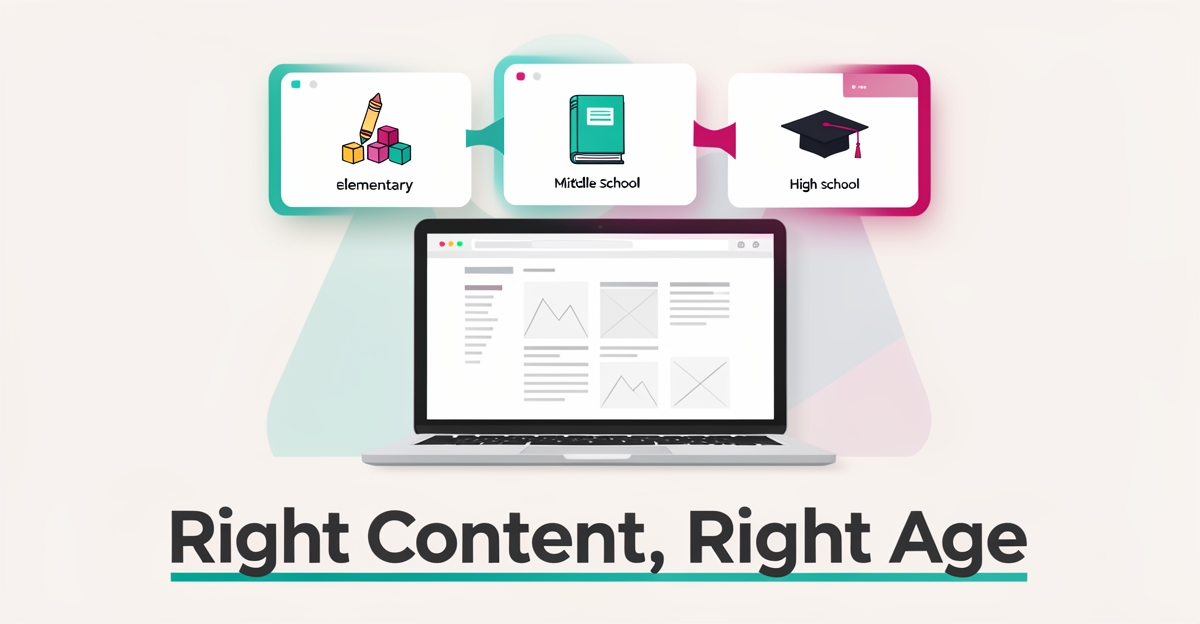
Parents searching for schools don't browse generically. An elementary parent worries about phonics programs and playground safety. A middle school parent asks about STEM electives and social-emotional support. A high school parent needs college counseling data and AP pass rates. When a charter school's homepage leads with "college readiness" for a kindergarten search, that parent bounces. Trust evaporates in seconds.
- Elementary parents prioritize safety, literacy foundations, and nurturing environments
- Middle school parents seek academic exploration, extracurricular breadth, and transition support
- High school parents demand college outcomes, career pathways, and advanced coursework
The stakes are real. Hispanic student enrollment in charter schools surged 18.69% over five years, signaling intense competition for diverse families. Yet a 50% enrollment shortfall can reduce monthly allocations to zero by January, making every lost prospect a financial wound. Schools invest in buildings and teachers but leave their digital front door locked to the very families they serve.
AI Business Sites sees this pattern across local service industries: generic content ranks, but specific content converts. The same principle applies to charter schools. Dynamic content that adjusts messaging based on the age group a parent is researching — showing phonics data to a kindergarten parent, robotics clubs to a sixth-grade parent — builds relevance instantly. It's not personalization for novelty. It's personalization because parents make enrollment decisions on trust, and trust starts with feeling understood.
What the Data Reveals About Parent Search Behavior
What the Data Reveals About Parent Search Behavior
As charter schools navigate the competitive landscape of educational choice, a critical aspect of their online strategy remains overlooked: the precision of messaging tailored to the age group of prospective students. Recent data sheds light on enrollment trends and financial risks, underscoring why age-appropriate content is no longer just a branding nicety, but a revenue-critical issue.
Charter schools have seen a 6.1% annual enrollment increase in North Carolina, with Hispanic student enrollment surging by 18.69% over five years, outperforming district schools in key subject areas. However, these schools also face significant financial challenges, particularly from enrollment shortfalls, which can drastically reduce monthly allocations, highlighting the urgent need for effective recruitment strategies.
A glaring gap in current strategies is the lack of age-appropriate online content. While there's no direct research linking this to charter school enrollment, indirect inferences from successful personalized learning initiatives using AI suggest a potential game-changer. For instance, AI's role in personalized learning, projected to reach a $25.7 billion market by 2030, indicates its transformative potential in education, potentially extending to marketing efforts.
- Demographic Insight: Leverage the growing trend of Hispanic enrollment (up by 18.69%) with culturally and age-relevant content.
- Financial Prudence: Mitigate enrollment shortfall risks (which can reduce allocations to $0) by enhancing online appeal with targeted messaging.
- Innovation Opportunity: Apply AI-powered personalization, successful in learning contexts, to dynamically adjust website content for different age groups, a strategy that could naturally align with the capabilities of platforms like those offered by AI Business Sites, which integrate dynamic content generation for enhanced user experience.
By addressing the knowledge gap with targeted research and implementing AI-driven content personalization, charter schools can not only enhance their online visibility but also ensure their messaging resonates deeply with prospective families, directly impacting enrollment and, by extension, revenue stability. This approach, focusing on precision and personalization, can help charter schools stand out in a competitive market and build trust with their target audience.
Local business: doing this the old way?
One system replaces the whole pile.
All of it — the website, the follow-up, the content, the leads — built and run for you for $1,497 + $497/mo. Month-to-month, and you own everything.
See what your build includesWhy AI-Powered Content Personalization Closes the Gap
Here is the written section "Why AI-Powered Content Personalization Closes the Gap" based on the provided guidelines and research data:
Charter schools face a critical challenge in attracting prospects due to mismatched online content, where adult-level language often fails to resonate with parents of elementary, middle, or high school students. This disconnect can lead to lost interest and enrollment opportunities. However, a solution lies in leveraging technology that has already transformed the learning experience: AI-powered content personalization.
Tailoring the Message, Automatically AI-driven personalization has revolutionized K-12 learning by dynamically adjusting educational content to individual student needs as seen in successful implementations across classrooms. Applying this same principle to charter school websites can bridge the content gap. By integrating AI, these schools can automatically adjust their website messaging based on the age group of the student being researched, ensuring relevance and trust with potential enrollees.
Statistics Supporting Personalization
- Enrollment Growth with Personal Touch: While direct data on content personalization in charter school marketing is lacking, the growth trends suggest that tailored approaches work. For instance, Hispanic student enrollment in charter schools has shown an 18.69% increase over five years demonstrating the power of targeted strategies.
- AI Market Validation: The broader education sector validates AI's potential, with the AI-powered learning market projected to reach $25.7 billion by 2030 indicating a clear trend towards personalized experiences.
Actionable Benefits for Charter Schools
- Enhanced Relevance: Content automatically tailored to the age group of the student, increasing parental engagement.
- Trust and Credibility: Consistent, age-appropriate messaging reinforces the school's understanding of family needs.
- Conversion Optimization: Reduced manual effort in content curation, with AI ensuring always-relevant information for prospects.
At AI Business Sites, we recognize the importance of a website that not only attracts but also adapts to its audience, a capability that aligns with our approach to building sites that "run themselves" through AI integration. By adopting AI-powered content personalization, charter schools can effectively close the gap between their online presence and the diverse needs of prospective families, potentially bolstering enrollment in a competitive educational landscape.
How to Implement Age-Appropriate Content at Scale
Many charter schools unknowingly push families away with content that doesn’t match the developmental stage of the student being researched—like using college-prep jargon for parents of kindergarteners. This mismatch creates friction at the very first touchpoint, eroding trust before a conversation even begins. The solution lies in deploying AI-generated, age-segmented content that adapts in real time to the visitor’s intent, turning static pages into dynamic enrollment tools.
AI Business Sites enables this shift through its integrated content engine, which researches, writes, and publishes new service and location pages monthly—each grounded in the school’s actual programs and geographic footprint. These pages are automatically interlinked to build topical clusters that Google rewards, eliminating the need for manual SEO work. For charter schools, this means a parent searching for “elementary STEM programs in Atlanta” lands on a page written in clear, engaging language suited to early learners, complete with local references and internal links to related middle or high school pathways.
The system scales effortlessly: once age-based content templates are set for elementary, middle, and high school levels, the AI generates localized variations across all service areas without additional effort from-same-page duplication. Older content is refreshed with links to newer pages, and outdated material is sunsetted automatically—keeping the site’s structure clean and authoritative. This continuous optimization supports local search visibility while ensuring relevance for every family, regardless of grade level or location.
Personalized content increases engagement, and in education, relevance builds trust faster than generic messaging ever could. With Hispanic student enrollment in charter schools growing 18.69% over five years, tailoring online experiences to diverse family needs isn’t just thoughtful—it’s strategic. Schools that fail to align content with developmental stages risk losing prospects to competitors who speak directly to their concerns.
AI-powered personalization, already transforming classroom learning through adaptive instruction (research shows its impact in K–12 settings), can now extend to marketing—ensuring every webpage meets families where they are. By automating age-appropriate content at scale, charter schools reduce manual workload while improving conversion: a website that evolves with its audience becomes a silent enrollment agent, working 24/7 to attract, inform, and convert the right families.
FOR local businesss — BUILT AND RUN BY US
Your website. Your content. Your leads. Your data.
$500 starts your build. Seven days later it's live — chat, booking, follow-up, and your Google presence all set up. Then we run it, every month. You do the work you actually get paid for.