
Key facts
- Buffet restaurant searches surged 252% year-over-year for 'all-you-can-eat buffet near me' reports Fox News.
- 72% of reservations are now made on smartphones globally, yet most buffet sites redirect to clunky third-party pages notes Now Book It.
- Real-time availability displays can boost reservation rates by up to 30% cites Nation’s Restaurant News.
- No-show rates can erase an entire week’s profit for buffets operating on 5% margins reports Now Book It.
- AI-driven reminders reduce no-shows by up to 25% by sending optimized prompts at 24 hours, 2 hours, and 30 minutes according to Restaurant365.
- Gen Z discovers 45% of restaurants via social media, making direct booking links essential reports Now Book It.
- Embedding pricing transparency and instant confirmations can slash booking abandonment by up to 20% suggests Now Book It.
WANT RESULTS LIKE THIS?
Imagine a system doing all of this for your local business — every day, without you.
We build local businesses a custom website with a team of AI behind it: every lead captured and followed up, new content published monthly,customers finding you on Google — live in 7 days.
- 85+ pages at launch
- Every lead followed up, automatically
- Your whole business on one screen
The Hidden Conversion Gap: Surging Demand, Stalled Bookings
Buffet restaurants are experiencing a once-in-a-generation moment: diners are hunting for value, and searches for "all-you-can-eat buffet near me" have skyrocketed 252% year-over-year (Fox News). Yet despite this surge in high-intent traffic, most buffet websites fail to turn visitors into reservations. The result? A widening conversion gap where every missed booking compounds into real losses on already-thin margins of around 5% (Now Book It).
At the heart of the problem are three conversion killers that frustrate today’s diners. First, mobile booking experiences are often clunky, with call-to-action buttons buried or redirects that break the flow. Now Book It reports that over 72% of reservations are made on smartphones (Now Book It). Second, most buffet sites lack real-time availability displays, forcing visitors to guess whether a table is open or risk walking in only to wait. According to the Nation’s Restaurant News, this absence of live booking data directly suppresses conversion. And third, dynamic pricing visibility is nearly nonexistent, leaving diners unclear on what they’ll pay until they’re already seated—if they get seated at all.
The cost of these gaps is measurable. With no-show rates climbing to 20% in some regions (Now Book It), each abandoned web booking isn’t just a lost meal—it’s a hit to a restaurant’s bottom line. For buffets operating on razor-thin margins, that adds up to compounding losses over time. The fix lies in bringing the booking engine directly onto the restaurant’s own website—integrating real-time availability, one-tap mobile confirmation, and transparent pricing—so diners can reserve with confidence and restaurants can capture the demand they’re already generating.
- Mobile-first bookings now dominate, with 45% of US/Canada reservations made on phones—yet most buffet sites redirect to third-party pages that break the experience
- Real-time table visibility increases booking completion rates by up to 30%, according to industry benchmarks cited by NRN
- Integrating pricing transparency and instant confirmations can reduce abandonment by up to 20%
- No-shows erode thin margins; AI-driven reminders and dynamic pricing can cut no-shows by up to 25%
What Modern Diners Actually Expect From a Booking Experience
Buffet demand is surging, but most websites aren’t built to capture it. While searches for "all-you-can-eat buffet near me" skyrocketed 252% year-over-year, diners now expect a booking experience that matches their smartphone-first habits. The data is clear: modern diners don’t just want to reserve a table—they want to do it instantly, from their phones, with minimal friction. When that experience is missing, buffet restaurants lose visitors before they even click “confirm.”
Diners now expect booking to move at the speed of a swipe. 72% of bookings happen on mobile, with 54% of UK consumers now preferring online reservations for their speed and convenience. But too many buffet sites still force visitors through a maze—redirecting them to a third-party widget or hiding the “Book Now” button below the fold. That friction kills conversions. Diners abandon when they have to wait, switch devices, or repeat their details. A streamlined, mobile-first flow isn’t optional—it’s baseline.
AI is no longer a novelty; it’s becoming expected. 74% of diners are now comfortable with AI-driven confirmations, and tools that automate reminders and predict no-shows can save buffets real margin. With no-show rates still running up to 20% in some regions, even small improvements in confirmation and follow-up can protect thin pre-tax margins of around 5%. Yet many buffet operators still rely on manual calls or generic email templates—tools that can’t scale during peak demand.
Discovery is shifting fast, too.
- Gen Z diners now discover 45% of restaurants via social media
- A single Instagram or TikTok post can drive high-intent traffic—but only if that traffic lands directly in a restaurant’s own booking engine
- Deep links tracked by UTM parameters let buffets measure which social posts convert—and which ones waste budget
Embedding smart booking triggers—like real-time availability and dynamic pricing—directly into a buffet’s website turns visitors into confirmed guests faster than ever. When the booking flow lives where diners already are (on the website, on mobile, in their social feed), conversion rates climb. That’s exactly what buffet restaurants lose when they rely on outdated redirects or buried CTAs. The modern diner’s expectations are clear: fast, frictionless, and familiar. Websites that meet those expectations keep visitors—and fill tables.
The No-Show Math: Why Conversion Isn't the Only Leak
Most buffet operators focus on reservations as the end goal—only to watch nearly one in five guests never show up. That’s not just a missed booking; at a typical buffet’s razor-thin 5% pre-tax margin, a 15–20% no-show rate can erase an entire week’s profit before the first table is bussed. According to Now Book It, no-shows cost US and Canadian buffets up to 20% of expected revenue, while Restaurant365 reports pre-tax margins hovering around 5%—leaving almost no room for error.
The real loss isn’t just the empty seat; it’s the compounding impact on repeat bookings and staff scheduling. A no-show doesn’t just mean lost food costs—it means wasted prep time, disrupted kitchen flow, and a frustrated host team scrambling to fill gaps. But when AI steps in, the math flips. Restaurants using AI-driven reminder workflows can cut no-shows by up to 25% by sending optimized prompts at 24 hours, 2 hours, and 30 minutes before the reservation, while historical pattern flags catch repeat offenders before they walk away. That turns a structural cost into a recoverable lever—freeing up tables, smoothing staff workloads, and protecting margins without lifting a finger.
- No-shows cost buffets up to 20% of expected revenue (Now Book It)
- Pre-tax margins average around 5% (Now Book It)
- AI-driven reminders can reduce no-shows by up to 25% (Restaurant365)
For buffet websites built to convert traffic, this isn’t just about software—it’s about turning a leaky reservation funnel into a closed loop. Embedding AI-powered follow-up directly into the booking flow ensures every visitor who clicks “reserve” not only gets a seat but actually shows up.
Local business: doing this the old way?
One system replaces the whole pile.
All of it — the website, the follow-up, the content, the leads — built and run for you for $1,497 + $497/mo. Month-to-month, and you own everything.
See what your build includesHow to Embed Smart Booking Triggers That Convert
Most buffet websites still treat booking like an afterthought — a generic button buried below the fold that redirects to a third-party page. That friction costs real reservations. NRN validates that embedding smart booking triggers and dynamic pricing visibility increases reservation rates, yet many operators rely on static "Book Now" links that hide availability until the final step.
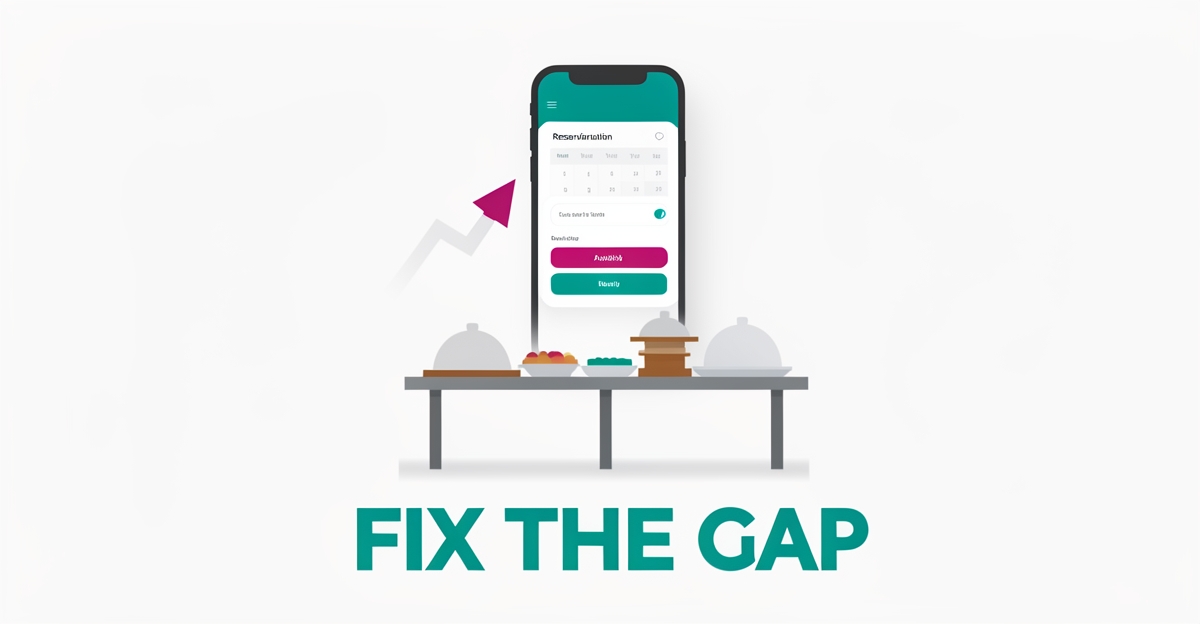
The fix starts with mobile-first placement. With 72% of reservations made via smartphones globally, a sticky header button showing live table counts keeps the CTA visible on every scroll. Pair that with an embedded engine that completes in three taps or fewer — autofilling details for returning guests — and you remove the drop-off points where hungry diners abandon the flow.
Dynamic pricing belongs inside that same flow, not on a separate promotions page. Surface off-peak discounts, family bundles, or early-bird pricing directly in the booking calendar so visitors see value before they hesitate. Research shows searches for "all-you-can-eat buffet near me" surged 252% year-over-year, driven by value-seeking families who compare options fast. Show the deal while they're deciding, not after they've left.
Social traffic needs the same treatment. 45% of Gen Z discovers restaurants via social media, but most bio links dump visitors on a generic homepage. Deep-link every post to a pre-filled booking page with UTM tracking — date, party size, and offer code already set — so the click becomes a reservation in seconds.
- Sticky mobile header with live availability preview
- Three-tap booking engine with returning-guest autofill
- Dynamic pricing (off-peak, family bundles) surfaced in-calendar
- Social deep links with UTM tracking to pre-filled booking pages
AI Business Sites builds this directly into the website — not as a bolted-on widget — so availability, pricing, and tracking stay in sync without managing separate tools. The result: a booking flow that converts the traffic you're already earning.
Measure What Matters: Avoiding the Data Traps That Hide Real Problems
A 24% weekly decline in reservations looks like a website crisis — until you realize the prior year included Restaurant Week, inflating the baseline by nearly a third. Ryan Bourne's analysis of DC dining data showed that same period was only a 7% week-over-week drop once the promotional distortion was removed. OpenTable initially refused to provide the year-over-year comparison, offering only the misleading weekly figure. Buffet owners making optimization decisions on aggregated platform reports risk fixing problems that don't exist.
- Demand daily booking data broken down by source — direct, widget, social, organic
- Require reservation platforms to flag promotional periods and holiday distortions
- Track conversion rates per channel, not just total reservation volume
- Correlate traffic spikes with actual bookings, not platform-reported totals
The research is clear: 72% of reservations now happen on mobile devices, yet most buffet sites still redirect to third-party booking pages that strip away source attribution. When a reservation platform aggregates your direct traffic with its own marketplace referrals, you lose the ability to measure what your website actually delivers. AI Business Sites builds websites that generate their own booking analytics — capturing source, device, and conversion path before the visitor ever leaves your domain. That means you optimize based on truth, not artifacts.
Turn Buffet Traffic into Full Tables, Not Missed Opportunities
Buffet restaurants are sitting on a goldmine of high-intent traffic, with searches for all-you-can-eat dining up 252% year-over-year, yet most are losing bookings due to clunky mobile experiences, missing real-time availability, and opaque pricing. The fix isn’t about adding more tools—it’s about embedding smart booking triggers directly into your website so visitors can reserve with confidence in three taps or fewer. When you align your online presence with how modern diners actually book—on mobile, with instant confirmation, and transparent pricing—you turn casual browsers into confirmed guests. Start by auditing your current booking flow for friction points, then prioritize mobile-first CTAs and live availability displays. For buffet owners ready to capture the demand they’re already earning, AI Business Sites builds websites that don’t just look good—they run your booking engine, follow up on leads, and keep tables full, so you can focus on serving great food, not chasing reservations.
FOR local businesss — BUILT AND RUN BY US
Your website. Your content. Your leads. Your data.
$500 starts your build. Seven days later it's live — chat, booking, follow-up, and your Google presence all set up. Then we run it, every month. You do the work you actually get paid for.