
Key facts
- The global bricks and blocks market is valued at USD 360 billion according to industry outlook data.
- Bricks command 81.6% market share in concrete block and brick manufacturing per market research analysis.
- By 2024, 56.2% of the global population will live in urban areas driving renovation demand.
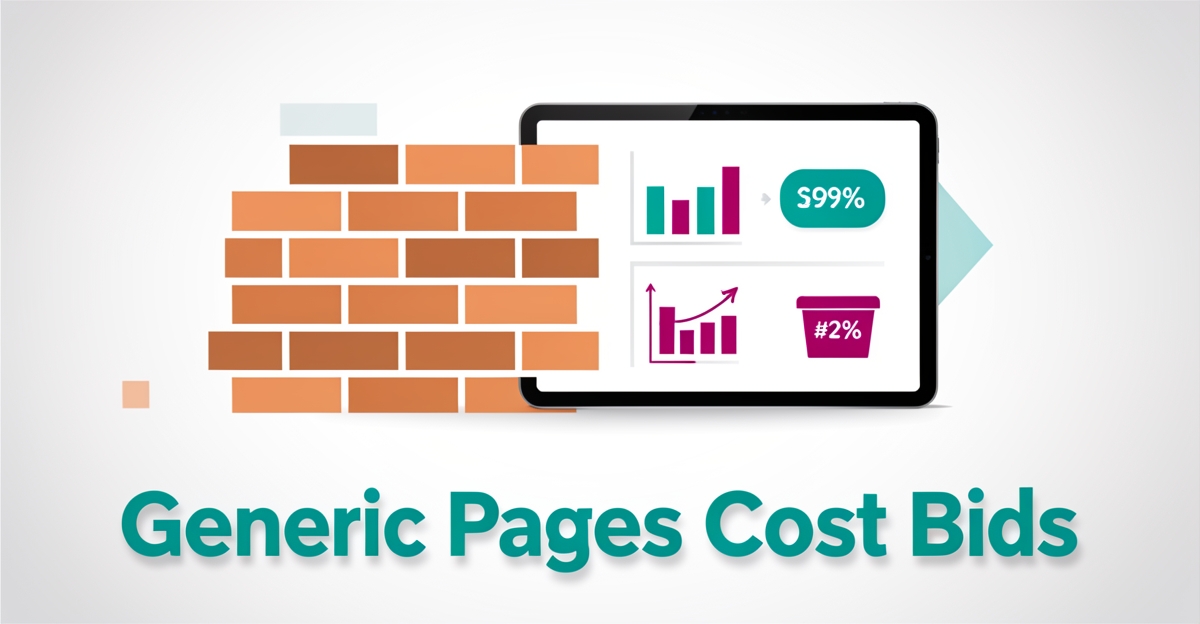
- Generic product pages lack regional pricing, real-time stock, and sustainability specs that architects need to bid confidently.
- AI-generated product pages dynamically display live inventory, location-based pricing, and environmental certifications automatically.
- Architects require four data points before specifying: regional pricing tiers, live inventory, low-carbon certifications, and logistics proximity data.
- AI Business Sites builds websites that pull live ERP data into product pages so stock levels and pricing update without manual effort.
WANT RESULTS LIKE THIS?
Imagine a system doing all of this for your local business — every day, without you.
We build local businesses a custom website with a team of AI behind it: every lead captured and followed up, new content published monthly,customers finding you on Google — live in 7 days.
- 85+ pages at launch
- Every lead followed up, automatically
- Your whole business on one screen
The Hidden Cost of Generic Product Pages in Brick Bidding
The Hidden Cost of Generic Product Pages in Brick Bidding
In the highly competitive $360 billion bricks market, where bricks hold a dominant 81.6% share, manufacturers are inadvertently losing high-value projects due to a overlooked flaw: generic product pages. These standardized listings fail to cater to the nuanced needs of architects and contractors, who require region-specific pricing, real-time stock data, and detailed sustainability specifications to submit competitive bids.
A recent study highlights the growing demand for sustainable, eco-friendly materials, with governments increasingly enforcing regulations that favor low-carbon bricks. Moreover, the industry's urbanization-driven growth, expected to see 56.2% of the global population in urban areas by 2024, further emphasizes the need for tailored product information. Generic pages, however, fall short in addressing these demands, leading to missed bidding opportunities.
-
Lack of Regional Pricing Transparency: Architects and contractors often seek suppliers who can offer competitive, regionally adjusted pricing. Generic pages fail to provide this crucial detail, hindering the ability to make informed bidding decisions.
-
Outdated Stock Information: The absence of real-time stock updates on generic pages can lead to bids based on incorrect assumptions about product availability, potentially resulting in failed bids or last-minute scrambles for alternatives.
-
Insufficient Sustainability Specs: With eco-friendly materials in high demand, generic pages that do not highlight sustainability features (e.g., recycled content, low-carbon production methods) miss a critical selling point, alienating environmentally conscious bidders.
Brick manufacturers can turn the tide by adopting AI-generated, customizable product pages. These pages can dynamically reflect:
- Real-time stock levels to ensure accuracy
- Region-specific pricing for competitiveness
- Detailed sustainability features to appeal to eco-conscious bidders
By integrating such tailored information, manufacturers can significantly enhance their bidding success rates. For instance, AI-driven bidding strategies can analyze market trends, optimize pricing, and assess risks more effectively than generic approaches, as noted in insights on AI in construction bidding.
For brick manufacturers aiming to dominate online bids, the strategy is clear:
- Embrace AI-Driven Customization: Transition from one-size-fits-all product pages to AI-generated, dynamic content.
- Highlight Sustainability: Ensure all product pages prominently feature eco-friendly attributes.
- Optimize for Regional Needs: Use data to tailor pricing and stock information by region.
In doing so, manufacturers can transform their online presence from a liability into a powerful bidding tool, capitalizing on the market's $360 billion potential and the dominant 81.6% brick market share. As industry research underscores, the future of brick manufacturing lies in automation and AI integration, making now the optimal time to adapt.
With AI Business Sites, manufacturers can leverage bespoke website solutions that integrate these strategies seamlessly, ensuring their online platform becomes a bidding powerhouse rather than a passive catalog.
What Bid Decision-Makers Actually Need to See
Architects and contractors don't specify brick products based on glossy brochures — they need verifiable data that lets them commit to a bid with confidence. A market outlook report shows that 56.2% of the global population now lives in urban areas, driving renovation demand that makes regional precision non-negotiable.
Decision-makers require four specific data points before they'll lock in a product: regional pricing tiers that reflect local market conditions, live inventory levels so they can schedule deliveries without guesswork, low-carbon certifications that satisfy tightening regulations, and logistics proximity calculations that keep projects on timeline and budget. Generic pages that list national averages or "contact for pricing" force specifiers to do the manufacturer's homework — and most won't bother.
- Regional pricing tiers tied to local distribution costs
- Real-time inventory by plant and yard location
- Verified low-carbon certifications (EPDs, HPDs, recycled content)
- Logistics proximity data — distance to site, lead times, freight options
When a contractor in Toronto needs 50,000 modular bricks for a mid-rise retrofit, they need to know which plant has stock this week, what the delivered price is to their postal code, and whether the product meets the project's embodied carbon target. Industry analysis confirms bricks hold 81.6% share in concrete block and brick manufacturing, but that volume means nothing if the specifier can't validate the details in the moment they're writing the spec.
AI Business Sites builds product pages that surface this data automatically — pulling from live inventory feeds, regional price matrices, and certification databases so every page reflects what's actually available, at the right price, for the right region. The result: specifiers get the confidence to name your product, and manufacturers win bids they never knew they were losing.
Local business: doing this the old way?
One system replaces the whole pile.
All of it — the website, the follow-up, the content, the leads — built and run for you for $1,497 + $497/mo. Month-to-month, and you own everything.
See what your build includesHow AI-Generated Product Pages Close the Bid Gap
The gap between what architects need and what generic product pages deliver isn't just a presentation problem — it's a bidding disadvantage. When a contractor searches for brick specifications at 6 p.m. on a Friday, they need real stock levels, regional pricing, and sustainability certifications that match their project requirements. Static listings frozen at last quarter's data force them to call, wait, and often move on to competitors who can answer instantly.
AI-generated product pages close this gap by pulling live inventory, location-based pricing, and environmental product declarations into every listing automatically. Research shows the global bricks and blocks market reached USD 360 billion, with bricks commanding 81.6% market share in concrete block and brick manufacturing. Yet most manufacturers still present the same generic catalog to every visitor, regardless of region or project type. By 2024, approximately 56.2% of the global population will live in urban areas, intensifying demand for locally sourced, sustainable materials that generic pages simply cannot reflect.
- Real-time stock levels that update automatically across all product pages
- Regional pricing adjusted for delivery zones, taxes, and local competition
- Sustainability credentials — recycled content, carbon footprint, EPDs — displayed prominently
- Technical specifications formatted for architect and engineer workflows
- Instant quote requests that route directly to the right sales team
The same digital transformation gap identified in construction bidding research applies directly to product presentation. As AI reshapes how contractors evaluate and submit bids, manufacturers whose product data feeds those systems gain a structural advantage. Pages that reflect current reality — not last year's brochure — become bid-ready assets that architects can specify with confidence. AI Business Sites builds this capability into the website itself, so product pages stay accurate without manual updates, turning every listing into a live sales tool that responds to the speed of the industry buyers trust.
From Generic to Competitive: Implementation Roadmap
Most brick manufacturers still rely on static product pages that show the same specs, pricing, and stock levels to every visitor — whether they're an architect in Toronto or a contractor in Dallas. That approach worked when bids happened over the phone, but today's specifiers expect real-time data that matches their project's location, timeline, and sustainability requirements. The global bricks and blocks market, valued at USD 360 billion, is increasingly driven by urbanization and infrastructure demand, with approximately 56.2% of the global population expected to live in urban areas by 2024. Generic pages can't keep pace.
- Connect live inventory feeds so specifiers see actual availability by plant and region
- Embed regional pricing logic that adjusts for freight, tariffs, and local market conditions
- Surface eco-certifications and carbon data dynamically based on the product variant
- Link product pages directly to bidding portals used by architects and GCs
- Automate content updates so new SKUs, plant openings, and sustainability credentials publish without manual effort
AI Business Sites builds this capability into the website itself — not as a separate tool, but as part of how the site operates day to day. When a manufacturer's ERP updates stock in Ontario, the product page for that region reflects it automatically. When a specifier in British Columbia searches for low-carbon brick, the page surfaces the right EPD documentation and regional pricing without a developer touching code. This is the same infrastructure that powers ongoing SEO content generation across service and location pages, ensuring every new product variant gets its own optimized, internally linked page at launch. The result: specifiers find accurate, bid-ready information the moment they land — and manufacturers capture more high-intent traffic that converts.
Frequently Asked Questions
Why are generic brick product pages causing manufacturers to lose online bids?
What specific data do architects and contractors need to see before they'll specify a brick product?
How do AI-generated product pages help brick manufacturers win more bids?
Is the $360 billion brick market growing, and does urbanization affect bidding requirements?
What's the implementation roadmap for moving from generic to competitive product pages?
Do brick manufacturers really need sustainability data on product pages to compete?
Key Takeaways
{ "title": "From Missed Bids to Market Dominance: The Brick Manufacturer's Digital Awakening", "content": "Brick manufacturers on the cusp of digital transformation can now bridge the gap between generic product pages and winning online bids. By embracing AI-generated, customizable product pages
FOR local businesss — BUILT AND RUN BY US
Your website. Your content. Your leads. Your data.
$500 starts your build. Seven days later it's live — chat, booking, follow-up, and your Google presence all set up. Then we run it, every month. You do the work you actually get paid for.