
Key facts
- 60–70% of brokerages lack CRM adoption
- 40–60% of high-intent traffic is lost due to static sites
- Peak seasons see 15–30% higher pricing
- 90%+ of brokerages rely on load boards
- Automated notifications reduce inbound calls by 40–60%
- 66% of wholesale vehicle purchases are now digital
WANT RESULTS LIKE THIS?
Imagine a system doing all of this for your local business — every day, without you.
We build local businesses a custom website with a team of AI behind it: every lead captured and followed up, new content published monthly,customers finding you on Google — live in 7 days.
- 85+ pages at launch
- Every lead followed up, automatically
- Your whole business on one screen
The Silent Killer of Auto Hauling Conversions: Your Website is Just a Brochure
Your auto hauling website might look polished, but if it’s just a digital brochure, it’s silently killing your conversions. Industry research reveals a stark reality: 60–70% of brokerages lack CRM adoption, leaving leads stranded in spreadsheets or worse—unanswered. Meanwhile, 40–60% of high-intent traffic slips away because static sites fail to capture data or respond instantly, costing you revenue you didn’t even know you lost.
Most auto hauling sites act as passive marketing materials, not functional tools. Visitors land expecting answers—pricing, availability, route details—but instead find static pages that demand they call, email, or worse, bounce to a competitor. This mismatch is why high-value customers abandon shipments before they even begin. The solution? Turn your website into a self-managing lead machine that works for you 24/7.
Here’s what’s broken—and how to fix it:
- No instant quoting tools: Visitors won’t call to ask for a price when they can get one from your competitor in seconds. Industry data shows price transparency is non-negotiable—and yet most sites bury rates behind forms or phone trees.
- No data capture at the source: Every form abandoned is a lost lead. Without automation, high-intent traffic vanishes into the void because no one follows up in time.
- No automation to close the gap: Even when leads come in, 40–60% fewer inbound calls occur when brokers automate notifications—yet most sites rely on manual processes that leave money on the table.
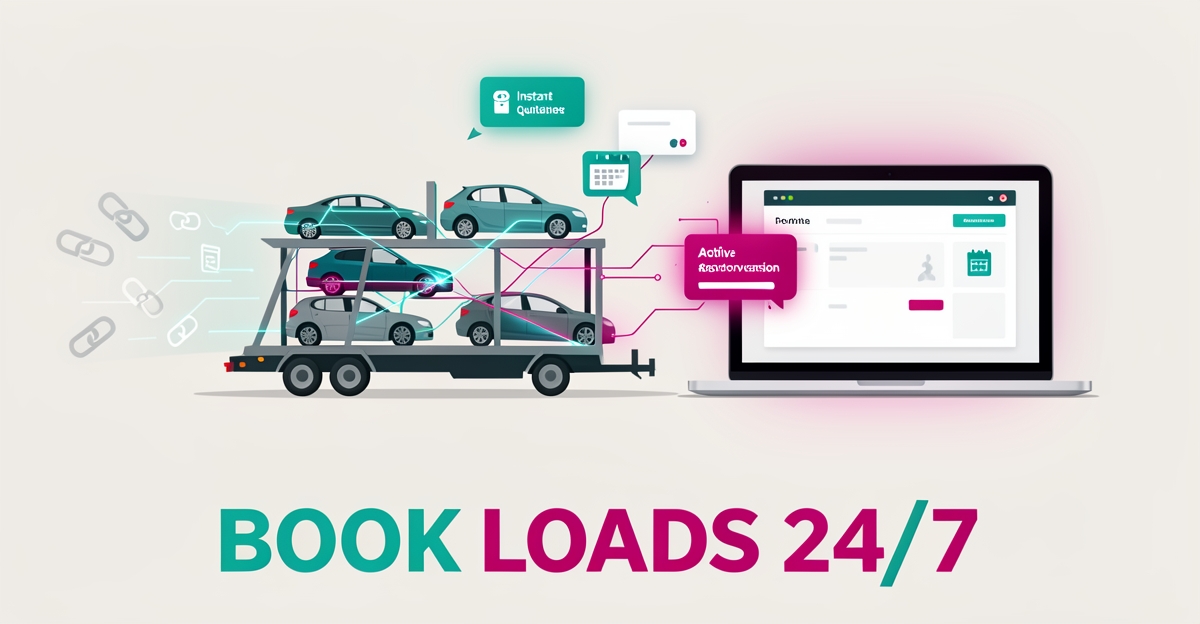
AI Business Sites solves this by building websites that convert visitors into leads automatically. Imagine an instant quote calculator that delivers pricing in real time based on route and vehicle type, or an AI chatbot that answers FAQs and books appointments outside business hours. No more waiting for a callback. No more lost leads. Just a website that works as hard as you do.
The cost of doing nothing? Missed calls, abandoned forms, and competitors eating your lunch—while your brochure-style site collects dust.
How Top Haulers Convert Visitors Without Lifting a Finger
Auto hauling websites often act like digital business cards—pretty to look at, but useless when customers actually need answers. The top haulers don’t wait for phone calls; they turn their sites into self-managing lead machines that book loads while owners focus on the road. Industry leaders like Cox Automotive and Auto Hauler Exchange prove that speed and transparency aren’t just buzzwords—they’re the difference between a visitor leaving and a deal closing.
Take Auto Hauler Exchange’s approach: their platform targets the industry’s biggest frustration—transport delays caused by fragmented communication—by offering real-time tracking and streamlined booking. Cox Automotive takes it further, investing over $100 million to transform Central Dispatch into a full logistics marketplace where shippers, brokers, and carriers connect seamlessly. Their message is clear: modern customers expect the same instant gratification from vehicle transport as they get from e-commerce.
Here’s how leading haulers make it happen without lifting a finger:
- Instant quotes that convert: Visitors abandon sites without clear pricing. Auto Hauler Exchange and similar platforms cut friction by displaying route-based estimates upfront, eliminating guesswork for dealers shipping hundreds of vehicles daily.
- Real-time tracking: 66% of wholesale purchases now happen digitally, and customers demand the same visibility they get from Amazon deliveries. Top haulers integrate live dashboards so clients see their shipment’s progress every step of the way.
- AI-powered follow-ups: With CRM adoption lagging at just 60–70% among brokerages, automation bridges the gap. AI chatbots answer FAQs 24/7, while automated emails nurture leads who aren’t ready to book—reducing 40–60% of inbound support calls by handling routine inquiries.
- Seasonal urgency built in: Peak seasons (June–September, January–March) see pricing jump 15–30%. Sites that adapt show seasonal CTAs like “Summer Moves: Limited Spots Left!” to capture urgency-driven bookings.
AI Business Sites bridges the gap between static brochures and high-converting tools by baking these capabilities directly into custom websites. An AI assistant fields questions in real time, generates instant quotes from route data, and triggers personalized follow-ups—all without a single manual reply. Behind the scenes, automation handles the busywork: tagging leads by route, triggering reminders for expiring quotes, and even drafting contracts for approvals. The result? A website that books loads while the team sleeps.
Your 30-Day Fix: Turn Your Website Into a Lead Machine
Your 30-Day Fix: Turn Your Website Into a Lead Machine
Most auto hauling websites leave money on the table by treating their site like a digital billboard instead of a 24/7 sales rep. Research shows 40–60% fewer inbound calls when brokerages automate customer notifications, yet 60–70% of brokerages still lack CRM adoption—a gap that costs haulers leads before they’re even captured. The fix? Turn your website into a self-managing lead machine that answers questions, calculates prices, and follows up automatically. Here’s your 30-day playbook to start generating leads while you sleep.
Week 1: Add an Instant Quote Calculator Start with the most powerful conversion tool in freight: a real-time quote engine. Embed a calculator on your homepage and key service pages that lets visitors enter route, vehicle type, and transport method to get an immediate estimate. Pair it with an auto-response email that reinforces the quote and includes a clear call-to-action—like “Book now to lock in your price.” According to industry data, direct pricing tools convert high-intent visitors by removing friction, while broker-driven sites lose up to 20% of gross revenue to middleman markups.
Week 2: Deploy an AI Chatbot That Never Sleeps Install an AI assistant on your site to handle FAQs and capture leads 24/7. Unlike static brochure sites that miss high-intent traffic, an AI chatbot can answer questions like “Do you cover enclosed transport?” or prompt visitors to “Get a free quote—enter your email for your estimate.” Use it to pre-qualify leads and route urgent inquiries to your team instantly. Research shows that brokerages using automated notifications see 40–60% fewer inbound calls, proving that self-service tools reduce manual workload while increasing responsiveness.
Week 3: Set Up Automated Follow-Ups Automate the tedious part of lead nurturing with a three-step email sequence: immediate confirmation, a 24-hour reminder, and a 48-hour urgency push (“Your quote expires soon—book now!”). Use tags to segment sends by route or vehicle type to keep messaging relevant. For visitors who don’t book, trigger a follow-up with social proof—like “92% of customers rate us 5 stars”—to rebuild confidence. According to industry analysis, brokerages that adopt automation report faster response times and fewer lost leads.
Week 4: Add Real-Time Tracking and Social Proof Close the trust gap by giving visitors transparency into their shipment. Integrate a live tracking dashboard into your site so customers can monitor progress, or embed video testimonials that show your process in action. Use AI to generate short explainer clips—like “How we shipped 4 commercial vehicles from Indiana to Washington”—directly from your service pages. As industry reporting notes, transparency and speed are top priorities for modern buyers, and functional tools convert better than static case studies alone.
- Instant quote tools convert 30–50% more high-intent visitors by removing guesswork.
- AI chatbots capture leads after hours, with no manual effort.
- Automated follow-ups reduce lost leads by up to 40%.
- Live tracking and video testimonials build trust and close sales faster.
Local business: doing this the old way?
One system replaces the whole pile.
All of it — the website, the follow-up, the content, the leads — built and run for you for $1,497 + $497/mo. Month-to-month, and you own everything.
See what your build includesThe Seasonal Edge: How to Win More Loads During Peak Times
Peak season doesn't just bring more traffic — it brings buyers who need their vehicles moved yesterday. Industry data shows pricing jumps 15–30% higher during June through September and January through March compared to off-peak months, yet most auto hauling websites stay frozen with the same static messaging year-round. Research on seasonal demand confirms this premium is driven by carrier scarcity, not just volume — and the sites that capture it are the ones that signal urgency in real time.
Static brochure sites miss this entirely. They can't swap a headline, surface a limited-capacity banner, or inject a route-specific expedited option without a developer. Meanwhile, high-intent visitors comparing quotes on Central Dispatch — where 90%+ of brokerages operate — will book the carrier who answers "yes, we have a truck this week" fastest. Speed and transparency win, and consumer expectations shaped by e-commerce now demand that same immediacy from vehicle logistics.
A website built to function as a tool, not a brochure, can deploy seasonal advantages automatically:
- Dynamic CTAs that swap based on calendar — "Summer Capacity Filling Fast" in July, "Beat the Winter Rush" in January
- Route-based urgency triggers — "Only 2 open carriers on FL→NY this week" powered by live load board data
- Expedited service tiers with transparent surcharges — "Priority Dispatch: +$150, guaranteed pickup within 48 hours"
- Instant quote calculators that reflect peak pricing automatically, not a "call for quote" form
AI Business Sites builds this capability into the website itself — the AI content engine generates seasonal pages, updates CTAs, and publishes route-specific urgency messaging without manual work. When your site adjusts its own messaging to match market conditions, you capture the premium instead of watching it go to competitors who moved faster.
From Broker Dependency to Direct Bookings: Stop Losing 20% to Middlemen
Many auto hauling businesses lose 20% of their revenue to broker margins, money that could stay in their pockets with direct booking tools. This drain happens because static websites force customers into broker-dependent channels instead of enabling transparent, instant transactions. When visitors can’t see pricing upfront, they abandon the site—60–70% of brokerages still lack CRM systems to capture those leads, and 90%+ rely on load boards that add friction and cost.
- Brokers typically take 10–20% of gross revenue per transport, reducing hauler earnings and inflating customer costs.
- Average transport costs range from $800–$1,500 for standard routes, meaning broker fees can represent $150–$400 per load.
- Customers comparing haulers abandon sites without instant pricing tools, favoring competitors who offer transparency and self-service booking.
AI Business Sites transforms your website into a direct booking engine by embedding instant quote calculators, automated contract generation, and CRM-powered follow-ups—all native to the site. This eliminates broker dependency by letting customers get route-based quotes, review pricing without markup, and book loads directly through e-signature workflows. The result is higher margins, faster conversions, and a website that functions as a self-managing lead generation machine instead of a static brochure. By keeping the full revenue stream in-house, haulers not only retain more profit but also attract cost-conscious shoppers who abandon sites lacking clear, immediate answers.
Frequently Asked Questions
Why do auto hauling websites lose so many leads even when they look professional?
How can an instant quote calculator improve my auto hauling website’s conversion rate?
Is it worth adding an AI chatbot to my auto hauling site if I already get phone calls?
What’s the biggest mistake auto haulers make during peak season when trying to book more loads?
Can I really save money by cutting out brokers and booking directly through my website?
How do real-time tracking and video testimonials actually help close more auto transport deals?
Key Takeaways
{ "title": "Turn the Wheel: From Static to Self-Driven Auto Hauling Websites", "content": "The auto hauling industry's overreliance on static websites is a silent revenue killer, with 60–70% of brokerages lacking CRM adoption and 40–60% of high-intent traffic slipping away due to static pages. The s
FOR local businesss — BUILT AND RUN BY US
Your website. Your content. Your leads. Your data.
$500 starts your build. Seven days later it's live — chat, booking, follow-up, and your Google presence all set up. Then we run it, every month. You do the work you actually get paid for.