
Key facts
- 80% of shoppers are willing to pay a 9.7% premium for sustainable goods according to PwC.
- 11-13 million refrigerated appliances reach end-of-life annually in the U.S. per the EPA.
- Over 50,000 large appliances enter Texas landfills monthly as reported by Frontier Waste Solutions.
- The home appliance recycling market will grow to USD 12 billion by 2035 per Wise Guy Reports.
- 40% of consumers evaluate production methods and recycling practices before buying according to PwC.
WANT RESULTS LIKE THIS?
Imagine a system doing all of this for your local business — every day, without you.
We build local businesses a custom website with a team of AI behind it: every lead captured and followed up, new content published monthly,customers finding you on Google — live in 7 days.
- 85+ pages at launch
- Every lead followed up, automatically
- Your whole business on one screen
The Transparency Gap Costing You Customers
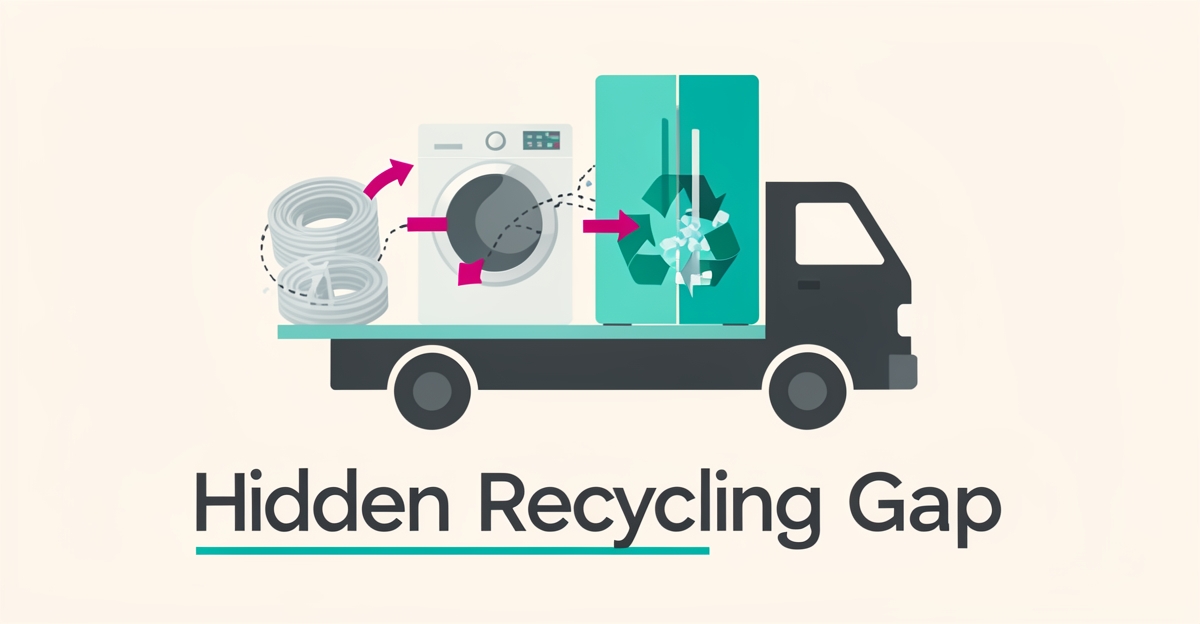
Most appliance removal websites list pickup fees and service areas but stay silent on what happens after the truck drives away. That silence is costing you leads.
Consumers now evaluate sustainability before they buy. According to PwC's 2024 Voice of Consumer Survey, 80% of shoppers are willing to pay a 9.7% premium for sustainable services, and 40% specifically assess production methods and recycling practices when choosing a provider. Yet most removal sites highlight regulatory compliance — like TCEQ rules — without showing the actual recycling journey.
The home appliance recycling market is projected to grow from USD 7.26 billion to USD 12 billion by 2035, driven by exactly this demand for transparency (Wiseguy Reports). Meanwhile, over 50,000 large appliances enter Texas landfills monthly (Frontier Waste Solutions), and 11–13 million refrigerated units reach end-of-life annually in the U.S. (EPA). Customers know the stakes. They want proof their old fridge won't join that pile.
When your website doesn't answer "what happens next?", prospects assume the worst and move to a competitor who does. The fix isn't complicated:
- A dedicated recycling process page with step-by-step visuals
- Photos or video from your partner facility showing material separation
- Clear language on refrigerant recovery, metal recycling, and landfill diversion rates
- Certifications and downstream vendor names, not just "we recycle responsibly"
AI Business Sites builds this transparency into the site structure from launch — dedicated service pages, FAQ-rich content for voice search, and automatic internal linking that connects your recycling story to every location and service page. The content engine then keeps it fresh with monthly updates grounded in your actual operations, not generic sustainability fluff.
Your recycling process is a competitive advantage. Your website should treat it like one.
What Customers Actually Want to See
Consumers don't just want their old refrigerator hauled away — they want proof it won't end up leaking refrigerant into a landfill. According to PwC's 2024 Voice of Consumer Survey, 80% of shoppers are willing to pay a 9.7% premium for sustainable goods, and 40% actively evaluate production methods and recycling practices before buying. That same scrutiny applies to the company picking up their appliances.
The EPA reports that 11–13 million refrigerated appliances reach end-of-life annually in the U.S., yet most removal sites show a pickup truck and a phone number — not what happens after the door closes. Customers now expect to see the full chain of custody: refrigerant recovery certification, foam insulation processing, metal separation rates, and final destination for each material stream. EPA disposal guidelines require certified technicians and documented recovery, but compliance certificates buried in a footer don't build trust. Visible, step-by-step documentation does.
- A dedicated recycling process page with photos or video of each stage — pickup, transport, facility intake, material separation
- Material recovery rates by category (steel, copper, aluminum, plastics, refrigerants) updated quarterly
- EPA Section 608 certification proof and state-level compliance documentation linked directly from the service page
- Downstream vendor names for each material stream so customers can verify end markets themselves
- Carbon offset or emissions avoidance calculations tied to each appliance type removed
Market research projects the appliance recycling sector will grow from USD 7.26 billion to USD 12 billion by 2035, driven largely by sustainability demand. Businesses that treat recycling transparency as a content strategy — not a compliance checkbox — capture that growth. AI Business Sites structures these details into service-area pages that rank for "eco-friendly appliance removal" and "certified refrigerant recovery" searches, turning regulatory proof into lead generation. The website becomes the evidence customers look for before they book.
Local business: doing this the old way?
One system replaces the whole pile.
All of it — the website, the follow-up, the content, the leads — built and run for you for $1,497 + $497/mo. Month-to-month, and you own everything.
See what your build includesStructuring Your Site to Show the Full Process
Consumers want to know what happens to their old appliances after pickup—how they’re recycled, safely, and sustainably. This guide explains how to structure your site to answer that question clearly and naturally, with the AI Business Sites platform helping generate SEO-optimized, transparent content.
Dedicated recycling process pages build trust by showing exactly how appliances are handled from collection to material recovery. Start with a clear, step-by-step breakdown of your workflow—pickup, transportation, decontamination, dismantling, and recycling of metals, plastics, and refrigerants. Pair each step with simple icons or short captions to make the process easy to follow at a glance. This level of detail meets rising consumer expectations, as 80% of shoppers say they’re willing to pay more for sustainable goods, and 40% specifically evaluate production methods and recycling when assessing eco-friendliness according to PwC’s 2024 Voice of Consumer Survey.
Enhance understanding with custom infographics that visualize the journey of a refrigerator, washing machine, or air conditioner through your facility. Use before-and-after visuals to show material separation—like copper wiring extracted from compressors or foam insulation processed for safe disposal. These graphics not only educate but also improve engagement, keeping visitors on the page longer—a signal search engines use to assess content quality. For local relevance, include location-specific disposal data, such as noting that over 50,000 large appliances enter Texas landfills monthly, highlighting the importance of responsible alternatives as reported by Frontier Waste Solutions.
Finally, strengthen your site’s SEO with structured data markup that highlights your recycling process. Implement FAQ schema for common questions like “What happens to Freon in old refrigerators?” or “Are appliance parts reused in new products?” and use HowTo schema to outline your recycling steps. This helps search engines understand and feature your content in rich results, capturing traffic from high-intent searches like “eco-friendly appliance removal” in a market projected to grow from $7.26 billion in 2024 to $12 billion by 2035 per Wise Guy Reports. By combining transparent process pages with smart technical optimization, you turn sustainability into a visible, searchable advantage—without needing to overhaul your entire site.
Turning Transparency Into Local Search Authority
Consumers increasingly demand transparency in sustainability practices, with 80% willing to pay more for sustainable goods and 85% experiencing climate change impacts firsthand. For appliance removal businesses, clearly documenting what happens after pickup isn’t just ethical—it’s a strategic opportunity to build trust and visibility. When businesses share their recycling process online, they create content that answers real customer questions while signaling relevance to search engines.
Publishing detailed recycling documentation establishes topical authority around sustainability, a growing focus in local search. Pages that explain step-by-step processes—from appliance pickup to material recovery—naturally incorporate long-tail keywords like "eco-friendly appliance removal" and "sustainable recycling practices," which align with rising consumer demand. This approach captures intent-driven traffic from users actively seeking responsible disposal options, especially as the home appliance recycling market expands toward a projected USD 12 billion by 2035.
Transparent process pages also form the foundation of effective internal linking structures. When an AI-powered content system generates new blog posts or service pages about appliance removal, it can automatically link to and from these sustainability resources, reinforcing topical clusters without manual effort. Over time, this creates a self-optimizing site architecture where older content gains relevance through connections to newer, detailed process explanations—exactly the kind of signal Google rewards with improved rankings.
For local businesses, this transparency directly enhances Google Business Profile relevance. When a website consistently publishes accurate, detailed information about recycling practices, it reinforces the business’s expertise in sustainable services—a key factor in local search visibility. Combined with accurate GBP optimization, this alignment between on-site content and business profile strengthens the likelihood of appearing in map packs and local results for sustainability-related queries.
Moreover, documenting the recycling process feeds automated content systems that keep sustainability pages current. An AI content engine can pull from verified process documentation to generate updated blog posts, FAQs, or location-specific recycling guides without requiring manual research. For example, if a business updates its material recovery partnerships, the system can reflect those changes across related pages, ensuring accuracy while reducing administrative burden. This creates a cycle where transparency-to-rank model: clear process documentation enables ongoing, SEO-optimized content that maintains relevance and authority.
Businesses that leverage this approach turn what could be a static compliance disclosure into a dynamic asset for local search. By grounding every update in verified operational details—such as the fact that 11–13 million refrigerated appliances reach end-of-life annually in the U.S.—they build credibility with both customers and search algorithms. The result is a website that doesn’t just inform but actively improves its own visibility over time, all while meeting the growing demand for honest, sustainable service.
Frequently Asked Questions
Why don't most appliance removal websites show what happens after pickup?
What percentage of consumers are willing to pay more for sustainable appliance removal services?
How many large appliances end up in Texas landfills each month?
What should I look for on a removal site to verify they actually recycle appliances responsibly?
Is it true that most refrigerated appliances in the U.S. are properly recycled at end-of-life?
How can showing my recycling process help my appliance removal business rank better in local search?
Key Takeaways
{ "title": "Unlock the Value of Transparency: Why Your Appliance Removal Business Can’t Afford to Stay Silent", "content": "The transparency gap in appliance removal businesses is not only costing leads but also undermining trust in an era where 80% of consumers prioritize sustainability, willin
FOR local businesss — BUILT AND RUN BY US
Your website. Your content. Your leads. Your data.
$500 starts your build. Seven days later it's live — chat, booking, follow-up, and your Google presence all set up. Then we run it, every month. You do the work you actually get paid for.