
Key facts
- The global generator market is projected to reach $67.45 billion by 2034, growing at a 4.96% CAGR from 2025 according to Precedence Research
- Hybrid generator systems reduce fuel consumption by 15–25% and are the fastest-growing segment in the market per Precedence Research
- Digital tool deployment in generator services is expected to grow at a 4.7% CAGR through 2034 as forecast by Frost & Sullivan
- Commercial and industrial clients represent 35% of generator market demand, with data centers being the fastest-growing application segment per Precedence Research
- Asia Pacific holds 35% of the global generator market share, making local SEO and Google Business Profile optimization critical according to Precedence Research
- Predictive maintenance powered by IoT and AI can reduce downtime by approximately 30% and extend equipment life by 20–40% per Precedence Research
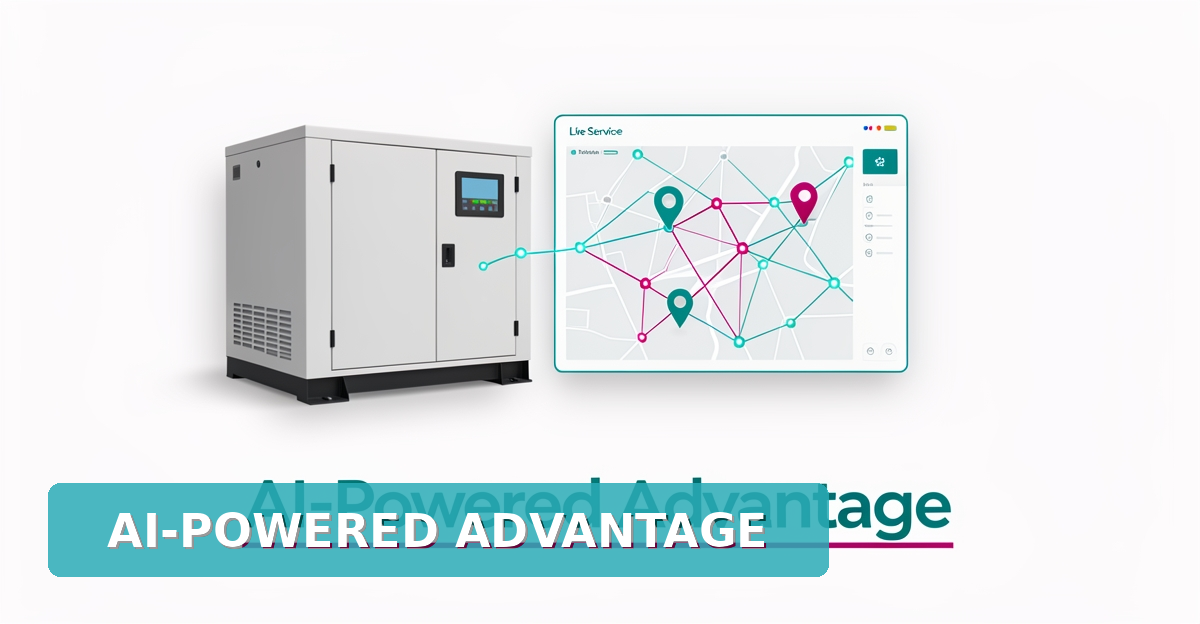
- AI-driven contact routing matches emergency calls to technicians by skill, location, and equipment type, improving response times for hybrid and data center systems based on Frost & Sullivan insights
WANT RESULTS LIKE THIS?
Imagine a system doing all of this for your local business — every day, without you.
We build local businesses a custom website with a team of AI behind it: every lead captured and followed up, new content published monthly,customers finding you on Google — live in 7 days.
- 85+ pages at launch
- Every lead followed up, automatically
- Your whole business on one screen
The Hidden Costs of Fragmented Digital Presence in Generator Services
Most generator service companies still run on a patchwork of disconnected tools — a brochure website here, a scheduling app there, a separate CRM, and a phone line that goes to voicemail after hours. That fragmentation isn't just inconvenient; it's costly. While the global generator market surges toward $67.45 billion by 2034, service providers stuck with siloed systems lose leads, miss emergency calls, and struggle to demonstrate the digital capabilities that commercial and data-center clients now expect.
The industry itself is sounding the alarm. Frost & Sullivan's Lucrecia Gomez warns that manufacturing quality generators alone won't sustain long-term success — companies must deliver technology-driven services like fuel monitoring, asset tracking, and remote diagnostics. Digital tool deployment in the sector is projected to grow at a 4.7% CAGR through 2034, yet many service websites still function as static brochures rather than operational hubs.
- Emergency calls route to the wrong technician or sit unanswered after hours
- Service maps and technician locations exist only in spreadsheets, not on the website
- Follow-up on commercial leads happens days later — if at all
- Content for hybrid-system maintenance and data-center SLAs never gets written
- Google Business Profile and local search presence go unmanaged
These gaps matter because commercial and industrial clients represent 35% of market demand, and data centers — the fastest-growing segment — require Tier 3/Tier 4 compliance proof and 24/7 emergency SLAs. A website that can't display real-time service coverage, route an emergency to a certified hybrid-system technician, or auto-generate localized content for those high-value segments isn't just a marketing liability; it's a revenue leak.
AI Business Sites builds custom websites that close these gaps by design — integrating service maps, AI-driven contact routing, automated follow-up, and ongoing SEO content generation into a single platform the business owner actually controls. The result is a digital presence that feels responsive, local, and trustworthy without the owner managing a dozen separate tools.
Solving the Puzzle: Key Features of an Effective All-in-One Website
Solving the Puzzle: Key Features of an Effective All-in-One Website for Generator Service Companies
As the generator market experiences rapid digital transformation, driven by a 4.96% CAGR through 2034 (Precedence Research), generator service companies must evolve beyond static websites. An effective all-in-one website must integrate cutting-edge technology to enhance responsiveness, locality, and trustworthiness. Here are the key features to look for, grounded in market research and trends:
Generator service companies need websites that display technician locations and equipment status in real-time, enabling AI-driven emergency dispatch. This is crucial given the industry's shift toward predictive maintenance (reducing downtime by ~30%) and remote operation (Precedence Research). A website with live service maps can ensure prompt emergency responses, especially for critical sectors like data centers with strict uptime requirements.
With hybrid systems (reducing fuel consumption by 15–25%) being the fastest-growing segment (Precedence Research), AI must route emergency calls to technicians based on skill, location, and equipment type. This ensures specialized maintenance for complex systems, aligning with Frost & Sullivan's advice to focus on digital service models for long-term success.
Websites should auto-generate content for hybrid system maintenance and data center compliance (catering to the fastest-growing data center/IT segment with strict Tier 3/Tier 4 requirements). Automatic internal linking can build topical authority, enhancing local SEO. For example, a website could generate location-specific pages highlighting expertise in Tier 4 data center maintenance, targeting high-CAGR regions like North America.
- Simplified Operations: One platform for website, CRM, scheduling, analytics, and content generation, reducing the complexity of managing 8–10 separate tools.
- Enhanced Customer Experience: AI-driven instant responses and localized content improve responsiveness and trust.
- Cost Efficiency: Replaces multiple subscriptions with a single, comprehensive solution.
Given the importance of customer awareness (Frost & Sullivan) and with 35% of the market in Asia Pacific (Precedence Research), integrating Google Business Profile optimization and review management is crucial for regional visibility and credibility.
AI enables these features to operate automatically, answering customers instantly, routing emergencies effectively, and generating relevant content without manual intervention. For generator service companies, this means reduced operational overhead and the ability to focus on high-value services like predictive maintenance and hybrid system integration.
By incorporating these features, generator service companies can create a website that not only attracts leads but also streamlines operations, enhances customer satisfaction, and stays ahead in a digitally transforming market. As the industry moves toward Everything-as-a-Service (XaaS) models, a unified website platform is essential for delivering integrated services and maintaining competitiveness.
Source Insights:
- According to Frost & Sullivan, digital services are key to differentiating generator manufacturers.
- Precedence Research highlights the surge in hybrid systems and the importance of digital tools for predictive maintenance.
Local business: doing this the old way?
One system replaces the whole pile.
All of it — the website, the follow-up, the content, the leads — built and run for you for $1,497 + $497/mo. Month-to-month, and you own everything.
See what your build includesPutting it into Practice: Implementation Steps for Generator Service Companies
Putting it into Practice: Implementation Steps for Generator Service Companies
As the generator service market undergoes rapid digital transformation, driven by a projected 4.96% CAGR from 2025 to 2034 and a growing need for integrated digital services source, having an all-in-one website with AI is no longer a nicety, but a necessity. Here are actionable steps to adopt such a platform, leveraging insights from industry trends and research:
Ensure your GBP is fully set up and optimized, as 35% of the generator market share is in Asia Pacific source, highlighting the importance of local visibility. This includes:
- Accurate and Detailed Listings: Ensure your services, especially hybrid system maintenance and data center compliance, are clearly listed.
- Review Management: Automate review monitoring and response to improve local search standing, crucial in a market where customer awareness is key source.
Given hybrid systems reduce fuel consumption by 15–25% source and data centers show the highest CAGR source, your content should:
- Auto-Generate Service Pages: For hybrid maintenance plans and data center emergency SLAs, enhancing topical authority through automatic internal linking.
- Blog on Industry Insights: Share expertise on predictive maintenance, IoT integration, and the benefits of AI in service routing, aligning with the 4.7% CAGR for digital tool deployment source.
Move away from managing multiple platforms. Your website should seamlessly integrate:
- CRM: For contact and deal management, with visual pipeline tracking.
- AI-Driven Contact Routing: Matching technicians to jobs based on skill, location, and equipment type, especially for specialized hybrid system maintenance.
- Scheduling and Analytics: For streamlined operations and data-driven decisions, reflecting the industry's shift toward Everything-as-a-Service (XaaS) models source.
- AI Integration: Ensure AI handles inquiries, routes emergencies, and generates content without manual intervention.
- Service Map Visibility: Display technician locations and equipment status in real-time on your website.
- Monthly Review: Assess website performance, content engagement, and lead conversion rates to adjust strategies.
By following these steps, generator service companies can leverage the power of an all-in-one website with AI, staying ahead of the competition in a market driven by digital innovation and customer-centric services. AI Business Sites can help you build and maintain such a website, ensuring you own everything from code to content, and have a platform that truly runs your business for you.
Why AI is the Game-Changer for Generator Service Companies
Generator service companies operate in a market where digital transformation is no longer optional. Frost & Sullivan's Global Power & Energy Research Director states that manufacturing high-quality generators alone will not be enough for long-term success, and that companies must show capability to provide services utilizing the latest technology and digital service models. This shift is already underway, with digital tool deployment in the generator service market forecast to grow at a 4.7% CAGR through 2034. For businesses still relying on disconnected tools for scheduling, customer communication, and lead follow-up, this creates a critical gap between customer expectations and operational reality.
AI closes that gap by turning a website into an active operational hub. Instead of manually coordinating emergency responses or chasing down leads, AI-driven systems can instantly route service requests to the right technician based on skill, location, and equipment type — a capability that becomes essential as hybrid systems, which reduce fuel consumption by 15–25%, become the fastest-growing segment. Predictive maintenance alerts, powered by IoT and AI, can identify potential failures before they occur, reducing downtime and extending equipment life by 20–40%. These aren’t futuristic concepts; they’re proven digital services that increase customer loyalty and create new revenue streams in an increasingly competitive market.
Beyond operations, AI transforms how generator service companies engage with their local markets. An integrated platform can auto-generate localized content for hybrid system maintenance or data center compliance, then build internal links that strengthen SEO without manual effort. Meanwhile, AI-powered contact routing ensures emergency calls are answered instantly, even outside business hours, while automated follow-up sequences prevent leads from slipping through the cracks. For generator service owners managing complex service areas and urgent response demands, this level of automation isn’t just efficient — it’s essential to staying competitive in a market projected to reach $67.45B by 2034. AI Business Sites builds websites that don’t just represent your business — they run it.
Frequently Asked Questions
What are the main costs of using fragmented digital tools for generator service companies?
How does an all-in-one website with AI improve emergency response for generator service companies?
Why is AI considered a game-changer for generator service websites?
What features should generator service companies look for in an all-in-one website platform?
How does hybrid system growth impact the need for specialized generator service websites?
Is managing Google Business Profile important for generator service companies, and why?
Don’t Let Your Website Be Your Biggest Revenue Leak: What a Smart All-in-One Platform Can Do for Generator Services
Fragmented tools aren’t just inconvenient—they’re costing generator service companies leads, emergency responses, and high-value commercial contracts. With the global generator market surging past $67 billion by 2034 and commercial clients expecting real-time service tracking and 24/7 emergency SLAs, a static brochure website won’t cut it anymore. The solution? An all-in-one platform that turns your website into an operational hub—displaying live technician maps, routing emergency calls to the right hybrid-system specialist, and generating localized content for data center compliance—all automatically. Instead of juggling spreadsheets, spreadsheets, and disconnected apps, a unified system handles follow-ups, SEO, and customer communication behind the scenes so you can focus on what you do best: keeping the power on. If your website isn’t actively generating leads while you sleep, it’s time to ask: Is your digital presence working for you—or against you?
FOR local businesss — BUILT AND RUN BY US
Your website. Your content. Your leads. Your data.
$500 starts your build. Seven days later it's live — chat, booking, follow-up, and your Google presence all set up. Then we run it, every month. You do the work you actually get paid for.