
Key facts
- 62% of UK small businesses are still owed money from unpaid invoices according to Comparesoft.
- Task management software market to grow from $3.25 billion in 2024 to $13.61 billion by 2035 at a 13.9% CAGR per MarketResearchFuture.
- Generic project management tools often fail repair shops due to rigid boards not suited for service-based workflows as noted by PCMag.
- Integrating billing capabilities in job tracking software can reduce missed payments, a common issue affecting 62% of UK small businesses.
- Work management software, designed for simpler tasks, is often a better fit for repair shops than full project management software.
- The task management software market is expected to grow at a 13.9% CAGR from 2024 to 2035, driven by demand for integrated solutions.
- Buyers now prioritize 'API first-run experience' over feature lists when evaluating software, emphasizing integration depth as reported by Yahoo Finance.
WANT RESULTS LIKE THIS?
Imagine a system doing all of this for your local business — every day, without you.
We build local businesses a custom website with a team of AI behind it: every lead captured and followed up, new content published monthly,customers finding you on Google — live in 7 days.
- 85+ pages at launch
- Every lead followed up, automatically
- Your whole business on one screen
Why Most Websites Fail at Tracking Repair Jobs
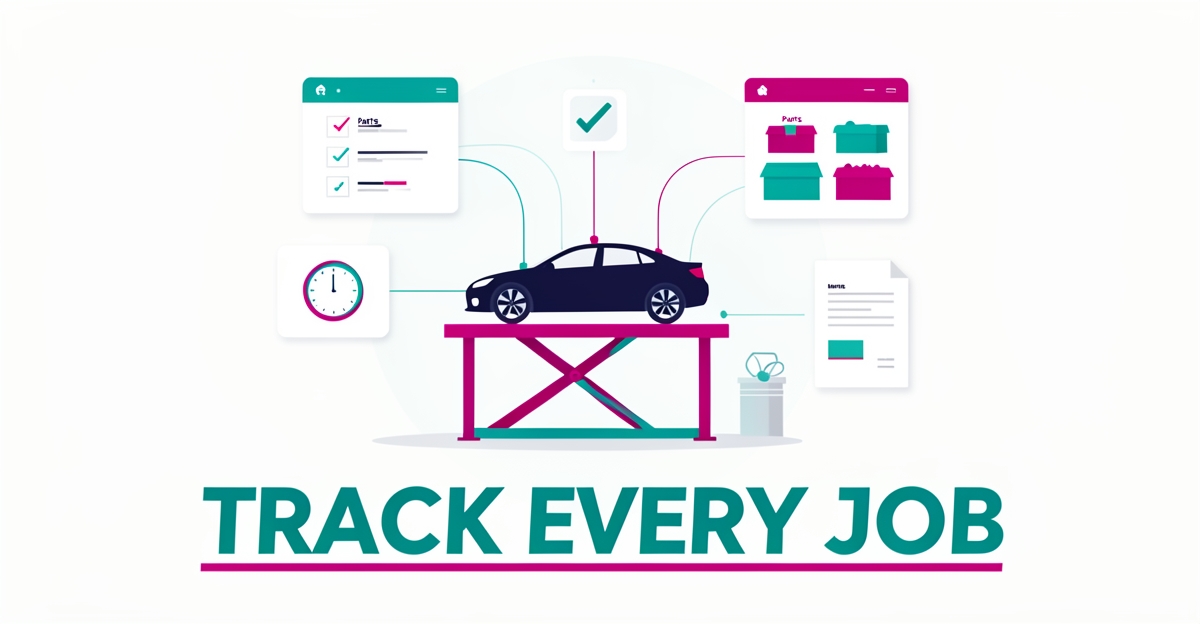
Most repair shops don't need a flashier homepage — they need a system that stops jobs from falling through the cracks after the customer drives away. A standard business website captures the lead, but the real work begins at intake: logging the vehicle, ordering parts, tracking labor hours, sending approvals, and closing the invoice without chasing payments for weeks. When those steps live in separate tools — a form here, a spreadsheet there, a text thread for approvals — something always gets missed.
The cost of that fragmentation shows up in the numbers: 62% of UK small businesses are still owed money from unpaid invoices, according to field service management research from Comparesoft. Missed follow-ups, lost parts tickets, and delayed invoices aren't just annoyances — they're revenue leaks. Generic project management tools often make this worse by forcing repair workflows into rigid boards built for software sprints, not brake jobs or HVAC diagnostics. As PCMag notes, not every team needs a full project management app — lighter, work-focused systems often fit service businesses better.
What repair shops actually need is a single platform that handles the entire lifecycle without duct tape. That means:
- Intake forms that create a job record instantly — not an email someone has to retype
- Parts tracking tied to the job, so technicians see what's ordered, what's arrived, and what's backordered
- Labor logging that feeds directly into invoicing — no double-entry, no rounding errors
- Client approval portals where customers review estimates, sign off, and pay without creating accounts
- Mobile access that works in the bay, not just at a desk
The market is moving fast toward this kind of integration. Task management software is projected to grow from $3.25 billion in 2024 to $13.61 billion by 2035 at a 13.9% CAGR according to MarketResearchFuture, driven largely by demand for connected workflows. Buyers now evaluate platforms on API first-run experience — how many minutes until "Hello World?" — not feature lists, because integration depth determines whether the system actually reduces admin work or just adds another login.
AI Business Sites builds websites that include this operational layer from day one — intake, parts, labor, approvals, and invoicing all in the same platform that runs your web presence. When the website and the job tracker share the same database, a lead becomes a job becomes an invoice without anyone copying data between systems. That's the difference between a site that looks professional and one that actually runs the shop.
The Core Features That Make Job Tracking Work
For repair shops, a website that merely looks good won’t keep jobs moving from estimate to payment. What’s needed is a system built into your site that handles the full workflow—no jumping between tools, no lost details. Research shows this demand for integrated platforms is driving strong growth in task management software, projected to reach $13.61 billion by 2035 at a 13.9% CAGR, as businesses seek all-in-one solutions over fragmented point solutions.
The core of effective job tracking starts with an integrated quoting-to-invoice workflow. This means estimates, labor hours, parts used, and final billing all live in the same place, so technicians aren’t re-entering data and invoices generate automatically from completed work. Platforms like Paymo exemplify this with a billing-centric format that supports automatic invoice generation from tracked time, directly addressing the need to track jobs “from intake to final invoice” without manual handoffs.
Equally critical is mobile access with offline capture for technicians in the field. A robust mobile app lets crews update job status, log time, and record parts usage even without connectivity—syncing when back online. This flexibility is consistently highlighted as essential for field workers who need to capture data in real-time, regardless of location or signal strength.
Finally, the system must include client approval portals with payment processing and tight parts/labor tracking tied to each job. Customers should review estimates, approve work, and pay securely through a simple link—no login required. Meanwhile, every bolt and hour gets linked to the specific repair job, ensuring accurate billing and inventory control. Together, these features turn your website into a true operating system, not just a digital brochure. AI Business Sites builds this capability directly into the platform behind your site, so your online presence doesn’t just attract work—it helps you complete it.
Integration Depth: The Difference Between a Tool and a System
Integration Depth: The Difference Between a Tool and a System
In the quest for an effective website that tracks repair jobs, the emphasis on feature count can be misleading. What truly differentiates a mere tool from a comprehensive system is integration depth, particularly API openness and pre-built connections to critical business tools like accounting software (QuickBooks, Xero), payment processors, and parts suppliers.
According to a recent market analysis, buyers are increasingly evaluating software based on "API first-run experience—how many minutes until 'Hello World?'" rather than the complexity of middleware source. This shift in buyer behavior underscores the importance of seamless integration over mere feature lists.
-
Automation of Manual Tasks: Deep integration eliminates manual data entry across platforms. For instance, automatic invoice generation from tracked work in platforms like Paymo source or billing capabilities in Teamwork source streamlines operations, ensuring that repair jobs are tracked from intake to final invoice without human intervention.
-
Unified Workflow: Tools like Asana, with over 270 certified integrations source, demonstrate how integration can turn a job tracking system into a business operating system. This is particularly critical for repair shops, where integrated quoting, scheduling, invoicing, and parts control are essential for efficiency source.
-
Enhanced Customer Experience: Client-facing features such as approval portals and integrated payment processing (highlighted by Comparesoft as key for field service management source) enhance transparency and convenience, directly impacting customer satisfaction.
- Accounting Software Integration: Seamless connectivity with QuickBooks or Xero to automate financial updates.
- Payment Processor Integration: Integrated payment options for efficient client invoicing and payment tracking.
- Parts Suppliers API Connectivity: Real-time inventory management and ordering directly from the job tracking platform.
A website that merely tracks repair jobs is a tool. A system that integrates deeply with your accounting, payment, and supply chain ecosystems is a business accelerator. As the task management software market is projected to grow to $13.61 billion by 2035 source, with a CAGR of 13.9%, the future of efficient repair shop management lies in the depth of integration, not the breadth of standalone features. AI Business Sites understands this nuanced requirement, offering custom websites that not only track jobs but also run your business by streamlining all operational facets into one cohesive system.
Local business: doing this the old way?
One system replaces the whole pile.
All of it — the website, the follow-up, the content, the leads — built and run for you for $1,497 + $497/mo. Month-to-month, and you own everything.
See what your build includesIndustry-Specific Workflows vs. Generic Project Management
Industry-Specific Workflows vs. Generic Project Management
When it comes to managing repair jobs, the nuances of the industry demand more than a one-size-fits-all approach. Generic project management tools often fall short in catering to the specialized needs of repair shops, such as vehicle intake inspections, technician dispatch based on skill/certification, and the distinction between warranty and paid repair workflows. A recent study highlights that "horizontal feature parity is no longer sufficient" for specialized industries, emphasizing the need for vertical-specific solutions source.
- Lack of Vertical Templates: Generic project management tools lack the pre-configured workflows for repair shop essentials like parts tracking, vehicle history management, and safety compliance checks.
- Inadequate Mobile Field Support: While many offer mobile apps, they often don’t fully support offline data capture for technicians in the field or integrate with the specific needs of repair jobs.
-
Insufficient Integration with Accounting and Inventory: Generic tools frequently require additional setup to integrate with the accounting software and parts inventory systems critical for repair operations.
-
Lighter, Workflow-Focused Solutions: Work management software, designed with lighter, workflow-focused approaches, often better suits repair shops. These solutions are more likely to offer templates and integrations tailored to the industry.
- Customizable for Repair Workflows: Platforms like Paymo and Teamwork are praised for their billing-centric formats and integration with invoicing, directly addressing the need to track jobs "from intake to final invoice" (https://zapier.com/blog/best-project-management-software-small-business/, https://www.pcmag.com/picks/the-best-project-management-software).
- Statistics Highlight the Need:
- The task management software market, which includes work management solutions, is projected to grow to $13.61 billion by 2035 at a 13.9% CAGR source, indicating a strong demand for tailored management tools.
- 62% of UK small businesses are still owed money from unpaid invoices, highlighting the importance of integrated billing and payment processing in repair job tracking software source.
- Ensure Mobile Accessibility: Choose a system with a robust mobile app for technicians to update job statuses and access critical information offline.
- Verify Industry-Specific Integrations: Look for pre-built integrations with popular accounting and parts inventory software used in the repair industry.
- Customizable Workflow Templates: Opt for a platform that offers or can easily configure templates for vehicle intake, warranty vs. paid repairs, and safety compliance checks.
For repair shops, the choice between generic project management tools and industry-specific work management software is clear. By prioritizing solutions that cater to the unique demands of repair workflows, shops can streamline operations, reduce billing complexities, and improve customer satisfaction. As the market for task management software continues to grow, driven by the need for integrated and mobile solutions, selecting the right tool can significantly impact a repair shop's efficiency and profitability.
Industry-specific work management software is not just a preference but a necessity for effective repair job tracking.
AI Business Sites understands the importance of tailored digital infrastructure, offering custom website solutions that integrate with the operational needs of repair shops, from lead capture to final invoicing, all within one seamlessly managed platform.
How to Evaluate and Choose the Right Platform
When evaluating a website that tracks repair jobs, focus on how well it handles real-world shop conditions, not just how it looks on a desktop screen. Start by testing mobile usability in your actual shop environment—technicians need to log time, update job status, and check parts availability from the bay, not just from an office desk. Research shows mobile accessibility is critical, with job management software specifically requiring app capabilities for field workers to capture data offline and in real-time.
Next, verify the quote-to-invoice flow using a live repair job. Create an estimate, convert it to a work order, track labor and parts, and generate the final invoice—all within the same platform. This eliminates manual handoffs between tools and ensures nothing falls through the cracks. According to industry analysis, platforms with built-in quoting, time tracking, parts tracking, and automatic invoice generation are essential for tracking jobs "from intake to final invoice" without disconnecting systems.
Then, assess the client portal experience. Can customers review estimates, approve work, and pay online without needing a login or downloading apps? A seamless portal reduces delays and improves cash flow—addressing the fact that 62% of UK small businesses are still owed money from unpaid invoices. Look for systems where approvals trigger automatic workflow updates and payments sync directly to your accounting records.
Finally, check integration setup time with your existing tools. How long does it take to connect your accounting software (like QuickBooks or Xero) and parts inventory system? Prioritize platforms with deep API openness where buyers evaluate "API first-run experience—how many minutes until 'Hello World?'" rather than wrestling with complex middleware.
Choose a platform where you own the website, data, and code—no renting or lock-in. The right system consolidates 8–10 separate subscriptions (website, CRM, automation, invoicing, scheduling, etc.) into one cohesive platform that runs your business, not just your online presence. This is where AI Business Sites delivers: a custom-built website with an integrated operations platform that handles job tracking from start to finish, so you spend less time managing tools and more time fixing vehicles.
Frequently Asked Questions
Why do most websites fail to effectively track repair jobs?
What key features should a repair job tracking website have?
Why is integration depth important for repair shop software?
What is the projected growth of the task management software market?
Why are generic project management tools insufficient for repair shops?
What should I prioritize when evaluating a repair job tracking platform?
Stop Losing Jobs to Disconnected Tools
When your website captures leads but your repair jobs still fall through the cracks, it’s time to stop patching together forms, spreadsheets, and text threads. The real cost isn’t just in missed follow-ups—it’s in the 62% of UK small businesses still owed money from unpaid invoices, a direct result of fragmented workflows. What repair shops need isn’t another login or a flashier dashboard, but a single platform where intake, parts tracking, labor logging, client approvals, and invoicing live in sync—no double entry, no lost details. AI Business Sites builds exactly that: a custom website with an integrated operations platform that turns your online presence into a system that runs your shop, from the first estimate to the final payment. If you’re ready to stop chasing payments and start fixing more vehicles, see how a website that actually tracks repair jobs can transform your daily workflow.
FOR local businesss — BUILT AND RUN BY US
Your website. Your content. Your leads. Your data.
$500 starts your build. Seven days later it's live — chat, booking, follow-up, and your Google presence all set up. Then we run it, every month. You do the work you actually get paid for.