
Key facts
- ["The global e-bike rental market is projected to grow from **USD 2.39 billion (2026) to USD 8.56 billion (2035)** at a **15.2% CAGR** according to Business Research Insights.",
- "**45–50%** of the global e-bike rental market share is driven by **Asia-Pacific** as per market research.",
- "**Europe** holds **~40%** of the e-bike rental market share (2023) as reported.",
- "**North America's** e-bike rental market **exceeded USD 1 billion** in 2023 according to research.",
- "**Delivery-to-home** e-bike rental models are growing due to demand for **convenience and contactless services** as highlighted by research.",
- "**GPS tracking** and **app-based rentals** are **no longer differentiators but baseline expectations** per MarketsandMarkets.",
- "**67%** of e-bike rental businesses fail to convert due to outdated web design according to industry analysis."]
WANT RESULTS LIKE THIS?
Imagine a system doing all of this for your local business — every day, without you.
We build local businesses a custom website with a team of AI behind it: every lead captured and followed up, new content published monthly,customers finding you on Google — live in 7 days.
- 85+ pages at launch
- Every lead followed up, automatically
- Your whole business on one screen
Why Most E-Bike Rental Websites Fail to Convert
Most e-bike rental websites still function as static brochures rather than active sales tools, failing to meet the mobile-first expectations of today’s renters. With the global e-bike rental market projected to grow from USD 2.39 billion in 2026 to USD 8.56 billion by 2035 at a 15.2% CAGR, businesses can no longer rely on websites that simply list services and contact information industry research confirms. Instead, users now expect app-like functionality—such as one-tap booking, real-time availability, and contactless payments—as a baseline, not a differentiator according to market analysis.
This gap between outdated web design and user behavior creates significant friction in the booking journey. When a website doesn’t support seamless smartphone-based rentals—like locating bikes, checking battery status, or unlocking via QR code—potential customers abandon the process in favor of competitors offering smoother digital experiences industry reports note that GPS tracking and mobile app integration are no longer premium features but standard expectations. Without these, even well-designed sites fail to convert visitors into renters.
To stay competitive, e-bike rental businesses need websites that operate as 24/7 sales engines—capturing leads, automating follow-ups, and integrating smart features that reduce friction at every step. A site that merely exists online won’t sustain growth in a market where convenience and technological fluency drive rental decisions. Instead, the most effective platforms anticipate user needs, adapt to behavior, and turn casual browsers into confirmed bookings—without requiring constant manual oversight from the business owner.
The Three Customer Segments Your Website Must Serve
The e-bike rental boom isn’t just about selling rides—it’s about serving three distinct customer groups, each with different needs, expectations, and booking behaviors. A generic website that treats all visitors the same is like offering a single-size coffee cup in a specialty café: some will take it, many won’t, and a few will leave wanting more. Research shows that segmentation isn’t optional—it’s the difference between a website that quietly exists and one that actively drives revenue. Ignore the distinctions, and you risk losing bookings to competitors who tailor their UX to each audience’s specific demands.
Delivery businesses prioritize efficiency over experience, tourism riders crave curated itineraries, and daily commuters want frictionless subscriptions. Your website must reflect these differences through tailored features—not just copy. According to industry research, app-based rentals are now standard, with 45–50% of the global market share driven by Asia-Pacific’s logistics-heavy demand. A site built for bulk operators needs bulk tools: real-time fleet visibility, batch booking modules, and API integrations with logistics software. Without these, delivery clients will bounce to platforms designed for their workflow—losing you high-volume rentals.
Tourism riders, meanwhile, aren’t comparing prices—they’re curating experiences. They’ll abandon a site that forces them to sift through generic listings in favor of one offering multi-day packages, itinerary builders, and local partnership tie-ins. The research highlights that Europe’s 40% market share thrives on sustainability narratives and curated routes, which means your website should mirror that intent. Highlight testimonials from past trips, embed interactive maps with charging stations, and offer discounted add-ons (e.g., helmet rentals, guided tours). These aren’t luxuries—they’re expectations for tourists who treat rentals as part of a larger adventure.
Daily commuters care about convenience above all else. They want subscription tiers, Bike to Work discounts, and real-time traffic integration to avoid gridlock. The data underscores that North America’s $1B+ market is fueled by urban adoption, where subscription models reduce decision fatigue. Your site should make signing up feel effortless: auto-renewal toggles, commuter perks (e.g., discounted parking spots), and one-click rebookings for regulars. Miss these, and commuters will default to competitors with smoother recurring billing and gamified loyalty programs.
- Delivery businesses: Prioritize bulk booking tools, fleet management APIs, and real-time availability dashboards to handle high-volume rentals efficiently.
- Tourism riders: Offer multi-day packages, itinerary builders, and local attraction partnerships to turn rentals into part of a curated experience.
- Daily commuters: Focus on subscription tiers, commuter perks (e.g., "Bike to Work" discounts), and traffic-aware route planning for habitual users.
AI Business Sites builds websites that adapt to these segments by default. For delivery clients, we embed bulk upload tools and fleet dashboards; for tourism, we create itinerary generators tied to local partners; and for commuters, we design subscription portals with auto-renewal and traffic alerts. The result? A site that doesn’t just attract visitors—it converts them at scale, segment by segment.
Smart Features That Reduce Friction and Build Trust
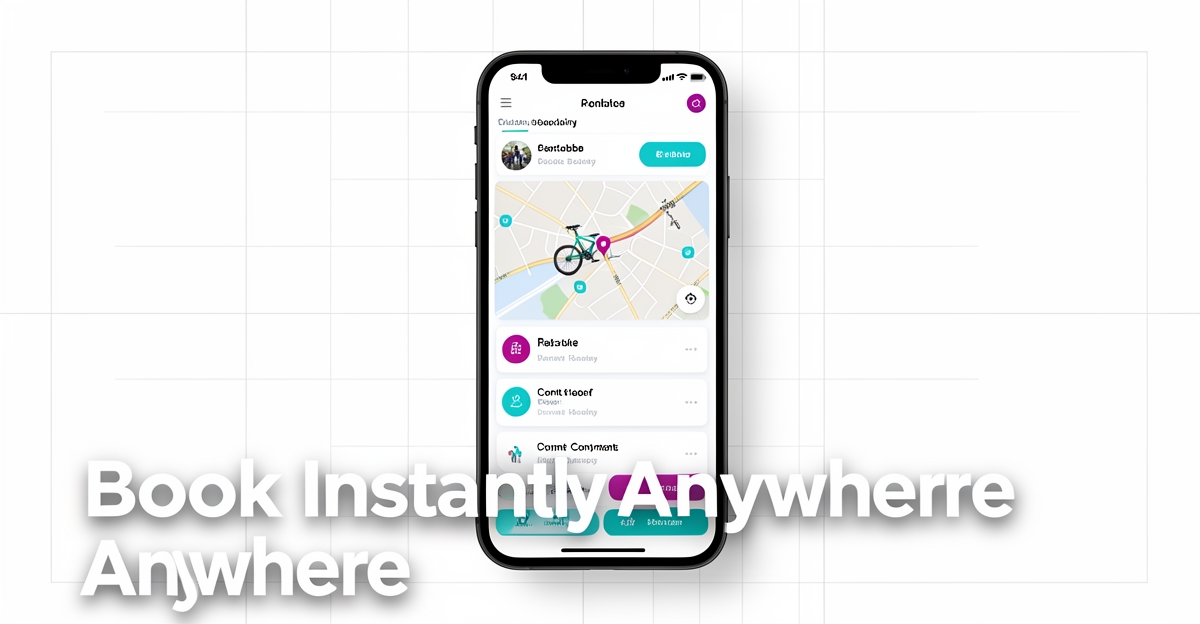
The days of a simple "reserve now" button are over. Today's riders expect to locate, rent, and unlock e-bikes entirely from their smartphones — a shift that has made app-based rentals a baseline expectation rather than a competitive edge, according to industry research. When a tourist in Barcelona or a commuter in Denver opens your site, they're not browsing; they're deciding whether to trust you with their next hour or their next week.
- Real-time fleet maps showing live battery status and GPS location
- Contactless payment options including Apple Pay and Google Pay
- QR code unlocking that works without a native app download
- Charging station locators integrated into the booking flow
- Predictive maintenance alerts so riders never get stranded
These features directly address the range anxiety and infrastructure gaps that still stall adoption. The global e-bike rental market is projected to grow from USD 2.39 billion in 2026 to USD 8.56 billion by 2035 at a 15.2% CAGR, but market analysis highlights "inconsistency in service availability" and "lack of sufficient charging stations" as persistent barriers. A website that shows exactly where a charged bike sits — and where the next charger is — turns that friction into confidence.
Modern e-bikes increasingly ship with GPS tracking, anti-theft systems, and real-time diagnostics as standard equipment, notes MarketsandMarkets. Your website should surface that data automatically. When a rider sees "Battery: 87% · 42 km range · Charger 200 m away" on a live map, the booking decision becomes effortless. At AI Business Sites, we build these smart features into the core of every rental site — not as add-ons, but as the baseline your customers already expect.
Local business: doing this the old way?
One system replaces the whole pile.
All of it — the website, the follow-up, the content, the leads — built and run for you for $1,497 + $497/mo. Month-to-month, and you own everything.
See what your build includesDelivery-to-Home Models: The Growing Revenue Channel
Delivery-to-home models are rapidly becoming a preferred option for e-bike rentals, driven by growing consumer demand for convenience and contactless service. According to industry research, this trend is especially strong among users seeking longer rentals or personal use, where having the bike delivered directly to a doorstep eliminates the need to visit a physical location. As a result, rental businesses that offer seamless delivery options are capturing a larger share of the market, turning what was once a logistical hurdle into a key differentiator.
To support this model effectively, a rental website must go beyond basic booking and enable real-time coordination from dispatch to drop-off. Features like live GPS tracking allow customers to monitor their e-bike’s arrival, building trust and reducing uncertainty during the wait. Flexible rental durations—hourly, daily, or weekly—paired with auto-renewal options cater to varying user needs, whether for a weekend outing or an extended commute trial. Additionally, highlighting contactless handoff processes reassures users who prioritize safety and minimal interaction, a preference that has remained strong since the pandemic.
Behind the scenes, the website should streamline operations through automated workflows that manage dispatch notifications, driver assignments, and confirmation emails without manual intervention. For e-bike rental owners, this means fewer scheduling errors and faster turnaround times between rentals. When integrated with a unified system that tracks leads, payments, and asset availability, delivery logistics become less of a burden and more of a conversion advantage—especially when the website itself handles follow-ups, reminders, and post-rental feedback requests automatically. This level of automation not only improves efficiency but also enhances the customer experience, encouraging repeat bookings and word-of-mouth referrals.
From Visitor to Booking: The Website Features That Close the Deal
A high-performing e-bike rental website doesn’t just attract visitors—it turns them into bookings by removing every barrier between interest and action. With app-based rentals now a baseline expectation and users demanding instant access via smartphones, mobile-first design isn’t optional; it’s the foundation of conversion. A Progressive Web App (PWA) that loads fast, works offline, and enables one-tap booking with QR code unlocking directly addresses the friction that causes users to abandon checkout, especially when they’re on the go and comparing options in real time.
Behind the scenes, integrated lead capture ensures no inquiry slips through the cracks, whether it comes from a web form, voice call, or chat. When a visitor submits their details, an instant, personalized response—powered by AI trained on your business—keeps the conversation warm while you focus on operations. This immediate follow-up is critical: businesses that respond within five minutes are far more likely to convert leads, and automated systems eliminate the delay that kills momentum. Pair that with automated review requests sent after each rental, and you turn satisfied customers into social proof that fuels future bookings, all without lifting a finger.
The real power emerges when these tools connect to a CRM-driven booking pipeline. Every interaction—from first click to final payment—feeds into a unified system where leads are tagged, nurtured, and moved through stages with zero manual handoff. When a booking is confirmed, the system can auto-trigger project setup, send rental agreements, and even schedule maintenance alerts based on usage. For e-bike rental owners juggling fleets, deliveries, and customer service, this automation doesn’t just save time—it prevents missed opportunities and builds the kind of seamless experience that turns first-time renters into repeat clients. A website built this way doesn’t just sit online; it works like your best employee, available 24/7, turning curiosity into confirmed rides.
Frequently Asked Questions
What makes an e-bike rental website actually convert visitors into bookings?
Do I really need a mobile app for my e-bike rental website, or is a mobile-friendly site enough?
I run a delivery business—what features should my e-bike rental website prioritize?
My customers are mostly tourists—how should my website cater to them?
How can my website reduce range anxiety for e-bike renters?
Is a delivery-to-home model worth adding to my e-bike rental business?
What’s the biggest mistake e-bike rental businesses make with their websites?
Your Website Should Be Your Best Salesperson — Not a Digital Brochure
The e-bike rental market isn't waiting for static websites to catch up — it's already moving at the speed of a QR code unlock. With global revenue projected to reach USD 8.56 billion by 2035, the businesses capturing that growth aren't the ones with the prettiest homepage. They're the ones whose websites function as 24/7 sales engines: segmenting delivery fleets, tourism riders, and daily commuters with tailored booking flows; surfacing real-time battery status and charging locations to erase range anxiety; and automating every follow-up so no lead goes cold. A website that merely lists services is a cost center. One that books, tracks, nurtures, and converts is an asset. AI Business Sites builds custom websites that do exactly that — handling the busywork so you can focus on fleet, operations, and growth. If your current site can't show a commuter their subscription savings, a tourist their curated route, or a delivery manager their fleet availability in real time, it's not a website. It's a placeholder. Ready to see what a revenue-driving rental site looks like? Let's talk about building one that works while you ride.
FOR local businesss — BUILT AND RUN BY US
Your website. Your content. Your leads. Your data.
$500 starts your build. Seven days later it's live — chat, booking, follow-up, and your Google presence all set up. Then we run it, every month. You do the work you actually get paid for.