
Key facts
- 60% of users will not trust a company without mobile optimization according to Best Version Media.
- 71% of consumers regularly read online reviews for local businesses during the buying process as reported by Best Version Media.
- 69% of consumers believe businesses need at least 20 reviews to trust their average rating highlighted in a Best Version Media study.
- 75% of consumers have skipped purchases due to outdated websites, and 93% express security concerns on poorly designed sites per Best Version Media.
- 46% of consumers lose trust after seeing an incorrect address, and 45% after encountering an incorrect phone number according to Best Version Media.
WANT RESULTS LIKE THIS?
Imagine a system doing all of this for your local business — every day, without you.
We build local businesses a custom website with a team of AI behind it: every lead captured and followed up, new content published monthly,customers finding you on Google — live in 7 days.
- 85+ pages at launch
- Every lead followed up, automatically
- Your whole business on one screen
The Credibility Gap: Why Stamp Websites Struggle with Trust
Trust isn't earned through claims — it's built in the split second a visitor lands on your site. Stanford research confirms people judge credibility primarily on visual design and layout before reading a single word, and that judgment happens at a subconscious level through dozens of micro-signals processed simultaneously. For stamp websites where customers can't physically inspect products before purchase, this visual trust gap is the difference between a quote request and a bounced visitor.
The numbers paint a stark picture: 60% of users will not trust a company without mobile optimization, and 57% won't recommend a business with a poor mobile experience. Meanwhile, 75% of consumers have skipped purchases due to outdated websites, and 93% express security concerns on poorly designed sites. These aren't preferences — they're trust thresholds that stamp websites routinely miss by relying on generic stock photos instead of real product samples.
- Stock imagery signals "we don't have real work to show" — authentic photos of actual stamps build credibility layers marketing photography cannot match
- Missing design process visibility leaves customers guessing about quality, revisions, and turnaround
- Unverifiable testimonials without source links damage trust more than having none at all
- Inconsistent contact details — 46% lose trust over wrong addresses, 45% over incorrect phone numbers
The credibility gap widens when stamp sites treat their gallery as an afterthought rather than a trust engine. Designer portfolios solve this by showing design iterations, interactive proofs, and structured case studies organized by project phases — patterns that transfer directly to stamp manufacturing. AI Business Sites applies these principles by automatically generating sample stamp galleries with design journey visuals, turning each product page into a verifiable proof point. When every stamp sample shows its evolution from concept to final impression, the trust gap closes before the customer even thinks to ask.
Building Trust with Authentic Visuals and Process Transparency
Trust decisions happen in split seconds. Stanford research confirms people judge website credibility primarily on visual design and layout before they read a single word. For stamp businesses, where customers can't physically inspect products before ordering, that first visual impression carries the entire weight of credibility.
Interactive sample galleries bridge this gap by adapting the "design iterations" pattern proven in designer portfolios. Figma's analysis of 23 professional portfolios shows that live demonstrations and clickable prototypes build credibility before visitors even open case studies. Applied to stamps, this means each sample should reveal: the final product photo, initial concept sketches, design iterations with annotations, and production specifications — all accessible through click-to-reveal or scroll-triggered interactions that mirror the design journey.
- Final stamp impression alongside the original vector artwork
- Design evolution from concept to production-ready file
- Material and ink specifications with durability notes
- Client challenge, revision history, and measurable outcome
Structured case studies organized by design phases — discovery, strategy, design, production, impact — sustain the trust that visual galleries initiate. Blackbird Digital emphasizes that service businesses benefit tremendously from showing methodology rather than keeping their approach mysterious. Digital Grace Design identifies photo-integrated timelines as a top strategy for process display, noting that clients can't inherently know what happens when they order custom stamps.
Verifiable social proof anchors everything. 69% of consumers believe businesses need at least 20 reviews to trust their average rating, and 71% regularly read reviews for local businesses during the buying process. Small Business SEO insists reviews must link directly to their source — Google Business Profile or Yelp — with names, locations, and faces. Organize these by stamp type and specific wins: turnaround time, design accuracy, impression clarity.
Mobile optimization isn't optional. 60% of users will not trust a company that hasn't optimized for mobile, and 57% won't recommend a business with a bad mobile site. Every interactive gallery, design timeline, and case study must work flawlessly on phones first — pinch-to-zoom on stamp details, swipe navigation through iterations, readable text without horizontal scrolling.
AI Business Sites builds these trust signals directly into every stamp website: automatically generated sample galleries with design journey visualizations, structured case study templates, and embedded Google review feeds that link to verified sources. The platform handles the technical execution so stamp makers can focus on craft, not code.
Local business: doing this the old way?
One system replaces the whole pile.
All of it — the website, the follow-up, the content, the leads — built and run for you for $1,497 + $497/mo. Month-to-month, and you own everything.
See what your build includesImplementing Effective Solutions: A Step-by-Step Guide for Stamp Websites
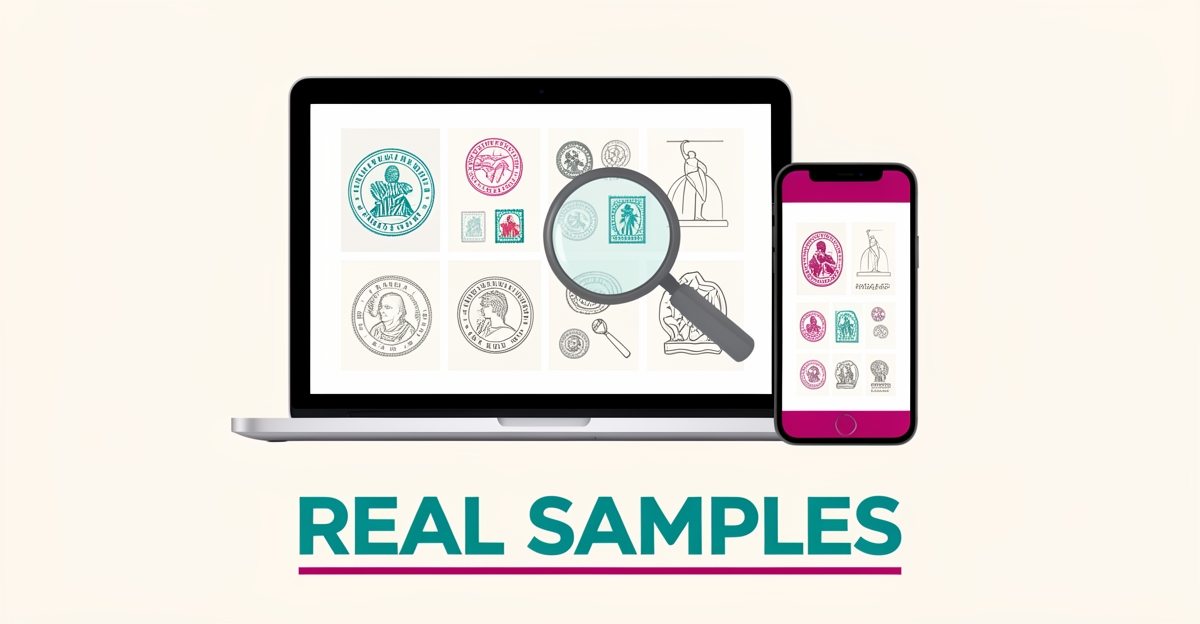
To build credibility, stamp websites must show real samples and transparent design processes—key trust signals that influence customer decisions within seconds. Research confirms users judge website trustworthiness primarily on visual design and layout in split seconds, making authentic visual proof essential for businesses selling custom products like stamps. A gallery featuring actual stamp samples, rather than generic images, establishes immediate authenticity and reduces purchase hesitation.
Implementing effective solutions starts with an interactive stamp sample gallery that visualizes the design journey. Each sample should display the final product alongside initial concepts, design iterations with annotations, and production notes, using click-to-reveal or scroll-based interactions to show evolution. This approach adapts proven designer portfolio patterns—where interactive visual proof builds credibility before case studies are even viewed—to the stamp manufacturing context, emphasizing transparency over polished marketing.
Next, structure detailed case studies around project phases: client challenge, design brief, concept options, revisions, final design, production specs, and verifiable client results. Including client names, locations, and photos (with permission) alongside direct links to original Google Business Profile reviews transforms generic testimonials into credible, source-linked social proof. Given that 69% of consumers require at least 20 reviews to trust a business’s average rating, maintaining a minimum of 20 verified, traceable reviews is critical for establishing legitimacy.
Finally, ensure all galleries, timelines, and case studies are optimized for mobile-first responsive design, as 60% of users will not trust a company without mobile optimization. Pair this with real team photos, authentic production facility images, and consistently displayed contact information—including a clickable phone number and embedded map—to reinforce operational transparency and subconscious confidence across every touchpoint. These steps collectively transform a stamp website from a static brochure into a trustworthy, conversion-focused platform that showcases real work and process. AI Business Sites supports this through auto-generated content features that dynamically populate galleries and design journey visuals based on actual project data, reducing manual effort while maintaining accuracy and relevance.
Frequently Asked Questions
How important is mobile optimization for a stamp website's credibility?
What kind of visual proof should a stamp website show to build trust?
How many verified reviews do stamp businesses need to appear trustworthy?
Why should stamp websites show their design process instead of just final products?
What happens if a stamp website uses fake or unverifiable testimonials?
How does inconsistent contact information affect trust in a stamp business website?
Your Stamp Website Should Show, Not Just Tell
A stamp website that earns trust does three things: it shows real samples with their design journey visible, proves its process through structured case studies, and backs every claim with verifiable reviews. The research is clear — visitors decide in seconds whether you're credible, and generic stock photos or vague testimonials don't survive that filter. What does? Interactive galleries that reveal concept-to-production evolution, case studies organized by design phase, and Google reviews linked to their source with names and locations attached. Mobile optimization isn't optional either; 60% of users won't trust a company without it. AI Business Sites builds these trust signals directly into every stamp website — auto-generating sample galleries with design journey visuals, structured case study templates, and embedded review feeds that link to verified sources. Your website should do the heavy lifting of proving quality before a customer ever asks. Ready to see what that looks like for your stamp business? Explore how a website built to show real work changes the conversation.
FOR local businesss — BUILT AND RUN BY US
Your website. Your content. Your leads. Your data.
$500 starts your build. Seven days later it's live — chat, booking, follow-up, and your Google presence all set up. Then we run it, every month. You do the work you actually get paid for.