
Key facts
- 77% of project owners now mandate digital documentation practices for contractors
- 69% of project owners require digital workflows frequently or very frequently according to a study
- Only 12% of owners are “very satisfied” with current digital tool connectedness as reported
- 82% of users prefer cloud-based systems for flexibility and remote access per market research
- Budget approvals and changes score 77/100 for impact from errors/delays in a construction study
- The global project management software market is projected to grow to $27.29B by 2032 at a 15.8% CAGR according to projections
- Mobile-first platforms for field teams are growing at over 13% per year per industry insights
WANT RESULTS LIKE THIS?
Imagine a system doing all of this for your local business — every day, without you.
We build local businesses a custom website with a team of AI behind it: every lead captured and followed up, new content published monthly,customers finding you on Google — live in 7 days.
- 85+ pages at launch
- Every lead followed up, automatically
- Your whole business on one screen
Why Your Repair Business Needs a Digital Paper Trail for Every Estimate
In today's digitally driven construction and repair landscape, maintaining a transparent digital paper trail for every estimate, approval, and project update is no longer a nicety, but a necessity. 77% of project owners now mandate digital documentation practices for contractors, with 69% requiring digital workflows frequently or very frequently source. This shift underscores the importance of moving away from manual, paper-based systems that are prone to errors, delays, and communication breakdowns.
Manual, paper-based systems for managing repair estimates and approvals are fraught with risks:
- Delays in Approval Processes: Physical documents can get lost, misplaced, or delayed in transit.
- Lack of Transparency: Stakeholders (including clients) may not have real-time access to project statuses or changes.
- Increased Errors: Handwritten notes or misplaced papers can lead to incorrect pricing, wrong parts ordering, or missed deadlines.
Only 12% of owners are “very satisfied” with the level of connectedness in current digital tools, highlighting a significant gap in the adoption and integration of effective digital solutions source. For repair businesses, this means implementing a system that:
- Generates and Stores Estimates and Approvals in One Place
- Provides Real-Time Collaboration between office staff, field technicians, and clients
- Offers Client-Facing Approval Portals for instant feedback and e-signatures
- Maintains Detailed Audit Trails for all document changes and approvals
- Enhanced Transparency: Clients and team members can access project statuses and documents anytime, from any device.
- Reduced Errors: Automated document generation and version control minimize mistakes.
- Faster Approvals: Digital approval portals and automated reminders streamline the process.
- Improved Compliance: Detailed audit trails ensure accountability and security.
Our platform is designed to replace fragmented legacy systems with a centralized, cloud-based solution:
- Automated Document Generation: Branded proposals, quotes, and approval documents are generated on demand.
- Client Approval Portals: Dedicated, login-free links for clients to review, comment, and sign off on documents.
- Real-Time Project Tracking: Integrated CRM and project management tools ensure all stakeholders are informed.
- Security and Compliance: Granular permissions, encrypted storage, and full audit trails protect your business.
By embracing a digital paper trail, repair businesses can not only meet the evolving expectations of project owners but also streamline operations, reduce costs, and enhance customer satisfaction.
Statistic Highlight:
- 82% of users prefer cloud-based systems for their flexibility and remote access source, making cloud integration a critical component for any digital solution adopted by repair businesses.
Key Takeaways:
- Adopt cloud-based, centralized platforms for project management.
- Ensure mobile access for field teams to update and access project documents.
- Automate approvals and follow-ups to reduce bottlenecks.
Embracing Digital: For repair businesses, the move to digital is not just about efficiency; it's about survival in a market where transparency, speed, and reliability are the defining characteristics of successful contractors.
A digital paper trail is no longer an option; it's the backbone of a competitive repair business.
3 Signs Your Current System is Costing You Time and Clients
Repair businesses waste thousands of dollars every year on systems that don’t actually move projects forward. When approvals stall, tools don’t talk to each other, and teams can’t access estimates from the job site, the result isn’t just frustration—it’s lost revenue. The data shows the exact bottlenecks that drain profits and push clients to competitors.
Only 12% of project owners are “very satisfied” with how contractors connect their digital tools, revealing a massive gap in connected workflows. Owners now mandate digital documentation in 69% of contracts, making disconnected systems a direct threat to staying in the game.
Here’s what your current setup is silently costing you.
- Delayed budget approvals create costly rework. Errors or delays in budget approvals and changes hit 77% of projects hard, and manual follow-ups guarantee missed deadlines.
- Disconnected tools force teams to jump between systems. Only 12% of owners are satisfied with the level of connectedness in today’s tools, and repair businesses lose deals when proposals, approvals, and invoices don’t flow together.
- No mobile access leaves field teams guessing. More than 13% of businesses now rely on mobile-first platforms to keep projects on track, and teams stuck using desktop-only systems risk falling behind on jobs and approvals.
The cost isn’t just time—it’s clients walking away. Repair businesses using fragmented systems report higher error rates and lower owner satisfaction, while those with centralized, cloud-based workflows close deals faster and keep projects moving. If your website and tools don’t give every stakeholder a single source of truth, you’re already losing ground.
What a Modern Repair-Project Website Actually Does Behind the Scenes
Most repair businesses still run estimates, approvals, and project updates through a patchwork of spreadsheets, text threads, and paper forms — and it shows. A formal study of 468 contractors found that budget approvals and changes are the single biggest source of errors and delays, scoring 77 out of 100 for impact when things go wrong according to industry research. At the same time, 69% of project owners now require contractors to use digital documentation frequently or very frequently, yet only 12% say they're "very satisfied" with how connected their current tools actually are per the same study.
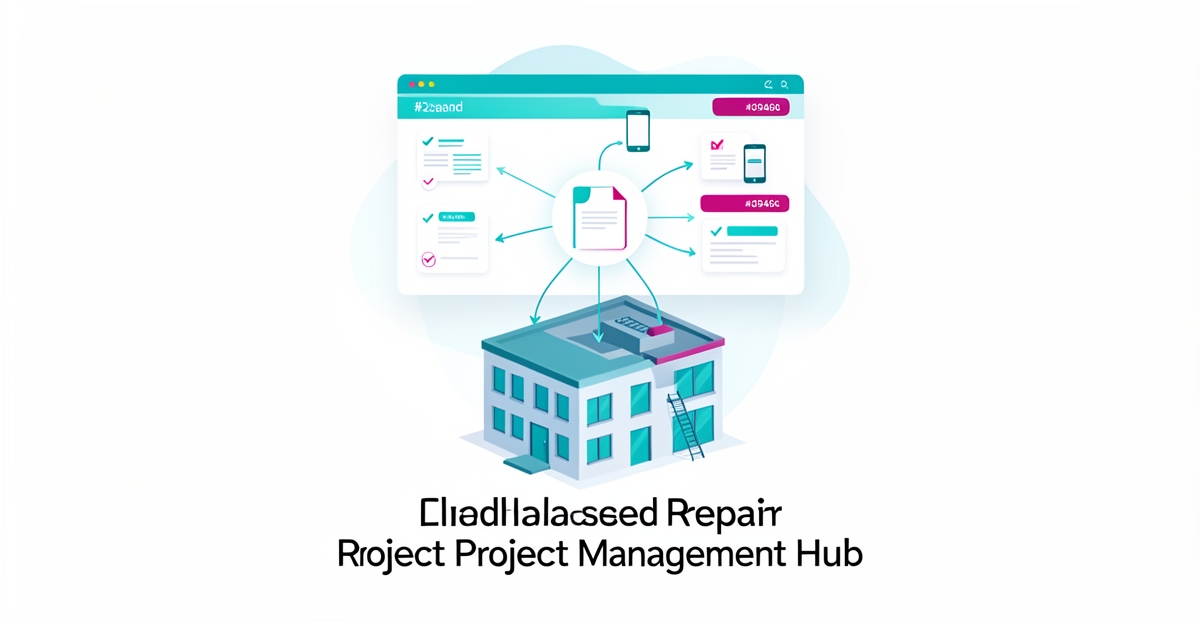
A modern repair-project website replaces that fragmentation with a cloud-based central hub where every estimate, parts approval, change order, and status update lives in one place. The global project management software market is projected to grow from $7.29 billion to $27.29 billion by 2032 at a 15.8% CAGR according to market analysis, driven largely by the shift to cloud platforms — 82% of users now prefer cloud solutions for remote access and real-time collaboration. For repair teams, that means field technicians can view the latest approved parts list on a phone at the job site, office staff can generate a revised quote in seconds, and the client can sign off from their kitchen table.
- Automated approval workflows that trigger reminders, escalate overdue items, and draft follow-ups using your actual business voice
- Client-facing portals where customers review estimates, upload photos, leave feedback, and e-sign — no login required
- Real-time project Kanban boards synced to the same record as the quote, so sales handoff to delivery happens automatically
- Full audit trails on every document and approval, timestamped and tied to the contact record
- AI-generated proposals and invoices pulled directly from project data, branded and ready to send
AI Business Sites builds this into every custom website — not as a bolt-on, but as the operating layer underneath. When a deal is won, a project spins up with the right template and assignee automatically. The client gets a link to approve the estimate. The technician sees the approved parts list on mobile. And the owner gets a weekly summary showing which approvals are pending — without logging into three different tools.
Local business: doing this the old way?
One system replaces the whole pile.
All of it — the website, the follow-up, the content, the leads — built and run for you for $1,497 + $497/mo. Month-to-month, and you own everything.
See what your build includesHow to Pick a Website That Works as Your Project Manager
Picking a website that doubles as your project manager means looking for features that solve real daily headaches—like never missing an approval or losing track of a parts estimate. Research shows that 77% of project owners now mandate digital documentation practices for contractors, yet only 12% are very satisfied with the connectedness of current tools, revealing a clear gap in what businesses actually need industry research. To close that gap, prioritize a platform that acts as a centralized hub for all project artifacts—storing estimates, approvals, and status updates in one place with version control to avoid disputes. Look for client-facing approval portals where clients can review documents, leave feedback, and sign contracts without logging in, creating a transparent digital paper trail that reduces miscommunication and rework.
Mobile-first access is non-negotiable for field teams who need to update tasks or approve parts from the job site. With mobile-first platforms growing at over 13% per year, your website should offer a responsive interface that works seamlessly on any device, including offline functionality for low-signal areas industry insights confirm. This ensures technicians can upload photos, check project status, or trigger approvals in real time, keeping workflows moving even when connectivity is spotty. Pair this with automated follow-ups—such as AI-drafted reminders sent 48 hours after a quote is shared—to eliminate bottlenecks around budget approvals, which remain the top source of errors and delays in repair projects.
Finally, ensure the platform integrates document generation with CRM and project tracking so estimates flow seamlessly into approvals and invoices. Features like branded quote creation, audit trails for every document change, and role-based access control aren’t just convenient—they’re essential for compliance and trust. AI Business Sites delivers this through a unified system where every approval, file upload, and status update is tracked in the project timeline, giving you full visibility without juggling multiple tools. When your website handles the busywork—from generating documents to nudging clients for feedback—you’re free to focus on the repair work that actually moves the needle.
Make Your Website Your Single Source of Truth for Quotes and Jobs
A transparent digital paper trail isn't a nice-to-have for repair businesses — it's what separates jobs that run smoothly from ones that stall on approvals. Research shows that 77% of project owners now mandate digital documentation for contractors, yet only 12% are "very satisfied" with how connected their current tools actually are. That gap is where estimates get lost, parts approvals sit in inboxes, and teams waste hours chasing signatures.
- Centralize every estimate, approval, and project status in one cloud-based hub
- Give clients a login-free portal to review, comment, and e-sign from any device
- Automate follow-ups so no approval slips through the cracks
- Track every interaction with a full audit trail — automatically
The platform behind AI Business Sites handles this by generating branded quotes and approval documents on demand, then routing them through a client-facing portal where feedback, file uploads, and signatures happen in real time. Field techs can view specs and upload photos from the job site — even offline — while the office sees every update instantly. Automated reminders nudge clients at 48 hours, then escalate if needed, all drafted by AI using your actual project history. With 82% of users preferring cloud solutions for remote access, this isn't future-proofing — it's catching up to how repair work actually gets done today.
Key Takeaways
{ "title": "Transform Your Repair Business with a Digital Paper Trail", "content": "In today's digitally driven repair landscape, a transparent digital paper trail is no longer a nicety, but a necessity. With 77% of project owners mandating digital documentation practices and only **12% sati
FOR local businesss — BUILT AND RUN BY US
Your website. Your content. Your leads. Your data.
$500 starts your build. Seven days later it's live — chat, booking, follow-up, and your Google presence all set up. Then we run it, every month. You do the work you actually get paid for.