
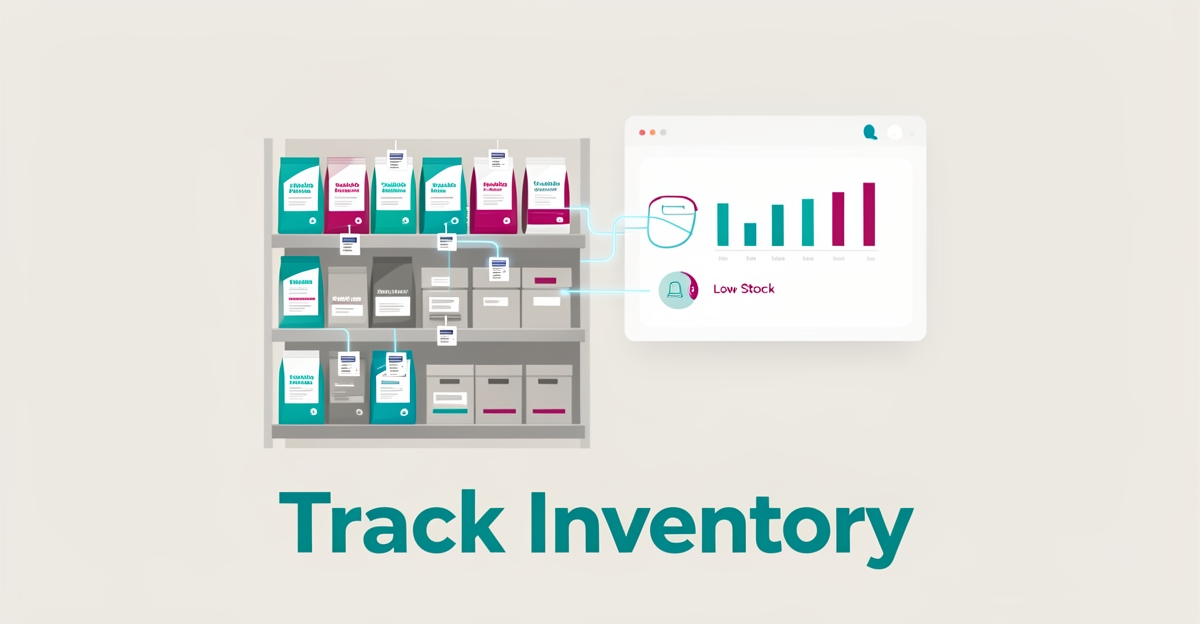
Key facts
- Stores using integrated platforms see a 65% reduction in paperwork hours after implementation per ECI Solutions
- AI-driven reordering prevents stockouts and can save over $140,000 by catching pricing discrepancies as documented at Monticello Farm and Home
- Real-time inventory tracking with four-decimal precision prevents rounding errors for bulk-to-unit conversions critical for feed stores buying by the ton and selling by the pound
- Native charge account management reduces outstanding balances by at least 20% through customer self-service portals per S&T Farm Supplies results
- Unified platforms boost year-over-year growth by 6% after implementation per ECI Solutions case studies
- ~70% of farm/feed store revenue runs on charge accounts, making native support essential per Rundoo.ai industry analysis
- AI demand forecasting cuts waste and optimizes stock levels dynamically per Focal Software industry analysis
WANT RESULTS LIKE THIS?
Imagine a system doing all of this for your local business — every day, without you.
We build local businesses a custom website with a team of AI behind it: every lead captured and followed up, new content published monthly,customers finding you on Google — live in 7 days.
- 85+ pages at launch
- Every lead followed up, automatically
- Your whole business on one screen
The Hidden Cost of Duct-Taped Systems: Why Generic Websites Fail Feed Stores
Most feed store owners don’t realize their website is costing them money every day — not because it’s slow or ugly, but because it can’t talk to their inventory system. When you’re juggling separate tools for stock levels, customer orders, and contact management, the cracks start to show in missed sales, frustrated customers, and bleeding cash flow.
A recent study found that stores using disconnected platforms lose an average of 65% of their operational time to manual paperwork — time that could be spent serving customers or growing the business. Instead of focusing on what matters, owners are double-entering data, hunting for lost receipts, and reconciling mismatched reports between systems that were never meant to work together.
This duct-taped approach creates real risks: delayed responses erode trust, stockouts send customers to competitors, and untracked charge accounts pile up as outstanding balances. One farm supply store described handing customers "sixty individual receipts monthly" and forcing them to calculate totals with a calculator — a process that’s not just inefficient, it’s damaging to relationships (Rundoo.ai). Without a unified view of inventory and customer behavior, you’re flying blind.
- Manual data entry increases error rates and slows down order fulfillment
- Disconnected systems prevent real-time stock visibility, leading to overstock or stockouts
- Customers face confusion when delivery tracking and payment aren’t synced with their purchase history
- Staff waste hours reconciling reports instead of focusing on customer service or sales
- Outstanding balances grow when customers can’t easily view or pay invoices upon delivery
The hidden cost isn’t just in labor — it’s in lost opportunities. When your website can’t trigger a reorder alert based on actual sales velocity, or when it doesn’t flag a repeat buyer for a loyalty discount, you’re leaving money on the table. AI Business Sites builds websites that eliminate this fragmentation by connecting inventory, orders, and CRM in one platform — so your site doesn’t just exist, it works for you.
Must-Have Features That Connect Inventory to Customer Behavior
A vet feed store’s website shouldn’t just list products—it should turn inventory data into actionable insights about how customers buy. When inventory tracking and customer behavior sync seamlessly, you cut manual work, prevent stockouts, and keep cash flowing without chasing overdue payments. The best platforms do more than track stock; they connect what’s on the shelf with who’s buying it, when, and how often.
Real-time inventory tracking with four-decimal precision prevents costly rounding errors for bulk-to-unit conversions, a make-or-break requirement for feed stores buying by the ton and selling by the pound. A Rundoo.ai report found stores that track inventory in four decimals avoid drift that erodes margins, while ECI Solutions notes real-time updates cut stockouts and overstock by up to 20%. Native charge account management turns paperwork into profit by consolidating statements and automating billing, a lifeline for stores where ~70% of revenue runs on credit. After switching to a system with customer self-service portals, S&T Farm Supplies saw clients pay immediately upon delivery, slashing outstanding balances by at least 20% and freeing up working capital tied in aging receivables.
AI-driven reordering removes guesswork by forecasting demand and triggering restocks before shelves run dry. According to Focal Software, machine learning engines predict needs with precision, while FMS Solutions reports smart reorder points cut waste and free capital from slow-moving stock. Visual product catalogs replace barcode hunts for items like hay bales and feed bags, letting staff match inventory to orders without scanning friction. As Rundoo.ai puts it, “many feed products lack barcodes and staff rely on sight recognition,” so a browsable, photographed catalog speeds transactions and reduces errors.
- Real-time tracking with four-decimal precision for bulk-to-unit conversions
- Native charge account management with consolidated statements and autopay
- AI-driven demand forecasting and automated reorder points
- Customer self-service portals for delivery tracking and instant payments
- Visual product catalogs for barcode-free items
Behind the scenes, platforms like Rundoo and ECI unify POS, inventory, CRM, ecommerce, and accounting so inventory data flows into customer behavior dashboards. The result? Stores cut paperwork by 65% and boost year-over-year growth by 6% after integration, per ECI’s case studies. For vet feed operators drowning in spreadsheets and late payments, a website that tracks inventory and connects it to customer actions isn’t a nicety—it’s the foundation of a smarter, faster business.
How to Spot a Website Built for Vet Feed Stores (Not Just Generic E-Commerce)
How to Spot a Website Built for Vet Feed Stores (Not Just Generic E-Commerce)
When evaluating platforms for your vet feed store, it's crucial to distinguish between generic e-commerce solutions and those truly designed for your niche. Here’s a practical checklist to help you identify the right fit:
| Feature | Red Flag (Generic E-Commerce) | Green Flag (Vet Feed Store Focused) |
|---|---|---|
| Inventory Tracking | Only whole number inventory tracking | Real-time tracking with four-decimal precision for bulk-to-unit conversions (Rundoo.ai) |
| Charge Accounts & Payments | No native charge account management | Native charge account support with consolidated statements and customer self-service payment portals (Rundoo.ai) |
| CRM & Automation | Basic contact management only | AI-driven demand forecasting, automated reordering, and CRM capturing buying patterns (Focal Software) (ECI Solutions) |
| Implementation Support | No specified training or go-live support | Detailed implementation schedule, dedicated training, and go-live readiness support (Rundoo.ai) |
- Precision Matters: Ensure the platform can handle four-decimal precision for inventory to prevent rounding errors, especially critical for bulk purchases and unit sales (Rundoo.ai).
- Charge Accounts are Crucial: ~70% of farm/feed store business runs on charge accounts. Look for native support to streamline billing and reduce outstanding balances by at least 20% (Rundoo.ai).
- AI for Efficiency: Opt for platforms with AI-driven demand forecasting to reduce manual work and prevent stockouts, ensuring dynamic stock level optimization (Focal Software).
-
Training is Key: Prioritize vendors offering detailed implementation plans and dedicated training to ensure a smooth transition and avoid operational blindness (Rundoo.ai).
-
Test with Your Workflow: Before committing, test the platform with your most complex inventory scenarios and charge account processes.
- Ask About Implementation: Ensure you have a clear training schedule and support plan for go-live.
- Verify Specialized Features: Confirm the platform supports visual product catalogs (for barcode-free items) and Buy Online, Pick Up In-Store (BOPIS) functionality for efficiency (ECI Solutions).
By focusing on these differentiated features, you can identify a website platform truly built for the complexities of vet feed stores, setting your business up for streamlined operations and growth. AI Business Sites, with its integrated approach to inventory tracking, customer management, and automation, aligns with these best practices to reduce manual work and enhance operational efficiency.
Local business: doing this the old way?
One system replaces the whole pile.
All of it — the website, the follow-up, the content, the leads — built and run for you for $1,497 + $497/mo. Month-to-month, and you own everything.
See what your build includesFrom Stockouts to Smooth Deliveries: How AI Turns Your Website into an Inventory Assistant
Most feed store owners know the panic of a stockout — the frantic call to a supplier, the disappointed customer, the lost sale. What if your website could see it coming days earlier and handle the fix before you even open your laptop?
AI-driven automation turns that scenario from wishful thinking into daily operations. Instead of manually checking reorder points or chasing delivery confirmations, the system monitors inventory in real time — down to four-decimal precision for bulk-to-unit conversions — and triggers reorder prompts the moment stock dips below your threshold. Delivery alerts go out automatically to customers who've opted in, and payment reminders hit charge accounts the instant an order ships. According to industry analysis, AI demand forecasting and machine learning are now "critical features" for predicting demand accurately and optimizing stock levels dynamically. FMS Solutions confirms that smart reordering uses data-driven suggestions to maintain optimal stock, reduce waste, and minimize capital tied up in slow-moving inventory.
- Automated reorder prompts based on real-time stock levels and seasonal demand patterns
- Delivery alerts and tracking links sent to customers without manual input
- Charge account statements consolidated and emailed automatically — no more handing customers sixty individual receipts
- AI anomaly detection that flags pricing discrepancies before they become costly errors
The payoff shows up in the numbers. Stores using integrated platforms report a 65% reduction in paperwork hours and 6% year-over-year growth after implementation, per ECI Solutions. One farm supply owner saw customers start paying immediately upon delivery through a self-service portal — where they used to be three months behind — cutting outstanding balances by at least 20%. At Monticello Farm and Home, an AI-driven check caught a pricing discrepancy that would have cost over $140,000 in inflated tax payments.
This is the difference between a website that sits there and one that works for you. AI Business Sites builds custom websites with this automation layer baked in — so inventory tracking, customer notifications, and reorder logic all run from the same system that powers your CRM, content, and lead follow-up. No duct-taped tools. No manual syncing. Just a website that handles the busywork while you focus on the next delivery.
Avoid the 8-Subscription Nightmare: One System That Actually Works
Vet feed store owners often find themselves juggling eight or more separate subscriptions—one for their website, another for inventory tracking, a third for CRM, and so on—each requiring its own login, updates, and troubleshooting. This fragmented approach not only increases monthly costs but also creates data silos that prevent inventory from connecting with customer behavior, leading to stockouts, overstock, and missed reorder opportunities. Research shows that stores using integrated platforms achieve a 65% reduction in paperwork hours and 6% year-over-year growth by unifying POS, inventory, CRM, ecommerce, and accounting into a single system.
With AI Business Sites, the admin platform behind your custom website replaces this stack of tools with one cohesive system. You own the code, content, and data—nothing is rented—and manage everything through a single admin interface. This eliminates the need to duct-tape together separate subscriptions for website hosting, CRM, automation, content generation, newsletter distribution, project management, document tools, and media creation. Instead, leads, inventory levels, customer interactions, and automated workflows all live in one place, reducing manual work and preventing the operational blind spots that come from managing disconnected tools.
The result is a website that doesn’t just sit there—it runs your business with you. By consolidating functions into one platform, vet feed stores gain real-time inventory visibility with four-decimal precision for bulk-to-unit conversions, native charge account management, and AI-driven reordering—all while avoiding the complexity and cost of maintaining multiple subscriptions. This unified approach ensures inventory tracking connects directly with customer behavior, enabling smarter reordering, fewer stockouts, and stronger cash flow without adding to your daily workload.
Frequently Asked Questions
Why is a generic website insufficient for a vet feed store?
What is the importance of real-time inventory tracking with four-decimal precision for vet feed stores?
How can native charge account management benefit a vet feed store?
What is the role of AI-driven demand forecasting in inventory management for vet feed stores?
Why is a visual product catalog essential for vet feed stores?
What are the key benefits of using a unified platform for vet feed stores?
Turn Your Website from a Cost Center into Your Best Inventory Assistant
If your website isn’t actively working with your inventory and order systems, it’s silently draining your profits through missed sales, frustrated customers, and wasted labor hours. The numbers don’t lie: stores using disconnected platforms lose up to 65% of their operational time to manual paperwork, while those with integrated systems report a 6% year-over-year growth and a 65% reduction in paperwork hours. The difference comes down to precision—four-decimal inventory tracking for bulk-to-unit conversions, native charge account management with consolidated statements, and AI-driven reordering that prevents stockouts before they happen. Instead of handing customers stacks of receipts to calculate totals, integrated platforms empower them to pay immediately upon delivery, cutting outstanding balances by at least 20%. The right website doesn’t just list products; it connects inventory data to customer behavior, turning every interaction into an opportunity to streamline operations and boost cash flow. If your current system can’t do that, it’s time to upgrade. Start by testing your platform with your most complex inventory scenarios and charge account processes—then ask vendors to walk you through their go-live support and training. Your website should work as hard as you do.
FOR local businesss — BUILT AND RUN BY US
Your website. Your content. Your leads. Your data.
$500 starts your build. Seven days later it's live — chat, booking, follow-up, and your Google presence all set up. Then we run it, every month. You do the work you actually get paid for.