
Key facts
- 80% of diners visit a restaurant's website before dining, making it the primary digital storefront according to TouchBistro's 2024 Diner Trends Report
- Food & Beverage websites convert at 5.03% — nearly double the global eCommerce average of 2.74% per Dynamic Yield benchmarks
- 85% of diners check the menu online first, yet PDF menus still dominate and hurt mobile usability TouchBistro reports
- Mobile users convert at 2.86% and tablet users at 2.89%, both outperforming desktop at 2.46% Dynamic Yield data shows
- 66% of diners book same-day reservations, demanding real-time availability on your website FSR Magazine research confirms
- 67% of diners check online reviews before visiting, making social proof near CTAs critical TouchBistro's 2024 report reveals
- Sites loading over 3 seconds lose diners to impatience, while sub-3-second sites see higher conversions Gourmet Marketing identifies speed as a top conversion factor
WANT RESULTS LIKE THIS?
Imagine a system doing all of this for your local business — every day, without you.
We build local businesses a custom website with a team of AI behind it: every lead captured and followed up, new content published monthly,customers finding you on Google — live in 7 days.
- 85+ pages at launch
- Every lead followed up, automatically
- Your whole business on one screen
Why Most Diner Websites Fail to Convert Visitors Into Diners
The first thing you need to know: diners are researching your restaurant online before they ever walk through the door. 80% of diners visit a restaurant’s website before dining, and 85% check the menu online first. Yet most diner sites prioritize style over substance—glossy photos, trendy fonts, and rotating hero images that look great on a designer’s screen but fail to convert visitors into customers. Even with this high-intent traffic, the Food & Beverage industry’s average conversion rate of 5.03%—nearly double the global eCommerce average of 2.74%—remains largely untapped by most restaurant websites.
What’s standing between your website and more bookings? Common friction points that drive visitors away before they can even place an order. Slow load times top the list—sites that take more than three seconds to appear lose potential diners to impatience. PDF menus, though still common, create another barrier: they load slowly, scale poorly on mobile, and hurt your search visibility. Hidden calls-to-action buried under sliders or behind multiple clicks force visitors to hunt for ways to order, and missing social proof—like recent reviews or customer photos—leaves diners with no reason to trust your business over the next option in search results.
- Speed matters: Sites that load in under three seconds see higher conversions across all devices.
- Menus need to be findable: PDF menus reduce accessibility and SEO performance.
- Calls-to-action must be visible and actionable, not buried or vague.
- Social proof should be embedded near conversion points to build immediate trust.
The irony? Most diner websites are beautiful—but they’re built to impress designers, not to convert customers. A website that answers questions, removes friction, and guides visitors to act can turn that high traffic into actual diners. At AI Business Sites, we design custom restaurant websites that prioritize conversion as much as curb appeal, because a great-looking site that doesn’t book tables isn’t doing its job.
The 8 Conversion Factors That Turn Browsers Into Customers
Most diner websites focus on looks over lead capture—but that’s a recipe for empty tables. The difference between a website that drives walk-ins and one that collects digital dust comes down to eight conversion factors backed by real data. Mobile users convert at nearly 3% (tablets hit 2.89%, mobile 2.86%), while desktop trails at 2.46%, proving speed and simplicity aren’t optional—they’re expected. And with 66% booking same-day reservations, your site has to do more than impress; it has to act.
Start with the menu. Swap out clunky PDFs for HTML menus that load instantly and rank on search engines—because 85% of diners check the menu before visiting. Pair that with clear calls-to-action like “Book Now” or “Order Online” placed above the fold, where visibility boosts conversions. Simplify navigation to six core tabs (Home, Menu, Order, Reservations, About, Contact) and embed social proof—reviews, testimonials, and customer photos—within 30 seconds of scrolling. That’s where 67% of diners make their final call.
Behind the scenes, automation handles the busywork. An AI assistant can respond to inquiries instantly, send review requests, and follow up with leads long after hours, turning skips into seated tables. Real-time availability matters too; with two-thirds of bookings happening same-day, outdated calendars cost sales. Combine these elements, and your website moves beyond a digital brochure to become a 24/7 concierge—one that AI Business Sites designs to run itself, so you can focus on the food, not the follow-ups.
How AI Automation Closes the Gap Between Interest and Action
The gap between a hungry visitor and a seated customer often comes down to speed. Most diners lose leads simply because they're too busy running the floor to reply to a form fill or answer the phone — and research shows 80% of diners visit a restaurant's website before dining, yet the average Food & Beverage conversion rate sits at 5.03%, leaving massive revenue on the table.
AI-powered automation closes that gap without adding operational burden. An AI voice agent answers missed calls, books tables, and captures details 24/7 — no hold music, no voicemail. Instant, personalized email responses fire the moment a lead submits a form, solving the "slow to reply" problem that kills conversions. Automated review requests go out after every visit, steadily building the social proof that 67% of diners check before walking through the door.
- Instant lead response via email and SMS — no manual follow-up needed
- AI voice agent capturing missed calls and converting them to bookings
- Automated review requests that build Google ratings while you cook
- AI-generated HTML menus from PDFs — mobile-friendly, SEO-ready, one click
- Ongoing local SEO content ranking for "best diner in [city]" searches
Tools like GoHighLevel unify CRM, automation, and review management in one login. Jasper and Ranked handle content and local SEO at scale. Apollo.io powers targeted outreach. The stack runs quietly behind your website — handling follow-up, reputation, and search visibility — so the site works while you run the floor.
Local business: doing this the old way?
One system replaces the whole pile.
All of it — the website, the follow-up, the content, the leads — built and run for you for $1,497 + $497/mo. Month-to-month, and you own everything.
See what your build includesWhat This Looks Like in Practice: A Conversion-Ready Diner Site
What This Looks Like in Practice: A Conversion-Ready Diner Site
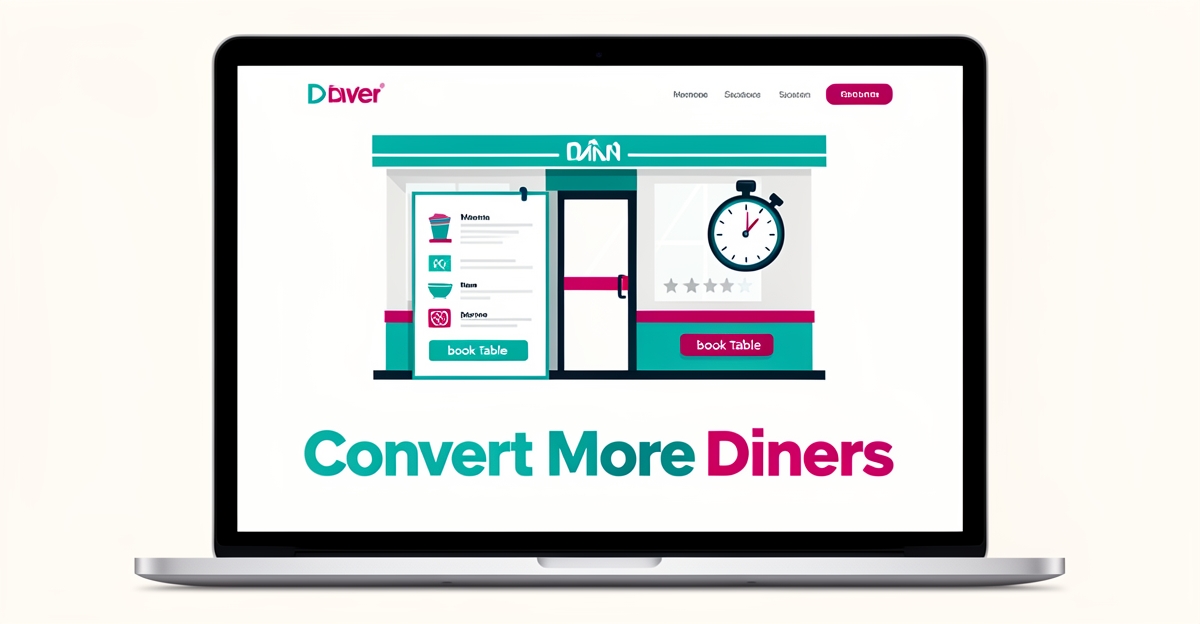
Imagine a diner website that seamlessly transforms visitors into customers. Less than 3 seconds after loading on mobile, the site presents a clear, HTML menu with mouth-watering photos and essential allergen markers, all accessible in just one click. Prominent "Book a Table" and "Order Now" buttons sit above the fold, guiding visitors toward immediate action.
To the right of the "Book a Table" button, live Google reviews reassure potential diners, building trust at the point of decision. In the footer, easily accessible hours and parking information alleviate common pre-visit concerns. Behind the scenes, every chat, call, and form fill is funneled into one unified system, triggering instant, personalized follow-ups—ensuring no lead slips through the cracks.
The Business Impact:
- Fewer Missed Leads: AI-powered auto-responses ensure immediate engagement, reducing the likelihood of prospects moving on due to slow follow-up (as highlighted in the TouchBistro 2024 Diner Trends Report).
- More Same-Day Bookings: With real-time availability and prominent CTAs, the site capitalizes on the 66% of diners who book same-day reservations (source: FSR Magazine).
- Higher Average Ticket: Clear, photo-rich HTML menus (as recommended by Gourmet Marketing) enhance menu clarity, leading to more informed, potentially higher-value orders.
Key Elements in Action:
- Mobile-Optimized Speed: Loads in under 3 seconds, crucial for the 2.86% mobile conversion rate outperforming desktop (source: *Dynamic Yield Conversion Rate Benchmarks*).
- Transparent Menu: HTML format with photos and allergen info, avoiding the conversion-killing pitfalls of PDFs (emphasized by *Gourmet Marketing*).
- Trust at First Sight: Live Google reviews next to the booking CTA, leveraging the 67% of diners who check reviews before visiting (according to *TouchBistro*).
This optimized diner website isn’t just visually appealing; it’s a conversion engine designed to turn every visit into a filled seat or placed order, seamlessly integrating the business operations platform of AI Business Sites to handle the backend, ensuring a cohesive customer experience.
Next Steps: Audit Your Site Against the Conversion Checklist
Your website shouldn’t just sit there—it should be running your business. That starts with an instant audit against what actually converts visitors into customers. Run this 8-point checklist today to spot weak spots before they turn away diners:
- Test mobile load speed
Over half of diners shop on mobile, yet most sites take 5+ seconds to load—costing you conversions. Use industry benchmarks as your target: under 3 seconds on mobile or tablet, where conversion rates hit 2.86–2.89%. Slow pages aren’t just annoying; they signal unprofessionalism. - Check if the menu is HTML, not PDF
PDF menus are a top conversion killer. They load slowly, break on mobile, and hurt SEO. Replace them with clean HTML menus featuring dish photos, clear descriptions, and dietary markers—just like the 85% of diners expect to find online before visiting. - Verify CTAs are above the fold “Book a Table” and “Order Now” buttons must be visible without scrolling. Diner websites with prominent CTAs convert 1.5–2x higher, according to conversion optimization guides.
- Count navigation tabs Most diner sites bury key pages under clutter. Stick to six core tabs: Home, Menu, Order, Reservations, About, Contact. Fewer options mean less friction—and more bookings.
- Confirm authentic photos Stock images destroy trust. Use real photos of your food, team, and dining room. Authenticity is critical when 67% of diners check reviews before choosing a restaurant.
- Locate hours/phone in under 3 seconds The most frustrated diners bail when practical info isn’t instant. Your phone number and hours should be visible within three taps—no exceptions.
- Find reviews near booking buttons Embed Google reviews and customer testimonials within 50 pixels of your “Reserve” or “Order” CTA. Social proof drives decisions when placed where diners are ready to act.
- Test same-day booking availability 66% of diners book same-day reservations, so your calendar must update in real time. Hidden availability or broken links lose customers to competitors who make booking effortless.
Fixing these issues turns your website from a digital brochure into a system that runs your dining room. At AI Business Sites, we build sites that don’t just look good—they handle the busywork: answering questions, following up on leads, and even managing reservations automatically. One platform, zero extra tools.
Frequently Asked Questions
How fast should a diner website load to avoid losing visitors?
Why should I replace my PDF menu with an HTML menu on my diner website?
Where should I place calls-to-action like 'Book Now' or 'Order Online' on my diner website?
How important are online reviews for getting diners to choose my restaurant?
What navigation structure works best for a diner website aiming to convert visitors?
Can AI tools really help my diner website convert more visitors without adding work for me?
Turn Clicks Into Customers: Your Diner’s Website Should Work as Hard as You Do
A diner website that converts isn’t about flashy design—it’s about removing friction where it matters most. From loading in under three seconds and serving an HTML menu instead of a PDF, to placing clear calls-to-action above the fold and embedding real reviews near booking buttons, every detail guides hungry visitors toward a reservation or order. When your site answers questions instantly, follows up automatically, and keeps your calendar full without extra work, it stops being a digital brochure and starts running your dining room. Ready to see where your site stands? Run the 8-point conversion checklist today—then let AI Business Sites handle the rest, so you can focus on what you do best: serving great food and welcoming guests.
FOR local businesss — BUILT AND RUN BY US
Your website. Your content. Your leads. Your data.
$500 starts your build. Seven days later it's live — chat, booking, follow-up, and your Google presence all set up. Then we run it, every month. You do the work you actually get paid for.