
Key facts
- The global CRM market is projected to reach **$53 billion** in the next 12 months according to HG Insights.
- The Transportation & Warehousing industry ranks **11th** in CRM spending at **$1.1 billion** across **124,769 companies** as per HG Insights.
- **53.9% of CRM buyers** are small businesses ($1–$10M revenue), despite accounting for only **0.5% of total spending** reports HG Insights.
- The global logistics CRM software market is valued at **$1.11 billion in 2026** and projected to grow at a **11% CAGR** according to Business Research Insights.
- **21% YoY drop** in shipments and spending was reported in Q3 2024 by U.S. Bank’s Freight Payment Index™ as noted by Revenova.
- **10.4% YoY increase** in containerized imports was seen in Q3 2024, alongside a **2.3% rise** in real consumer spending on goods per Revenova’s recap.
- The global logistics market size is valued at **$3.32 trillion** (2025), demanding specialized CRM solutions for efficiency as highlighted by Integrow.
WANT RESULTS LIKE THIS?
Imagine a system doing all of this for your local business — every day, without you.
We build local businesses a custom website with a team of AI behind it: every lead captured and followed up, new content published monthly,customers finding you on Google — live in 7 days.
- 85+ pages at launch
- Every lead followed up, automatically
- Your whole business on one screen
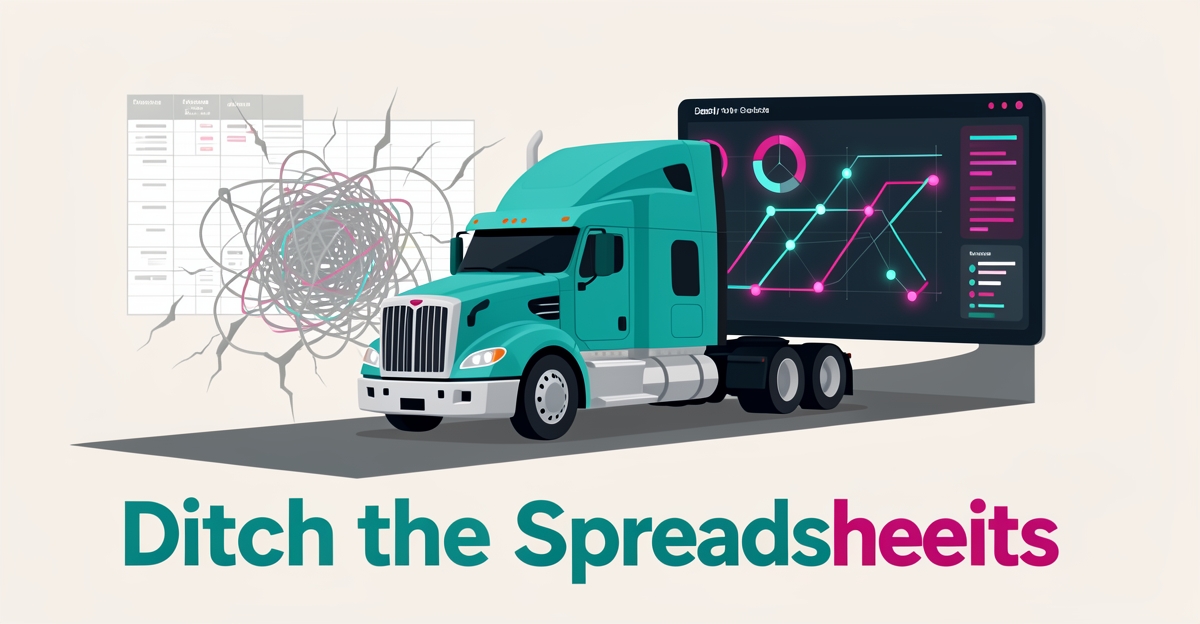
The Hidden Costs of Traditional Spreadsheets in Trucking Operations
Traditional spreadsheets might seem like a simple solution for tracking shipper relationships and shipment data, but in reality, they’re quietly costing trucking operators thousands in lost efficiency and missed opportunities. When every minute counts and margins are thin, relying on manual spreadsheets isn’t just outdated—it’s a direct drag on profitability. The trucking industry, now a $3.32 trillion global market, demands tools built for its unique rhythm: real-time shipment visibility, automated workflows, and unified data streams that spreadsheets simply can’t deliver.
A closer look at market trends reveals the scale of the problem. While the overall CRM market is projected to hit $53 billion annually, transportation and warehousing ranks 11th in spending at $1.1 billion across 124,769 companies, signaling that many fleets still operate without the systems they need to compete. Meanwhile, small businesses ($1–$10M revenue)—which make up 53.9% of CRM buyers—are adopting specialized tools to level the playing field. Spreadsheets can’t keep pace with the dynamic demands of freight, where a lead isn’t just a contact but a lane, a TEU volume, or a recurring contract. The result? Silos between teams, manual errors, and lost visibility that turn into real revenue leaks.
The inefficiencies add up fast. Spreadsheets force teams into:
- Fragmented data that lives in separate files, with sales seeing one view of a shipper’s history while dispatchers rely on another.
- Manual workflows that create bottlenecks—like the dreaded “email chain of death” where every update requires someone to manually copy, paste, and notify.
- Automated workflows in logistics CRMs eliminate the need for constant follow-ups by triggering instant customer notifications when shipments hit key milestones.
- Missed real-time opportunities, where delays or capacity changes go unnoticed until it’s too late to pivot.
In a 2024 freight market where volumes dipped 21% YoY according to U.S. Bank’s Freight Payment Index™, every inefficiency compounds the impact. Operators using spreadsheets spend hours reconciling data, correcting errors, and playing catch-up—time that could be spent nurturing long-term shipper relationships or optimizing routes. The alternative? A platform that treats your CRM like a living system: tracking every interaction from the first chat to the final invoice, tagging high-value contracts, and surfacing risks before they derail a deal. That’s the kind of clarity that turns a reactive operation into a proactive one—and keeps margins where they belong.
For fleet owners juggling thin margins and high expectations, spreadsheets aren’t just a tool—they’re a liability. The right system doesn’t just organize data; it eliminates the hidden costs of disorganization.
The Solution: Key Features of an Effective Trucking CRM
A trucking business running on spreadsheets is like trying to run a cross-country route with a paper map—you might get there eventually, but you’ll waste time, money, and customer trust along the way. The research underscores what fleet operators already suspect: traditional tools can’t keep up with the volume, complexity, or pace of modern freight management. Industry-specific CRMs are stepping in to fill the gap, offering the structure and automation needed to turn scattered data into a strategic advantage.
For trucking companies managing long-term shipper relationships, an effective CRM doesn’t just store contacts—it tracks every interaction from initial inquiry to final invoice, giving fleet owners a clear view of their sales pipeline and customer history in one place. This unified visibility is critical in today’s freight market, where 21% of shippers cut spending in Q3 2024 and competition remains fierce. Research shows that logistics-specific CRMs provide a 360-degree view of operations, connecting shippers, carriers, and partners through a single source of truth rather than siloed spreadsheets.
Automation is another game-changer, especially when it comes to reducing manual errors and reclaiming time. Automated workflows in logistics CRMs eliminate the “email chain of death” by triggering instant customer notifications at key milestones—like warehouse check-ins or delays—without human intervention. This not only saves hours of labor but also improves client satisfaction by keeping shippers informed proactively. In a market where excess capacity gives shippers leverage, proactive communication can make the difference between retention and lost contracts.
AI-driven insights further elevate these platforms by shifting operations from reactive to predictive. Advanced CRMs use domain-specific language models to flag potential delays before they happen, suggest alternative routes, and even forecast demand trends. This level of foresight is invaluable when managing volatile freight markets, where real consumer spending on goods rose just 2.3% YoY while containerized imports surged 10.4%. With AI handling the heavy lifting, fleet owners can focus on strategy—not putting out fires.
Here’s what to prioritize when evaluating a trucking CRM:
- Unified data visibility that connects sales, dispatch, and operations in real time
- Automated workflows for quote-to-cash processes, invoicing, and client notifications
- Seamless integration with existing TMS/ERP systems to reduce Days Sales Outstanding (DSO)
- AI-powered predictive analytics for delay forecasting and demand planning
- Scalability to handle 10x shipment volume without performance drops
For fleet owners tired of playing catch-up with spreadsheets, an industry-specific CRM isn’t just a tool—it’s the foundation for smarter, faster, and more profitable operations. As logistics CRMs grow at an 11% CAGR and cloud-based solutions dominate adoption, the choice becomes clear: adapt or get left behind in the freight traffic.
Local business: doing this the old way?
One system replaces the whole pile.
All of it — the website, the follow-up, the content, the leads — built and run for you for $1,497 + $497/mo. Month-to-month, and you own everything.
See what your build includesImplementing the Right CRM for Your Trucking Business: Actionable Steps
Implementing the right CRM for your trucking business starts with a clear assessment of your current workflow and pain points. Many fleet owners still rely on spreadsheets, which fragment data and create manual processes that increase the risk of errors and lost revenue, especially as shipment volume grows. Transitioning to a logistics-focused CRM requires a structured approach that prioritizes integration, scalability, and proactive management from day one.
Begin by mapping your end-to-end quote-to-cash cycle, identifying where delays or miscommunications commonly occur—such as between delivery confirmation and invoicing. Research shows that unified visibility through a single source of truth connects shippers, carriers, and partners, enabling a 360-degree view critical for maintaining "digital provenance" and reducing Days Sales Outstanding (DSO). Choose a CRM that integrates seamlessly with your existing TMS or ERP systems to automate document flow and eliminate gaps that slow cash flow. Look for platforms that treat shipments as dynamic elements—like lanes, TEU volumes, or recurring contracts—rather than static contacts, ensuring the system scales with your operational complexity.
Next, evaluate automation capabilities that reduce manual labor and improve customer communication. Automated workflows in logistics CRMs eliminate the "email chain of death" by triggering instant customer notifications at warehouse milestones, reclaiming significant manual labor hours. Prioritize features like automated quote follow-ups, proactive delay alerts using AI-driven predictions, and self-service customer portals for document access. These tools shift management from reactive to proactive, which is essential in a shipper-favored market where timely communication builds long-term loyalty. Ensure the CRM includes AI-powered analytics for demand forecasting and routing suggestions, allowing you to anticipate disruptions before they impact delivery timelines.
Finally, plan for phased implementation and team adoption. Start with a pilot group focusing on one lane or customer segment to test integration and workflow accuracy before rolling out company-wide. Provide hands-on training that emphasizes real-world use cases, such as tracking a shipment from first contact to final invoice, to demonstrate tangible value. Monitor key metrics like response time to customer inquiries, invoice accuracy, and on-time delivery rates post-implementation to measure ROI. A well-executed CRM rollout not only streamlines operations but positions your trucking business to compete more effectively in a $3.32 trillion global logistics market where technology adoption is increasingly a differentiator. AI Business Sites supports this transition by embedding CRM functionality directly into custom websites, ensuring lead capture, follow-up, and deal tracking happen in one unified system without added complexity.
Frequently Asked Questions
Why are traditional spreadsheets costing trucking companies money?
What key features should I look for in a trucking CRM?
How does a logistics CRM improve customer retention in today’s freight market?
Can a trucking CRM integrate with my existing TMS or ERP system?
Is investing in a CRM worth it for a small trucking business?
What ROI can I expect from implementing a trucking CRM?
Key Takeaways
{ "title": "Shifting Gears: Where Spreadsheets End and Profitable Operations Begin", "content": "As the $3.32 trillion global logistics market continues to evolve, trucking operators face a stark choice: cling to outdated spreadsheets or harness the power of industry-specific CRMs to drive profitabi
FOR local businesss — BUILT AND RUN BY US
Your website. Your content. Your leads. Your data.
$500 starts your build. Seven days later it's live — chat, booking, follow-up, and your Google presence all set up. Then we run it, every month. You do the work you actually get paid for.