
Key facts
- Virtual coaching sessions grew from 40% to 72% between 2020 and 2023 according to ZenCal research
- Over 62% of coaches globally have adopted online platforms per ZenCal analysis
- Online coaching market projected to reach $17.33 billion by 2035 according to Circle analysis
- Right platform cuts check-in time to 2-3 minutes vs 12-15 minutes on wrong one per Coachway framework
- At 50 clients per week, efficient platforms save 90-minute Sunday vs 6-hour Sunday research shows
- Revenue-share costs a €6,000/month coach about €14,000 more over 24 months according to Coachway data
- Platform migrations cost 1 to 4 weeks of work and 5 percent retention risk experts warn
WANT RESULTS LIKE THIS?
Imagine a system doing all of this for your local business — every day, without you.
We build local businesses a custom website with a team of AI behind it: every lead captured and followed up, new content published monthly,customers finding you on Google — live in 7 days.
- 85+ pages at launch
- Every lead followed up, automatically
- Your whole business on one screen
The Fragmented Tool Trap: Why Online Coaches Waste Hours on Tech Instead of Clients
Online coaches often find themselves trapped in a fragmented technology maze, juggling scheduling in one app, payments in another, Zoom for calls, and separate tools for client management or course delivery. This constant app-switching creates operational friction that directly impacts their ability to focus on coaching. Research shows that coaches using inefficient platforms spend most of their time managing tools rather than working with clients, a problem that intensifies as their client base grows.
The time cost of this fragmentation is substantial. At 50 clients per week, the difference between an efficient platform and a disjointed tool stack can mean the difference between a 90-minute Sunday and a 6-hour Sunday spent on administrative tasks. This inefficiency isn’t just frustrating—it erodes profit margins and client experience, with coaches reporting lost sessions, missed follow-ups, and scattered notes due to disconnected systems.
Experts emphasize that workflow consolidation—particularly a unified inbox for messages, scheduling, payments, and client notes—is the single highest-leverage feature for online coaches. Every tab switch costs 4 to 6 seconds, and when multiplied across dozens of clients each week, those seconds compound into hours of wasted time. The most successful coaches recognize that the platform they choose is the most leveraged technology decision they will make, directly affecting their time, retention, and long-term scalability.
For coaches serving 30+ clients, the financial impact of tool fragmentation becomes even more pronounced. Platforms that take a percentage of revenue compound costs over time, with flat-fee alternatives saving established coaches approximately €14,000 over 24 months compared to revenue-share models. Meanwhile, migration risks—ranging from 1 to 4 weeks of focused work and up to 5 percent client retention loss—make switching platforms a daunting prospect, trapping many in suboptimal stacks simply to avoid the transition pain.
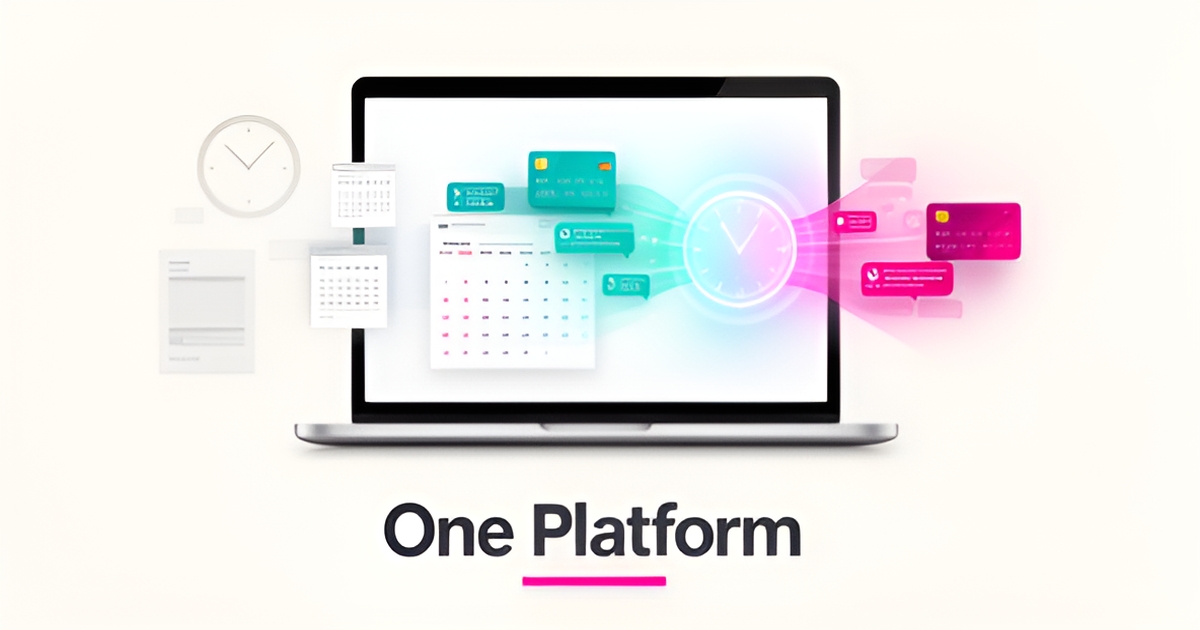
AI Business Sites addresses this fragmentation by combining website, CRM, scheduling, payments, and AI-driven client management into a single managed operating system. Rather than requiring coaches to assemble and maintain multiple tools, the platform handles the technical overhead so they can focus on delivering value. This approach aligns with the growing demand for all-in-one solutions that reduce complexity without sacrificing functionality—especially for coaches ready to scale beyond DIY tool limitations.
The Consolidation Shift: Why Top Coaches Are Moving to All-in-One Platforms with Unified Workflows
The most successful online coaches have stopped asking "which tool is best?" and started asking "why am I still using five different tools?" According to industry analysis, the market is shifting decisively toward consolidation as coaches recognize that fragmented stacks create invisible taxes on their time and client experience.
The math behind this shift is compelling. Research from coaching platform specialists reveals that inefficient platforms cost coaches 4 to 6 seconds per client interaction when switching between tabs for scheduling, payments, and messaging. At 50 clients per week, this compounds into a stark difference: a 90-minute Sunday versus a 6-hour Sunday spent on administrative busywork.
This time drain explains why workflow consolidation—particularly unified inbox functionality—has become the highest-leverage feature in platform selection. When client communications, program delivery, and payment tracking live in one screen, coaches reclaim hours previously lost to digital context-switching. As one framework derived from working with 150 online coaches emphasizes, the platform that consolidates these workflows wins; the one that splits them across tabs costs you compounding hours every single week.
The financial argument for consolidation proves equally persuasive. Coaches face a critical choice between flat-fee platforms and revenue-share models, with data showing that revenue-share structures cost a €6,000-per-month coach approximately €14,000 more over 24 months than flat-rate alternatives. This pricing pressure drives established coaches toward all-in-one systems where they can connect their own Stripe accounts and maintain direct control over their revenue flow.
Modern consolidated platforms distinguish themselves through specific capabilities that eliminate tool fragmentation:
- Unified inbox functionality that merges client messages, scheduling, and payment notifications into one screen
- Flat per-client or fixed-tier pricing that doesn't penalize business growth
- Native payment architecture allowing coaches to connect their own Stripe accounts
- AI-assisted client management that handles routine check-ins and follow-ups
- Migration support that imports existing client data without the typical 1-4 weeks of downtime
The emergence of AI-powered business operating systems represents the next evolution of this consolidation trend. Rather than cobbling together separate tools for websites, CRM, and client communication, coaches increasingly turn to managed solutions that handle the entire technology stack. AI Business Sites exemplifies this approach by combining website functionality with built-in CRM and automated client follow-up, eliminating the need to sync data across disconnected platforms.
The consolidation shift ultimately reflects a broader maturation in the coaching industry. As practitioners note, the realization that "I was not the problem—I just needed the right system" drives coaches to abandon the DIY tool stack in favor of platforms that let them focus on coaching rather than technology management. With the online coaching market projected to reach $17.33 billion by 2035, the coaches who thrive will be those who recognize that the platform is the business infrastructure, not just another subscription.
Local business: doing this the old way?
One system replaces the whole pile.
All of it — the website, the follow-up, the content, the leads — built and run for you for $1,497 + $497/mo. Month-to-month, and you own everything.
See what your build includesBeyond Consolidation: The Critical Decision Factors Online Coaches Overlook When Choosing a Platform
Most coaches evaluate platforms by checking feature boxes — scheduling, payments, video, community — and miss the structural decisions that compound for years. The platform you pick is the most leveraged technology decision you will make as an online coach, and getting it wrong means every workflow above 30 clients fights you daily.
Research from 150 coaches over six years identifies a 12-point framework where the first three criteria matter most: pricing structure, workflow consolidation, and support speed. Flat per-client or fixed-tier pricing beats revenue-share models decisively — over 24 months on a €6,000-per-month coach, the gap between flat platform fees and revenue-share amounts to approximately €14,000. A coach with 50 clients at €200 per month pays €1,500 monthly on a 15% revenue-share platform versus €500 on flat per-client pricing, a difference that compounds with every price increase.
Workflow consolidation — specifically a unified inbox — is the single highest-leverage feature in the category. The platform that consolidates client communications, programs, payments, and scheduling into one screen wins; the platform that splits them across tabs costs you 4 to 6 seconds per switch, multiplied by every client every week. At 50 clients per week, that time difference equals a 90-minute Sunday versus a 6-hour Sunday. Right-platform check-in time drops to 2–3 minutes per client versus 12–15 minutes on the wrong one.
- Native language support — English-only platforms show lower adherence and retention in Nordic and DACH markets
- Payment architecture — connecting your own Stripe avoids working-capital pressure and counterparty risk
- Migration support — assisted import of client lists, programs, and document vaults versus 1 to 4 weeks of DIY work and 5 percent retention risk
AI Business Sites applies this same consolidation logic to the broader small-business operating system: one flat price, your own Stripe, and a managed migration path so you own the code, content, and data from day one. The coaches who treat platform selection as infrastructure — not a feature list — are the ones who stop managing tools and start scaling their practice.
Frequently Asked Questions
What platforms do online coaches use to avoid wasting hours on tech instead of clients?
Why is workflow consolidation considered the highest-leverage feature for online coaches?
How much money can online coaches save by choosing flat-fee platforms over revenue-share models?
What are the risks and costs associated with switching online coaching platforms?
Do online coaches need native language support in their platforms, and why?
What payment architecture do online coaches prefer when choosing a platform?
Stop Managing Tools. Start Coaching.
The choice in front of every online coach comes down to this: keep stitching together scheduling apps, payment processors, and messaging tools — or consolidate into one system that actually works the way you do. The numbers make the case. Fragmented stacks cost you 4 to 6 seconds per tab switch, turning a 90-minute Sunday into a 6-hour one at 50 clients per week, and revenue-share pricing can drain roughly €14,000 more over 24 months than flat-fee alternatives. That's why the most successful coaches now treat platform selection as business infrastructure, not another subscription — prioritizing unified inboxes, flat pricing, and their own Stripe connection. This is the same consolidation logic behind AI Business Sites: one managed system handling your website, CRM, scheduling, payments, and client follow-up, so your energy goes to clients instead of tool management. If you're ready to reclaim those hours, start with a simple audit — list every tool you pay for, then ask which ones could disappear tomorrow. And if you want to see what a fully managed, done-for-you system looks like, book a free strategy call. No obligation, no pressure — just a real conversation about what your coaching business needs.
FOR local businesss — BUILT AND RUN BY US
Your website. Your content. Your leads. Your data.
$500 starts your build. Seven days later it's live — chat, booking, follow-up, and your Google presence all set up. Then we run it, every month. You do the work you actually get paid for.