
Key facts
- Logging companies waste 43 hours weekly on admin due to fragmented tools according to industry research
- Average annual losses reach $62,000 from wasted administrative time alone per University of Georgia study
- Imperial Dade cut delivery time from 24 to 17 minutes (29% improvement) with 100+ drivers per Track-POD case study
- Remote logging sites often lack reliable cell service making offline functionality critical for operations in dead zones
- 67% of users found benefits far exceeded costs in the TRACT platform study from peer-reviewed research
- Unified mobile apps eliminate confusion from separate scheduling, time tracking, and communication tools per field operations research
- Digital signatures, geotags, and timestamped photos create legally valid proof of delivery reducing disputes and chargebacks
WANT RESULTS LIKE THIS?
Imagine a system doing all of this for your local business — every day, without you.
We build local businesses a custom website with a team of AI behind it: every lead captured and followed up, new content published monthly,customers finding you on Google — live in 7 days.
- 85+ pages at launch
- Every lead followed up, automatically
- Your whole business on one screen
Why Most Logging Websites Fail at Job Tracking
Logging companies waste 43 hours every week on administrative overhead because their current systems force crews to toggle between spreadsheets, paper logs, and disconnected apps just to track a single haul. Industry research confirms that fragmented tools create more confusion than clarity—leaving dispatchers guessing where trucks are, managers scrambling to reconcile deliveries, and clients in the dark about arrival times. When every minute counts toward fuel costs and client trust, this scattered approach isn’t just inefficient; it’s a direct hit to profitability, with studies showing average annual losses of $62,000 from wasted admin time alone.
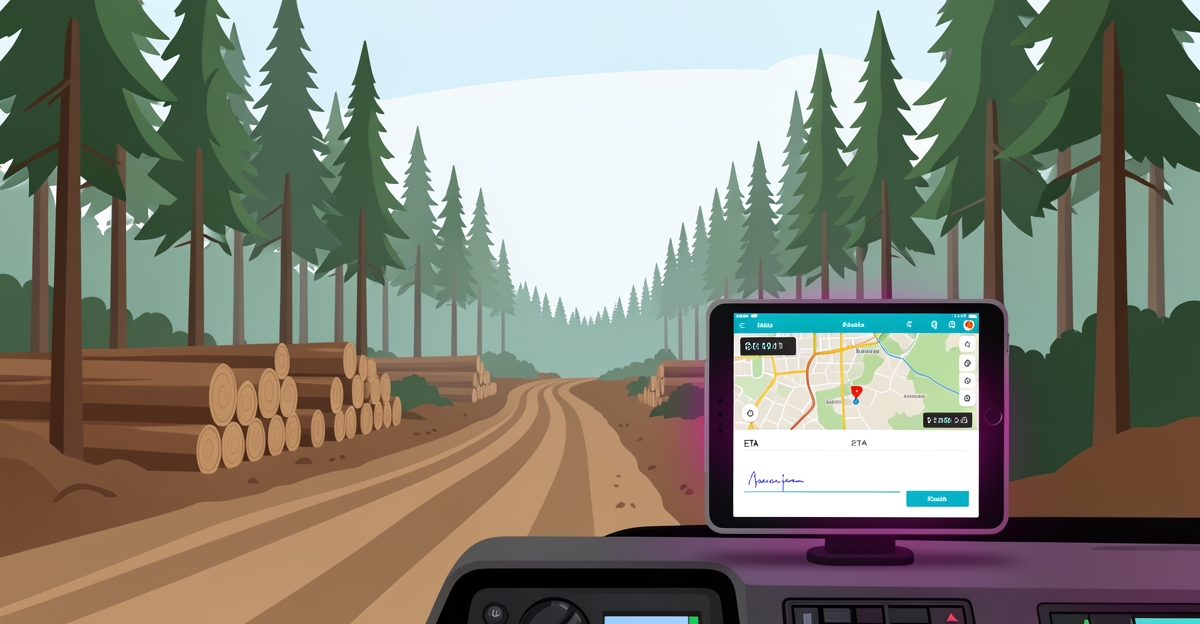
The core issue isn’t lack of effort—it’s that most logging sites weren’t built to handle the realities of the field. Remote job sites often have no reliable cell service, yet standard web platforms demand constant connectivity to update job status, log GPS coordinates, or confirm deliveries. Without offline functionality, crews in the backcountry or deep woods can’t record critical data until they’re back in range, creating gaps that ripple into billing disputes and compliance headaches. Even when online, these generic sites can’t dynamically update ETAs in real time or push branded tracking links to clients, leaving customers repeatedly calling to ask, “Where’s my load?”
- No unified view of crews, trucks, and loads in motion — just siloed tabs that slow down decision-making
- Manual entry of paper logs, spreadsheets, and handwritten notes that double the work and triple the errors
- Delayed delivery confirmations and missing geotags that weaken proof of service and client trust
- Inability to integrate with accounting, HR, or compliance systems, forcing duplicate data entry across platforms
Even when a site technically supports GPS, it often lacks the depth needed for logging operations. Real-time tracking must do more than show a dot on a map—it needs to log arrival times, capture photos as proof, and generate digital signatures instantly, all while working offline and syncing seamlessly when connection returns. As one operations manager put it, the difference between a system that tracks and one that transforms operations is whether drivers can use it without training—and whether the data flows automatically into the back office without manual cleanup.
AI Business Sites builds job tracking directly into your website’s admin platform, so what feels like scattered chaos on other sites becomes a single source of truth. The site tracks crews in real time, logs deliveries with photos and e-signatures, and updates clients automatically—even when crews are offline. No extra apps. No reconciling spreadsheets. Just your website doing the heavy lifting behind the scenes.
Five Features That Actually Move the Needle
Logging companies that adopt job tracking websites with real-time GPS and dynamic ETA features see measurable improvements in operational efficiency and client satisfaction. Real-time vehicle tracking provides visibility into team location and arrival times, enabling route optimization and reducing fuel waste by identifying better paths for future hauls. This capability also supports proactive adjustments during transit, which is critical when managing time-sensitive deliveries across remote logging routes. According to industry insights, real-time transparency through live tracking and branded client links builds trust by letting customers know exactly when to expect deliveries and monitor progress in real time.
Offline-first mobile applications are essential for crews working in areas with unreliable cellular coverage, a common challenge in logging operations. Systems that continue to capture data offline and synchronize when connectivity returns ensure no information is lost during hauls through remote timberlands. This functionality directly addresses a key barrier to adoption in field environments, where delayed sync or data loss can undermine trust in the system. Platforms offering this resilience help maintain consistent records of crew activity, load movements, and delivery confirmations regardless of location.
Automated documentation features—including geotagged photos, timestamps, and e-signatures—eliminate manual paperwork while creating legally valid proof of delivery. These tools streamline settlements and reconciliation by generating instant, auditable records that reduce disputes over load completion or timing. Crews benefit from faster turnaround between jobs, as digital PODs eliminate the need to return to the office for signature collection or form submission. When combined with client-facing tracking links, this creates a closed-loop system where both operators and customers have access to the same verified delivery data.
- 43 hours per week saved on administrative tasks
- $62,000 average annual savings
- Delivery time reduced from 24 to 17 minutes per delivery (29% improvement)
Integration with accounting and HR systems ensures that data captured in the field flows seamlessly into payroll, invoicing, and compliance workflows. This eliminates duplicate entry and reduces errors when transferring job completion data, crew hours, or load metrics between platforms. For logging companies managing multiple contracts and regulated hauls, this connectivity supports faster settlements and better financial oversight. The ability to connect with existing business tools also means companies can adopt new tracking capabilities without overhauling their entire tech stack, preserving investments in current software while gaining real-time field visibility. AI Business Sites incorporates these principles into its project management tools, enabling logging operations to track hauls, manage crews, and share progress with clients—all from a single, self-updating website.
Local business: doing this the old way?
One system replaces the whole pile.
All of it — the website, the follow-up, the content, the leads — built and run for you for $1,497 + $497/mo. Month-to-month, and you own everything.
See what your build includesHow to Evaluate a Platform Before You Commit
Before you commit to any job tracking platform, put it to the test under real-world conditions. Logging crews need tools that work when the signal drops, and the best systems prove their worth in the dead zones where your teams actually operate. Test offline functionality by turning off your phone’s data and trying to log a haul or update a delivery status—if the app crashes or loses data, it won’t survive your next remote site day. The Track-POD platform highlights how critical offline capability is for logging operations in areas with poor cellular coverage, ensuring no job slips through the cracks when connectivity fades.
Adoption speed matters just as much as technical specs. The fastest platforms earn trust from day one, especially with older crew members who may hesitate at new technology. Choose a system where veterans can start tracking jobs within hours, not weeks. One delivery company saw drivers pick up use quickly, including older, less tech-savvy team members—proof that simplicity trumps complexity when time is money. If your platform requires a week of training or separate apps for scheduling versus tracking, expect pushback and slower ROI.
Integration depth separates the keepers from the costly mistakes. A single system should unify load tracking, settlements, and accounting without manual exports or duplicate entries. The TRACT users in a University of Georgia study saved 43 hours per week and $62,000 annually by consolidating operations—hard numbers that vanish when tools don’t talk to each other. Avoid fragmented stacks where scheduling, time tracking, and communication live in separate apps; Arborgold warns these silos waste time and create confusion in the field.
Finally, confirm that paperless workflows hold legal weight. Digital signatures, geotags, and timestamped photos must serve as valid proof of delivery to avoid disputes with clients or regulators. Without this foundation, even the slickest tracking system risks costly chargebacks or compliance headaches.
- Test offline functionality before you buy—your crews will thank you when the signal drops.
- Prioritize platforms that onboard veteran crews within hours, not weeks, to avoid adoption delays.
- Reject fragmented tools that force crews to juggle separate apps for tracking versus scheduling.
- Demand legally valid paperless workflows—digital signatures and geotags must stand up in disputes.
Logging companies that skip these steps often end up paying for two systems: the shiny new tracking platform and the emergency patch for the gaps it left behind.
What Implementation Looks Like for a Logging Operation
What Implementation Looks Like for a Logging Operation
Implementing an effective job tracking website for a logging operation is more than just setting up software; it's about seamlessly integrating multiple operational facets. For logging companies, this means connecting haul tracking to crew assignments, enhancing client visibility, automating delivery confirmations, and configuring alerts for exceptions.
A well-designed system can yield significant benefits, such as reducing delivery times from 24 to 17 minutes per delivery (a 29% improvement, as seen with Imperial Dade's 100+ drivers) and saving an average of $62,000 annually, as highlighted in a University of Georgia study on TRACT users. Additionally, such systems can save 43 hours per week on administrative tasks, freeing up resources for core operations.
- Connecting Haul Tracking to Crew Assignments:
- Real-Time GPS Tracking: Ensure the system provides live vehicle tracking with dynamic ETA updates, even in remote areas with offline capability. This not only optimizes routes but also ensures that crew assignments are aligned with the actual location and schedule of hauls.
-
Unified Mobile App: Use a single app for crew management, eliminating the need for multiple tools and reducing confusion among field personnel.
-
Setting Up Client Visibility Portals:
- Branded Tracking Links: Offer clients direct, real-time visibility into their delivery status through custom links.
-
Instant Delivery Confirmations: Automate digital signatures and photos as proof of delivery, updating clients immediately.
-
Automating Delivery Confirmations:
- Digital Signatures & Photos: Capture and store these electronically for legal validity and transparency.
-
Auto-Notification System: Inform clients of delivery status changes in real-time, enhancing trust and reducing queries.
-
Configuring Alerts for Exceptions:
- Customizable Alerts: Set up notifications for late deliveries, route deviations, or any predefined exceptions to ensure prompt action.
-
Integration with Existing Systems: Ensure alerts feed into your CRM or project management tool for holistic oversight.
-
Offline Capability: Critical for remote logging areas, ensuring continuous functionality.
- Integration Capabilities: Must integrate with HR, scheduling, and accounting systems for streamlined operations.
- Ease of Adoption: Systems should be intuitive for all crew members, regardless of tech proficiency.
Imperial Dade, with over 100 drivers, saw a significant reduction in delivery time (from 24 to 17 minutes) by implementing a streamlined tracking system. This not only improved efficiency but also enhanced customer satisfaction through real-time updates. Similarly, logging companies can leverage such integrated platforms to not only track jobs effectively but also to automate administrative tasks, reduce costs, and improve client relationships.
By focusing on these key aspects, logging operations can ensure a successful implementation that drives tangible operational and financial benefits.
Frequently Asked Questions
How much time can a logging company save each week by using a job tracking website with integrated features?
What kind of annual cost savings can logging companies expect from reducing administrative overhead with a unified tracking system?
Why is offline functionality critical for logging crews working in remote areas?
How much faster can deliveries be completed with real-time tracking and automated confirmations, based on real-world examples?
What should logging companies look for to ensure their job tracking system integrates well with existing accounting and HR software?
Is it realistic to expect older or less tech-savvy crew members to adopt a new job tracking system quickly?
Turn Your Website Into Your Logging Operation’s Command Center
The average logging company spends 43 hours each week on manual tracking, reconciliation, and client updates—time that evaporates into lost fuel, frustrated clients, and $62,000 in annual overhead. The culprit isn’t effort; it’s fragmented tools that force crews to juggle spreadsheets, paper logs, and disconnected apps just to answer, *Where’s my load?* Real-time GPS tracking, offline-first mobile apps, and automated documentation aren’t luxuries; they’re the difference between guessing and knowing. When your website becomes the single source of truth—tracking crews in motion, logging deliveries with photos and e-signatures, and updating clients automatically—you reclaim those hours for core operations. Before committing, test any platform offline and watch how fast veteran crews adopt it. Ask whether it integrates with your accounting and HR systems, so data flows without reentry, or whether it’s another silo demanding constant attention. Your website shouldn’t just sit there. It should run your tracking, your paperwork, and your client updates behind the scenes. Start with a platform built to do both.
FOR local businesss — BUILT AND RUN BY US
Your website. Your content. Your leads. Your data.
$500 starts your build. Seven days later it's live — chat, booking, follow-up, and your Google presence all set up. Then we run it, every month. You do the work you actually get paid for.