
Key facts
- Wix has 263 million registered users as of January 2025 according to market data
- Wix ranks as the 3rd most used website builder among the top 10,000 sites globally per market analysis
- Wix saw a 13% increase in 2024 with a projected 15.2% rise for 2025 based on growth trends
- Over 3,000 stores switched from Wix to WooCommerce, the top destination for departing users per platform migration figures
- Wix offers over 2,000 free templates but requires manual setup for every workflow per independent testing
- AI Business Sites includes the quote→job→invoice→review loop in its $497/month plan per business brief
- AI Business Sites delivers 85+ pages live within 7 days from kickoff per service timeline
WANT RESULTS LIKE THIS?
Imagine a system doing all of this for your local business — every day, without you.
We build local businesses a custom website with a team of AI behind it: every lead captured and followed up, new content published monthly,customers finding you on Google — live in 7 days.
- 85+ pages at launch
- Every lead followed up, automatically
- Your whole business on one screen
The Illusion of Simplicity in Website Builders
Wix has become a go-to choice for small businesses seeking a simple way to build a website, holding the top spot among brands using basic website-building technologies and ranking as the third most used platform among the top 10,000 sites globally according to market analysis. Its widespread adoption is reinforced by strong growth trends, including a 13% increase in 2024 and a projected 15.2% rise for 2025, as reported in the same source. Despite this popularity, many service businesses discover too late that the ease of drag-and-drop design masks deeper operational shortcomings.
The illusion of simplicity often fades when owners try to manage lead follow-up, maintain consistent content, or connect essential business tools—areas where DIY builders frequently fall short without significant manual effort. While Wix offers over 2,000 free templates and supports more than 180 languages, as noted by independent testing, these features don’t automate the daily tasks that keep a service business running. Owners frequently find themselves juggling multiple disconnected systems just to capture a lead, send a quote, or follow up on an invoice.
This gap becomes especially apparent when comparing Wix’s self-service model to managed platforms that integrate automation and ongoing support. AI Business Sites, for example, includes built-in lead capture, AI-powered follow-up, and automated content publishing—eliminating the need for owners to become part-time web developers or marketers. The result is a website that doesn’t just look professional but actively works to support the business behind it.
Why Service Businesses Outgrow Basic Website Builders
For service businesses, the website is not a brochure — it is the front office. The moment a visitor asks for a quote, books a job, or pays an invoice, a basic builder's job description runs out. That gap between what a site displays and what a business actually does is where owners start feeling the limits.
Wix dominates the simple-builder category — market data shows it is the first choice for brands using simple website-building technologies, with 263 million registered users as of January 2025. For launching a clean site quickly, it works. The tension appears later, when the business needs the site to operate, not just exist.
The clearest signal lives in the switching data. Among stores leaving Wix, platform migration figures show WooCommerce as the top destination with 3,023 switches, followed closely by Shopify at 2,969. The research does not explain why they leave — but both destinations are operation-heavy platforms, which suggests growing businesses eventually need more machinery behind the storefront.
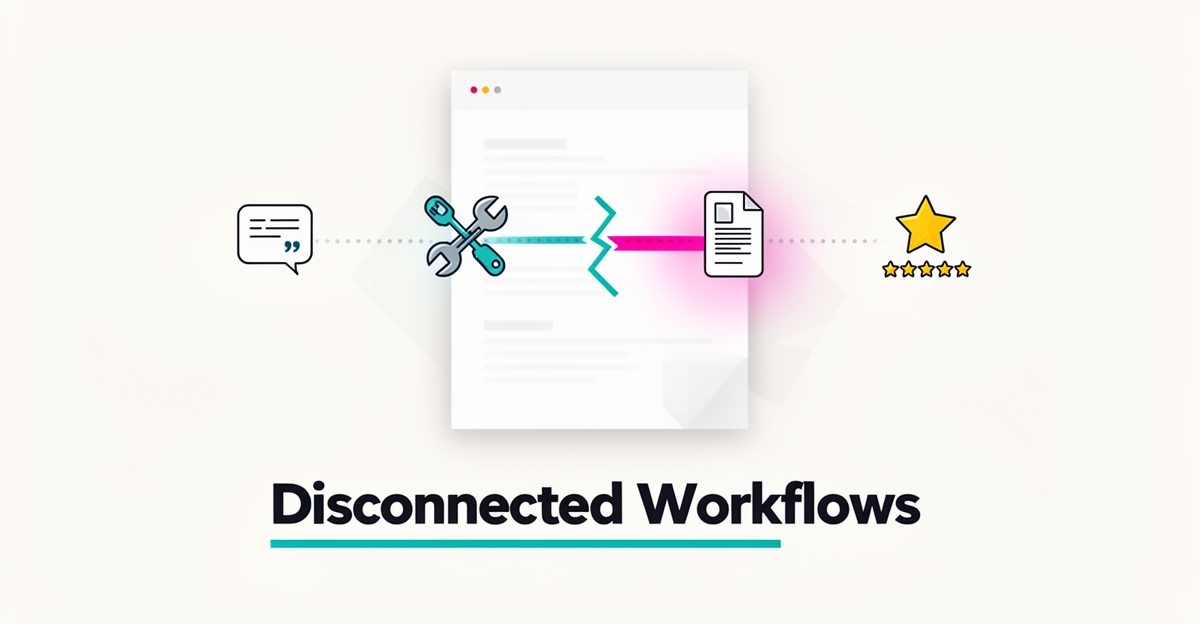
For a contractor, clinic, or cleaning company, that machinery is a specific loop:
- Drafting and sending quotes that customers can approve online
- Turning approved quotes into scheduled jobs on a real calendar
- Sending invoices that collect card payments without a phone call
- Requesting the Google review automatically after the job closes
On a standard builder, each of those steps typically means another subscription, another login, and another integration to babysit. Wix itself leans on an app market of 500+ add-ons to extend core functionality — which is exactly the problem. The business owner becomes the systems integrator, stitching together quoting tools, booking plugins, and review software that were never designed to talk to each other.
This is the operational ceiling that template-based builders were never designed to cross. They optimize for getting a page published, not for running the quote-to-invoice workflow that service businesses live on. Even reviewers who rank Wix as the best website builder for 2026 after 300+ hours of testing are evaluating it as a website builder — not as a back office.
The result is a familiar pattern: a polished website on the front, and a patchwork of six disconnected tools behind it. The business grows, the duct tape multiplies, and eventually the owner starts shopping for platforms built around operations rather than pages.
That is the gap a managed approach addresses. AI Business Sites builds the quote-to-job-to-invoice loop directly into the website, with AI drafting quotes, automated review requests, and follow-up running as one system — no app marketplace archaeology required. For service businesses that have outgrown the brochure stage, the question is not which builder has more templates. It is whether the website can actually run the work.
Local business: doing this the old way?
One system replaces the whole pile.
All of it — the website, the follow-up, the content, the leads — built and run for you for $1,497 + $497/mo. Month-to-month, and you own everything.
See what your build includesHow AI Business Sites Closes the Gap with Done-For-You Automation
For many service businesses, a Wix site starts as a simple brochure but quickly becomes a source of frustration as operational needs outgrow its capabilities. While Wix ranks as the third most used website builder among the top 10,000 sites globally and maintains strong growth with a 13% increase in 2024, its strength as a DIY platform reveals limits when businesses need more than a static online presence. Owners often find themselves juggling multiple subscriptions—separate tools for CRM, quoting, invoicing, and review requests—just to replicate what an integrated system handles natively. The platform’s template-based approach, despite offering over 2,000 free designs, requires manual setup for every workflow, leaving critical functions like lead follow-up or job scheduling to fall through the cracks during busy days on job sites.
AI Business Sites closes this gap by replacing the patchwork of tools with a done-for-you AI business operating system that includes a custom website and an intelligent back office—managed entirely by our team. For a $1,497 setup fee and $497/month, clients receive a live site within 7 days with 85+ pages, ongoing SEO content (14+ pieces monthly), and core operational modules like Jobs & Estimates, which automates the quote → job → invoice → review loop without per-seat fees. Unlike Wix’s app-dependent model, where adding basic functionality often means navigating paid integrations, AI Business Sites includes hosting, maintenance, AI-powered content generation, voice and chat agents, CRM, and invoicing—all configured and updated by us. The client owns everything—code, content, domain, and Stripe account—while we handle the technical work, ensuring the system runs the business behind the scenes so owners can focus on delivering their service. This managed approach eliminates the unspoken frustration of platform switching: no more duct-taping six SaaS tools together or missing calls because the website can’t answer or follow up. Instead, the site becomes a working system that captures leads, writes quotes, schedules jobs, collects payments, and requests reviews—all from one unified, AI-driven interface that requires no prompting, integrations, or daily oversight from the business owner.
Frequently Asked Questions
Is Wix still one of the most used website builders?
How many people actually use Wix?
Are there signs businesses are leaving Wix for other platforms?
Does Wix have enough templates and language support to get started quickly?
Why do service businesses say Wix feels limiting after launch?
Can Wix handle quote-to-job-to-invoice workflows out of the box?
From Brochure to Business Engine: What Comes Next
For service businesses, the real cost of a website isn’t just in the setup—it’s in the time lost juggling tools, chasing follow-ups, and rebuilding workflows that should run on their own. Wix gets you online fast, but as the article shows, its strength as a DIY builder becomes a liability when your site needs to do more than look good—it needs to quote, schedule, invoice, and follow up without you becoming a part-time developer. That’s where managed platforms like AI Business Sites shift the equation: by handling the technical work behind the scenes, they turn your website into a working system that captures leads, runs your quote-to-invoice loop, and keeps your business moving—even when you’re on a job site. If you’re tired of duct-taping subscriptions together and ready for a site that actually runs the business, the next step is simple. Book a free strategy call to see how it works—no obligation, just a real conversation about what you need. Start your build.
FOR local businesss — BUILT AND RUN BY US
Your website. Your content. Your leads. Your data.
$500 starts your build. Seven days later it's live — chat, booking, follow-up, and your Google presence all set up. Then we run it, every month. You do the work you actually get paid for.