
Key facts
- Over 80% of diners check reviews before choosing a restaurant before deciding.
- 70% of Tier 1 restaurant revenue comes from online ordering according to industry data.
- 85.4% of online orders happen on mobile devices for Indian restaurants.
- A restaurant’s Google Business Profile views increased 220% after optimizing photos and posts in a case study.
- Online orders jumped 13x after integrating Google reviews and authenticity-focused content per the same case study.
- Upscale Indian restaurants succeed by spotlighting regional cuisines like Tamil Nadu and Kerala CNBC reports.
- Restaurants using stock photos and generic menus lose trust compared to those sharing real dish stories and cultural narratives per growth insights.
WANT RESULTS LIKE THIS?
Imagine a system doing all of this for your local business — every day, without you.
We build local businesses a custom website with a team of AI behind it: every lead captured and followed up, new content published monthly,customers finding you on Google — live in 7 days.
- 85+ pages at launch
- Every lead followed up, automatically
- Your whole business on one screen
Why Most Indian Restaurant Websites Fail to Build Trust
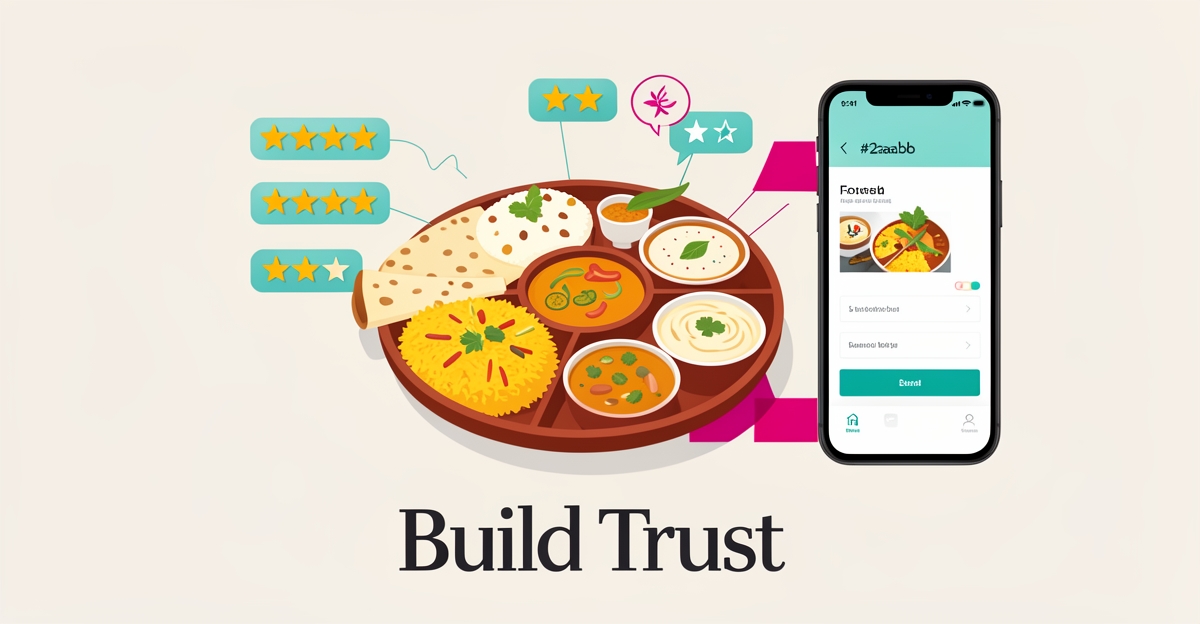
Most Indian restaurant websites still feel like placeholders — generic stock photos of butter chicken, a PDF menu last updated in 2019, and zero proof that real people actually eat there. Diners notice. Over 80% of diners check reviews before choosing a restaurant, according to a case study tracking organic growth for an Indian restaurant, yet most sites bury social proof or skip it entirely organic growth case study.
- Stock images that could belong to any curry house in any city
- Menus listing "Chicken Curry" with no regional context or ingredient story
- No staff photos, no kitchen shots, no cultural narrative
- Zero integration with Google reviews or customer photos
The gap matters more now because the upscale Indian dining boom is raising the bar for authenticity online. Restaurants like Semma in New York and Copra in Los Angeles succeed by spotlighting specific regional cuisines — Tamil Nadu, Kerala, Goa — and telling the stories behind each dish CNBC report on upscale Indian restaurants. Chef Vikas Khanna puts it plainly: "You need to patronize the cuisine." Diners now expect that same specificity before they even walk through the door.
Meanwhile, 70% of Tier 1 restaurant revenue comes from online ordering, and 85.4% of those orders happen on mobile Indian restaurant industry statistics. A website that looks generic doesn't just lose trust — it loses orders. One case study showed that optimizing a Google Business Profile with authentic photos and regular posts grew profile views from 8,400 to 27,000 monthly — a 220% jump organic growth case study. The restaurants winning trust online aren't doing anything magic. They're showing real food, real regions, and real feedback — consistently.
The Authenticity Elements That Actually Convert Visitors
The Authenticity Elements That Actually Convert Visitors
For Indian restaurant owners, building trust with potential diners through a website is paramount. Authenticity is the cornerstone of this trust, and several key website components have been proven to convert visitors into loyal customers. Backed by compelling research data, these elements include high-quality, genuine visuals, storytelling, verified customer feedback, and a seamless, authentic online ordering experience.
1. High-Quality, Genuine Visuals Investing in high-quality photos of real dishes, prepared in-house, and staff at work, significantly enhances trust. A case study highlighted in a recent industry report (growwithba.com) shows that authentic visuals can be a game-changer, contributing to a substantial increase in online orders. For example, showcasing photos of chefs preparing traditional dishes or the bustling kitchen can make the dining experience feel more authentic.
2. Regional Storytelling for Signature Dishes Weaving in the cultural and regional stories behind signature dishes on the website resonates deeply with customers seeking authenticity. CNBC (cnbc.com) notes the boom in upscale Indian dining, where authenticity through storytelling is a key differentiator. Describing the origins of a dish, such as its regional roots or the chef's inspiration, can evoke a sense of heritage.
3. Verified Customer Reviews Integrated from Google Business Profile (GBP) Over 80% of diners (growwithba.com) check reviews before choosing a restaurant. Integrating verified Google Business Profile reviews directly into the website builds immediate credibility. A notable case study saw GBP views increase by 220% and online orders surge by 13 times after optimizing and integrating GBP reviews and posts.
4. Direct Ordering System Highlighting Authenticity Reducing dependency on food aggregators by implementing a direct ordering system not only increases margins but also allows for showcasing the authenticity of dishes within the ordering interface. Restroworks (restroworks.com) highlights that 85.4% of orders now come via mobile apps, with a digital payment preference, underscoring the need for a seamless, trustworthy direct ordering experience.
Actionable Takeaways for Indian Restaurant Owners:
- Invest in Authentic Visual Content: High-quality photos of dishes and staff.
- Tell the Story Behind Your Dishes: Highlight regional and cultural authenticity.
- Leverage Verified Reviews: Integrate Google Business Profile reviews into your website.
- Implement a Direct, Authentic Ordering System: Reduce aggregator dependency and highlight dish authenticity.
By incorporating these authenticity-driven elements, Indian restaurant owners can significantly enhance their website's ability to build trust and convert visitors into regular customers, as evidenced by the remarkable growth metrics from the referenced case study. AI Business Sites, with its custom website solutions, can help streamline this process, ensuring a website that not only looks authentic but also functions seamlessly to capture and convert leads.
Local business: doing this the old way?
One system replaces the whole pile.
All of it — the website, the follow-up, the content, the leads — built and run for you for $1,497 + $497/mo. Month-to-month, and you own everything.
See what your build includesHow to Execute This Without a Marketing Team
You don't need a marketing degree to run a trust-building website — you need a routine that fits between prep and service. The case study behind one Indian restaurant's growth from six to 79 daily online orders proves that effective SEO and content strategies require no deep technical skills, just consistent execution.
Start with a 20-minute weekly GBP ritual: update hours, post one dish photo with its regional story, and reply to every review. Capture photos during service — phone cameras work when you shoot in natural light and plate with intention. Build a simple spreadsheet: dish name, region, one-sentence origin story, and the photo file name. That becomes your content library.
- Monday: GBP update + review responses (15 minutes)
- Wednesday: Photograph two regional specials during prep
- Friday: Write one staff spotlight or dish story (10 minutes)
- Daily: Check direct ordering dashboard for friction points
The research shows 85.4% of orders come via mobile apps and over 80% of diners check reviews first — so your review response system matters as much as your menu. Draft templates for common scenarios (thank you, apology, dietary question) and personalize each reply with the guest's name and specific dish.
AI Business Sites handles the heavy lifting: the platform generates authentic regional dish stories, staff spotlights, and review response drafts automatically while you stay in control — approving, editing, or skipping any piece before it goes live. Your direct ordering system connects to the same dashboard, so menu changes, photo updates, and story additions sync everywhere without double entry. The website runs the routine; you run the restaurant.
Frequently Asked Questions
What should I include on my Indian restaurant website to build trust with customers?
Do I need professional photography for my restaurant website?
How important are customer reviews for my restaurant’s website?
Should I highlight regional cuisines on my menu to attract more customers?
How can I make my restaurant website more engaging without a marketing team?
Do I need a direct online ordering system for my restaurant website?
Key Takeaways
{ "title": "Serving Trust, One Authentic Website at a Time", "content": "In the era of the upscale Indian dining boom, where 70% of revenue flows from online ordering and 80% of diners rely on reviews, authenticity is the recipe for trust. By ditching generic placeholders for genuine visuals, region
FOR local businesss — BUILT AND RUN BY US
Your website. Your content. Your leads. Your data.
$500 starts your build. Seven days later it's live — chat, booking, follow-up, and your Google presence all set up. Then we run it, every month. You do the work you actually get paid for.