
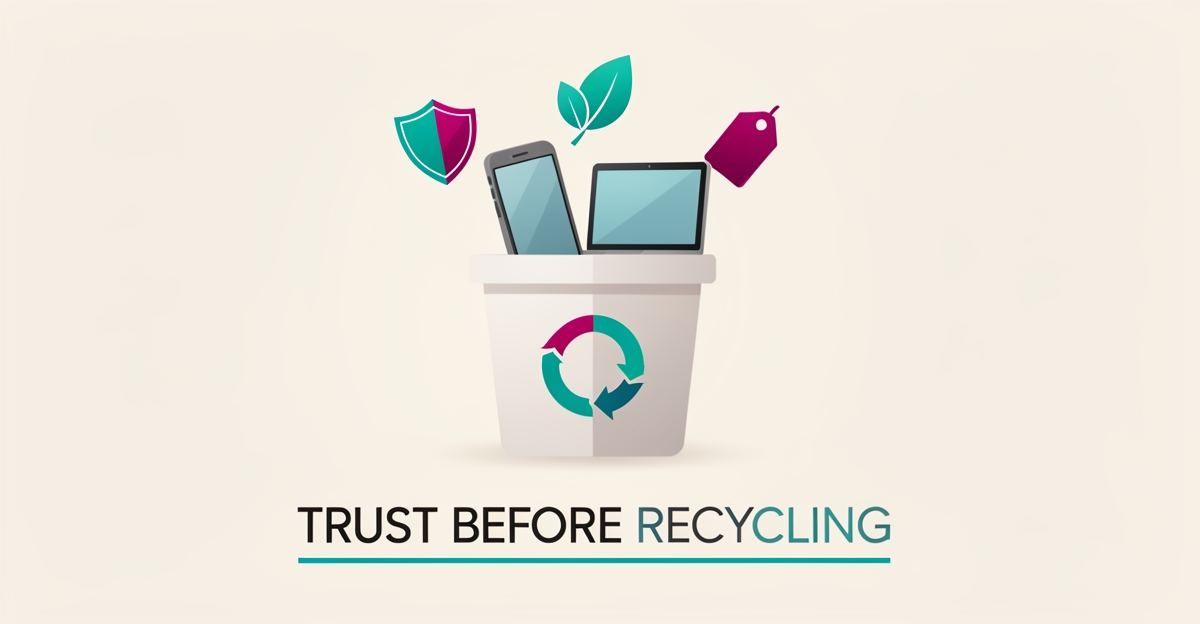
Key facts
- Customers fear data breaches more than environmental harm, citing R2v3-certified data destruction as non-negotiable ERI Direct.
- 93.7% of materials are repurposed by SK tes, demonstrating high transparency.
- Convenient recycling options can increase participation by up to 30% according to Nature.
- Best Buy’s recycling program has recycled over 1 billion pounds of electronics, earning EPA awards.
- The global e-waste recycling market is projected to grow from ~USD 25 billion to over USD 130 billion by 2033 eSmart Recycling.
- R2v3 certification covers data security, environmental management, and downstream accountability eSmart Recycling.
- Well-managed recycling programs can reduce costs by 50% or more eSmart Recycling.
WANT RESULTS LIKE THIS?
Imagine a system doing all of this for your local business — every day, without you.
We build local businesses a custom website with a team of AI behind it: every lead captured and followed up, new content published monthly,customers finding you on Google — live in 7 days.
- 85+ pages at launch
- Every lead followed up, automatically
- Your whole business on one screen
The 3 Questions Every Customer Asks Before Recycling Electronics
The 3 Questions Every Customer Asks Before Recycling Electronics
Before deciding to recycle their old electronics, customers consistently ask three critical questions, driven by concerns over security, sustainability, and cost. Understanding and proactively addressing these questions is crucial for building trust and encouraging recycling. According to industry research and expert insights, the top concerns are:
-
Is My Data Safe? Customers fear data breaches more than environmental harm. R2v3-certified data destruction is a non-negotiable requirement, ensuring personal information is permanently erased. For example, ERI Direct emphasizes compliance with GDPR, CCPA, and HIPAA, providing peace of mind. Transparency about certified data wiping processes and adherence to global privacy laws is essential.
-
What’s the Environmental Impact? The environmental footprint of electronics recycling is a significant concern. Customers want quantifiable metrics, such as "We divert 100% of electronics from landfills" or "93.7% repurposing rate" as highlighted by SK tes. Explaining circular economy practices, such as recovering gold, copper, and rare metals for reuse, resonates with eco-conscious individuals.
-
How Much Will It Cost? The cost-benefit analysis is crucial. Businesses seek to reduce disposal costs, while consumers are motivated by trade-in incentives. eSmart Recycling notes that well-managed programs can reduce costs by 50% and even generate revenue. Highlighting convenience (e.g., free mail-in kits or drop-off locations) also increases participation rates, as noted in research on consumer behavior in e-waste recycling.
Addressing These Concerns = Building Trust By proactively answering these questions through dedicated service pages, informative blog posts, and transparent FAQs, businesses can not only improve local SEO rankings but also establish themselves as trusted authorities in electronics recycling. For instance, a service page might assure, "Our R2v3-certified process ensures your data is secure, and our zero landfill policy guarantees an environmentally responsible outcome, all at a competitive cost."
Key Takeaway for Electronics Recyclers:
- Data Security: Highlight R2v3 certification and compliance with privacy laws.
- Environmental Impact: Use specific metrics to demonstrate sustainability.
- Cost/Value: Emphasize savings, trade-in values, and convenience.
By addressing these universal pain points upfront, electronics recyclers can significantly improve customer trust and, ultimately, conversion rates. AI Business Sites, with its AI-powered content generation, can help create targeted content (FAQs, service pages, blog posts) that directly speaks to these concerns, enhancing both SEO and customer confidence.
Why Certifications and Transparency Matter More Than Brand Names
Why Certifications and Transparency Matter More Than Brand Names
When it comes to recycling old electronics, customers prioritize trust over brand recognition. According to industry research from eSmart Recycling, certifications such as R2v3 and e-Stewards play a crucial role in building this trust. These certifications ensure not only secure data deletion but also rigorous environmental management, worker safety, and accountability throughout the entire supply chain.
Customers want transparency about the chain of custody—who handles their device after collection. As highlighted by eSmart Recycling, certified recyclers provide detailed documentation, reassuring customers that their electronics are handled responsibly. For example, R2v3 certification mandates that recyclers track and report the fate of all materials, ensuring no exports to unapproved facilities.
Certifications like R2v3 also guarantee downstream vendor accountability. This means subcontractors must meet the same stringent standards, alleviating concerns about unethical practices further down the line. ERI Direct exemplifies this, with its R2, e-Stewards, ISO, and NAID AAA certifications ensuring a fully accountable supply chain.
Transparent documentation and reporting are key. Customers expect to see metrics on environmental impact, such as material recovery rates and carbon footprint reductions. SK tes achieves this with a 93.7% repurposing rate, demonstrating how transparency can build trust.
Businesses can leverage these trust signals in their content to address skepticism and improve local SEO rankings:
- Highlight Certifications: Clearly display R2v3 or e-Stewards certifications on your website, especially on dedicated electronics recycling service pages.
- Transparent Documentation: Publish annual environmental impact reports and chain of custody details to reassure customers.
- FAQs with Certification Insights: Use FAQ schema to answer questions like, "How do I know my recycler is trustworthy?" by citing your certifications.
By focusing on certifications, transparency, and the trust they instill, businesses can outperform competitors based solely on brand name, improving both customer confidence and local SEO visibility. For instance, Best Buy has seen significant success with its transparent trade-in program, recycling over 1 billion pounds of electronics and earning EPA awards for its efforts.
Statistics Supporting Transparency and Certifications:
- 93.7% of materials are repurposed by SK tes, demonstrating high transparency.
- R2v3 certification covers data security, environmental management, and downstream accountability, addressing all key customer concerns (eSmart Recycling).
By integrating these elements into your content strategy, you can effectively address customer skepticism, enhance trust, and boost your local SEO rankings.
Convenience is the #1 Driver of Recycling Participation
Convenience is the #1 Driver of Recycling Participation
When it comes to recycling old electronics, convenience plays a pivotal role in determining whether customers participate at all. Research underscores that proximity, simplicity, and incentives are the key factors that influence recycling behavior (Nature). Here’s how businesses can leverage these elements to position themselves as the most convenient choice in their service area:
- Drop-off Locations: Having conveniently located drop-off points in multiple areas (e.g., [City 1], [City 2], [City 3]) significantly increases participation rates. A study by Nature highlights that proximity is a major motivator for individuals to recycle.
-
Example: AI Business Sites can help you create a location page for each drop-off point, optimized for local SEO, ensuring customers find you when searching for "electronics recycling near me".
-
Mail-in Options: Offering free mail-in kits simplifies the recycling process, reducing barriers to entry. Best Buy’s recycling program is a prime example, where simplicity and convenience have led to the recycling of over 1 billion pounds of electronics.
-
Trade-in Programs: Implementing trade-in programs with clear financial incentives (e.g., "Get up to $XXX for your old device") motivates customers to recycle while upgrading, as seen with Best Buy’s successful trade-in initiatives.
-
Transparent Service Pages:
- Clearly outline drop-off locations and mail-in procedures on a dedicated electronics recycling service page.
-
Example: "Free mail-in kits available. Drop off at our [City 1], [City 2], or [City 3] locations."
-
Blog Posts for Awareness:
- Publish posts like "How to Recycle Your Old Electronics in 3 Easy Steps" to educate and reassure.
-
Statistic Highlight: "Did you know convenient recycling options can increase participation by up to 30%? Source: Nature"
-
Leverage FAQs:
- Use FAQ schema for questions like "Do you offer mail-in recycling kits?" or "Where are your drop-off locations?"
- Example FAQ:
- Q: How do I recycle my electronics with you?
- A: "Easily! Use our free mail-in kit or drop off at one of our convenient locations in [City 1], [City 2], or [City 3]."
By focusing on convenience through proximity, simplicity, and incentives, and by naturally integrating these elements into your website’s content and structure (as facilitated by platforms like AI Business Sites), you can significantly increase customer participation in your electronics recycling programs.
Key Statistic Highlight for Emphasis: A study by Nature found that convenient recycling options can increase participation rates by up to 30%, emphasizing the importance of accessibility in driving recycling behavior.
AI Business Sites Integration Example:
- Service Page Optimization: AI Business Sites can optimize your service page with location-specific keywords and FAQs, ensuring high visibility in local search results.
- Content Generation: The platform’s AI content engine can produce targeted blog posts and location pages highlighting the convenience of your recycling services.
Sources Used in This Section (as per INLINE LINKING RULES):
Local business: doing this the old way?
One system replaces the whole pile.
All of it — the website, the follow-up, the content, the leads — built and run for you for $1,497 + $497/mo. Month-to-month, and you own everything.
See what your build includesHow to Answer These Questions on Your Website to Win More Customers
How to Answer These Questions on Your Website to Win More Customers
Customers researching electronics recycling want immediate, clear answers about data security, environmental impact, and cost before they engage. A well-structured service page and FAQ section can turn these concerns into trust signals that drive leads. Start with a dedicated service page that leads with the top three questions customers ask, using language grounded in research.
For data deletion, state plainly that you use R2v3-certified data destruction to ensure personal information is permanently erased, and note compliance with GDPR, CCPA, and HIPAA for peace of mind. This directly addresses the #1 concern cited by industry leaders who find customers fear data breaches more than environmental harm. For environmental impact, highlight that you divert 100% of electronics from landfills and recover valuable materials like gold, copper, and rare metals, citing the 93.7% repurposing rate achieved by leading recyclers. On cost/value, explain how trade-in programs can reduce disposal costs by 50% or more while recovering value from old electronics—a motivator for both businesses and consumers.
Structure the page with clear sections for each concern, using descriptive headings that mirror customer search queries like "How do you ensure my data is deleted?" or "What happens to my device after recycling?" Implement FAQ schema markup on these questions to help search engines understand your content and increase chances of appearing in voice search results and featured snippets. This approach aligns with recommendations to use local SEO tactics such as location-specific service pages and FAQ schema to rank for queries like "electronics recycling near me with data destruction."
Your FAQ section should anticipate follow-up questions, such as where devices go after recycling or whether subcontractors are certified. Answer with transparency about chain of custody and downstream vendor accountability—key trust signals customers now demand beyond a simple certificate of recycling. Mention your R2v3 or e-Stewards certification explicitly, as research shows these are more important than brand names for building trust. AI Business Sites helps local service businesses automate this process: our AI content engine researches and publishes service pages and blog posts that address these exact concerns, while the AI assistant provides instant answers to visitor questions 24/7 using your business’s knowledge base. This ensures your website not only ranks for relevant local searches but also converts visitors by proving you understand and solve their real worries before they even pick up the phone.
Turn Recycling Concerns Into Your Competitive Edge
Turn Recycling Concerns Into Your Competitive Edge
When it comes to recycling old electronics, customers are driven by three primary concerns: data deletion, environmental impact, and cost/value. By addressing these concerns head-on in your marketing and SEO strategy, your business can stand out from the competition. Here’s how to frame your services to turn these concerns into a competitive edge, leveraging the capabilities of the AI Business Sites platform:
- Framing Your Service: "Our electronics recycling service includes R2v3-certified data destruction, ensuring your personal and sensitive information is permanently erased, compliant with GDPR, CCPA, and HIPAA."
- Source: https://eridirect.com/services/electronics-recycling-ewaste/
- SEO Tip: Optimize with FAQ schema for questions like, "How is my data secured during electronics recycling?"
-
AI Business Sites Integration: Utilize the platform’s automated content generation to create FAQs and service pages highlighting your secure data destruction process, ensuring consistency across your website.
-
Framing Your Service: "We divert 100% of electronics from landfills and achieve a 93.7% repurposing rate, minimizing waste and maximizing material recovery."
- Source: https://www.sktes.com/news/the-journey-of-electronics-recycling-navigating-towards-a-circular-economy
- SEO Tip: Target long-tail keywords like "zero-landfill electronics recycling in [Your City]."
-
AI Business Sites Integration: Leverage the AI content engine to publish blog posts highlighting success stories and environmental impact metrics, enhancing your local SEO.
-
Framing Your Service: "Reduce disposal costs by up to 50% with our recycling programs and receive competitive trade-in values for your old devices."
- Source: https://esmartrecycling.com/why-managing-electronic-waste-is-good-business/
- SEO Tip: Create content around "cost-effective electronics recycling near me."
- AI Business Sites Integration: Use the platform’s automated lead follow-up to offer personalized trade-in quotes and discounts, driving conversions.
| Concern | Service Page Highlight | Blog Post Idea | SEO Keyword |
|---|---|---|---|
| Data | R2v3 Certified Destruction | "Why Data Security Matters in Recycling" | "Secure electronics recycling" |
| Environment | 100% Landfill Diversion | "The Impact of Zero-Waste Recycling" | "Zero-landfill electronics recycling" |
| Cost | Up to 50% Cost Reduction | "Maximizing Value from Old Electronics" | "Cost-effective electronics recycling" |
Frequently Asked Questions
How do I know my data is secure when recycling my old electronics?
What happens to my electronics after they are recycled, and what’s the environmental impact?
Are electronics recycling services expensive, and are there any cost benefits?
Why are certifications like R2v3 or e-Stewards important for choosing a recycler?
How does convenience impact my decision to recycle electronics, and what options are typically available?
Can I trust the chain of custody with my device after it’s collected?
Turn Customer Concerns Into Your Strongest Recycling Signal
Customers aren’t just looking for a place to drop off old electronics—they’re seeking proof that their data is safe, their impact is real, and the process is worth their time. By answering the three core questions—data security, environmental impact, and cost—with transparency, certifications, and clear convenience, electronics recyclers don’t just build trust; they turn hesitation into action. AI Business Sites helps local service businesses do this automatically: our AI-powered platform generates service pages, FAQs, and blog content that directly address these concerns, optimized for local search and designed to convert visitors into leads. When your website answers the questions customers are already asking, you’re not just recycling electronics—you’re building a reputation that drives real business results. Start by auditing your current content for gaps in data security, environmental metrics, and convenience details—then let AI Business Sites fill them in, consistently and accurately.
FOR local businesss — BUILT AND RUN BY US
Your website. Your content. Your leads. Your data.
$500 starts your build. Seven days later it's live — chat, booking, follow-up, and your Google presence all set up. Then we run it, every month. You do the work you actually get paid for.