
Key facts
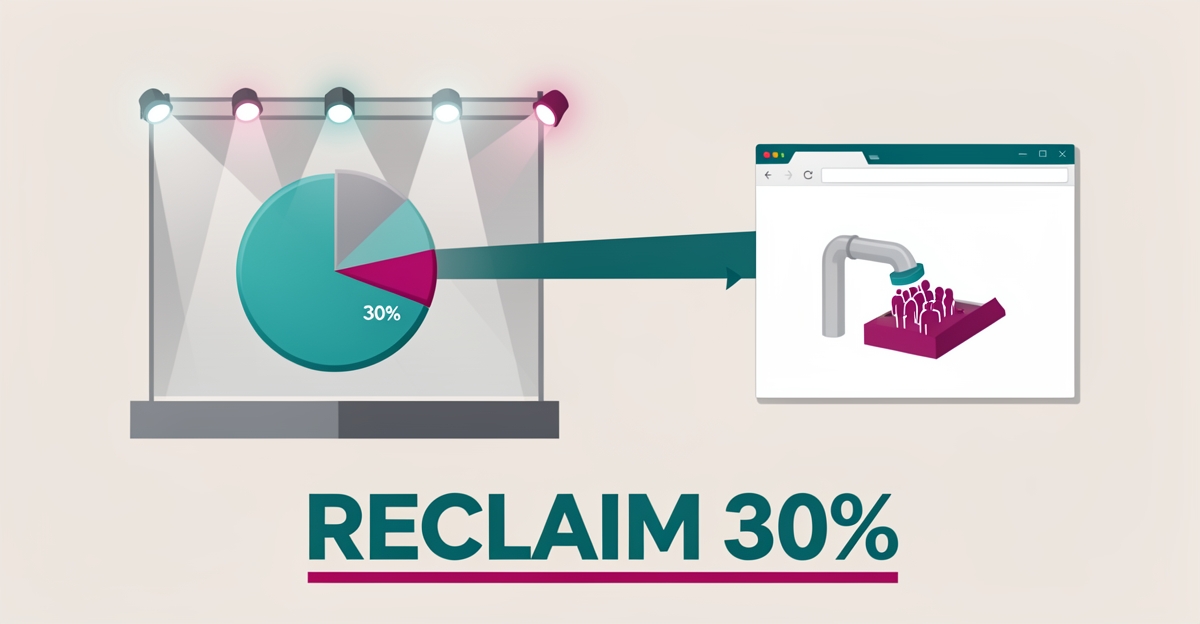
- Third-party ticketing platforms extract up to 30% of venue revenue through fees while locking away customer data that drives long-term growth
- Web-based ticketing platforms hold 58.4% market share in 2025 because superior SEO reduces customer acquisition costs by 38% versus mobile-only approaches
- 73% of global online ticket transactions now occur via mobile, up from 52% in 2022 and projected to reach 84% by 2030
- Integrated ticketing and CRM systems drive 19–23% increases in ancillary spending per attendee through targeted marketing automation
- AI-powered dynamic pricing delivers 23–28% revenue lifts over static models while predictive analytics achieve 87% demand forecasting accuracy
- Mesmerica achieved 300% year-over-year growth after implementing white-label ticketing and owning the end-to-end customer journey
- Overtime Elite sold more tickets in a single weekend on their owned platform than in their entire previous season on a third-party system
WANT RESULTS LIKE THIS?
Imagine a system doing all of this for your local business — every day, without you.
We build local businesses a custom website with a team of AI behind it: every lead captured and followed up, new content published monthly,customers finding you on Google — live in 7 days.
- 85+ pages at launch
- Every lead followed up, automatically
- Your whole business on one screen
The Hidden Cost of Third-Party Ticketing: Margin Erosion in the Digital Age
Third-party ticketing platforms have turned venues into tenants on their own property, extracting value at every transaction while locking away the customer data that drives long-term growth. The global digital ticketing market is projected to reach $107.7 billion by 2034, yet venues surrendering to marketplace dependency watch margins erode with every ticket sold.
Research shows web-based ticketing platforms hold 58.4% market share in 2025, largely because superior SEO reduces customer acquisition costs by 38% compared to mobile-only approaches. Meanwhile, 73% of global online ticket transactions now occur via mobile, creating a clear imperative: venues need owned web infrastructure that captures mobile demand without surrendering control.
- Third-party platforms charge for access to your own customer data — a landlord model that undermines profitability
- Marketplace ticketing shows competitor ads on your event pages, diverting buyers you already earned
- Integrated ticketing and CRM systems drive 19–23% increases in ancillary spending per attendee
- AI-powered dynamic pricing delivers 23–28% revenue lifts over static models
Venues that reclaim ownership see immediate results. Mesmerica achieved 300% year-over-year growth after implementing white-label ticketing and owning the end-to-end customer journey. Overtime Elite sold more tickets in a single weekend on their own platform than in their entire previous season on a third-party system.
AI Business Sites builds custom websites that integrate direct booking and ticketing flows natively — no contracts, lower overhead, and full data ownership. Your website becomes the commerce engine, not a referral link to someone else's marketplace.
Breaking Free: The Business Case for Owned Web Ticketing Strategies
The data makes it clear: venues operating on third-party platforms function as tenants on their own property, surrendering customer data and brand control to marketplaces that treat their audience as inventory. This "landlord-tenant" dynamic directly undermines long-term profitability, but the alternative is already proving its value. Mesmerica achieved 300% year-over-year growth by implementing white-label ticketing and owning the end-to-end customer journey, while Overtime Elite sold more tickets in a single weekend after switching platforms than they had in their entire previous season.
Web-based ticketing platforms maintain 58.4% market share in 2025 largely because their superior SEO capabilities reduce customer acquisition costs by 38% compared to mobile-only approaches. This advantage compounds when venues integrate ticketing with CRM and marketing tools through headless APIs — a combination that drives 19-23% increases in ancillary spending per attendee through targeted marketing. The shift is accelerating: 64% of large North American venues have implemented unified ticketing and CRM systems by Q2 2026, up from just 38% in 2023.
An owned web strategy delivers three compounding advantages that third-party platforms cannot match:
- Full data sovereignty — your customer relationships, purchase histories, and behavioral insights stay yours
- Elimination of marketplace competition — no competitor ads appearing on your own event pages
- Trust-building checkout on your own domain, which increases conversion rates
The technology enabling this transition has matured significantly. Modern API-first architectures replace the "innovation ceiling" of legacy monolithic systems, while asynchronous processing ensures site stability during high-demand on-sales. AI-powered dynamic pricing algorithms now deliver 23-28% revenue increases per event compared to static models, and predictive analytics achieve 87% accuracy in demand forecasting. These capabilities, once reserved for enterprise venues, are increasingly accessible through platforms designed as invisible engines rather than restrictive marketplaces.
For venues ready to make the shift, the website itself becomes the primary revenue engine — not a marketing brochure that sends traffic elsewhere. AI Business Sites builds custom websites with native ticketing and CRM integration, so the checkout, customer data, and marketing automation all live on your domain. The result is a digital asset that appreciates in value with every transaction, rather than a recurring cost that scales with your success.
Local business: doing this the old way?
One system replaces the whole pile.
All of it — the website, the follow-up, the content, the leads — built and run for you for $1,497 + $497/mo. Month-to-month, and you own everything.
See what your build includesPractical Implementation: Transitioning to an Owned Ticketing Platform with AI-Driven Websites
Venues facing steep third-party ticketing fees can reclaim control by transitioning to an owned web ticketing strategy. This shift begins with selecting a platform that supports direct sales, integrates with existing CRM and marketing tools, and operates without long-term contracts or hidden fees. The goal is to build a seamless, branded experience where the venue owns the customer relationship from first click to post-event follow-up.
The implementation process starts with auditing current ticketing workflows and identifying integration points with systems like email marketing, customer databases, and analytics tools. Next, venues should choose a white-label solution that allows full customization of the checkout experience, ensuring brand consistency across all touchpoints. Research shows that web-based ticketing platforms held 58.4% market share in 2025 due to superior SEO capabilities that reduce customer acquisition costs by 38% compared to mobile-only approaches, making them ideal for owned strategies according to industry reports.
Integration with CRM and marketing platforms via headless APIs enables real-time data synchronization, which drives 19-23% increases in ancillary spending per attendee through targeted marketing efforts as demonstrated in venue case studies. This connectivity also improves ROI measurement by accurately attributing ad spend to actual ticket sales. Venues should prioritize platforms that support AI-powered features like dynamic pricing and predictive analytics, which have delivered 23-28% revenue increases per event compared to static pricing models based on enterprise adoption trends.
AI Business Sites builds custom websites that include owned ticketing functionality as part of a unified business platform. These sites are designed to run themselves—handling lead capture, automated follow-ups, and content updates—while giving venues full control over their data, domain, and customer interactions. By eliminating third-party dependency, venues not only protect margins but also build stronger, direct relationships with their audience. The transition isn’t just about switching platforms—it’s about owning the entire fan journey.
Frequently Asked Questions
How much revenue are venues actually losing to third-party ticketing platforms?
What happens to my customer data when I use a third-party ticketing platform?
Will switching to my own ticketing platform hurt my mobile sales since most buyers use phones?
Can an owned ticketing platform actually increase my revenue beyond just saving fees?
Is it difficult to transition from a third-party platform to an owned web strategy?
What real results have other venues seen after switching to owned ticketing?
Turn Your Website Into Your Most Profitable Ticket Booth
The evidence is clear: third-party ticketing platforms are quietly draining venue profits by charging for access to your own data, displaying competitor ads on your event pages, and limiting your ability to grow ancillary revenue. Venues that reclaim control through owned web ticketing see transformative results—like Mesmerica’s 300% year-over-year growth and Overtime Elite selling more tickets in a single weekend than their entire previous season. By integrating ticketing with CRM and marketing tools, venues drive 19–23% higher spending per attendee, while AI-powered dynamic pricing delivers 23–28% revenue lifts. The path forward starts with auditing your current ticketing workflow, choosing a white-label solution that keeps your brand and data fully in-house, and leveraging AI-driven features to optimize pricing and forecast demand. Your website shouldn’t just promote events—it should power them. See how venues are already thriving with owned ticketing strategies and take the first step toward owning the full fan journey.
FOR local businesss — BUILT AND RUN BY US
Your website. Your content. Your leads. Your data.
$500 starts your build. Seven days later it's live — chat, booking, follow-up, and your Google presence all set up. Then we run it, every month. You do the work you actually get paid for.