
Key facts
- 80% of buyers who later regret purchases felt completely confident at the point of sale, creating a dangerous confidence gap according to Outreach retention analysis.
- Acquiring new fleet clients costs 5-7 times more than retaining existing ones per Outreach research.
- Repeat customers spend up to 70% more than new ones according to Contentstack.
- Increasing customer retention by just 5% can boost profits by 25% to 95% per Outreach data.
- 71% of customers expect personalized experiences according to Contentstack.
- 67% of consumers identify email as the most important channel for personalization per Business.com research.
- Global daily email traffic exceeded 347 billion messages in 2023 according to Business.com engagement data.
WANT RESULTS LIKE THIS?
Imagine a system doing all of this for your local business — every day, without you.
We build local businesses a custom website with a team of AI behind it: every lead captured and followed up, new content published monthly,customers finding you on Google — live in 7 days.
- 85+ pages at launch
- Every lead followed up, automatically
- Your whole business on one screen
Why First-Time Wrap Clients Quietly Walk Away
Why First-Time Wrap Clients Quietly Walk Away
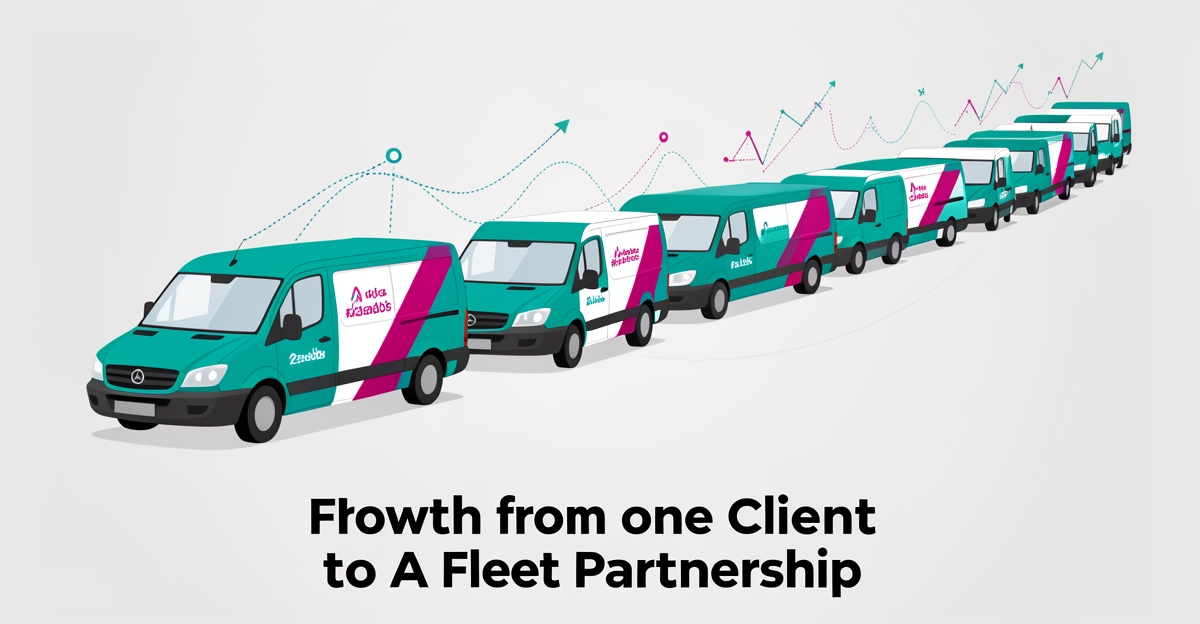
The transition from a one-time wrap client to a long-term fleet partner is fraught with a silent threat: the "confidence gap." This phenomenon, where initial buyer confidence masks eventual regret, affects 80% of buyers who later express dissatisfaction, with a startling 24% canceling contracts altogether (1). Behind this gap lies a stark economic reality: acquiring new fleet clients costs 5-7 times more than retaining existing ones (2), yet most wrap shops lack a post-sale system to bridge the silence after installation.
The Economics of Neglect
The financial implications of inaction are clear. With repeat customers spending up to 70% more than new ones (3), the failure to implement retention strategies translates into significant lost revenue. Moreover, the high cost of acquisition versus the relatively low cost of retention (2) underscores the urgency of addressing the confidence gap.
Key Reasons for Silent Departures:
- Lack of Personalized Follow-Up: Expectation for personalized experiences (expected by 71% of customers) often goes unmet (4).
- Inadequate Onboarding: Poor initial interactions can drive buyer regret, with slow implementation or unmet expectations leading to churn (1).
- Absence of Proactive Engagement: The failure to monitor and respond to declining engagement can result in silent churn, with 33% of regretful buyers replacing their provider (1).
Bridging the Gap with AI-Driven Solutions
AI Business Sites' platform offers a tailored solution to this challenge by enabling wrap shops to deploy automated, personalized email sequences. These sequences can be designed to:
- Immediately thank first-time clients post-purchase
- Request feedback within days to address potential concerns
- Engage with educational content (e.g., fleet preparation tips, wrap design trends) 15 days later, establishing the wrap shop as an authority
By leveraging such strategic, data-driven nurturing, wrap shops can effectively close the confidence gap, ensuring that initial confidence translates into long-term loyalty and partnership. This approach not only enhances customer satisfaction but also leverages the economic benefits of retention, aligning with the platform's capability to handle the busywork of follow-ups automatically, minimizing manual labor while maximizing relationship value.
The Automated Nurture Sequence That Builds Fleet Loyalty
The wrap is installed, the fleet manager is happy, and the invoice is paid — but the real work of retention starts the moment the truck leaves your bay. Research shows that 80% of buyers who eventually experience regret felt completely confident at the point of sale, creating a dangerous confidence gap that silent shops rarely bridge (Outreach retention analysis). An automated nurture sequence closes that gap systematically, turning a one-time project into a predictable revenue stream without adding administrative burden.
The most effective cadence mirrors the buyer's actual timeline, not an arbitrary marketing calendar. Following the proven model used by brands like Ted's Vintage Art, the sequence opens with an immediate post-install thank-you that includes a care guide, establishing expertise while the experience is fresh (Business.com sequence breakdown). A review request with a photo prompt arrives at day seven, capturing social proof when pride in the new wrap is highest. By day 15, a value-add email delivers seasonal maintenance tips or a wrap protection upsell — educational content that positions the shop as a partner, not a vendor. Quarterly check-ins then sync to fleet replacement cycles, ensuring the shop is top-of-mind when budgets renew.
- Immediate: Thank-you + care guide (sets expectations, reduces support tickets)
- Day 7: Review request with photo prompt (builds social proof organically)
- Day 15: Seasonal tips or protection upsell (value-first, not sales-first)
- Quarterly: Fleet cycle check-in (timed to procurement calendars)
Frequency matters as much as content. Expert guidance recommends matching email volume to the purchase cycle — roughly five touches for cycles under two weeks, tapering to one per month for longer horizons (Business.com frequency guidelines). For fleet managers operating on annual or multi-year replacement schedules, that means fewer, higher-value communications that respect their time. With global daily email traffic exceeding 347 billion messages, every send must earn its place in the inbox (Business.com engagement data).
AI Business Sites builds this cadence directly into the website's automation layer, so the sequence triggers automatically when a deal moves to "Installed" — no manual enrollment, no forgotten follow-ups. The CRM tracks opens, clicks, and replies, feeding a health score that flags disengaged accounts before they churn. When a fleet manager clicks a protection upsell link but doesn't convert, the system can alert the shop owner for a personal call, blending automation with human judgment at the exact moment it matters. The result is a retention engine that runs in the background while the shop focuses on the next install.
Local business: doing this the old way?
One system replaces the whole pile.
All of it — the website, the follow-up, the content, the leads — built and run for you for $1,497 + $497/mo. Month-to-month, and you own everything.
See what your build includesBehavioral Triggers That Turn One Job into a Fleet Contract
Behavioral Triggers That Turn One Job into a Fleet Contract
In the competitive world of fleet wrapping, converting a one-time client into a long-term partner requires more than just a satisfactory initial service. It demands strategic, personalized nurturing that addresses the "confidence gap" and prevents buyer regret. By leveraging CRM data to trigger tailored outreach, wrap shops can significantly increase the likelihood of repeat business. Here’s how to move beyond generic newsletters and harness the power of behavioral triggers:
1. Save Campaigns for Disengaging Contacts Monitor engagement through CRM data, such as decreased email opens or page visits. If a fleet manager’s interaction drops, trigger a "save campaign" with incentives or solutions. For instance, 67% of consumers identify email as the most important channel for personalization source, making targeted email campaigns crucial. Offering exclusive discounts on future wraps or complimentary design consultations can rekindle interest.
2. Upsell Triggers for Protection Films Utilize page visit data to identify fleet managers viewing pricing or service pages for wrap protection films. Automatically trigger a case study or consultation offer highlighting the benefits of premium protection, such as increased durability and easier cleaning. Research shows that repeat customers spend up to 70% more than new ones source, making upsell opportunities highly valuable.
3. Automated Case Study Delivery for Expansion Signals Detect signals of fleet expansion (e.g., increased website interactions related to larger vehicle wraps) and automatically deliver relevant case studies. This proactive approach demonstrates expertise and readiness to scale with the client’s growing needs. Experts emphasize that early communication is essential to combat skepticism source, and timely case studies can fill this gap.
- Engagement Drop: Trigger "save campaigns" with personalized incentives.
- Protection Film Interest: Offer premium wrap protection case studies or consultations.
- Fleet Expansion Signals: Deliver scalable solution case studies proactively.
By integrating these strategies into your CRM-driven automation, you not only enhance the client experience but also position your wrap shop as a long-term, trusted partner for fleet management needs. Increasing customer retention by just 5% can boost profits by 25% to 95% source, underscoring the potential impact of such targeted engagement. AI Business Sites' platform, with its built-in CRM and automation capabilities, facilitates this level of personalized nurturing without increasing manual labor, providing a clear competitive edge.
Running the System Without Adding to Your Workload
Most wrap shops know the math: retaining a fleet client is far more profitable than chasing the next one. Research shows that repeat customers spend up to 70% more than new ones, and a mere 5% increase in retention can lift profits by 25% to 95% (Outreach). The problem isn't the strategy — it's the execution. Running personalized nurture sequences for every fleet manager manually is a fast track to burnout.
- A visual automation builder with pre-built "New Client Onboarding" and "Fleet Renewal" templates so you never start from scratch
- Two-way email tracking inside the CRM — every reply, open, and click logged automatically against the contact and deal
- An AI assistant that drafts personalized follow-ups using real project context for your approval before sending
- One consolidated system that replaces a separate CRM, email tool, and project tracker
The platform handles the busywork — tagging contacts, advancing pipeline stages, sending the right message at the right interval — while you stay in control. You approve the draft; the system executes. No more stitching together disconnected tools or wondering if a renewal email went out. Your website doesn't just capture the lead; it runs the retention engine that turns a one-time wrap into a multi-year fleet partnership.
Frequently Asked Questions
Why do first-time wrap clients leave even when they seemed happy at installation?
Is it really worth investing in retention over finding new fleet clients?
What does an effective automated follow-up sequence look like for fleet wrap clients?
How can I personalize follow-ups without spending hours writing emails?
What if a fleet manager stops opening our emails — can automation actually win them back?
How much more profit can retention actually bring to a wrap shop?
From One Wrap to a Lasting Partnership
Turning a first-time wrap client into a long-term fleet partner isn’t about chasing the next sale—it’s about nurturing the relationship that begins the moment the truck leaves your bay. As we’ve seen, the confidence gap is real, but it’s bridgeable with timely, personalized follow-ups that educate, engage, and anticipate needs. By automating thoughtful touchpoints—from post-install thank-yous to seasonal tips and behavioral-triggered upsells—wrap shops can build trust without adding to their workload. The result? Higher retention, increased lifetime value, and a reputation as a true fleet partner, not just a vendor. Ready to let your website do the follow-up so you can focus on what you do best? See how AI Business Sites helps service businesses run smarter, not harder.
FOR local businesss — BUILT AND RUN BY US
Your website. Your content. Your leads. Your data.
$500 starts your build. Seven days later it's live — chat, booking, follow-up, and your Google presence all set up. Then we run it, every month. You do the work you actually get paid for.