
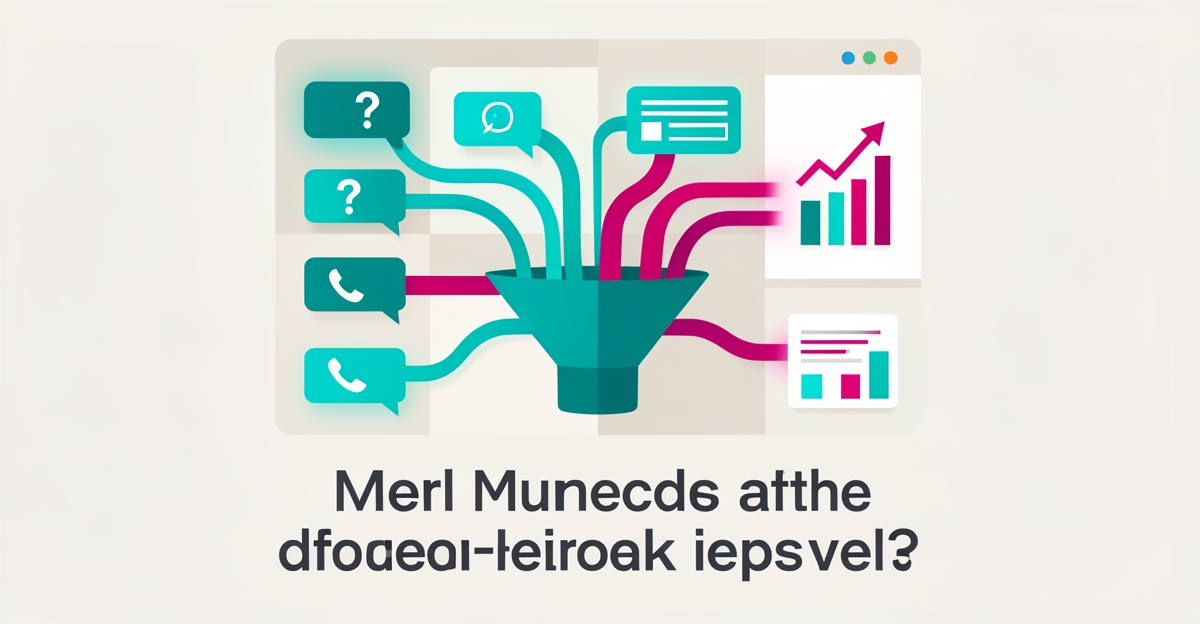
Key facts
- Mature AI adopters report 17% higher customer satisfaction in customer service according to IBM research
- Amazon's AI-powered chatbots manage over 75% of customer interactions as reported by CommercePundit
- 70% of global customer service managers use generative AI for sentiment analysis per IBM findings
- NICE CXone supports 30+ messaging channels through a single interface based on their platform capabilities
- AI Business Sites delivers automated weekly reports with AI-generated recommendations as noted by Insight.com
- Human-in-the-loop review ensures AI-generated actions are approved before reaching customers per Insight.com guidance
- Grounding AI in business-specific content improves insight quality by reflecting real service gaps aligned with IBM's hyper-personalization research
WANT RESULTS LIKE THIS?
Imagine a system doing all of this for your local business — every day, without you.
We build local businesses a custom website with a team of AI behind it: every lead captured and followed up, new content published monthly,customers finding you on Google — live in 7 days.
- 85+ pages at launch
- Every lead followed up, automatically
- Your whole business on one screen
The Hidden Cost of Untracked Client Inquiries
Every time a client asks a question on your website, calls your business, or fills out a form, they’re handing you a piece of strategic intelligence—yet most small businesses let that data vanish without a trace. Untracked client inquiries represent a silent drain on growth, obscuring patterns in customer needs, emerging service gaps, and competitive threats that could inform smarter decisions. Without a system to capture and analyze these interactions, owners operate on guesswork instead of insight, missing opportunities to refine offerings, anticipate demand, or address pain points before they escalate. This gap isn’t just about missed information—it’s about opportunity cost: the strategies never tested, the services never launched, and the customer trust eroded by slow or generic responses.
Research confirms that businesses leveraging AI to transform inquiries into structured data see measurable gains. Mature adopters of AI in customer service report 17% higher customer satisfaction and 15% higher human agent satisfaction, proving that intelligent inquiry handling benefits both customers and teams. Meanwhile, Amazon’s AI-powered chatbots manage over 75% of customer interactions, demonstrating how automation at scale frees human capacity for higher-value work while ensuring no question goes unlogged. These outcomes aren’t reserved for enterprises—small businesses using integrated systems like AI Business Sites achieve similar results by turning every chat, call, and form submission into categorized, sentiment-tagged data points that feed real-time analytics dashboards.
- Automatically capture inquiries across web chat, phone, email, and forms into a unified database
- Apply AI-driven categorization and sentiment analysis to every interaction without manual effort
- Generate weekly intelligence reports that surface trending questions, unmet needs, and service opportunities
- Enable human-in-the-loop review for outbound actions while fully automating insight generation
- Ground the AI’s knowledge in your actual service content—not generic scripts—to ensure insights reflect real business gaps
When client questions are systematically tracked and analyzed, they stop being isolated interactions and start revealing the patterns that drive smarter strategy—transforming your website from a passive brochure into an active intelligence engine that works while you focus on delivering value.
From Reactive to Proactive: The AI-Driven Solution
From Reactive to Proactive: The AI-Driven Solution
Small businesses often drown in client questions without a system to turn those interactions into strategic value. Research confirms a critical shift: AI transforms customer service from reactive responses to proactive, predictive engagement by capturing inquiries across channels and analyzing them in real time. IBM reports that mature AI adopters see 17% higher customer satisfaction, while CommercePundit notes Amazon’s AI-powered chatbots manage over 75% of customer interactions. This evolution enables businesses to anticipate needs before they arise, moving beyond simple scripted replies to insight-driven action.
The solution lies in deploying website-integrated AI chatbots that unify capture, automate categorization, and apply sentiment analysis to every inquiry. NICE’s CXone platform supports 30+ messaging channels through a single interface, ensuring no question slips through the cracks whether it comes from web chat, phone, email, or form submissions. Meanwhile, Insight.com emphasizes that built-in analytics in chatbot platforms provide real-time data collection essential for business agility—turning raw interactions into structured intelligence without manual effort.
- Automatically tag each inquiry by topic, urgency, and sentiment using generative AI, as 70% of global customer service managers now do for sentiment analysis.
- Feed structured data into intelligence reports that surface trending questions, unmet needs, and service gaps—no coding required.
- Deliver automated weekly summaries covering leads, deals, and analytics with AI-generated recommendations, directly to the client’s inbox.
AI Business Sites implements this approach by embedding its AI assistant directly into custom websites, where it answers questions using the business’s own knowledge base—not generic scripts—while logging every interaction into a unified CRM. This ensures insights reflect genuine customer behavior rather than chatbot limitations, grounding analysis in real service patterns. The system maintains human-in-the-loop safety for outbound actions but fully automates the insight generation pipeline, allowing owners to review trends and act strategically without lifting a finger on data processing.
Local business: doing this the old way?
One system replaces the whole pile.
All of it — the website, the follow-up, the content, the leads — built and run for you for $1,497 + $497/mo. Month-to-month, and you own everything.
See what your build includesImplementing the Solution: Step-by-Step for Small Businesses
The gap between answering questions and understanding them is where most small businesses lose ground. Every client inquiry carries a signal — about pricing confusion, service gaps, seasonal demand, or competitor comparisons — but without a system to capture and categorize those signals automatically, they vanish into chat logs and voicemails. Research from IBM's Institute for Business Value shows that mature AI adopters achieve 17% higher customer satisfaction and a 23.5% reduction in cost per contact by turning reactive support into proactive intelligence.
The implementation starts with unification. Instead of stitching together a chatbot, a phone system, and a form builder, deploy a single AI assistant that lives on your website and connects every channel — web chat, voice calls, form submissions, bookings, and email — into one conversation timeline. NICE confirms that effective platforms support 30+ messaging channels through a single interface, and Insight.com notes integration with Teams, Messenger, Slack, and existing content systems. AI Business Sites applies this principle by ensuring every interaction lands in one place so nothing falls through the cracks.
- Configure automatic tagging by topic, urgency, and sentiment on every inquiry — no manual coding required
- Feed the assistant your actual service pages, pricing, FAQs, and documented processes so answers reflect your business, not generic scripts
- Enable real-time analytics that surface trending questions, unmet needs, and competitor mentions in automated weekly reports
- Keep human review on outbound actions — approve emails, CRM updates, and workflow triggers before they reach customers
- Let the system generate intelligence summaries daily or weekly with AI-generated recommendations you can act on
CommercePundit emphasizes that successful implementation hinges on data quality and staff buy-in, not just technology. Insight.com advises investing in people rather than replacing them — AI handles the repetitive capture and categorization, while your team interprets nuances and makes strategic decisions. The result is a feedback loop where client questions continuously refine your content, your offerings, and your competitive position, without adding another dashboard to your morning routine.
Frequently Asked Questions
How does an AI chatbot actually turn customer questions into business insights instead of just answering them?
Will an AI chatbot really understand my specific business, or will it give generic answers that frustrate customers?
What kind of measurable results do small businesses actually see from using AI to handle customer inquiries?
Do I lose control if the AI starts making decisions or sending messages to customers?
Can one system really handle phone calls, web chat, forms, and email without things falling through the cracks?
Is this only for big companies with technical teams, or can a small business actually implement it?
Let Your Website Start Working for You
Every client question is a signal—about pricing confusion, seasonal demand, or service gaps—and when you capture and analyze those interactions automatically, they stop being noise and start shaping smarter decisions. The research shows mature AI adopters see 17% higher customer satisfaction and meaningful efficiency gains, not by replacing teams, but by freeing them from repetitive tasks to focus on what truly matters. With a system like AI Business Sites, your website becomes an intelligence engine: inquiries are unified, tagged by topic and sentiment, and turned into weekly reports that surface trends without manual effort. You stay in control, reviewing outbound actions while the AI handles the capture and analysis behind the scenes. If you’re ready to turn every chat, call, and form submission into strategic insight—without adding another tool to your plate—explore how a self-running website can work for your business, not just represent it.
FOR local businesss — BUILT AND RUN BY US
Your website. Your content. Your leads. Your data.
$500 starts your build. Seven days later it's live — chat, booking, follow-up, and your Google presence all set up. Then we run it, every month. You do the work you actually get paid for.