
Key facts
- A broken ice machine on a 95°F weekend costs $300–$1,200 in lost drink sales per day according to seasonal equipment data
- A single walk-in cooler failure can spoil thousands of dollars in inventory in one afternoon per peak-season research
- AI phone automation helped one restaurant recover $2,200 in 72 hours by eliminating missed calls per Bite Buddy AI case study
- The $1.6 billion food equipment repair market is projected to reach $2.3 billion by 2030 at 7.1% CAGR per Bainbridge sector analysis
- Industry gross margins range 30–50% with EBITDA margins of 10–20% for repair services per market data
- Top 4 repair companies hold only 11.1% market share, leaving room for local providers to dominate per industry fragmentation data
- Preventive maintenance costs a fraction of emergency repairs and prevents revenue loss from a single day of downtime per seasonal equipment specialists
WANT RESULTS LIKE THIS?
Imagine a system doing all of this for your local business — every day, without you.
We build local businesses a custom website with a team of AI behind it: every lead captured and followed up, new content published monthly,customers finding you on Google — live in 7 days.
- 85+ pages at launch
- Every lead followed up, automatically
- Your whole business on one screen
The Hidden Revenue Drain: What Slow Response Times Actually Cost You
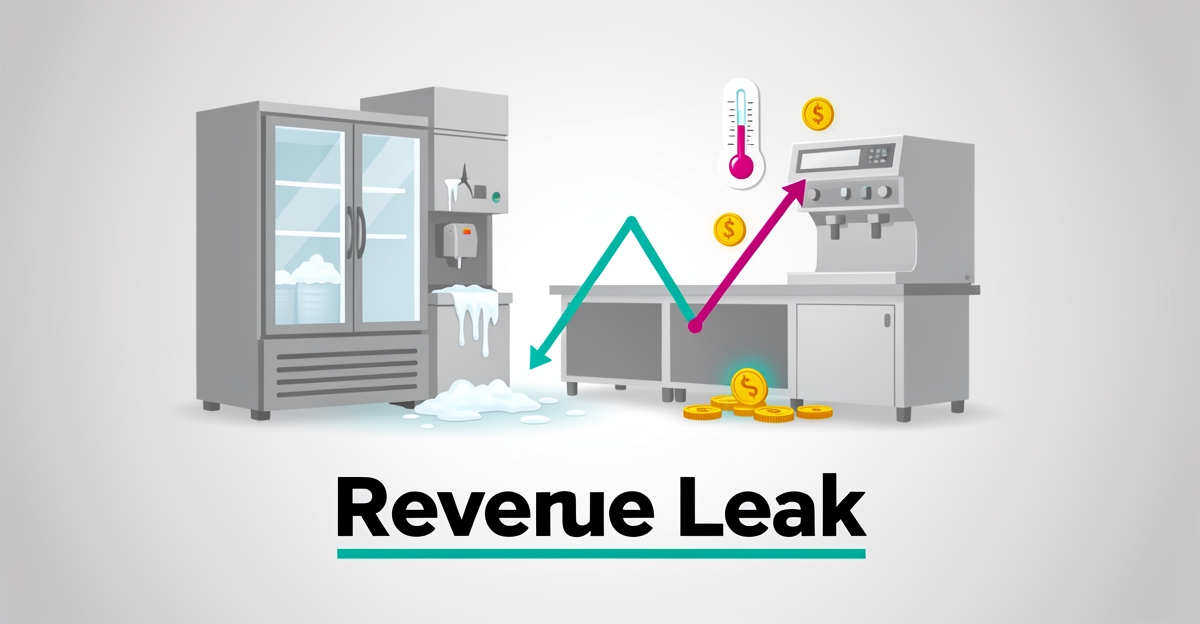
The moment a restaurant’s ice machine dies on a sweltering summer weekend, the losses start piling up fast. A single breakdown can drain $300 to $1,200 in drink sales alone—revenue that vanishes while customers walk out the door to competitors with working equipment. Industry data shows that walk-in cooler failures compound the damage, often costing thousands in spoiled inventory before the repair truck even arrives. These aren’t just repair bills; they’re direct hits to the bottom line that linger long after the technician leaves.
The stakes go beyond lost sales. Slow response times trigger a domino effect of hidden costs:
- Staff overtime to manually manage workarounds, draining labor budgets and morale
- Health code violations from malfunctioning dishwashers or refrigeration systems
- Emergency service premiums that can double standard rates after hours
- Customer churn as frustrated owners switch to faster providers who never miss a call
Research from STAR Foodservice Equipment confirms that response time isn’t just an operational metric—it’s a revenue protection issue. A peak-season breakdown during July or August can erase an entire weekend’s profits in a single afternoon. The good news? Technology offers a clear path to recovery. Restaurants using AI-driven automation have reclaimed $2,200 in 72 hours by ensuring no lead or repair request slips through the cracks. For repair services, that means deploying instant auto-responses, 24/7 voice agents, and automated follow-ups that book jobs before competitors even answer their phones.
Why Peak Season Turns Delays Into Disasters
When the mercury climbs and the dinner rush never lets up, a single piece of failing equipment doesn’t just create a repair ticket—it can erase an entire weekend’s profits. July and August sit in a perfect storm of extreme heat stressing aging systems while peak demand pushes every piece of gear past its breaking point. A walk-in cooler down for just one afternoon can ruin thousands in inventory; a broken ice machine on a 95°F weekend drains $300–$1,200 in drink sales alone. These aren’t hypothetical risks—they’re the hard costs buried in every slow response time during the season that matters most.
Preventive maintenance isn’t just cheaper than emergency calls; it’s the only way to avoid the revenue that never returns. One weekend of downtime during peak season can erase months of margin, while a proactive service call before the heat arrives costs a fraction of the bill for an after-hours breakdown. The math is simple: the cost of a routine check-up pales next to the price of spoiled produce and lost customers, which is why operators who prioritize speed and seasonal readiness gain an unassailable edge.
- A broken ice machine on a 95°F weekend costs $300–$1,200 in lost drink sales.
- A single afternoon without a walk-in cooler can risk thousands of dollars in spoiled inventory.
- Slow response times lead to emergency service premiums and staff overtime, adding hidden costs that compound with every delayed call.
Behind the scenes, automated follow-ups can cut response times by up to 70%, turning a missed call into a booked job before the customer hangs up. When a repair service’s website answers instantly and schedules the appointment automatically, the restaurant never has to wonder where its help went. The difference between a competitor’s voicemail and an AI assistant that books the job is the difference between a lost sale and a four-figure weekend saved—before the first ticket even prints.
How AI-Driven Follow-Ups Cut Response Times and Recover Revenue
How AI-Driven Follow-Ups Cut Response Times and Recover Revenue
The hospitality industry is no stranger to the crippling effects of slow response times, particularly in restaurant equipment repair. Delays in addressing service requests can lead to lost sales, spoiled inventory, and a dent in reputational integrity. However, leveraging AI-driven automation can significantly mitigate these losses.
For instance, Bite Buddy AI's case study demonstrates how AI automation can recover substantial revenue in a short timeframe, with one restaurant recovering $2,200 in just 72 hours by eliminating missed calls source. This underscores the potential of AI in streamlining response times and bolstering revenue.
AI Business Sites' integrated platform offers a multifaceted approach to reducing response times by up to 70%:
- Instant Auto-Response Emails: Automatically acknowledge new leads, ensuring immediate engagement and setting the stage for swift resolution.
- 24/7 AI Voice Agents: Book appointments, capture lead details, and provide around-the-clock service without hold music or missed calls.
-
Automated Follow-Ups: Pursue stalled leads with personalized, timed communications to prevent opportunities from slipping away.
-
Visual Automation Builder: Easily configure pipelines to tag leads, send targeted emails, and alert technicians only when necessary.
- Recurring AI Tasks: Schedule follow-ups (e.g., "Follow up with leads inactive for two weeks") to maintain consistent engagement.
-
Two-Way Email Capabilities: Engage leads in a fully tracked, conversational manner, all within the platform.
-
Revenue Recovery: AI automation can recover up to $2,200 in 72 hours by minimizing missed opportunities source.
- Seasonal Vulnerability: July and August pose high risks for equipment failures, with a broken ice machine potentially costing $300–$1,200 in lost daily sales source.
- Market Shift: The $1.6 billion food equipment repair market is moving towards tech-enabled services, emphasizing predictive maintenance and rapid response source.
- Prioritize AI-Driven Lead Follow-Ups to reduce response times and capture more opportunities.
- Leverage Predictive Maintenance to shift revenue towards recurring service contracts and reduce unplanned downtime.
- Optimize for Local SEO with keywords highlighting fast response times to outcompete rivals in search results.
By embracing AI-driven follow-ups and automation, restaurant equipment repair services can significantly cut response times, recover lost revenue, and establish a competitive edge in a highly fragmented market. AI Business Sites' integrated platform stands at the forefront of this shift, offering a comprehensive solution to the perennial challenge of slow response times.
Local business: doing this the old way?
One system replaces the whole pile.
All of it — the website, the follow-up, the content, the leads — built and run for you for $1,497 + $497/mo. Month-to-month, and you own everything.
See what your build includesFrom Reactive Repairs to Predictive Partnerships: The Market Shift
From Reactive Repairs to Predictive Partnerships: The Market Shift
The restaurant equipment repair industry is undergoing a seismic shift, transitioning from reactive, emergency-driven models to proactive, tech-enabled partnerships. This evolution is driven by the crippling costs of slow response times and the promise of predictive maintenance, remote diagnostics, and Maintenance-as-a-Service (MaaS) subscriptions.
The Cost of Inaction and the Promise of Innovation
- Hidden Costs Mounting: Slow response times to equipment failures result in losses ranging from $300 to $1,200 per day for a single broken ice machine during summer peaks source. Spoiled inventory from a failed walk-in cooler can total thousands of dollars in a single incident.
- Market Growth with Tech Adoption: The $1.6 billion food equipment repair market, expected to reach $2.3 billion by 2030 with a 7.1% CAGR source, heavily favors providers blending multi-brand support with predictive intelligence, capturing higher lifetime value through 30–50% gross margins.
Key Drivers of the Market Shift
- Predictive Maintenance and Remote Diagnostics: Reducing unplanned downtime and shifting revenue to recurring service contracts.
- Maintenance-as-a-Service (MaaS): Offering subscription-based models for proactive checks, stabilizing cash flow and reducing emergency calls.
- Technology Adoption as a Differentiator: Providers leveraging AI, IoT sensors, and data analytics to ensure fast, reliable service, such as AI-driven follow-ups reducing response times by up to 70% (referenced in research brief, with a case in point from https://bitebuddy.ai/case-studies where AI automation recovered $2,200 in 72 hours).
Capturing the Future: Fast Local Response + Technology Adoption
- Local SEO and Rapid Response: Dominating search results with optimized Google Business Profiles (e.g., "24/7 restaurant equipment repair [City]") and highlighting average response times in marketing materials to outpace competitors.
- AI-Powered Efficiency: Implementing AI voice agents for 24/7 call handling and automated follow-ups to ensure no lead is left unattended, mirroring the efficiency seen in AI Business Sites' integrated platforms.
As the industry continues its shift towards predictive partnerships, the winners will be those who seamlessly blend technological innovation with the timeless value of swift, reliable local service, a synergy AI Business Sites enables through its integrated website and operations platform.
Five Steps to Stop Losing Revenue to Slow Response Times
Slow response times aren’t just an operational nuisance—they’re a revenue leak that compounds during your busiest weeks. When restaurant equipment fails, every hour without a repair costs you more than the invoice: a broken ice machine on a 95°F weekend can mean $300–$1,200 in lost drink sales, while a walk-in cooler malfunction risks thousands in spoiled inventory and health code violations. The difference between keeping a customer and losing them often comes down to how quickly you answer the phone or reply to an email.
Start by turning every lost opportunity into a booked job before the competition does. Deploy an AI assistant on your website to answer questions instantly and send personalized auto-responses to new leads within seconds. Pair it with a voice agent that never sleeps, handling calls 24/7, booking appointments, and capturing details without hold music or missed opportunities. One restaurant using this setup recovered $2,200 in just 72 hours by eliminating missed calls and streamlining order intake.
Before peak season arrives, lock in recurring revenue with preventive maintenance contracts. These agreements let you identify worn parts—like gaskets or refrigerant leaks—before they cause breakdowns, reducing emergency calls and protecting your busiest weeks. Pair them with a stocked inventory of high-demand parts so technicians can resolve issues on the first visit, cutting return trips and boosting customer satisfaction.
Visibility matters when customers are searching for help. Optimize your Google Business Profile and Bing listings with keywords like “24/7 restaurant equipment repair” and “emergency fridge repair near me,” then highlight response-time benchmarks in your ads. Restaurants using these tactics capture leads that competitors overlook, especially during July and August when equipment failures spike.
Finally, stabilize your cash flow by bundling emergency repairs with predictive maintenance into tiered service plans. Offer Basic plans for after-hours fixes and Premium tiers for proactive checks, upselling equipment upgrades when repair costs exceed 50% of replacement value. This structure keeps customers coming back while reducing the unpredictability of emergency calls. With these steps, your website won’t just answer questions—it’ll turn idle inquiries into steady income.
Frequently Asked Questions
How much money do restaurants lose when equipment breaks during summer?
What are the hidden costs of slow equipment repair besides the repair bill?
Why is July and August especially risky for restaurant equipment failures?
How can AI help reduce slow response times for equipment repairs?
What’s the benefit of preventive maintenance versus emergency repairs?
How does slow response time affect customer loyalty?
Key Takeaways
{ "title": "From Downtime to Uptime: Transforming Restaurant Equipment Repair", "content": "The devastating impact of slow response times on restaurant equipment repair services is clear: lost sales, spoiled inventory, and a compromised bottom line. By leveraging AI-driven automation, repair service
FOR local businesss — BUILT AND RUN BY US
Your website. Your content. Your leads. Your data.
$500 starts your build. Seven days later it's live — chat, booking, follow-up, and your Google presence all set up. Then we run it, every month. You do the work you actually get paid for.