
Key facts
- 78% of customers buy from the first company that responds to their inquiry, not the one with the best price according to industry research
- Leads contacted within 5 minutes are 9x more likely to convert than those contacted after 30 minutes per speed-to-lead data
- After-hours leads represent 35-67% of total volume but wait 18+ hours for a reply without automation research shows
- Shops averaging 47-minute response generate $8,400 monthly profit from leads; cutting to 2 minutes yields $40,600 — a $386,400 annual gap scenario analysis reveals
- Only 7% of dealerships have automated after-hours response systems despite 60% of leads arriving outside business hours industry benchmarks confirm
- Hybrid automation-human follow-up within 5 minutes yields 34% higher conversion than pure automation or human-only response research demonstrates
- The average prospect requires 5-7 touchpoints before responding, yet 73% of leads never get contacted at all speed-to-lead statistics show
WANT RESULTS LIKE THIS?
Imagine a system doing all of this for your local business — every day, without you.
We build local businesses a custom website with a team of AI behind it: every lead captured and followed up, new content published monthly,customers finding you on Google — live in 7 days.
- 85+ pages at launch
- Every lead followed up, automatically
- Your whole business on one screen
The Five-Minute Window That Decides Your Revenue
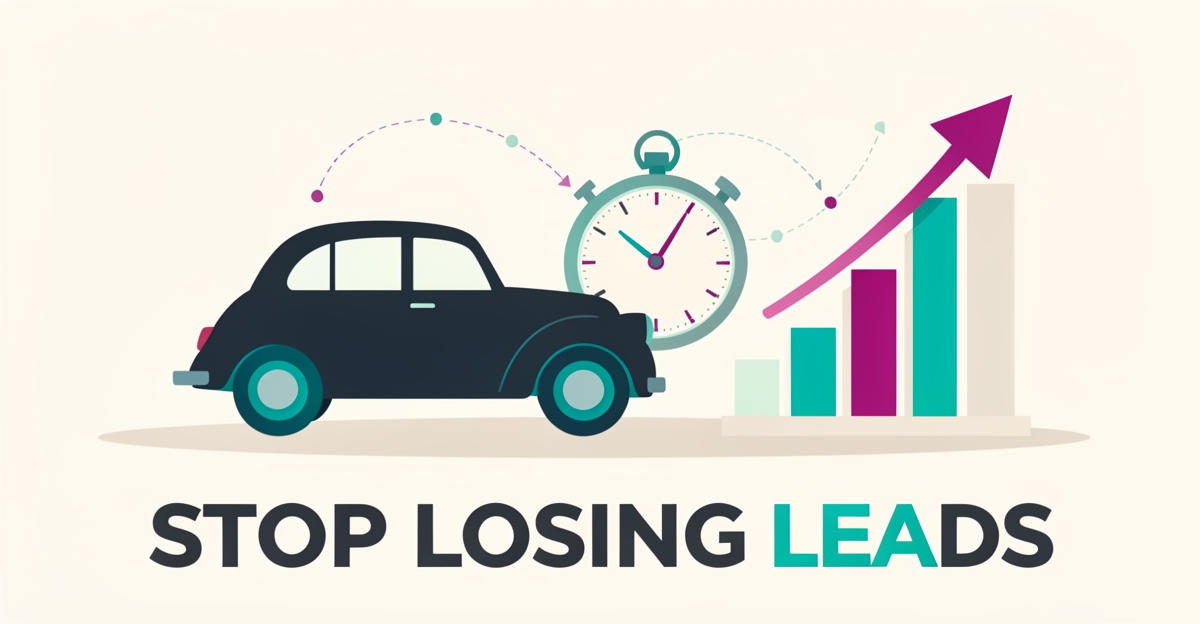
The clock starts the moment a customer hits submit. 78% of customers buy from the first company that responds, not the one with the best price or the shiniest shop. Leads contacted within five minutes are 9x more likely to convert than those contacted after 30 minutes, and every minute of delay cuts revenue potential by 1.5%. In practical terms, a shop averaging a 47-minute response generates roughly $8,400 in monthly profit from leads. Cut that response to two minutes, and the same lead volume yields over $40,600—a $386,400 annual gap that most shops never see because they're too busy working on cars to answer the phone.
The structural problem is brutal in its simplicity: peak inquiry volume hits exactly when your techs are on lifts. Research shows the days when the most new leads arrive are the days when the fewest people are available to respond. After-hours leads represent 35–67% of total volume, yet they wait an average of 18+ hours for a reply. Weekend inquiries fare even worse, sitting for nearly 19 hours while weekday leads get a response in 2.5 hours. Only 7% of dealerships have any automated system to handle this gap, leaving the vast majority of shops effectively closed for business when customers are actively shopping.
- After-hours leads convert 23% higher when contacted immediately
- Leads waiting longer than 10 minutes have a 400% higher chance of buying elsewhere
- Lead quality perception drops 10% per hour of delay regardless of response quality
- Companies responding within 5 minutes spend 50% less on customer acquisition
AI Business Sites builds websites that solve this structural mismatch by responding instantly, 24/7. The AI assistant on your site acknowledges every inquiry within seconds—web form, chat, or missed call—so the customer knows they're heard while your team finishes the job in front of them. That immediate acknowledgment buys you the five-minute window to follow up personally, turning a structural disadvantage into a competitive moat.
Why Manual Follow-Up Fails Even With Good Intentions
Most shop owners genuinely intend to call every lead back. The problem isn't motivation — it's math. The average auto repair shop takes 3 hours to respond to a new inquiry, and research shows 73% of leads never get contacted at all. Weekends are worse: leads submitted Saturday or Sunday wait an average of 18.7 hours versus 2.5 hours on a weekday, according to speed-to-lead benchmarks. By the time the phone rings, the customer has already moved on.
- Shoppers submit 3–4 vendor forms within 10 minutes, creating a race the slowest shop cannot win
- Lead quality perception drops 10% for every hour of delay, regardless of how good the eventual response is
- 78% of customers buy from the first company that responds, not the one with the best price
Industry analysis confirms the structural trap: peak inquiry volume hits at the exact same time peak service volume fills the bays. The days when the most leads arrive are the days when the fewest people are free to answer them. An independent shop owner in Phoenix put it bluntly: "I lost a $1,400 transmission service to the Toyota dealer because they had online booking and I was on a lift when the email came in. By the time I replied, the customer had already made an appointment."
AI Business Sites builds websites that close this gap automatically — instant acknowledgment goes out the moment a form is submitted, followed by a structured sequence that keeps the conversation alive until a human can take over. The shop stays top-of-mind without the owner having to drop a phone in hand 24/7.
The Hybrid Approach: Automation for Speed, Humans for Conversion
The data is clear: pure automation feels robotic, and human-only response is too slow. The winning model sits in the middle. Research shows a hybrid approach—instant automated acknowledgment followed by personalized human follow-up within five minutes—yields 34% higher conversion than either extreme alone. Technology accelerates the connection, but people still shape the customer experience inside the interaction.
Speed wins the first impression; humanity closes the deal. Leads contacted within five minutes are 9x more likely to convert than those contacted after 30 minutes. Yet basic personalization paired with speed beats high personalization paired with delay every time: under five minutes with basic personalization hits a 21% close rate, while one hour or more with very high personalization drops to just 8%. Every minute of delay erodes revenue potential by 1.5%, and lead quality perception falls 10% per hour regardless of how polished the eventual reply is.
The follow-up sequence itself matters as much as the first response. The average prospect requires 5-7 touchpoints before responding, and effective sequences alternate channels strategically:
- Immediate automated acknowledgment via email and SMS (under 60 seconds)
- Personalized human call within 5 minutes referencing the specific inquiry
- Follow-up text with a direct booking link if the call goes unanswered
- Email with relevant service details and social proof within 30 minutes
- Continued nurture cadence—call, text, email—for leads not ready to book immediately
This persistence pays off long after the initial contact. Data from HVAC contractors mirrors what auto shops experience: 45% of revenue books a week or more after the initial lead, and 15% closes after 30 days. Shops relying on a single call or email leave that revenue on the table. AI Business Sites structures these multi-channel sequences automatically so the first response is instant and the human follow-up never slips—turning more inquiries into confirmed jobs without adding manual work.
Local business: doing this the old way?
One system replaces the whole pile.
All of it — the website, the follow-up, the content, the leads — built and run for you for $1,497 + $497/mo. Month-to-month, and you own everything.
See what your build includesWhat an Automated Sequence Looks Like in Practice
For auto shops, an effective automated follow-up sequence starts the moment a lead comes in—whether it’s a web form, phone call, or chat. The system immediately sends a personalized SMS or email confirming receipt and setting expectations, such as “Thanks for reaching out! A service advisor will review your request and respond within 5 minutes.” This instant acknowledgment is critical, as leads contacted within 5 minutes are 9x more likely to convert than those contacted after 30 minutes, and response times under 1 minute see conversion rates of 391% (baseline) industry research.
Five minutes after the initial contact, a service advisor sends a personal text—perhaps noting they’re reviewing the AC repair request or brake inspection details and will follow up shortly. At the 30-minute mark, the automation triggers an email with relevant service information, like tips on preparing for a brake inspection or common signs your AC needs servicing. If there’s still no response, the system attempts a callback at the 2-hour mark. Should the lead remain unresponsive, a 24-hour value-add follow-up delivers something useful—such as a maintenance tip to extend tire life or a financing option for major repairs—keeping the shop top-of-mind without being pushy. Finally, at 7 days, a re-engagement message checks in, offering to revisit the service need or share a seasonal promotion.
This structured, multi-touch approach aligns with data showing the average prospect requires 5-7 touchpoints before responding research indicates. By combining instant automation with timely human interaction, auto shops capture more of the $5,000-$12,000 lifetime value per customer that manual follow-up often leaves on the table industry analysis. For shops using AI Business Sites, this sequence runs seamlessly behind the scenes—ensuring no lead slips through due to delayed response, while freeing advisors to focus on the conversations that close jobs.
The Business Case: From $6,600 to $40,600 Monthly Profit
The financial impact of slow lead follow-up is no longer theoretical—it's measurable in real dollars lost each month. Shops responding to leads within 5 minutes see conversion rates jump from 45% to 75%, directly increasing booked appointments without additional ad spend. This shift alone translates to a monthly profit increase from $6,600 to over $40,600 when handling 200 leads, based on dealership scenarios where slow follow-up costs $32,200 per month in lost revenue.
Speed also slashes customer acquisition costs by 50%, as faster responders convert more leads efficiently. For after-hours inquiries—which make up 45-50% of total service volume—immediate contact boosts conversion by 23% compared to delayed replies. Without automation, these leads often sit untouched until morning, by which time competitors have already engaged them.
The window replacement study proves the scale of opportunity: passive follow-up generated $72,000 in revenue, while very active, multi-touch sequences drove $315,000—a 337% increase. This isn’t about working harder; it’s about responding intelligently at scale.
AI Business Sites enables this through built-in automation that triggers personalized follow-ups the moment a lead arrives—no separate tools, no extra logins. The system runs on your website, using your existing infrastructure to keep leads warm, reduce acquisition costs, and turn inquiry volume into predictable profit.
- Conversion rates increase from 45% to 75% with AI-assisted follow-up
- After-hours leads convert 23% higher when contacted immediately
- Companies responding within 5 minutes spend 50% less on customer acquisition
Frequently Asked Questions
How much revenue am I actually losing by not responding to leads within 5 minutes?
Is it really true that 78% of customers buy from the first responder, even if I have better prices?
What happens to leads that come in after hours or on weekends when my shop is closed?
Do I really need automation, or can I just train my team to respond faster?
Will automated responses feel robotic and turn customers away?
How many follow-up attempts does it actually take to convert a typical lead?
Key Takeaways
{ "title": "Close the 5-Minute Gap: Where Speed Meets Opportunity", "content": "The stark reality for auto shops is clear: the first 5 minutes after a lead submission dictate the fate of potential revenue. Delays of just minutes can erode trust, cede opportunities to competitors, and ultimately, lea
FOR local businesss — BUILT AND RUN BY US
Your website. Your content. Your leads. Your data.
$500 starts your build. Seven days later it's live — chat, booking, follow-up, and your Google presence all set up. Then we run it, every month. You do the work you actually get paid for.