
Key facts
- 16% of U.S. households rely on maid services in a $17 billion market according to ISSAISSA
- 72% of consumers prioritize time-saving when choosing a maid service based on market research
- 41% of consumers prefer same-day service, a key driver for fast turnaround visibility per consumer preference data
- 67% of U.S. maid service bookings are made via mobile devices as reported in industry studies
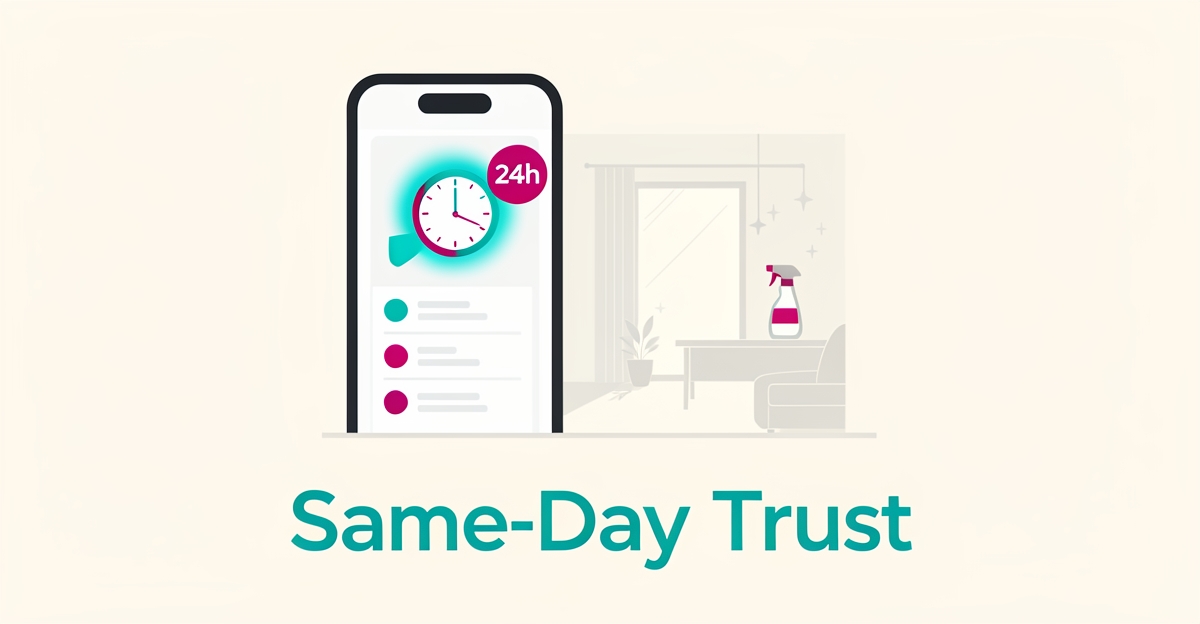
- Displaying clear turnaround times like '24-hour express' can build trust and reduce booking friction inferred from demand for speed
- Labor shortages and wage increases in South Florida highlight operational transparency opportunities per local business reports
- Transparent turnaround times on websites can convert visitors by meeting time-sensitive customer expectations aligned with market growth trends
WANT RESULTS LIKE THIS?
Imagine a system doing all of this for your local business — every day, without you.
We build local businesses a custom website with a team of AI behind it: every lead captured and followed up, new content published monthly,customers finding you on Google — live in 7 days.
- 85+ pages at launch
- Every lead followed up, automatically
- Your whole business on one screen
The Trust Gap: Why Maid Service Websites Fail to Reassure
The Trust Gap: Why Maid Service Websites Fail to Reassure
In the $17 billion U.S. residential maid services market, where 16% of households rely on such services, a surprising oversight jeopardizes trust and bookings: invisible turnaround times on websites. Despite 72% of consumers prioritizing time-saving and 41% preferring same-day service, maid service websites oftentimes neglect to display clear turnaround times, leaving potential customers uncertain.
This lack of transparency creates a trust gap. A customer's decision to book hinges heavily on how quickly a service can be delivered. For instance, the choice between a 24-hour versus a 48-hour turnaround can be the deciding factor, yet this critical information is frequently absent from maid service websites. This omission is particularly glaring given the industry's digital shift, with 67% of U.S. bookings now made via mobile.
- Clear Timeframes: Displaying specific turnaround times (e.g., "Book Now, Clean Tomorrow") could significantly enhance trust by setting clear expectations, a strategy inferred from the high demand for time-saving services source.
- Mobile Optimization for Speed: While 67% of U.S. bookings are made via mobile, websites often fail to leverage this channel for immediate turnaround time visibility, missing an opportunity to capitalize on the preference for quick, digital interactions source.
- Addressing Labor Challenges: The industry's labor shortages and wage increases, as seen in South Florida, could be proactively communicated on websites to manage customer expectations, potentially building trust through transparency source.
By failing to address these points, maid service websites inadvertently push potential customers away, undermining the very trust needed to secure bookings in a competitive, time-sensitive market. AI Business Sites observes this gap as a critical missed opportunity for service providers to differentiate themselves through transparency and user-centric design, aligning with the platform's focus on building websites that proactively manage customer expectations and enhance trust.
The Solution: Transparent Turnaround Times as a Trust Anchor
The Solution: Transparent Turnaround Times as a Trust Anchor
In the competitive landscape of maid services, trust and speed are paramount. While the industry's $17 billion valuation in the U.S. residential market underscores its demand, with 16% of households utilizing such services, the real challenge lies in converting website visitors into bookings. A crucial yet overlooked element in this conversion process is the transparent display of turnaround times on service provider websites.
Harnessing the Power of Speed Preferences
Research indicates that 72% of consumers prioritize time-saving, with a significant 41% preferring same-day service. Although no direct studies link website turnaround time visibility to booking rates, the emphasis on speed suggests that clearly displaying turnaround times (e.g., 24-hour vs. 48-hour) could significantly enhance trust and conversion rates. For instance, a maid service showcasing a guaranteed 24-hour turnaround on its website can leverage this as a competitive advantage, appealing directly to the time-conscious consumer.
Leveraging Digital Booking Trends for Transparency
Given that 67% of U.S. bookings are made via mobile, enhancing mobile booking capabilities with transparent turnaround times can capture a larger share of the market. A website that not only allows for easy mobile booking but also clearly communicates when the service can be expected, aligns perfectly with consumer preferences for speed and transparency.
Actionable Recommendations for Maid Services
-
Display Clear Turnaround Times: Enhance trust by clearly showcasing service turnaround times (e.g., 24-hour, 48-hour) on your website, especially on mobile, to cater to the 41% of consumers who prefer same-day services.
-
Optimize for Mobile Booking: Ensure seamless mobile booking experiences to capture the 67% of U.S. bookings made via mobile, integrating clear turnaround time displays at the point of booking.
-
Address Operational Challenges Transparently: Communicate any price adjustments due to labor challenges (as seen in South Florida's wage increases) by highlighting the value-added services, building trust through transparency.
Implementing Transparency for Success
By incorporating transparent turnaround times into their website design, maid services can differentiate themselves in a crowded market. This simple yet effective strategy can build trust, cater to the prevalent desire for quick services, and ultimately, drive more bookings. As the industry continues to grow, prioritizing such user-centric design elements will be crucial for long-term success.
For example, a service could highlight on its website, "Book now and choose from our 24-hour express or 48-hour standard turnaround options, designed to fit your busy schedule," directly addressing the speed preference of its potential clients.
Key Takeaways
- Transparency Drives Trust: Clear turnaround times can enhance customer confidence in maid services.
- Speed Matters: Cater to the 41% of consumers who prefer same-day services with visible turnaround times.
- Mobile Optimization is Key: 67% of U.S. bookings are mobile, making clear, mobile-friendly turnaround time displays crucial.
Sources:
- ISSA Industry News on market valuation and household penetration.
- Market Reports World on consumer preferences and digital booking trends.
- NBC Miami on labor challenges.
Local business: doing this the old way?
One system replaces the whole pile.
All of it — the website, the follow-up, the content, the leads — built and run for you for $1,497 + $497/mo. Month-to-month, and you own everything.
See what your build includesImplementing Transparency: A Step-by-Step Guide for Maid Services
Most maid service websites force customers to call or fill out a form just to learn when a crew can show up — and that friction costs bookings. With 72% of consumers prioritizing time-saving and 41% preferring same-day service, according to market research, visible turnaround times aren't a nice-to-have; they're a trust signal that meets buyers where they already are.
Start by defining your standard service windows — 24-hour, 48-hour, same-day — and map each to the specific cleaning types you offer. A standard recurring clean might reliably fit a 48-hour window, while a move-out deep clean needs 72 hours. Publish these windows on every service page and your booking flow so visitors see the answer before they ask. The $17 billion U.S. residential maid services market rewards clarity; households using services (16% nationally) choose providers who respect their schedule.
- Add a "How fast can we start?" banner above the fold on your homepage with your fastest available window
- Display turnaround time next to each service card — not buried in FAQs
- Show real-time availability for the next 7 days using a simple calendar widget
- Automate confirmation emails that restate the promised window and crew arrival range
- Track which windows convert best and adjust staffing to match demand
AI Business Sites handles the heavy lifting by pulling your service definitions from your service catalog and crew capacity, then displaying live turnaround times on every page automatically — no manual updates, no stale promises. The same platform that builds your local SEO website design also manages the CRM, booking, and follow-up so the promise you make on the homepage is the promise your team delivers. When the website runs the business, trust becomes measurable — and bookings follow.
Frequently Asked Questions
Why don't most maid service websites show how fast they can clean my home?
Does displaying turnaround times like '24-hour' or '48-hour' actually increase bookings?
How do labor shortages and wage increases affect my ability to offer fast turnaround times?
What's the most effective way to show turnaround times on a mobile booking site?
Can a website automatically update turnaround times based on crew capacity?
What turnaround time windows should I offer for different cleaning types?
Key Takeaways
{ "title": "Unlock Trust and Bookings with Transparency", "content": "The $17 billion U.S. residential maid services market hinges on trust and speed, yet many providers overlook a critical trust-builder: transparent turnaround times on their websites. By displaying clear service delivery windows (e
FOR local businesss — BUILT AND RUN BY US
Your website. Your content. Your leads. Your data.
$500 starts your build. Seven days later it's live — chat, booking, follow-up, and your Google presence all set up. Then we run it, every month. You do the work you actually get paid for.