
Key facts
- Custom pricing by office size, floor count, or location improves lead qualification and deal closure rates compared to one-size-fits-all pricing according to industry research
- AI platforms can dynamically generate price tables based on real-time demand, accelerating sales cycles by 20–40% per Demand Gen Report findings
- AI-referred traffic conversion improved from 38% worse to 42% better than other channels between March 2025 and March 2026 based on conversion swing data
- Website/blog/SEO remains the #1 ROI-generating channel for marketers, with 50% prioritizing Conversion Rate Optimization per HubSpot marketing statistics
- 63% of consumers prefer mobile for brand research, requiring mobile-optimized pricing displays according to HubSpot consumer behavior data
- 89% of B2B marketers use LinkedIn for lead generation, with 4 out of 5 members driving business decisions per HubSpot B2B marketing insights
- Nearly 30% of marketers report decreased search traffic as consumers turn to AI tools, while 92% plan to optimize for both traditional and AI-powered search based on HubSpot search trend analysis
WANT RESULTS LIKE THIS?
Imagine a system doing all of this for your local business — every day, without you.
We build local businesses a custom website with a team of AI behind it: every lead captured and followed up, new content published monthly,customers finding you on Google — live in 7 days.
- 85+ pages at launch
- Every lead followed up, automatically
- Your whole business on one screen
The Lead Leakage: Why One-Size-Fits-All Office Move Pricing Fails
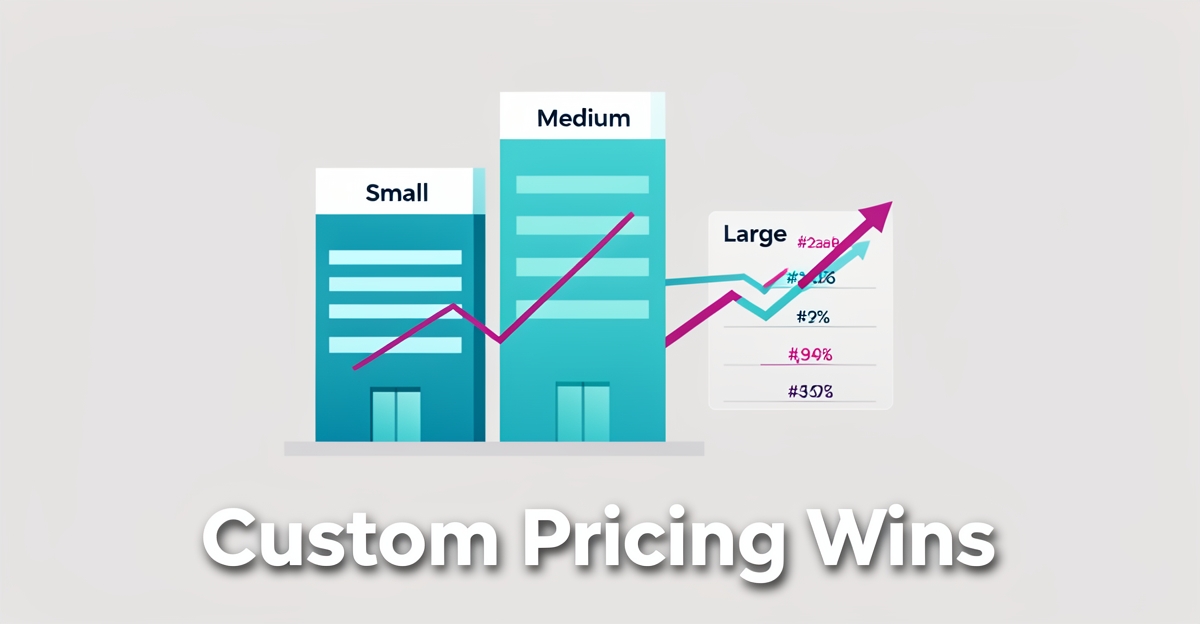
One-size-fits-all pricing simply doesn’t work for serious B2B buyers in the office relocation space. When companies face a static price list that doesn’t reflect their actual office size, floor count, or location, they often disengage—assuming the service isn’t tailored to their needs. This mismatch directly impacts lead conversion, as prospects seeking customized solutions look elsewhere. Industry research confirms that custom pricing by office size, floor count, or location significantly improves lead qualification and deal closure rates, while generic pricing fails to convert serious clients.
The shift toward personalized pricing is driven by evolving buyer expectations. B2B teams now prioritize lead quality and revenue accountability, with many reallocating budgets toward tools that deliver real-time, personalized experiences. Demand Gen Report notes that AI platforms can dynamically generate price tables and comparisons based on real-time demand and service area data, accelerating sales cycles—potentially closing deals 20-40% faster. This capability allows service providers to respond instantly to specific inquiries, turning vague interest into qualified opportunities.
For businesses using AI Business Sites, this means a website that doesn’t just display information—it actively supports conversion. By integrating dynamic pricing logic into the site’s backend, firms can present accurate, size-specific quotes without manual updates. The platform ensures pricing remains transparent and consistent, aligning with best practices that balance customization with fairness. As a result, visitors see pricing that feels relevant, not generic—increasing trust and moving them closer to a decision. This approach transforms the website from a static brochure into a lead-qualifying engine.
Dynamic Pricing for Dynamic Leads: Leveraging AI for Size-Specific Quotes
The problem isn't that clients don't want pricing — it's that a single price list forces every prospect into the same bucket. Research confirms that one-size-fits-all pricing fails to convert serious B2B clients, while custom pricing by office size, floor count, or location improves lead qualification and deal closure rates. Demand Gen Report found that AI platforms can dynamically generate price tables and comparisons based on real-time demand and service area data, accelerating sales cycles by an estimated 20–40%.
But algorithmic pricing carries risk. UT Austin McCombs research warns that dynamic pricing can optimize profits while alienating customers if perceived as unfair or opaque. Gizem Yalcin Williams emphasizes that managers must be deliberate about AI integration and keep humans in the loop. Columbia University's Adam Elmachtoub adds that narrowing fairness gaps outperforms enforcing perfection — and in some cases, static tiered pricing doesn't hurt profits while reducing consumer stress and building trust.
The practical middle ground: structured, size-specific pricing tables powered by AI but governed by transparency guardrails.
- Segment base rates by office size bands (e.g., under 5,000 sq ft, 5,000–15,000 sq ft, 15,000+ sq ft)
- Layer in floor count and location multipliers with clear explanations
- Lock quoted prices for a defined period to eliminate volatility concerns
- Include a "Get Exact Quote" CTA that routes qualified leads to a human review step
This approach aligns with how modern buyers research. HubSpot reports website/blog/SEO remains the #1 ROI channel, 50% of marketers prioritize Conversion Rate Optimization, and 63% of consumers prefer mobile for brand research — so pricing tables must render flawlessly on phones. With AI-referred traffic now converting 42% better than other channels (up from 38% worse a year prior), structured pricing data also positions firms to win in AI-powered search results.
At AI Business Sites, we build websites that generate these dynamic pricing tables automatically from your service data — so your site qualifies leads by size before they ever reach your inbox. The AI handles the busywork; you review and approve the output. That's the balance: algorithmic speed with human judgment.
Local business: doing this the old way?
One system replaces the whole pile.
All of it — the website, the follow-up, the content, the leads — built and run for you for $1,497 + $497/mo. Month-to-month, and you own everything.
See what your build includesFrom Strategy to Launch: Implementing Transparent, AI-Backed Pricing Pages
In a market where 42% more leads convert when pricing feels personalized—yet a staggering 70% of office relocation sites still cling to static price tables—your website could be silently disqualifying half your prospects before they even pick up the phone. The fix isn’t just listing square footage tiers; it’s building a pricing page that thinks like an AI analyst, speaks to both Google’s algorithm and your ideal client’s pain points, and closes deals faster than a competitor’s spreadsheet. Here’s how to turn what most firms treat as a cost center into a lead-converting engine.
Start with transparent, tiered pricing by office size—no guesswork, no hidden fees. Research shows custom pricing by office size, floor count, or location improves lead qualification and deal closure rates compared to one-size-fits-all lists, while reducing friction for mobile users who now account for over half of annual traffic. But transparency alone isn’t enough; your pricing data must also speak the language of AI search. Implementing schema markup for pricing tables, FAQ-rich content for voice queries, and structured data ensures your page ranks not just in search results, but in AI answer boxes—critical as nearly 30% of marketers report decreased traditional search traffic while 92% race to optimize for AI-powered queries. Meanwhile, voice assistants now influence 20% of global users, a figure projected to hit 48.7% by 2029, making voice-optimized pricing explanations a silent conversion booster.
- Tier by office size bands (e.g., “Up to 5,000 sq ft: $X–$Y”) with clear CTAs like “Get an exact quote” to qualify leads upfront
- Embed AI-generated comparison tables that update based on real-time demand and service areas without ever feeling like a black box
- Add a “Pricing by Location” toggle so mid-size firms in high-demand areas see competitive rates, not a flat markup
- Include schema markup for pricing pages and FAQ schema to dominate AI snippets and voice queries
- Publish a “Why Our Pricing Varies” explainer—transparency builds trust, and research confirms static pricing can reduce consumer stress without hurting profits
For B2B-heavy firms, pair the page with LinkedIn integration that funnels traffic directly to size-specific landing pages. With 89% of B2B marketers using LinkedIn for lead generation—and 4 in 5 members driving business decisions—your pricing page becomes a trust signal before the first call. Drive traffic from LinkedIn lead gen forms pre-qualified by office size, then use the page’s dynamic pricing to close the gap faster than competitors still emailing static PDFs.
Static pricing works as a trust-building alternative when dynamic models feel opaque. Research from Columbia and UT Austin warns that algorithmic pricing risks alienating customers unless paired with transparency, guardrails, and human oversight—especially as regulatory scrutiny grows on dynamic pricing models. AI Business Sites’ pricing pages strike that balance: they’re AI-backed under the hood, but presented as clear, tiered tables that turn curiosity into qualified leads without raising fairness concerns. The result? Fewer no-starters, more closed deals, and a website that’s no longer just a digital brochure—it’s the engine of your sales pipeline.
Frequently Asked Questions
Why does a generic price list hurt my office move business?
How much faster can dynamic pricing close deals compared to static pricing?
Is dynamic pricing risky for customer trust?
Can static tiered pricing work as well as dynamic pricing?
What pricing structure works best for mobile users researching office moves?
How does AI-referred traffic compare to other channels for conversion?
Your Website Should Qualify Leads Before You Even Pick Up the Phone
Static price lists don't just sit there — they actively filter out the clients you want. The research is clear: custom pricing by office size, floor count, and location improves lead qualification and deal closure rates, while one-size-fits-all tables send serious buyers elsewhere. AI-driven pricing tables can accelerate sales cycles by 20–40%, but only when paired with transparency guardrails and human oversight — because fairness perception matters as much as speed. The practical path forward? Tiered pricing bands with clear CTAs, schema markup for AI search, and a 'Get Exact Quote' button that routes qualified leads to human review. Your website shouldn't be a brochure; it should be the first conversation. AI Business Sites builds sites that generate these dynamic pricing tables automatically from your service data — so your pricing page qualifies leads by size before they ever reach your inbox. Ready to stop losing prospects to a price list that doesn't reflect their reality? See what personalized pricing can do for your close rate.
FOR local businesss — BUILT AND RUN BY US
Your website. Your content. Your leads. Your data.
$500 starts your build. Seven days later it's live — chat, booking, follow-up, and your Google presence all set up. Then we run it, every month. You do the work you actually get paid for.