
Key facts
- 89% of patients consider online information essential for healthcare decisions according to healthcare search research
- Patients use digital resources twice as often as referrals when choosing providers per industry research
- Nearly half of all healthcare searches have local intent according to local SEO analysis
- MapZot.AI delivers 85–90% forecast accuracy for healthcare expansion planning per platform data
- Over 55% of urology website traffic comes from mobile devices per urology website design guidance
- AI-generated location pages with structured data help clinics appear in Google Map Pack results per local SEO experts
- Static zip-code lists in footers are ignored by AI summaries and Map Pack algorithms according to healthcare search research
WANT RESULTS LIKE THIS?
Imagine a system doing all of this for your local business — every day, without you.
We build local businesses a custom website with a team of AI behind it: every lead captured and followed up, new content published monthly,customers finding you on Google — live in 7 days.
- 85+ pages at launch
- Every lead followed up, automatically
- Your whole business on one screen
Why Most Urology Service Area Pages Fail to Convert
Most urology practices still treat their service area like a footer afterthought — a static list of zip codes or a buried "Areas We Serve" page that neither patients nor search engines can actually use. That approach worked when patients clicked through to websites, but today's search behavior has fundamentally shifted.
According to healthcare search research, 89% of patients consider online information essential for healthcare decisions, and digital resources are now used twice as much as referrals. Yet most urology sites hide their geographic coverage behind generic footers that Google's AI summaries and Map Pack results simply ignore.
The problem compounds with zero-click search dominance. Local intent searches make up nearly half of all healthcare queries, and patients increasingly rely on conversational, AI-driven queries like "urologist near me who treats kidney stones" rather than browsing static directory pages. When your service area lives in a footer, you're invisible to both the Map Pack and the AI summaries that now answer patient questions before they ever click.
- Static zip-code lists don't match how patients search today
- Buried location pages get skipped by AI summaries and Map Pack
- Generic "Areas We Serve" footers signal low relevance to search engines
- No dynamic maps means no visual trust signal for prospective patients
Urology website design experts emphasize that patient-centric design requires interactive elements and clear service visibility — not hidden footers. AI Business Sites builds dynamic, AI-generated location pages and service area maps that align with how patients actually search, turning geographic coverage into a conversion asset rather than a compliance checkbox.
What Patients Actually Need to See Before They Call
Patients don’t just want to know if you’re nearby — they need to see exactly where you serve and what you offer in their area before they’ll pick up the phone. Research shows that digital resources are now used twice as often as referrals when making healthcare decisions, meaning your online presence is often the first — and sometimes only — touchpoint before a call is made according to industry research. For urology clinics, this means static service area lists or generic maps aren’t enough. Patients expect clarity, relevance, and proof — all delivered in a way that works on the device they’re using most: their phone.
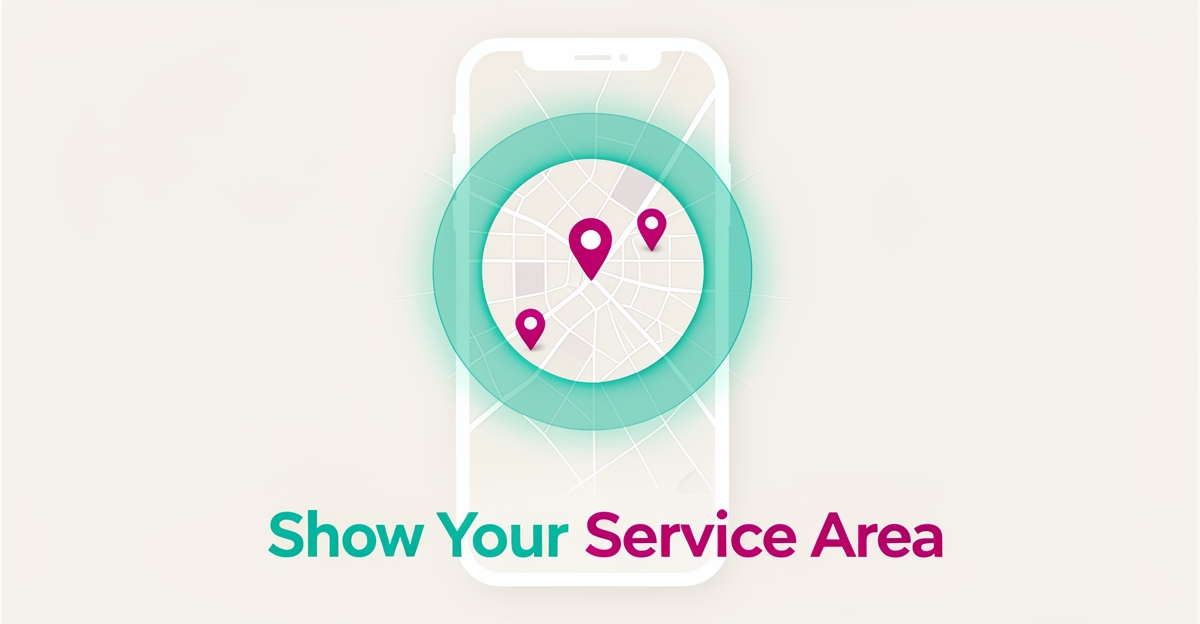
Over 55% of traffic to urology websites comes from mobile devices, so any service area presentation must be fully responsive and intuitive on smaller screens as noted in urology-specific website design guidance. An AI-powered dynamic map that adjusts in real time based on the user’s location — showing not just boundaries but active service zones, wait times, or clinic availability — meets this need. Unlike static images, these maps can highlight exactly which neighborhoods, ZIP codes, or cities are covered, reducing confusion and building immediate trust.
But visibility isn’t just about geography — it’s about relevance. Pairing your map with condition-specific service descriptions tied to each location helps patients see that you don’t just treat urology broadly, but that you handle their specific concern — whether it’s BPH, kidney stones, or incontinence — right in their community. This localized approach aligns with how patients search: using natural-language queries like “urologist for prostate enlargement near me” and expecting structured, trustworthy answers as highlighted in healthcare marketing insights.
Finally, social proof transforms interest into action. Displaying verified patient reviews, provider bios, and credentials directly within each service area section reassures visitors that others like them have had positive experiences nearby. When combined with clear navigation and fast load times, these elements create a patient-centric experience that doesn’t just inform — it convinces. The result? More informed visitors, fewer unnecessary calls, and a higher likelihood that the next click is to book an appointment.
Local business: doing this the old way?
One system replaces the whole pile.
All of it — the website, the follow-up, the content, the leads — built and run for you for $1,497 + $497/mo. Month-to-month, and you own everything.
See what your build includesHow to Build a Service Area Presence That Ranks and Converts
Building a service area presence that ranks and converts starts with making your geographic coverage instantly clear to both patients and search engines. Nearly half of all healthcare searches have local intent, so clinics that fail to define their service area risk disappearing from results where patients are actively looking for care. A strategic approach combines AI-generated location pages, dynamic mapping, and technical precision to turn visibility into appointments.
Begin by using AI to create location-specific service pages tailored to each zip code, neighborhood, or city you serve. These pages should include structured data markup so search engines understand your exact service boundaries and can display them in local results. Pair this with dynamic maps from platforms like MapZot.AI, which offer 85–90% forecast accuracy for healthcare expansion planning, to visually show patients exactly where you provide care. Interactive maps not only improve engagement but also reinforce local relevance signals that boost rankings.
Optimize your Google Business Profile for each service zone by ensuring consistent NAP information, adding service-specific categories, and regularly updating posts and photos that reflect your urology specialties in those areas. This strengthens your presence in the Google Map Pack, where patients often make decisions without clicking through to a website. Complement this with automated internal linking so new location pages reinforce existing service clusters—like prostate care or incontinence treatment—creating topical authority that Google rewards.
Throughout this process, treat HIPAA and ADA compliance as non-negotiable foundations. Ensure all forms, chat tools, and video content protect patient privacy, and design pages for accessibility with proper contrast, alt text, and keyboard navigation. Prioritize page speed as well, since over 55% of users access urology websites via mobile devices, and slow load times directly impact both user experience and search rankings. When technical integrity and localized content work together, your service area becomes a conversion asset—not just a footnote.
Turn Service Area Visibility Into a Predictable Patient Pipeline
Turn Service Area Visibility Into a Predictable Patient Pipeline
Showing your urology service area effectively isn't just about mapping your coverage; it's about leveraging that visibility to drive booked appointments. For urology clinics, integrating AI-driven solutions can bridge the gap between online visibility and tangible business outcomes.
By combining automated lead capture, instant AI follow-up, and review management tailored to each location, map impressions can be systematically converted into booked appointments. A unified system encompassing the website, Google Business Profile (GBP), CRM, and an AI content engine streamlines operations, replacing up to 10 disparate tools. This integration not only reduces management overhead but also enables the automatic generation of monthly location pages, expanding geographic reach without manual intervention.
Key Statistics Highlighting the Necessity of Integrated Solutions:
- Local Intent Searches: Nearly half of all searches have local intent, underscoring the importance of clear service area visibility source.
- Consumer Trust: 89% of patients consider online information essential for trust, making accurate, AI-driven map integrations crucial source.
- Digital Resources Usage: Patients use digital resources twice as much as referrals for healthcare decisions, emphasizing the need for a strong online presence source.
Strategies to Turn Visibility into Bookings:
- AI-Driven Dynamic Maps: Utilize platforms like MapZot.AI for precise service area visualization, enhancing local SEO and patient engagement source.
- Patient-Centric Engagement: Employ interactive tools, social proof, and clear service descriptions to boost conversion rates source.
- Localized SEO Strategies: Optimize content for "urologist near me" searches and leverage structured data for improved visibility source.
The Power of a Unified System: AI Business Sites' approach, for example, demonstrates how a custom website, integrated with GBP optimization, a full CRM, and an AI content engine, can automate lead follow-ups, review management, and content generation. This not only reduces the complexity of managing multiple tools but also ensures a cohesive patient experience across all touchpoints, from initial search to booked appointment. By focusing on patient-centric design, technical compliance, and localized SEO, urology clinics can effectively turn service area visibility into a predictable pipeline of patient calls.
Frequently Asked Questions
Why are static zip-code lists ineffective for urology service area pages?
What percentage of healthcare searches have local intent, and why is this important for urology clinics?
How do AI-driven dynamic maps improve patient engagement and SEO for urology clinics?
Why is mobile optimization crucial for urology website design?
How does integrating social proof into service area pages impact patient trust and conversions?
What is the significance of using structured data markup for location-specific service pages?
Your Service Area Should Be Your Strongest Lead Generator
Your urology practice's service area isn't a compliance checkbox — it's a conversion engine. When patients search for "urologist near me who treats kidney stones," they need to see exactly where you serve and what you treat in their neighborhood before they'll call. Static zip-code lists and buried footers don't meet that need. Dynamic, AI-generated location pages with interactive maps, condition-specific content, and verified reviews do. They align with how patients actually search today — through conversational, local-intent queries that trigger Map Pack results and AI summaries. Clinics that pair this visibility with instant follow-up and automated review management turn map impressions into booked appointments systematically. 89% of patients consider online information essential for healthcare decisions, and your service area presentation is often the first — and sometimes only — touchpoint before the phone rings. Ready to make your coverage visible where it matters? Start by auditing your current location pages against what patients actually search for, then build from there.
FOR local businesss — BUILT AND RUN BY US
Your website. Your content. Your leads. Your data.
$500 starts your build. Seven days later it's live — chat, booking, follow-up, and your Google presence all set up. Then we run it, every month. You do the work you actually get paid for.