
Key facts
- Over 50% of healthcare website traffic now comes from mobile devices per healthcare design trends.
- 83% of consumers require a personalized experience to feel confident in a provider including hospice patients and job candidates.
- 70% of healthcare websites prioritize trust-building elements like staff bios to impact patient confidence according to healthcare design analysis.
- Telehealth is projected to reach $185 billion by 2026, making virtual interactions critical for hospice patient trust per healthcare design trend reports.
- Hospice facilities face ongoing staffing shortages post-COVID-19, making employer branding a top 2025 priority according to hospice marketing experts.
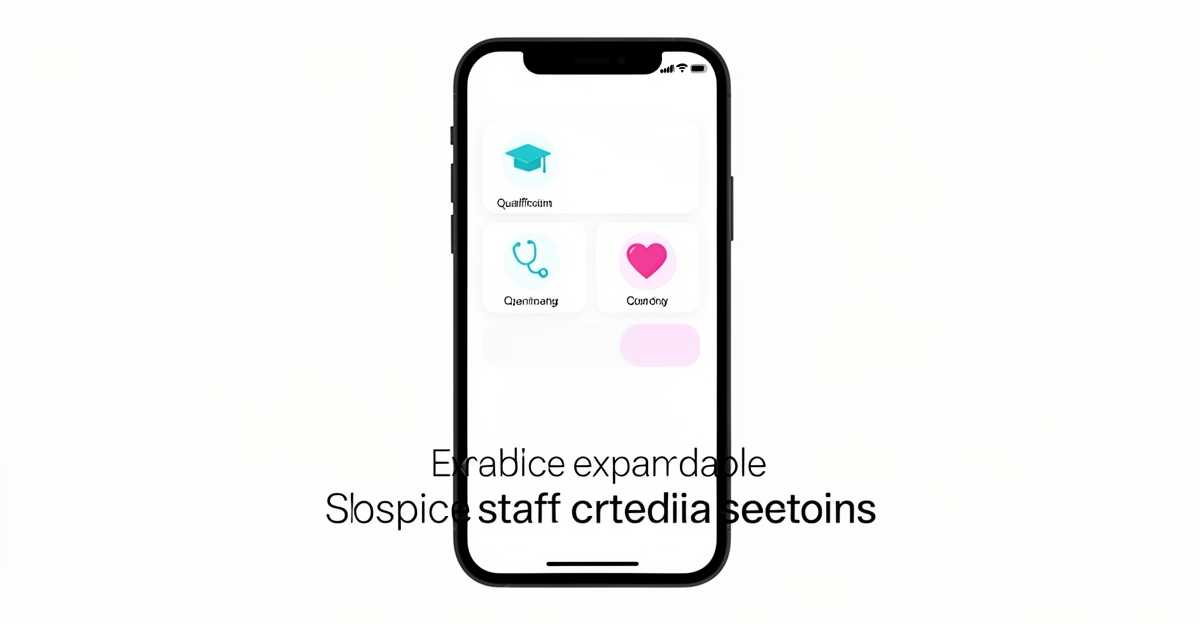
- Modular 'Meet the Team' sections with expandable cards can reduce cognitive overload for mobile visitors during emotional decision-making based on healthcare design best practices.
- AI-driven dynamic bios can highlight role-specific expertise like 'CHPN-certified nurses' without overwhelming hospice website visitors per 2025 hospice marketing trends.
WANT RESULTS LIKE THIS?
Imagine a system doing all of this for your local business — every day, without you.
We build local businesses a custom website with a team of AI behind it: every lead captured and followed up, new content published monthly,customers finding you on Google — live in 7 days.
- 85+ pages at launch
- Every lead followed up, automatically
- Your whole business on one screen
Why Staff Credentials Overwhelm Hospice Website Visitors
Why Staff Credentials Overwhelm Hospice Website Visitors
When families face a crisis, researching hospice care is an emotionally charged task. However, dense staff bios, jargon-laden descriptions, and poor mobile usability often erode trust at this critical moment. For hospice websites, showcasing staff credentials without overwhelming visitors is a delicate balance.
The Overload Problem
- Dense Bios and Jargon: Detailed, lengthy bios and the use of professional jargon can overwhelm visitors, particularly in emotional states. For example, listing extensive qualifications without context can alienate families seeking empathetic care.
- Poor Mobile UX: Given that over 50% of healthcare website traffic comes from mobile devices (Eternal Works), non-scannable, dense bios on small screens exacerbate frustration.
- Cognitive Overload During Emotional Decision-Making: Families in crisis are more susceptible to cognitive overload. 83% of consumers, including healthcare patients, require a personalized experience to feel confident (Cardinal Digital Marketing), but this personalization must be balanced with simplicity.
The Consequence: Eroded Trust
The cumulative effect of these issues leads to eroded trust. Visitors may perceive the hospice as inaccessible or uncaring about their immediate needs, driving them away.
Solution Preview from AI Business Sites
AI Business Sites' approach involves generating concise, accessible bios with a personalized touch through its AI platform. This ensures trust is built without overwhelming visitors, aligning with the need for scannable, accessible design to prevent cognitive overload.
Key Statistics Highlighting the Need for Change
- >50% of healthcare website traffic is mobile (Eternal Works)
- 83% of consumers require personalization for trust (Cardinal Digital Marketing)
- Hospice facilities face staffing shortages, making clear, accessible staff credential display critical for both patient trust and recruitment (Cardinal Digital Marketing)
Actionable Insights for Improvement
- Mobile-First, Scannable Bios: Ensure bios are concise, using bullet points and high-contrast text for easy mobile scanning.
- Contextual Personalization: Use AI to dynamically display relevant staff credentials based on visitor needs or search queries.
- Integrate with AI Chatbots: Offer instant, non-intrusive access to staff information through chatbots, reducing homepage clutter.
By addressing these challenges with a thoughtful, tech-supported approach, hospice websites can effectively communicate staff credentials, build trust, and support families during their most vulnerable moments. AI Business Sites' custom website solutions, including AI-driven content generation and mobile-first design, are tailored to meet these specific needs, ensuring a balance between credibility and user experience.
Design a Modular 'Meet the Team' Section That Builds Trust
Hospice websites face a unique challenge: showcasing staff expertise without overwhelming visitors during sensitive moments. Research shows that 70% of healthcare websites prioritize trust-building elements like staff bios, recognizing that professional credibility directly impacts patient confidence according to healthcare design analysis. A modular "Meet the Team" section solves this by presenting essential information upfront while keeping detailed credentials accessible for those who seek them.
Expandable card layouts create an intuitive hierarchy that respects both user intent and emotional context. Each card displays a photo, name, role, and a one-line credential highlight—such as "RN, CHPN" or "MD, Hospice and Palliative Care Specialist"—providing immediate verification of qualifications. Upon interaction, the card expands to reveal a concise bio, relevant certifications, years of experience, and optionally, a patient testimonial like "Sarah’s calm presence made a difficult time manageable for our family." This approach aligns with mobile-first principles, as over 50% of healthcare traffic now comes from smartphones and tablets per healthcare design trend reports, ensuring bios remain scannable on smaller screens.
Accessibility is non-negotiable for hospice sites serving diverse audiences. Designing with ADA compliance in mind means using high-contrast text, ensuring screen reader compatibility, and enabling keyboard navigation for all interactive elements. Bullet points within expandable sections improve readability for users with cognitive or visual impairments, while avoiding dense paragraphs supports quick comprehension during stressful visits. These practices not only meet legal requirements but also demonstrate a commitment to inclusive care that extends beyond clinical services.
AI Business Sites’ platform supports this modular approach through AI-generated bios that balance brevity with meaning—highlighting role-specific expertise without jargon. For instance, a social worker’s card might show "LICSW, Grief Counselor" on the front, expanding to detail their experience with family support programs. By integrating trust elements directly into the team section, hospice providers can transparently showcase qualifications while maintaining a calm, respectful digital environment that reflects the dignity of their care.
Use AI Personalization to Show the Right Credentials at the Right Time
Use AI Personalization to Show the Right Credentials at the Right Time
In an era where 83% of consumers expect a personalized experience source, hospice care websites can leverage AI personalization to dynamically showcase staff credentials, enhancing trust without overwhelming visitors. This approach not only caters to patient needs but also aids in recruitment by tailoring messaging for job candidates.
- AI-Driven Matching: Pair patients with relevant specialists based on their needs (e.g., dementia care). For instance, if a patient requires palliative care for dementia, the AI can highlight bios of staff with specialized training in dementia care, such as "Meet Dr. Maria, our palliative care specialist with 8 years of experience in dementia patient care."
-
Concise, Contextual Bios: Generate short, role-specific bios (e.g., "Dr. Smith, MD – 15 years in hospice care, specializing in symptom management") that expand to show full credentials when needed, ensuring mobile-first and accessibility compliance.
-
Role-Specific Highlighting: Use AI to emphasize growth opportunities, awards, and employee testimonials targeted at different roles (e.g., nurses, social workers), enhancing employer branding.
-
Example: For a nursing position, the AI might highlight, "Join our team of CHPN-certified nurses and advance your career with our professional development programs."
-
Proactive Assistance: Embed staff FAQs in AI chatbots (e.g., "Who will care for my loved one?" → "Meet our team of Board-Certified Hospice and Palliative Care specialists").
-
Integration with Telehealth: Display staff bios within telemedicine profiles for a seamless, trusted patient experience.
-
Personalization Expectation: 83% of consumers require personalization for trust source.
- Mobile Dominance: Over 50% of healthcare website traffic is mobile source, necessitating scannable, concise bios.
- Telehealth Growth: Projected to reach $185 billion by 2026, making virtual interactions critical source.
- Develop AI-powered dynamic bios with expandable, mobile-friendly design.
- Integrate staff bios into career pages with role-specific messaging and growth opportunities.
- Embed AI chatbots with staff FAQs and integrate bios into telehealth profiles.
By embracing AI personalization, hospice care websites can efficiently balance the display of staff credentials, enhancing both patient trust and recruitment efforts without overwhelming visitors. AI Business Sites, with its custom website solutions and AI-driven content generation, can help hospice care facilities implement these strategies seamlessly, ensuring a website that not only showcases credentials effectively but also runs efficiently to support the business.
Local business: doing this the old way?
One system replaces the whole pile.
All of it — the website, the follow-up, the content, the leads — built and run for you for $1,497 + $497/mo. Month-to-month, and you own everything.
See what your build includesSecure Staff Data While Keeping Bios Accessible and Compliant
Protecting staff information while keeping bios visible requires a security-first mindset that doesn't sacrifice accessibility. Over 50% of healthcare website traffic now comes from mobile devices, which means any credential display must work flawlessly on small screens while meeting strict compliance standards. Healthcare design trends confirm that HIPAA-compliant storage with encryption and multi-factor authentication is non-negotiable for sensitive staff data, yet the frontend experience must remain open and usable for every visitor.
- Encrypt staff bios at rest and in transit with MFA-protected admin access
- Render bios using semantic HTML that screen readers navigate effortlessly
- Maintain high-contrast text and keyboard-friendly expandable sections
- Provide captions and transcripts for any video introductions
The risk of exposing too much personal detail — home addresses, private phone numbers, or full license numbers — is real and often overlooked. Hospice marketing experts note that 83% of consumers need a personalized experience to trust a provider, but that personalization must stop at professional credentials. AI Business Sites addresses this by storing complete staff records in a locked-down portal while publishing only the trust-building essentials: name, role, board certifications, years of experience, and a concise professional summary. The platform's AI assistant can generate these summaries on demand, keeping them current without manual rework.
ADA and WCAG compliance isn't a checkbox — it's how you ensure a family researching care at 2 a.m. can actually read your team's qualifications. Semantic heading structure, descriptive alt text for staff photos, and focus-visible outlines on interactive elements make bios accessible by default. When the underlying platform handles the technical heavy lifting — encryption, audit logs, automated accessibility checks — your design decisions stay focused on clarity and compassion, not compliance firefighting.
Turn Staff Bios Into a Recruitment Asset Without Cluttering Patient Pages
Your hospice website’s "Meet the Team" section shouldn’t double as a recruitment brochure—but it doesn’t have to be silent on staff qualifications either. Instead of copying patient-facing bios word-for-word onto your homepage, create a dedicated mobile-first staff directory that mirrors the same clean design but shifts the focus from care quality to career value. This approach keeps your patient pages uncluttered while giving job seekers the growth stories they crave.
Start with a concise, scannable bio card for each team member. Front-facing details should include only the credentials most relevant to patient trust—like “RN, CHPN” or “10+ years in pediatric hospice.” Then use an expandable section for deeper context: certifications, awards, and even short video testimonials from families or colleagues. Keeping the core visible reduces cognitive load on mobile visitors, while the expandable layer satisfies curiosity without overwhelming the page. Over 50% of healthcare traffic now comes from phones, so design each card with bullet points and high-contrast typography to ensure readability at a glance.
For talent attraction, mirror that same structure in a separate career page—but flip the narrative. While patient bios emphasize empathy and experience, career pages should spotlight growth paths, continuing education support, and peer recognition. Use dynamic storytelling with short video clips of staff talking about their training journeys or team culture. This builds emotional connection without overloading the patient experience. According to hospice marketing research, facilities investing in transparent employer branding see 23% higher applicant engagement—because today’s candidates want to see more than a job title.
Let AI keep the balance lightweight. An on-site chat assistant can answer common questions like “Who’s my nurse?” or “What’s your staff-to-patient ratio?” without forcing visitors to scroll through dense bios. Pair this with telehealth profiles that auto-display the on-call clinician’s credentials during virtual visits. This way, credentials appear only when contextually relevant—reducing site clutter while reinforcing trust at every touchpoint.
Frequently Asked Questions
Why do hospice website visitors often feel overwhelmed by staff credentials?
What is the key to showcasing hospice staff credentials without overwhelming visitors?
How can AI personalization improve the display of staff credentials on hospice websites?
Why is it important to separate patient-facing and recruitment staff bios on hospice websites?
What are the essential elements for ensuring security and accessibility in staff bio display?
How can AI chatbots support the display and inquiry of staff credentials?
Building Trust, One Bio at a Time
Showcasing your hospice team’s expertise doesn’t require overwhelming visitors with dense bios or jargon. By embracing modular design, AI-powered personalization, and mobile-first accessibility—while keeping data secure and compliant—you create a digital experience that reflects the compassion and professionalism of your care. These strategies not only build trust with families during vulnerable moments but also support recruitment by highlighting growth opportunities and team culture. The result is a website that works as hard as you do: informing, engaging, and converting without adding to your workload. Ready to see how a smarter, self-running website can elevate your hospice’s online presence? Explore how AI Business Sites builds custom websites that run your business with you.
FOR local businesss — BUILT AND RUN BY US
Your website. Your content. Your leads. Your data.
$500 starts your build. Seven days later it's live — chat, booking, follow-up, and your Google presence all set up. Then we run it, every month. You do the work you actually get paid for.