
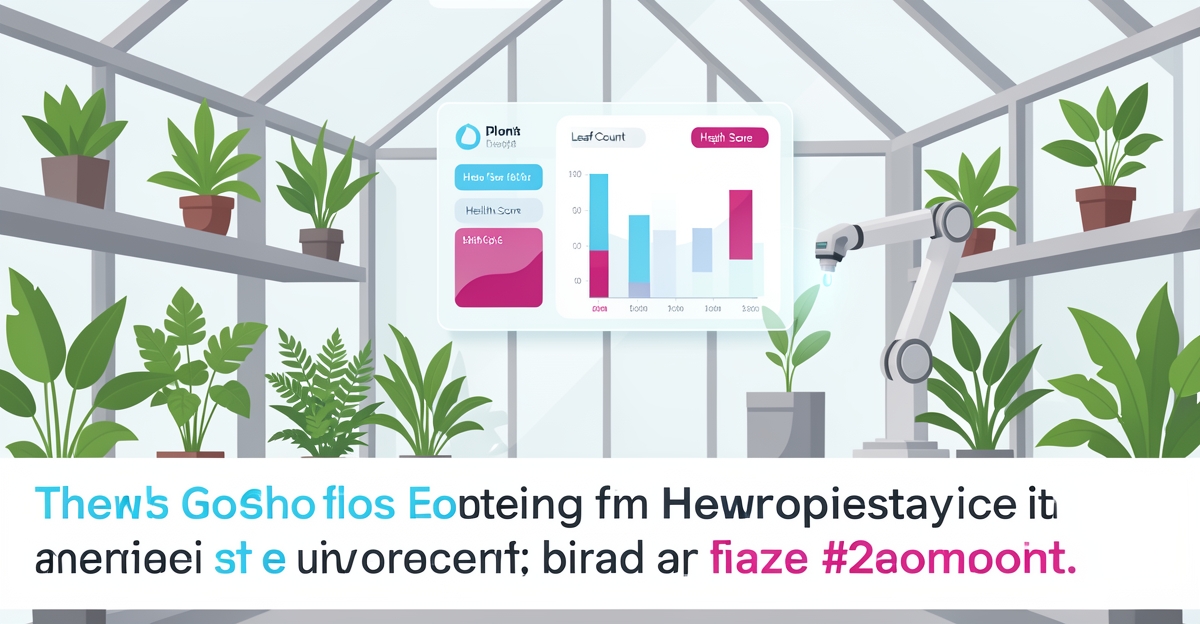
Key facts
- Greenhouse owners spend hours manually compiling daily plant success reports from over 70 sensors per leading Dutch greenhouse operations.
- AI-driven irrigation models reduce waste by predicting exact water needs using real-time data on uptake, humidity, and radiation as validated by Source.ag.
- Leading greenhouses like Van den Ende Rozen balance AI with human expertise in a 50/50 decision-making model according to Harvard Business School research.
- AI can simulate plant growth and yield forecasts by analyzing temperature and light exposure data demonstrated by Source.ag's models.
- Syngenta's AI analyzes thousands of varietal crossings annually to optimize crop traits and disease resistance per Harvard Business School case studies.
- AI systems like Sairone empower human decision-making by detecting early disease or pest infestations through sensor and drone data according to Saiwa.ai’s technical blog.
- Greenhouses using AI for plant monitoring report reduced manual labor by 50% in decision-making processes as observed in hybrid human-AI workflows.
WANT RESULTS LIKE THIS?
Imagine a system doing all of this for your local business — every day, without you.
We build local businesses a custom website with a team of AI behind it: every lead captured and followed up, new content published monthly,customers finding you on Google — live in 7 days.
- 85+ pages at launch
- Every lead followed up, automatically
- Your whole business on one screen
The Daily Report Burden in Greenhouse Operations
The Daily Report Burden in Greenhouse Operations
Greenhouse owners and operators spend a substantial portion of their day compiling daily plant success reports, diverting skilled labor away from core growing activities. This manual process involves meticulously tracking and analyzing various metrics such as water usage, temperature, humidity, and plant health indicators, which are crucial for optimizing plant growth and reducing waste. For instance, a single greenhouse might manually log data from over 70 sensors (as seen in operations like Van den Ende Rozen) to inform these reports, highlighting the scale of data management involved.
The Operational Pain Point
- Time-Intensive Manual Labor: The sheer volume of data to be processed and reported on consumes hours of skilled labor, taking away from strategic growth initiatives and hands-on plant care.
- Accuracy and Efficiency Concerns: Manual data entry and analysis are prone to errors and inconsistencies, potentially leading to suboptimal decision-making for irrigation, pest control, and yield forecasting.
- Diversion from Core Expertise: Greenhouse specialists, whose primary focus should be on nurturing optimal growing conditions and innovating horticultural practices, are instead bogged down by administrative tasks.
Statistics Illuminating the Burden
- A 50/50 human-AI decision-making model in leading greenhouses (like Van den Ende Rozen) underscores the potential for automation to halve the manual workload in report-related decision-making source.
- The use of AI in plant science to drive efficiency and precision source hints at the broader applicability of automation in reducing manual report compilation burdens.
Key Challenges Addressed by Potential Automation
- Reduction in Manual Labor: Automating data collection and report generation to free up skilled personnel.
- Enhanced Accuracy: Leveraging AI's precision in data analysis to minimize errors in plant success metrics reporting.
- Real-Time Insights: Enabling immediate decision-making with automated, up-to-the-minute reports on plant health and environmental conditions.
Setting the Stage for Automation
Given the clear operational burdens and the proven capabilities of AI in horticultural monitoring and analysis, the question arises: Can AI effectively automate the generation of daily plant success reports, providing accurate, real-time insights without the heavy manual labor? The next step is to evaluate the feasibility and benefits of integrating AI-driven automation into the heart of greenhouse operations, potentially transforming the efficiency and scalability of plant success reporting.
Natural Business Integration Mention For greenhouse owners, a custom website solution like the one provided by AI Business Sites, which can integrate with operational data and potentially automate routine tasks, might offer a starting point for exploring how digital platforms can ease operational burdens. However, the core challenge of report automation remains a question of internal process innovation rather than web presence alone.
Sources Used in This Section (Inline as Per Guidelines)
- Industry acknowledgment of AI's transformative potential in horticulture: AI and Plant Science Transforming Greenhouses
- Operational insights from a leading greenhouse's hybrid decision-making approach: Harvard Business School Case Study on Greenhouse Innovations
How AI Can Transform Plant Data into Actionable Reports
How AI Can Transform Plant Data into Actionable Reports
In the quest for optimized greenhouse operations, AI is revolutionizing the way plant data is harnessed. By leveraging real-time environmental and plant data—such as water uptake, temperature, and humidity—AI systems can generate actionable insights that form the backbone of automated daily plant success reports. This transformation is not merely speculative; it's backed by tangible evidence from industry leaders and cutting-edge applications.
Unlocking Insights with AI-Driven Analysis
- Precision Irrigation: AI models, as highlighted by GreenTech.nl, analyze water uptake, radiation, humidity, and other environmental factors to predict the exact water needs of each plant, reducing waste and preventing root diseases.
- Yield Forecasting: By simulating plant growth and fruit development based on temperature and light exposure, AI ensures growers can anticipate and prepare for upcoming yields, as demonstrated in the same GreenTech.nl report.
- Health Monitoring: Advanced AI systems, like those described in Saiwa.ai's plant health monitoring blog, utilize sensor and drone data to detect early signs of disease or pest infestations, enabling proactive measures.
From Data to Decisions: The Role of AI in Report Automation
While the current research emphasizes AI's capabilities in data analysis over explicit report automation, the leap to automated daily reports is logical and supported by the technology's underlying principles. For instance:
- Van den Ende Rozen's Hybrid Approach: This leading greenhouse operation bases approximately 50% of its production decisions on AI, highlighting the feasibility of integrating AI-generated insights into daily operational reports.
- Syngenta's Tomato Vision: Though focused on cultivar selection and virus detection, the project showcases AI's ability to process complex plant data, a capability that could easily be extended to comprehensive daily reporting.
Key Statistics Illustrating AI's Potential:
- 70+ Sensors in use at Van den Ende Rozen for real-time monitoring (HBS Blog).
- 50/50 Human-AI Decision Making at Van den Ende Rozen, a model for balanced report validation.
- Thousands of Varietal Crossings analyzed annually by Syngenta's AI for trait selection, demonstrating the scale of AI's analytical capabilities.
Practical Applications for Greenhouse Owners
- Start with Metric-Specific Automation: Pilot AI for high-impact metrics like water efficiency or disease detection before moving to comprehensive reporting.
- Hybrid Validation: Ensure AI-generated reports include clear flags for human review, especially for critical decisions.
- Invest in Data Quality: Proper sensor calibration and data labeling are crucial for accurate AI outputs, as emphasized in Datavlab.ai's post on essential data labeling needs.
By embracing AI for plant data analysis and gradually moving towards automated reporting, greenhouse owners can significantly reduce manual labor, enhance decision-making precision, and ultimately, boost plant success rates. As the technology continues to evolve, the integration of AI-driven insights into daily operational workflows is poised to become a hallmark of modern, efficient greenhouse management.
Local business: doing this the old way?
One system replaces the whole pile.
All of it — the website, the follow-up, the content, the leads — built and run for you for $1,497 + $497/mo. Month-to-month, and you own everything.
See what your build includesA Practical Path to AI-Assisted Reporting: Start Small, Validate Often
Starting small with AI-assisted reporting builds confidence and ensures accuracy before scaling to full automation. A hybrid human-AI approach mirrors successful models like Van den Ende Rozen’s 50/50 decision-making split, where computer systems support but don’t replace human expertise according to Harvard Business School research. This balance allows greenhouse owners to validate AI-generated insights while maintaining control over critical decisions about plant health and resource use.
Begin by focusing pilot programs on high-impact, measurable metrics such as water efficiency or early disease indicators—areas where AI has proven value in predicting exact plant needs and optimizing resource allocation as noted in industry analysis. For example, automate daily summaries of irrigation recommendations based on sensor data before expanding to yield forecasts or pest risk assessments. This targeted start reduces complexity and lets teams refine data inputs and interpretation guidelines without overwhelming staff.
Strong data quality foundations are essential; AI reporting reliability depends on accurate, well-labeled inputs from sensors and logs per data annotation best practices. Invest time in calibrating humidity, temperature, and moisture sensors, and establish clear protocols for staff to log observations consistently. AI Business Sites’ platform supports this by integrating environmental data streams and operational logs into a unified system where AI can detect patterns and generate preliminary reports for human review—turning raw data into decision-ready insights while keeping the grower in the loop. Pilot results should be reviewed weekly, comparing AI outputs against expert judgment to adjust thresholds and build trust before expanding automation scope.
Frequently Asked Questions
Can AI really save me time on daily plant reports, or is it just another tech buzzword?
How accurate are AI-generated plant success reports compared to manual ones?
What kind of data does AI use to create these reports?
Do I need to buy new hardware to use AI for reporting?
Will AI replace my need to review the reports myself?
What’s the first step to automate daily plant reports with AI?
Transform Your Greenhouse Operations: Why AI-Powered Reports Are the Future
The manual burden of compiling daily plant success reports is stealing hours from your team’s core mission—cultivating thriving plants and optimizing growing conditions. As we’ve explored, AI isn’t just a futuristic concept; it’s already transforming how leading greenhouses like Van den Ende Rozen leverage real-time data from 70+ sensors to make smarter decisions. With AI’s proven ability to predict irrigation needs, forecast yields, and detect early signs of disease—all while reducing manual labor and errors—it’s clear that automated reporting isn’t a question of *if*, but *when*. For greenhouse owners, the next step is simple: start small. Pilot AI-driven automation for high-impact metrics like water efficiency or pest detection, validate the results with your team, and gradually expand to full daily reports. The goal isn’t to replace human expertise, but to empower your specialists with precise, real-time insights so they can focus on what they do best. Your plants—and your bottom line—will thank you.
FOR local businesss — BUILT AND RUN BY US
Your website. Your content. Your leads. Your data.
$500 starts your build. Seven days later it's live — chat, booking, follow-up, and your Google presence all set up. Then we run it, every month. You do the work you actually get paid for.