
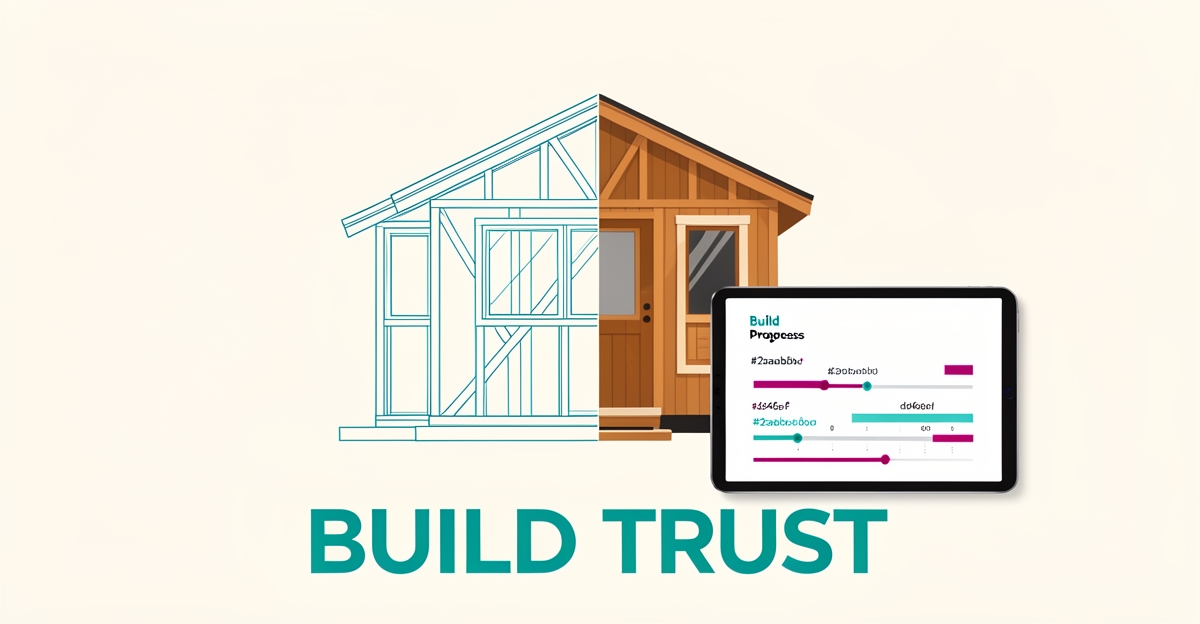
Key facts
- The tiny homes market is expected to grow by **USD 3.71 billion from 2025 to 2029** with a **4.2% CAGR** according to Finance Yahoo.
- Listings with **3D virtual tours generate up to 49% more leads** per Matterport.
- **Over 50% of first-time buyers** would consider a **sight-unseen purchase** facilitated by virtual tours as reported by Covering Companies.
- **54% of the tiny homes market growth** originates from **North America** according to Technavio via PR Newswire.
- Virtual tours can **reduce market time by nearly half** for properties as noted by Covering Companies.
- **Customization drives growth** in the tiny home market, yet **transparency gaps** exist in construction visibility highlighted by Finance Yahoo.
WANT RESULTS LIKE THIS?
Imagine a system doing all of this for your local business — every day, without you.
We build local businesses a custom website with a team of AI behind it: every lead captured and followed up, new content published monthly,customers finding you on Google — live in 7 days.
- 85+ pages at launch
- Every lead followed up, automatically
- Your whole business on one screen
The Transparency Gap in Tiny Home Construction
The tiny home market is booming — expected to grow by USD 3.71 billion from 2025 to 2029 — yet most buyers still can't see how their future home actually comes together. Customization drives this growth, but it also creates a transparency gap: clients commit thousands of dollars before ever laying eyes on the framing, insulation, or finish work that defines quality. In a market where 54% of growth originates from North America alone, that gap isn't just a trust issue — it's a competitive liability.
Traditional portfolios and static photos leave too much to interpretation. Buyers want to verify craftsmanship, confirm material choices, and understand timelines — not just admire the final reveal. Research from the broader housing market shows that listings with 3D tours generate up to 49% more leads, and over 50% of first-time buyers would consider a sight-unseen purchase. Those behaviors are migrating into the tiny home space, where buyers often live states away from their builder.
- Customization without visibility creates hesitation at the decision point
- Static galleries can't show sequencing, trade coordination, or problem-solving
- Out-of-area buyers need proof before they commit travel budget
- Competitors who document the process win the trust comparison by default
Builders who open the curtain — showing the rough-in, the drywall, the cabinet install — don't just satisfy curiosity. They reduce buyer uncertainty at the moment it matters most. The challenge isn't whether buyers want this access; it's whether builders can deliver it without adding production overhead. That's where a website built to handle ongoing content updates — like those from AI Business Sites — turns a one-off transparency effort into a systematic advantage.
The Solution: Leveraging Virtual Tours for Trust and Efficiency
The Solution: Leveraging Virtual Tours for Trust and Efficiency
In the realm of tiny home construction, where customization and transparency are paramount, virtual tours can emerge as a game-changer. By drawing lessons from the real estate industry, tiny home builders can harness virtual tours to build trust, reduce buyer uncertainty, and streamline their sales process. Here's how:
Enhancing Trust Through Transparency
Virtual tours, particularly 3D varieties, offer a level of transparency that traditional marketing materials cannot match. For instance, listings with 3D tours can generate up to 49% more leads (Matterport), as they provide buyers with an immersive, self-guided exploration experience. This is especially valuable in the tiny home market, where buyers often seek detailed insights into spatial layouts and customization options. By integrating 3D virtual tours of the build process, tiny home builders can demonstrate their commitment to openness, potentially increasing buyer confidence.
Streamlining the Sales Process
The efficiency gains from virtual tours are twofold. Firstly, they can significantly reduce the number of unqualified leads visiting the site, as buyers are better informed from the outset. Secondly, for serious buyers, virtual tours can reduce market time by nearly half (Covering Companies), allowing builders to focus on more engaged prospects. This aligns with the broader trend in the tiny homes market, which is expected to grow by USD 3.71 billion from 2025 to 2029, with a CAGR of 4.2% (Finance Yahoo).
Key Strategies for Tiny Home Builders
- Adopt Audience-Centric Design: Tailor virtual tours to highlight customization options and sustainability features, crucial for tiny home buyers (Concept3D).
- Integrate with the Build Process: Showcase the construction process in 3D to enhance transparency and trust, potentially boosting lead generation (Matterport).
- Balance with In-Person Visits: Position virtual tours as a preliminary step, encouraging in-person visits for a comprehensive experience (Covering Companies).
Integration with Online Visibility
For tiny home builders, integrating virtual tours into their website can also enhance local SEO and online visibility. Platforms like AI Business Sites automatically embed and update virtual tour content with project milestones and client feedback, improving search visibility and user trust. This seamless integration not only attracts more leads but also provides a competitive edge in the growing tiny homes market.
By embracing virtual tours as part of their strategy, tiny home builders can not only keep pace with buyer expectations but also set a new standard for transparency and efficiency in the industry. As the market continues to grow, driven by demands for customization and technological innovation, the incorporation of virtual tours stands out as a forward-thinking approach to building trust and streamlining sales.
Local business: doing this the old way?
One system replaces the whole pile.
All of it — the website, the follow-up, the content, the leads — built and run for you for $1,497 + $497/mo. Month-to-month, and you own everything.
See what your build includesImplementing Effective Virtual Tours for Tiny Home Builders
Implementing Effective Virtual Tours for Tiny Home Builders
Virtual tours are no longer a luxury but a necessity for builders looking to stay competitive. For tiny home builders, offering virtual tours of their build process can significantly enhance trust and reduce buyer uncertainty, especially given the market's growth trajectory, expected to reach USD 3.71 billion by 2029 with a CAGR of 4.2% source.
Tiny home buyers are driven by customization and sustainability. Virtual tours should be tailored to highlight these aspects, as suggested by Cassie Fay from Concept3D, emphasizing audience-centric design and storytelling source. This might include interactive hotspots for customization options and detailed views of eco-friendly features.
Showcasing the build process in 3D can offer unparalleled transparency. Listings with 3D tours generate up to 49% more leads source, a statistic highly relevant to tiny home builders looking to maximize engagement. Integrating these tours with project milestones on platforms like AI Business Sites can further enhance engagement and search visibility.
While virtual tours are powerful, they should complement, not replace, in-person visits. As Professor Gautam Pant notes, virtual tours decrease information overload but cannot fully address sensory and spatial concerns source. Builders should encourage viewers to schedule in-person visits after the virtual tour.
- Customize for Your Audience: Highlight features most valued by tiny home buyers, such as sustainability and customization options.
- Invest in 3D Technology: For a more immersive experience that can increase leads and potentially sell units for up to 9% more source.
- Seamless Website Integration: Use platforms like AI Business Sites to embed tours alongside project updates and client feedback, enhancing SEO and user trust.
By following these steps, tiny home builders can leverage virtual tours to enhance their online presence, drive more informed leads, and ultimately, close more sales in a competitive and growing market. AI Business Sites, with its capability to automatically embed and update virtual tour content, can play a pivotal role in this strategy, streamlining the process for builders.
Measuring Success and Overcoming Limitations
Measuring Success and Overcoming Limitations
As tiny home builders embark on offering virtual tours of their build process, measuring the initiative's success and addressing its limitations are crucial. According to industry research, listings with 3D tours generate up to 49% more leads and can sell for up to 9% more, reducing market time by nearly half (Matterport). While these statistics hail from the broader real estate sector, their applicability to tiny home construction is supported by the market's growth trends, expected to increase by USD 3.71 billion from 2025-2029 with a CAGR of 4.2% (Technavio via PR Newswire).
- Engagement Rates: Track time spent on virtual tours and engagement metrics (e.g., rooms explored, questions asked) to gauge buyer interest.
- Lead Generation: Monitor the increase in leads generated directly from virtual tour interactions.
-
Sales Efficiency: Measure the reduction in time spent on physical site visits and the increase in sight-unseen purchases.
-
Deception Risks: Ensure virtual tours accurately represent the build process and final product to maintain trust, as highlighted by Professor Gautam Pant's emphasis on transparency (Covering Companies).
-
Information Overload: Design virtual tours with an audience-centric approach, focusing on key aspects of the tiny home's customization and sustainability features, as recommended by Cassie Fay of Concept3D (Concept3D Blog).
To refine the approach for tiny home builders: 1. Direct Consumer Studies: Conduct surveys and interviews with tiny home buyers to understand their preferences and expectations from virtual tours. 2. Case Studies on Tiny Home Builders: Analyze the impact of virtual tours on sales and customer satisfaction in the tiny home niche. 3. Technological Innovations: Explore integrating augmented reality (AR) with virtual tours to further enhance the buyer experience.
By acknowledging and addressing these aspects, tiny home builders can leverage virtual tours effectively, enhancing their market competitiveness and buyer trust. AI Business Sites, with its expertise in integrating interactive content into website structures for improved SEO and user engagement, can support such initiatives by seamlessly embedding and updating virtual tour content alongside project milestones and client feedback.
Frequently Asked Questions
Do virtual tours actually help tiny home builders get more leads?
Will buyers really commit to a tiny home without seeing it in person first?
Can virtual tours replace in-person visits for tiny home buyers?
Is the tiny home market growing enough to justify investing in virtual tour technology?
What's the risk of virtual tours making our build process look worse than it is?
How do we keep virtual tour content updated without it becoming a production burden?
Key Takeaways
{ "title": "Building Trust, One Virtual Tour at a Time", "content": "The tiny home market's explosive growth hinges on trust and transparency, with buyers craving more than just final product aesthetics. By embracing virtual tours of their build process, tiny home builders can significantly reduce b
FOR local businesss — BUILT AND RUN BY US
Your website. Your content. Your leads. Your data.
$500 starts your build. Seven days later it's live — chat, booking, follow-up, and your Google presence all set up. Then we run it, every month. You do the work you actually get paid for.