
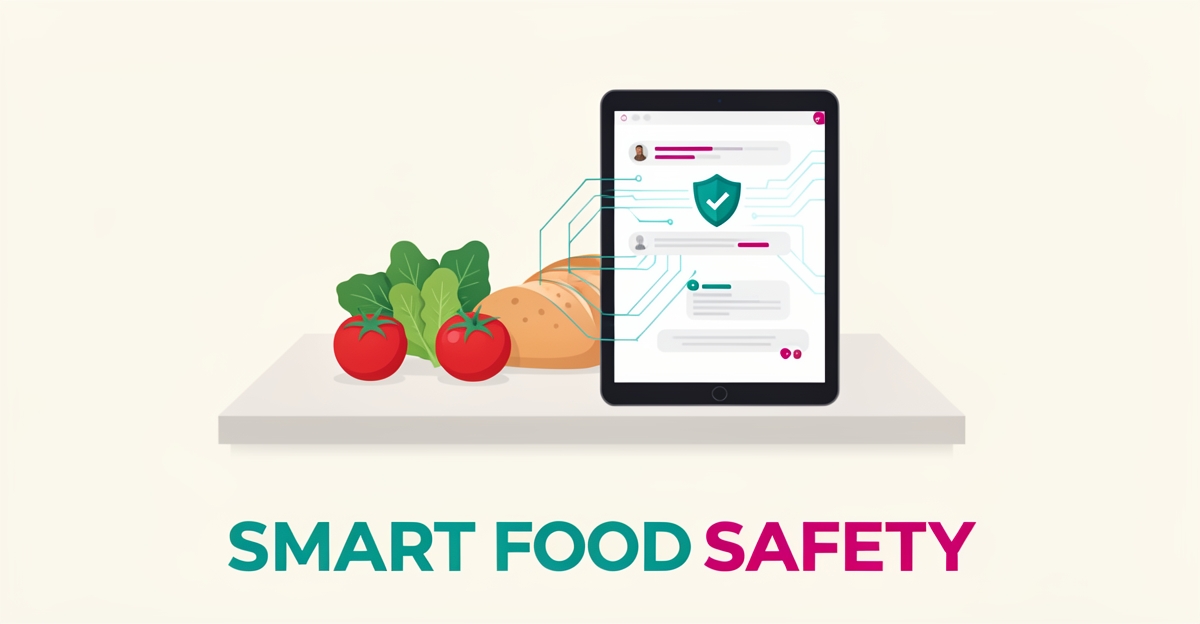
Key facts
- The global AI market for food safety and quality control is projected to reach $13.7 billion by 2030, growing at a 30.9% CAGR according to BCC Research.
- Over 60% of food manufacturers have already adopted AI for real-time quality inspection as per BCC Research.
- The Asia Pacific region is anticipated to show the fastest growth in AI adoption for food safety as reported by Towards FNB.
- Experts emphasize the necessity of human oversight in AI-driven food safety solutions to maintain trust and accountability as noted in IFT publications.
- AI can analyze patterns in inquiries, predict, and prevent potential safety breaches through machine learning according to market insights.
- Small food businesses using AI for inquiries can free up human resources for more complex operations and strategic tasks as highlighted by the Institute of Food Technologists.
- Pilot AI projects for specific food safety inquiries are recommended to assess effectiveness before full integration recommended by food safety experts in IFT Magazine.
WANT RESULTS LIKE THIS?
Imagine a system doing all of this for your local business — every day, without you.
We build local businesses a custom website with a team of AI behind it: every lead captured and followed up, new content published monthly,customers finding you on Google — live in 7 days.
- 85+ pages at launch
- Every lead followed up, automatically
- Your whole business on one screen
The Food Safety Inquiry Conundrum
The Food Safety Inquiry Conundrum
In the intricate world of food safety, inquiries about handling practices, cross-contamination risks, and HACCP protocols are not just frequent but crucial. Small food businesses, in particular, face a daunting challenge: responding to these inquiries efficiently without compromising accuracy. The stakes are high, with the slightest misstep potentially leading to reputational damage or even legal repercussions. Meanwhile, the global AI market for food safety and quality control is burgeoning, projected to reach $13.7 billion by 2030, growing at a remarkable CAGR of 30.9% according to market research.
Handling each inquiry manually is time-consuming and demands a level of expertise that not all staff members may possess. A study by the Institute of Food Technologists highlights the importance of data quality and human oversight in AI adoption for food safety, indirectly suggesting the potential for AI to alleviate some of the inquiry burden by providing standardized, informed responses.
AI, particularly through chatbots and automated response systems, offers a promising solution. By integrating AI into their customer service channels, small food businesses can:
- Provide instant responses to frequent inquiries, ensuring timely customer satisfaction.
- Ensure consistency in the information provided, reducing the risk of human error.
- Free up human resources for more complex inquiries and strategic operations.
- Market Validation: The rapid growth of the AI market in food safety validates the industry's move towards technological solutions, with Asia Pacific expected to be the fastest-growing region for AI in food safety.
- Adoption Rates: Over 60% of food manufacturers have adopted AI for real-time quality inspection as per BCC Research, indicating a willingness to leverage AI for critical safety aspects.
- Expert Endorsement: Experts like Hal King and Willette Crawford emphasize the role of AI in extending food safety capabilities, albeit with a strong caveat for human oversight as noted in IFT publications.
For small food businesses, integrating AI for food safety inquiries means more than just adopting technology; it means doing so in a way that complements existing operations. Platforms like those offered by AI Business Sites, which combine AI-driven customer service tools with comprehensive website solutions, can provide a streamlined approach. These platforms not only handle inquiries but also ensure the business's online presence is optimized for search, further enhancing visibility and trust among consumers.
While the direct application of AI to handle specific food safety inquiries (like HACCP protocols) is an area needing further exploration, the broader trends and expert opinions suggest a clear path: 1. Pilot AI Solutions: Test AI's capability in handling specific inquiries to gauge effectiveness. 2. Ensure Human Oversight: Implement AI in a manner that ensures human review for critical responses. 3. Invest in Data Quality: Recognize that AI's effectiveness is deeply tied to the quality of data it's trained on.
As the food industry hurtles towards an AI-driven future, small businesses embracing this technology strategically will not only solve the food safety inquiry conundrum but also position themselves at the forefront of innovation and customer trust.
AI-Powered Solution for Food Safety Inquiries
AI-Powered Solution for Food Safety Inquiries
As the food industry navigates the complexities of ensuring safety and compliance, Artificial Intelligence (AI) emerges as a transformative tool. With the global AI market for food safety and quality control projected to reach $13.7 billion by 2030, growing at a CAGR of 30.9%, the potential for AI to enhance food safety management is undeniable (industry research, [https://www.bccresearch.com/pressroom/ift/ai-revolutionizes-food-safety-and-quality-control-market?srsltid=AfmBOooIHQ0QXe3t4qFO6TxvdfPLpnFzAocYnSDTJPoqBL6M2C9lNByA]).
AI can be leveraged to create a proactive risk management system for food safety inquiries, particularly for complex questions regarding HACCP protocols and cross-contamination risks. By integrating AI into their platforms, small food businesses can:
- Provide real-time responses to client inquiries, ensuring immediate addressal of concerns.
- Utilize machine learning to analyze patterns in inquiries, predicting and preventing potential safety breaches.
- Ensure compliance simplification by keeping abreast of the latest regulatory requirements and updating responses accordingly.
Critically, experts like Hal King (Active Food Safety) and Willette Crawford (Katalyst Consulting) emphasize the necessity of human oversight in AI-driven food safety solutions to maintain trust and accountability (research on AI in food safety, [https://www.ift.org/trends-and-learning/research-and-publications/ai-and-food-safety/]). This balanced approach allows AI to handle the volume and speed of inquiries while ensuring a human touch for critical decisions.
For small food businesses, integrating AI into their existing infrastructure can significantly enhance operational efficiency. Platforms like those offered by AI Business Sites, which combine custom website design with AI-powered customer service tools, can automatically handle inquiries, reduce response times, and ensure compliance with local regulatory standards. This not only streamlines operations but also frees up resources for more strategic initiatives.
- Market Growth: The AI in food safety market is expected to grow at a 30.9% CAGR by 2030.
- Adoption Rate: Over 60% of food manufacturing already adopts AI for real-time quality inspection.
- Regional Focus: The Asia Pacific region is anticipated to show the fastest growth in AI adoption for food safety.
While direct evidence on AI's application for specific food safety inquiries is emerging, the broader trends and expert insights strongly support its potential. Small food businesses considering AI for food safety inquiries should prioritize data quality enhancement and pilot projects to assess direct applicability, always with a model that incorporates essential human oversight.
AI Business Sites understands the nuances of integrating technology with operational needs, offering solutions that can adapt to the unique challenges of food safety management, providing a custom website that not only addresses inquiries efficiently but also ensures the business runs smoothly, with AI handling the busywork.
By embracing AI in a balanced, human-supervised manner, small food businesses can leverage the technology's capabilities to enhance safety, compliance, and customer satisfaction, positioning themselves at the forefront of industry innovation.
Sources (inline links as per guidelines):
Local business: doing this the old way?
One system replaces the whole pile.
All of it — the website, the follow-up, the content, the leads — built and run for you for $1,497 + $497/mo. Month-to-month, and you own everything.
See what your build includesImplementing AI for Food Safety Inquiries Effectively
Starting small is the smartest way to adopt AI for food safety inquiries without overwhelming your team or risking compliance gaps. The market for AI in food safety is projected to reach $13.7 billion by 2030, but success depends on implementation discipline, not market momentum. Food safety experts consistently emphasize that AI extends rather than replaces human expertise, making oversight the non-negotiable foundation of any deployment.
- Pilot AI for a narrow set of repetitive inquiries — allergen declarations, temperature log basics, or label review checklists — before expanding to HACCP protocol questions
- Invest in cleaning and structuring your existing SOPs, regulatory references, and past audit findings so the AI has high-quality ground truth to draw from
- Build a mandatory human review step for any response involving cross-contamination risk, critical control points, or regulatory interpretation
- Track resolution accuracy and escalation rates weekly during the pilot to measure real performance against your baseline
Data quality determines whether AI becomes a liability or an asset. Hal King of Active Food Safety highlights that AI effectiveness hinges entirely on the relevance and accuracy of the training data, a principle that applies directly to inquiry handling. Willette Crawford of Katalyst Consulting reinforces that human oversight isn't optional — it's the mechanism that maintains accountability when regulations shift or edge cases emerge. At AI Business Sites, we've seen small food businesses achieve the best results when their website's AI assistant handles routine questions using the business's own curated knowledge base, with every response grounded in documented procedures and a clear path to human review for anything beyond standard guidance. The goal isn't full automation — it's freeing your experts from answering the same basic questions so they can focus on the complex judgments that actually require their experience.
Frequently Asked Questions
Can AI actually handle complex food safety questions like HACCP protocols and cross-contamination risks?
Is the AI food safety market growing fast enough to justify investment for a small business?
What happens if the AI gives wrong food safety advice — who's liable?
How much data do I need to train an AI for food safety inquiries?
Can I start small with AI for food safety without overhauling my whole operation?
Will AI replace my food safety team?
Key Takeaways
{ "title": "Transforming Food Safety with AI: The Next Step for Small Businesses", "content": "As the food industry embraces AI to enhance safety and compliance, small businesses can leverage this technology to efficiently handle inquiries about food handling, cross-contamination, and HACCP standard
FOR local businesss — BUILT AND RUN BY US
Your website. Your content. Your leads. Your data.
$500 starts your build. Seven days later it's live — chat, booking, follow-up, and your Google presence all set up. Then we run it, every month. You do the work you actually get paid for.