
Key facts
- Google's local SEO algorithms favor unified entity authority via single websites
- 95% of people use Google for mobile searches according to SEO Resellers Canada
- Service Area Pages (SAPs) enhance local search visibility as highlighted by BrightLocal
- Hyper-local content requires ≥70% uniqueness per page per Robben Media
- 46% of voice queries target local businesses as noted by Robben Media
- Nova Scotia diners save up to 75% in development costs with a single Smart Hub versus multiple sites
- Single Smart Hub sites reduce management overhead by 90% per SEO Nova Scotia
WANT RESULTS LIKE THIS?
Imagine a system doing all of this for your local business — every day, without you.
We build local businesses a custom website with a team of AI behind it: every lead captured and followed up, new content published monthly,customers finding you on Google — live in 7 days.
- 85+ pages at launch
- Every lead followed up, automatically
- Your whole business on one screen
The Multi-Town Dilemma: Managing Local SEO for Nova Scotia Diners
The Multi-Town Dilemma: Managing Local SEO for Nova Scotia Diners
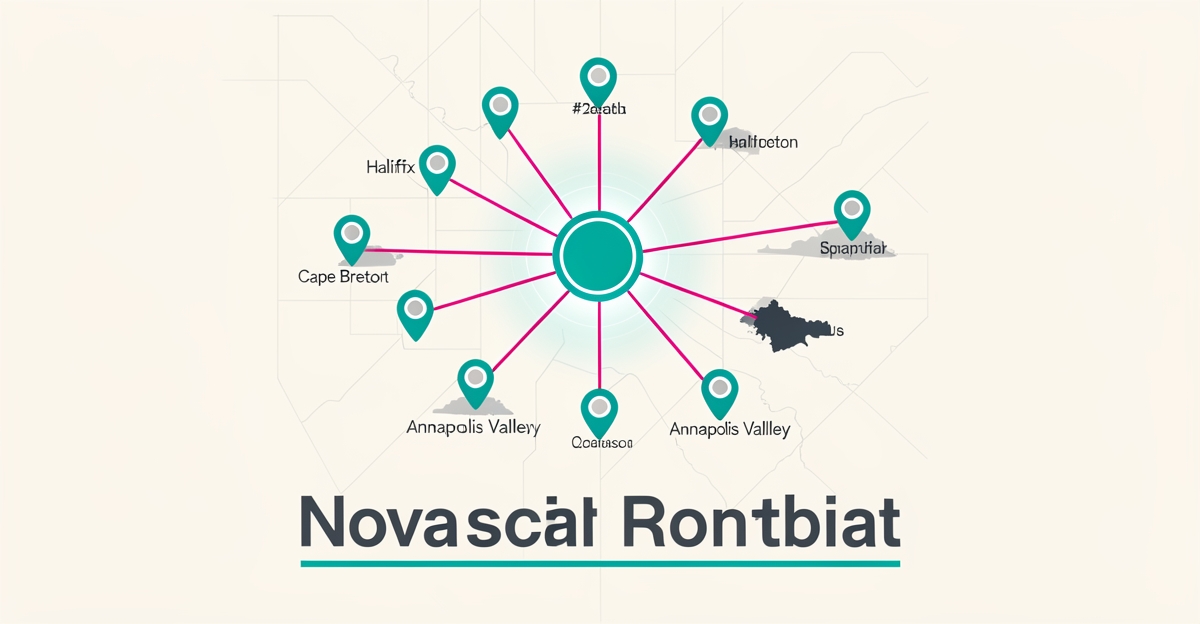
Nova Scotia's diverse culinary scene presents a unique challenge for diners operating across multiple towns: effectively managing Local SEO to attract and retain local customers. The age-old question for these businesses is whether to maintain separate websites for each location or leverage a single, AI-driven "Smart Diner Hub" with dynamic location pages.
The Cost and Complexity of Separate Sites
Running multiple websites for each town in Nova Scotia comes with significant overhead. Not only does it multiply development, hosting, and maintenance costs, but it also complicates SEO efforts. Each site requires individual optimization, content creation, and Google Business Profile (GBP) management, leading to a logistical nightmare for diners already stretched thin. According to Search Engine Journal, Google's local algorithms have evolved to favor entity-based authority, making fragmented websites less effective at signaling a unified brand presence (Search Engine Journal).
The Single Smart Hub Advantage
A single, well-architected website with dynamic Service Area Pages (SAPs) offers a streamlined solution. BrightLocal highlights that SAPs are ideal for service-based businesses, enhancing visibility in local search results and establishing topical authority across multiple areas (BrightLocal). For Nova Scotia diners, this means:
- Unified Brand Authority: Consolidated online presence strengthens entity signals to Google.
- Simplified Management: One website to update, optimize, and manage.
- Cost Efficiency: Reduced development, hosting, and maintenance expenses.
Key to Success: Hyper-Local Content and Technical Optimization
- Hyper-Local Uniqueness: Each town's page must be at least 70% unique to avoid duplicate content penalties, as advised by Robben Media (Robben Media). This can be achieved by incorporating town-specific content such as local events, menu favorites, and community partnerships.
- Mobile-First Approach: Given 95% of people use Google for mobile searches (SEO Resellers Canada), ensuring a responsive, fast website is crucial.
- LocalBusiness Schema and NAP Consistency: Proper schema implementation and consistent Name, Address, Phone (NAP) across all online platforms, including Tier 1 citations like Google Business Profile, Bing Places, and key directories, is vital for digital authority.
Actionable Recommendations for Nova Scotia Diners
- Build a Single Smart Diner Hub with dynamic, AI-driven Service Area Pages for each town.
- Ensure ≥70% Unique Content per town page, leveraging AI for research and drafting, with human review for authenticity.
- Optimize a Google Business Profile for each physical location or service area, linking back to the corresponding dynamic page on the hub site.
- Implement LocalBusiness Schema with strict NAP consistency across all town pages and online directories.
Conclusion
For Nova Scotia diners grappling with the multi-town dilemma, a single Smart Diner Hub with dynamic Service Area Pages is the recommended strategy. By consolidating online authority, simplifying management, and focusing on hyper-local content and technical optimization, diners can effectively reach local customers across multiple towns without spreading resources thin. Before full implementation, a pilot with 3-5 representative towns can validate the approach's efficacy in the Nova Scotia market.
Statistics Highlighting the Strategy's Potential
- 95% of people use Google for mobile searches, emphasizing the need for a mobile-first website (SEO Resellers Canada).
- 89% of viewers have bought products or services after watching a video, suggesting the importance of integrating video content into the hub site (SEO Resellers Canada).
- 46% of voice queries are for local businesses, highlighting the potential for optimizing the site for voice search (Robben Media).
Research-Backed Solution: The Single Smart Diner Hub Approach
Research-Backed Solution: The Single Smart Diner Hub Approach
In the pursuit of effective local SEO for Nova Scotia diners, a critical question arises: is it more beneficial to maintain multiple sites or a single, AI-driven "Smart Diner Hub" with dynamic location pages? Grounded in authoritative research, the answer leans heavily towards the latter. Here’s why:
1. Google’s Entity-Based Algorithm Favors Consolidation Google’s local SEO algorithms now prioritize AI-driven entity matching over basic directory lookups. A single website consolidates authority, reviews, backlinks, and structured data, sending stronger entity signals than fragmented sites (Search Engine Journal, 2023) Google's local algorithms have evolved beyond basic directory lookups to AI-driven entity matching.
2. Service Area Pages (SAPs) - The Efficient Multi-Location Strategy SAPs are designed for service-based businesses without physical storefronts in every served area. They enhance local search visibility, improve organic rankings, and establish topical authority across multiple service areas, all from a single domain (BrightLocal) SAPs enhance visibility in local search results and improve organic rankings.
3. Hyper-Local Content with ≥70% Uniqueness Per Page To avoid duplicate content penalties, each town’s page must be at least 70% unique, incorporating local specifics like events, landmarks, and preferences (Robben Media) Hyper-local pages need ≥70% uniqueness to avoid penalties. For example, a diner in Truro could highlight its participation in local events like the Truro Farmers' Market, while one in Yarmouth might focus on its proximity to the Yarmouth Wharf.
Key Implementation Strategies:
- Dynamic Location Pages: Utilize a modern tech stack (Next.js/React) to generate town-specific pages pulling from a structured database of local data.
- Human-Reviewed AI Content: Leverage AI for drafting, with human oversight for authenticity, ensuring ≥70% uniqueness per page.
- Optimized Google Business Profiles (GBPs): Claim and optimize a GBP for each physical location or service area, linking to the respective dynamic page on the hub site.
4. Mobile-First and Tier 1 Citation Prioritization Given that 95% of people use Google for mobile searches (SEO Resellers Canada, 2024) 95% of people use Google for mobile searches, a single, responsive site is easier to optimize than multiple sites. Focus citations on Tier 1 platforms for maximum algorithmic trust.
Conclusion The single Smart Diner Hub approach, backed by Google’s entity-based algorithm, the efficacy of SAPs, and the necessity of hyper-local uniqueness, is the recommended strategy for Nova Scotia diners. This approach reduces management overhead, enhances local SEO, and scales efficiently across multiple towns.
Actionable Next Step Proceed with a pilot: launch dynamic pages for 3-5 representative towns, measuring local pack rankings, organic traffic, and conversion rates over 90 days before full rollout.
Local business: doing this the old way?
One system replaces the whole pile.
All of it — the website, the follow-up, the content, the leads — built and run for you for $1,497 + $497/mo. Month-to-month, and you own everything.
See what your build includesImplementing the Smart Diner Hub: Practical Steps for Nova Scotia Diners
Building a Smart Diner Hub starts with architecture that scales. A modern Next.js foundation lets you generate dynamic location pages for every Nova Scotia town you serve — each one pulling from a structured database of local menu favorites, community events, supplier partnerships, and real customer photos. This approach consolidates authority, reviews, and backlinks into a single domain, which aligns with how Google's AI-driven entity matching now evaluates local businesses across multiple locations, according to Search Engine Journal's analysis of multi-location SEO.
- Deploy dynamic Service Area Pages with ≥70% unique content per town — local landmarks, seasonal events, and area-specific FAQs, not swapped city names
- Create and optimize a Google Business Profile for each physical diner or service area, linking each to its corresponding hub page
- Implement location-specific LocalBusiness schema with database-driven NAP consistency across the site, GBPs, and Tier 1 citations
- Prioritize Core Web Vitals on every town page — 95% of people use Google for mobile searches, making mobile-first performance non-negotiable
AI Business Sites builds this structure into every custom website, handling the technical SEO foundation — schema, internal linking, mobile optimization — so diner owners can focus on what makes each location special. The platform's AI content engine researches and drafts hyper-local page sections, then flags them for human review to maintain the authenticity that both Google and local customers expect. This balances the efficiency of automation with the 70% uniqueness threshold that experts like Robben Media identify as essential for avoiding duplicate content penalties.
Each town page becomes a conversion asset, not just an SEO placeholder. Embedded reviews, driving directions, and town-specific menu highlights turn searchers into diners. Meanwhile, a single GBP management dashboard lets you monitor reviews, post updates, and analyze competitor activity across every location from one place — eliminating the fragmentation that makes multi-site strategies so costly to maintain. The result: a unified digital presence that scales across Nova Scotia without multiplying your workload.
Frequently Asked Questions
Should my Nova Scotia diner use one Smart Hub or multiple sites for Local SEO?
What’s the minimum content uniqueness required for each town’s page to avoid penalties?
Why is a mobile-first approach crucial for my diner’s website?
Do I need a Google Business Profile (GBP) for each location with a Smart Hub?
What’s the benefit of using LocalBusiness Schema with my Smart Hub?
How does a Smart Hub improve lead conversion for my diner?
Key Takeaways
{ "title": "Simplify, Scale, and Thrive: The Smart Diner Hub Advantage", "content": "For Nova Scotia diners operating across multiple towns, the path to effective local SEO and streamlined management is clear: a single, AI-driven Smart Diner Hub with dynamic Service Area Pages (SAPs) outperforms the
FOR local businesss — BUILT AND RUN BY US
Your website. Your content. Your leads. Your data.
$500 starts your build. Seven days later it's live — chat, booking, follow-up, and your Google presence all set up. Then we run it, every month. You do the work you actually get paid for.