
Key facts
- Teachers using AI for reports reclaim an average of 5.9 hours/week according to AI education specialists
- 96% of families are unaware of their school's AI policies per parent engagement research
- 51% of K–12 teachers now use AI tools per industry data
- Teachers spend 3–5 hours weekly crafting individualized reports as reported in the article
- 83% of families report no clear communication about AI use in schools according to engagement studies
WANT RESULTS LIKE THIS?
Imagine a system doing all of this for your local business — every day, without you.
We build local businesses a custom website with a team of AI behind it: every lead captured and followed up, new content published monthly,customers finding you on Google — live in 7 days.
- 85+ pages at launch
- Every lead followed up, automatically
- Your whole business on one screen
The Reporting Burden Draining Teacher Time
Every Friday afternoon, Montessori teachers face the same dilemma: stay late writing individualized weekly reports, or sacrifice observation time during the week to get ahead. These reports aren't generic updates — they're detailed narratives tracking each child's unique developmental journey, from practical life mastery to social-emotional growth. The time cost is staggering, pulling educators away from the very work that makes Montessori effective.
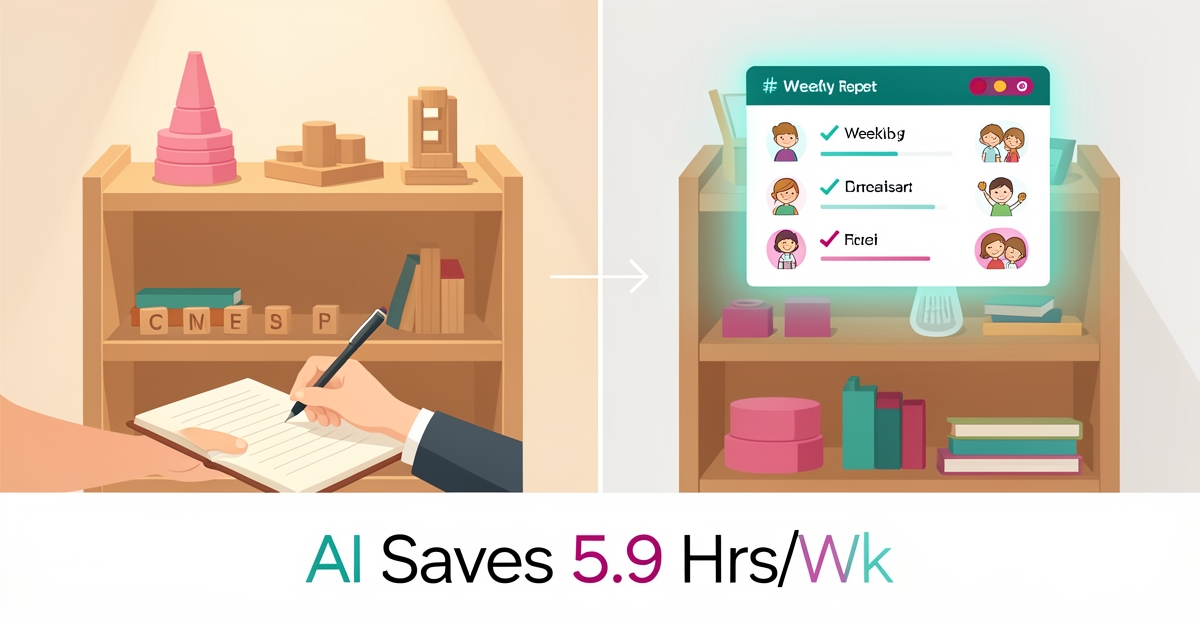
Research shows educators using AI reclaim an average of 5.9 hours per week on administrative tasks like report writing according to AI education specialists. That's nearly a full workday returned to lesson planning, student observation, and classroom preparation. Yet adoption remains cautious — 96% of families remain unaware of their school's AI policies per parent engagement research, creating a trust gap before any tool is even implemented.
- Teachers spend 3–5 hours weekly crafting individualized reports
- Observation time — the cornerstone of Montessori assessment — gets compressed
- Weekend work becomes routine during reporting seasons
- Consistency varies across classrooms and experience levels
The irony is palpable: a method built on careful observation requires teachers to stop observing in order to document what they've seen. Industry data confirms 51% of K–12 teachers now use AI tools, but Montessori environments face unique tension — can algorithmic output capture the nuance of a child's "aha" moment with the pink tower? At AI Business Sites, we see this same tension in small businesses: automation works when it amplifies human judgment, not when it replaces the relational core of the work.
Where AI Fits — and Where It Doesn't — in Montessori Reporting
AI works best when it handles the scaffolding — formatting, consistency, and turning raw observation notes into a clean draft — so teachers can focus on the nuance that defines Montessori practice. The research bears this out: educators using AI for parent communication report saving an average of 5.9 hours per week, according to analysis of AI tools for parent communication and EdTech Magazine coverage. That time returns directly to observation, lesson planning, and the quiet moments with children that no algorithm can replicate.
- Structuring weekly updates from teacher notes into a consistent, readable format
- Applying school-wide tone guidelines and formatting standards automatically
- Flagging developmental milestones and patterns across observations for teacher review
- Ensuring every report includes the same core sections — practical life, sensorial, language, math, cultural
Where AI falls short is the storytelling that Montessori parents trust. A child's hesitation before choosing a work, the way they return a material to the shelf, the spontaneous moment of helping a younger peer — these require human judgment to interpret and convey. As Dan Fitzpatrick puts it, the principle is to "outsource the doing, not the thinking." The Cengage Group's 2024 review shows 51% of K–12 teachers now use AI, but the most effective implementations keep final voice and context in human hands. Schools that treat AI as a drafting partner — not a replacement for the teacher's voice — preserve the authenticity families expect while reclaiming hours for what matters most.
Local business: doing this the old way?
One system replaces the whole pile.
All of it — the website, the follow-up, the content, the leads — built and run for you for $1,497 + $497/mo. Month-to-month, and you own everything.
See what your build includesBuilding Parent Trust Through Transparency and Oversight
Trust doesn't happen by accident. When 83% of families report no clear communication about AI use in schools, the gap between intention and perception becomes a liability. Research from Stanford HAI confirms that parental involvement in shaping AI policies isn't optional — it's foundational to adoption. Schools that lead with learning outcomes rather than efficiency metrics transform AI from a black box into a shared commitment.
- FERPA-compliant tools protect student data by design, not as an afterthought
- Teacher review of every report preserves the observational nuance Montessori parents expect
- Proactive parent involvement in policy-setting builds buy-in before the first report goes out
- Transparent communication about AI's role — drafting, not deciding — keeps the human in the loop
The same principle applies beyond classrooms. At AI Business Sites, we've seen how small businesses earn trust when their AI assistant drafts client updates for human review before sending — whether that's a weekly project summary for a home renovation client or a progress report for a legal matter. The technology handles the structure and consistency; the professional provides the judgment. Schools adopting AI for parent reports should apply the same standard: AI proposes, teachers decide, parents stay informed.
A Practical Path Forward for Montessori Leaders
The most practical starting point isn't a platform decision — it's a pilot. Pick one classroom, feed the guide's existing observation logs into an AI tool, and have it draft the weekly reports. The guide keeps final approval. You measure two things: hours returned to the teacher, and whether parents feel more connected to their child's progress.
Research shows teachers using AI for parent communication reclaim an average of 5.9 hours per week without sacrificing personalization. In K–12 settings, 51% of teachers already use AI in some capacity, and adoption is accelerating because the time savings are real. The goal isn't automation for its own sake — it's protecting the evening hours Montessori guides need for lesson planning, material preparation, and simply being present for their own families.
- Start with observation logs you already keep — no new data entry required
- Keep the guide as the final editor; AI drafts, human approves
- Track time saved versus parent satisfaction scores over 4–6 weeks
- Choose FERPA-compliant tools that don't train on student data
This approach mirrors what we see work for small businesses every day at AI Business Sites: the technology handles the repetitive drafting, while the professional applies the judgment that only they can provide. Schools that lead with transparency — telling parents exactly how reports are generated and inviting feedback — build more trust than those that adopt quietly. Stanford researchers emphasize that parental involvement in shaping AI policies is essential for long-term acceptance. When the pilot shows results, you'll have the evidence to scale thoughtfully — classroom by classroom, not by mandate.
Frequently Asked Questions
How much time can Montessori teachers save each week by using AI for parent reports?
Will using AI for weekly reports make the feedback feel less personal or robotic for parents?
Are most parents aware of their school's AI policies for tools like weekly report generation?
How can schools build trust with parents when introducing AI for parent reports?
What’s a practical first step for a Montessori school considering AI for weekly reports?
Do AI tools used for generating parent reports need to comply with student data privacy laws like FERPA?
Key Takeaways
{ "title": "Empowering Montessori Education: Where AI Meets Human Touch", "content": "The integration of AI in generating weekly classroom reports for Montessori schools presents a dual opportunity: reducing the administrative burden on teachers by an average of 5.9 hours per week, as noted by AI ed
FOR local businesss — BUILT AND RUN BY US
Your website. Your content. Your leads. Your data.
$500 starts your build. Seven days later it's live — chat, booking, follow-up, and your Google presence all set up. Then we run it, every month. You do the work you actually get paid for.