
Key facts
- The global ghost kitchen market is projected to grow from $99.30 billion in 2026 to $223.66 billion by 2033, at a 12.3% CAGR according to Coherent Market Insights.
- 47% of customers are reluctant to order from ghost kitchens due to reliability and quality concerns as per Deloitte’s 2021 report.
- North America holds 31.7% of the ghost kitchen market share, driven by the strong presence of food delivery platforms Coherent Market Insights.
- Pop-up kitchens, which hold a 54% market share, enable rapid entry into new markets Coherent Market Insights.
- 65% of dark kitchens in Ireland required food safety improvements to meet local standards as highlighted in the report.
- Food delivery app sales surged 162% YoY during the pandemic, accelerating ghost kitchen adoption The Hustle.
- AI Business Sites can automatically generate and update location-specific content for ghost kitchens across multiple delivery zones AI Business Sites.
WANT RESULTS LIKE THIS?
Imagine a system doing all of this for your local business — every day, without you.
We build local businesses a custom website with a team of AI behind it: every lead captured and followed up, new content published monthly,customers finding you on Google — live in 7 days.
- 85+ pages at launch
- Every lead followed up, automatically
- Your whole business on one screen
The Trust Gap Ghost Kitchens Can't Ignore
Ghost kitchens face a significant trust barrier that directly impacts their ability to convert online interest into orders. According to Deloitte’s 2021 report, 47% of customers are reluctant to order from ghost kitchens due to doubts about reliability and quality. This skepticism stems largely from the model’s inherent lack of physical storefronts and direct customer interaction, which erodes perceptions of openness and accountability. Without visible ties to a specific community, ghost kitchens struggle to establish the local legitimacy that traditional restaurants build through years of neighborhood presence.
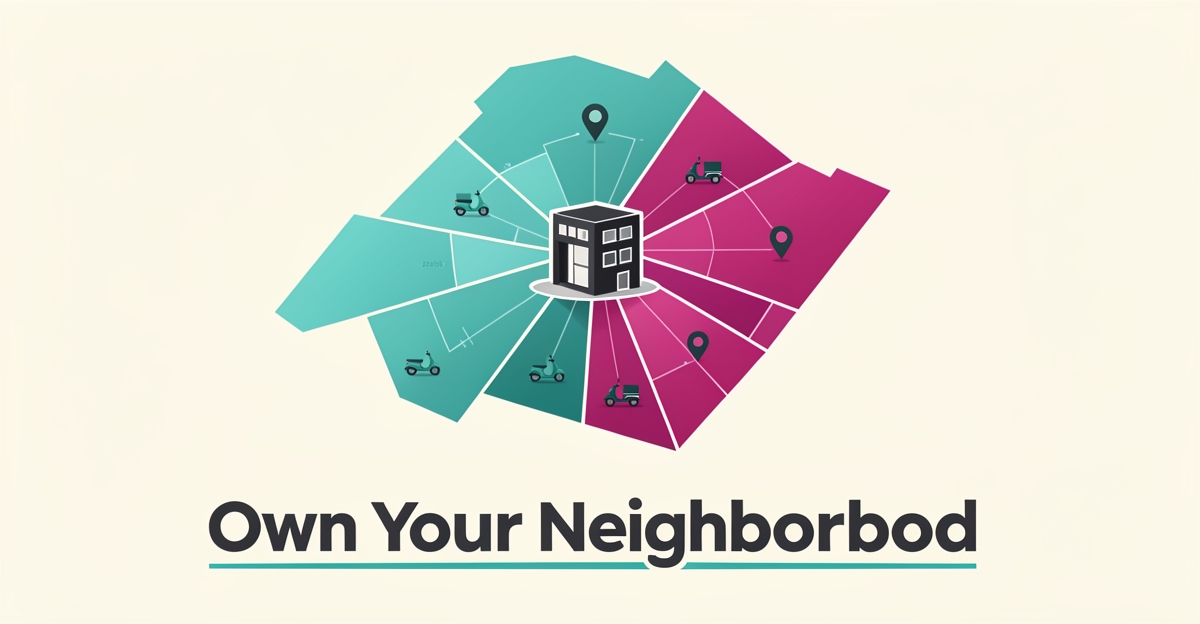
Neighborhood-specific service pages offer a strategic solution to this trust deficit by creating tangible, localized signals of legitimacy. Each page can demonstrate hyper-local relevance through details like estimated delivery times, zone-specific licensing, health inspection scores, and community engagement highlights — turning abstract compliance into visible proof of accountability. By anchoring the ghost kitchen’s digital presence to a defined service area, these pages counteract the perception of being a faceless, transient operation and instead signal a committed, neighborhood-integrated business.
For ghost kitchens operating across multiple delivery zones, manually maintaining individual pages for each neighborhood is impractical and unsustainable. The AI Business Sites platform addresses this challenge by automatically generating and updating location-specific content based on actual service areas, ensuring every page reflects current delivery capabilities and local compliance without requiring ongoing manual effort. This automation allows ghost kitchens to scale their owned local SEO assets efficiently, reducing dependence on third-party discovery channels while systematically building trust at the hyper-local level — one neighborhood page at a time.
Breaking Free from Platform Dependence
The ghost kitchen model runs on delivery apps — DoorDash, Uber Eats, and their peers control the customer relationship, the data, and the discovery funnel. That dependence isn't just a line item; Coherent Market Insights classifies it as a key industry restraint, noting that app-based deployment dominates the market precisely because platforms like DoorDash and Uber Eats have become the default search layer for hungry customers. When 31.7% of the global market sits in North America, driven by "strong presence of food delivery platforms," the structural risk is clear: you're building your business on rented land.
- Platform fees of 15–30% per order erode already-thin margins
- Algorithm changes can cut visibility overnight without warning
- Customer data stays with the platform, not the kitchen
- No direct relationship means no loyalty loop to nurture
Owned neighborhood pages change that equation. When someone searches "food delivery Downtown Halifax" or "late night takeout Clayton Park," they're expressing high-intent demand that currently routes straight to the apps. A properly structured service-area page captures that organic traffic before it hits the platform — no commission, no intermediary, no algorithm gatekeeper. The Deloitte 2021 finding that 47% of customers distrust ghost kitchens makes this even more valuable: a neighborhood page with local licensing info, delivery-time estimates, and area-specific social proof builds the transparency the market currently lacks.
The operational barrier has always been scale. Writing and maintaining unique pages for 20+ delivery zones isn't feasible manually — but it's exactly what AI Business Sites was built to handle. The platform's content engine researches, writes, and publishes neighborhood-specific service pages monthly, complete with automatic internal linking that builds the topical authority Google rewards. Each page becomes an owned asset that compounds over time, reducing platform dependence one search query at a time.
Turning Regulatory Compliance into a Trust Signal
Ghost kitchens face mounting regulatory scrutiny that can quickly become a compliance burden—unless reframed as a trust-building opportunity. Cities like New York now require specific permits and regular inspections for ghost kitchens operating within municipal boundaries, while in Ireland, 65% of dark kitchens needed food safety improvements to meet local standards. These requirements aren't just hurdles; they're verifiable proof of operational integrity that customers increasingly seek.
Neighborhood-specific service pages transform this regulatory pressure into a localized credibility signal. By displaying zone-specific licenses, current health inspection scores, and compliance badges directly on each delivery area page, ghost kitchens demonstrate accountability at the hyper-local level. This approach directly addresses the 47% of customers who remain hesitant to order from ghost kitchens due to concerns about reliability and quality—turning opaque operations into transparent, neighborhood-accountable services.
- Show active permits and inspection dates for each delivery zone
- Display neighborhood-specific health scores or compliance ratings
- Highlight adherence to local food safety regulations per municipality
For ghost kitchens using AI Business Sites, this compliance information can be dynamically updated across all neighborhood pages without manual effort. The platform pulls from integrated data sources to ensure licenses, inspection results, and regulatory badges remain current—turning what was once a administrative chore into a continuously refreshed trust signal that ranks in local search and reassures customers block by block.
Local business: doing this the old way?
One system replaces the whole pile.
All of it — the website, the follow-up, the content, the leads — built and run for you for $1,497 + $497/mo. Month-to-month, and you own everything.
See what your build includesTargeting Underserved Neighborhoods at Scale
Targeting Underserved Neighborhoods at Scale
The ghost kitchen market's explosive growth, projected to reach USD 223.66 billion by 2033 (Coherent Market Insights), presents a compelling opportunity for operators to target underserved neighborhoods. Notably, pop-up kitchens, which hold a 54% market share, enable rapid entry into new markets (Coherent Market Insights). By leveraging AI-generated neighborhood pages, ghost kitchens can efficiently prioritize high-demand, low-competition delivery zones without manual content overhead.
Seizing the Underserved Market Opportunity
- Trust Through Local Legitimacy: Neighborhood-specific pages can address the 47% trust deficit (Deloitte 2021) by showcasing local compliance, delivery estimates, and social proof tailored to each area.
- Reducing Platform Dependence: Owned local SEO assets, such as neighborhood pages, capture organic search traffic (e.g., "food delivery [neighborhood]"), reducing reliance on third-party platforms (Coherent Market Insights).
- Compliance as a Trust Signal: Pages can highlight zone-specific licenses and health scores, turning regulatory requirements into trust-building opportunities, especially in areas like New York City, where permits and inspections are mandatory (Coherent Market Insights).
AI-Driven Scalability with AI Business Sites
AI Business Sites' capability to dynamically generate neighborhood-specific content aligns perfectly with this strategy. By:
- Automating Content Creation: Researching, writing, and publishing location pages monthly, without manual effort.
- Optimizing for Local SEO: Automatically linking pages to enhance topical authority and search rankings.
- Identifying High-Potential Zones: Using delivery data to prioritize page creation for underserved, high-demand areas.
Strategic Implementation
- Hyper-Local Content: Embed neighborhood-specific health scores, licenses, and social proof to build trust.
- Data-Driven Page Creation: Use delivery metrics to identify and prioritize underserved areas for page generation.
- Continuous SEO Optimization: Leverage AI for automatic internal linking and content updates to maintain search visibility.
By embracing this AI-driven, hyper-local strategy, ghost kitchens can not only capture underserved market shares but also establish a formidable online presence, reducing dependence on delivery platforms and fostering direct customer relationships. As the market continues to grow at a 12.3% CAGR, proactive adoption of such strategies will be pivotal for long-term success.
How AI Business Sites Automates Neighborhood Page Deployment
How AI Business Sites Automates Neighborhood Page Deployment for Ghost Kitchens
In the burgeoning ghost kitchen market, projected to reach USD 223.66 billion by 2033, trust deficits, platform dependence, and regulatory pressures necessitate innovative digital strategies. AI Business Sites addresses these challenges by automating the deployment of hyper-local neighborhood pages, a capability grounded in its platform's unique blend of AI-driven content generation and local SEO expertise.
Automating Trust and Visibility at Scale
AI Business Sites' platform researches, writes, and publishes location-specific service pages monthly, automatically linking them to relevant existing content. This process not only streamlines the creation of neighborhood-specific pages but also enhances internal linking, a key factor in Google's ranking algorithm. For ghost kitchens, this means:
- Addressing the 47% Trust Deficit: By showcasing neighborhood-specific presence, licensing, and accountability, ghost kitchens can alleviate consumer doubts highlighted in a Deloitte 2021 report citing trust concerns.
- Reducing Platform Dependence: Capturing organic search traffic for queries like "food delivery [neighborhood]" reduces reliance on third-party platforms, a restraint identified by Coherent Market Insights.
- Demonstrating Regulatory Compliance: Pages can highlight zone-specific licenses and health scores, turning regulatory burdens into trust signals, as seen in NYC's permit requirements noted in the report.
Leveraging AI for Scalable Local SEO
Unlike current AI applications in the ghost kitchen sector, which focus on operational tasks (order management, inventory), AI Business Sites fills the whitespace by dynamically generating local SEO content. This capability:
- Scales Neighborhood Page Deployment: Enables ghost kitchens to target high-demand, underserved areas identified through delivery data, a strategy supported by the market's pop-up kitchen trend.
- Ensures Consistency and Quality: Automatically links new pages to existing relevant content, improving site structure and search rankings, a benefit not directly addressed in existing research but logically derived from SEO best practices.
Key Statistics Driving the Strategy
- Market Growth: Projected 12.3% CAGR from 2026 to 2033 according to Coherent Market Insights.
- Trust Gap: 47% of customers reluctant to order from ghost kitchens due to reliability and quality concerns as per Deloitte 2021.
- Platform Dominance: North America's 31.7% market share driven by strong delivery platform presence highlighted in the report.
Actionable Takeaway
For ghost kitchens, leveraging AI Business Sites' automated neighborhood page deployment is a strategic move to build trust, reduce platform dependence, and demonstrate compliance. By understanding the market's growth trajectory, trust deficits, and the role of AI in scaling local SEO efforts, ghost kitchens can gain a competitive edge in the digital landscape.
Example Neighborhood Page Strategy
| Neighborhood | Content Focus | SEO Target |
|---|---|---|
| Downtown Halifax | Highlight local licensing, quick delivery times | "Halifax Downtown Food Delivery" |
| Bedford Area | Emphasize community engagement, neighborhood events | "Bedford Neighborhood Takeout Options" |
| Dartmouth | Showcase health and safety compliance, special offers | "Dartmouth Safe Food Delivery Services" |
Frequently Asked Questions
Why should ghost kitchens build neighborhood-specific pages for delivery?
What are the key benefits of reducing platform dependence for ghost kitchens?
How can ghost kitchens efficiently manage multiple neighborhood pages?
What regulatory challenges can neighborhood pages help ghost kitchens overcome?
How does targeting underserved neighborhoods with AI-generated pages benefit ghost kitchens?
What is the projected growth of the global ghost kitchen market by 2033?
Key Takeaways
{ "title": "Tapping into Trust: The Halifax Ghost Kitchen Advantage", "content": "As Halifax's ghost kitchen market evolves, the path to success lies in bridging the trust gap and breaking free from platform dependence. By investing in neighborhood-specific service pages, ghost kitchens can est
FOR local businesss — BUILT AND RUN BY US
Your website. Your content. Your leads. Your data.
$500 starts your build. Seven days later it's live — chat, booking, follow-up, and your Google presence all set up. Then we run it, every month. You do the work you actually get paid for.