
Key facts
- Digital freight forwarding is growing at 23.1% annually, far outpacing traditional methods at 4.2% according to industry trends
- 50% of shippers value online visibility when choosing a forwarder based on Newgate survey data
- Centralized platforms improve visibility, quoting, and tracking as noted in industry insights
- Managing multiple regional websites leads to duplicated effort and increased operational costs per digital freight forwarding trends
- A strong, consistent digital presence is crucial for building credibility and trust according to logistics branding strategies
- Trust is built before the first booking and tested during disruptions per logistics branding experts
- SEO success hinges on topical authority, not domain count as suggested by logistics trends for 2024
WANT RESULTS LIKE THIS?
Imagine a system doing all of this for your local business — every day, without you.
We build local businesses a custom website with a team of AI behind it: every lead captured and followed up, new content published monthly,customers finding you on Google — live in 7 days.
- 85+ pages at launch
- Every lead followed up, automatically
- Your whole business on one screen
The Fragmented Freight Forwarding Web Presence Dilemma
The Fragmented Freight Forwarding Web Presence Dilemma
In the era of digital transformation, freight forwarders face a pivotal decision: whether to maintain multiple regional websites or unite under a single, dynamic platform. This dilemma is compounded by the inefficiencies, brand inconsistencies, and missed operational opportunities that often accompany fragmented web presences.
Inefficiencies of Multiple Websites
Managing multiple regional websites can be a logistical nightmare for freight forwarders. Each site requires separate updates, content strategies, and SEO optimizations, leading to duplicated effort and increased operational costs. For instance, a study highlights the rapid growth of digital freight forwarding (23.1% annually), suggesting that outdated, fragmented web strategies may hinder competitiveness.
Brand Inconsistency Across Regions
A fragmented web presence often results in inconsistent branding, confusing potential clients and undermining trust. A strong, consistent digital presence is crucial for building credibility, as emphasized by logistics branding strategies. Inconsistent messaging across regions can dilute a freight forwarder’s brand identity.
Missed Operational Opportunities
Separate websites may also miss out on operational efficiencies achievable through a unified platform. For example, centralized platforms can improve visibility, quoting, and tracking, as noted in industry trends. A single, dynamic website with AI-powered content delivery and regional filtering could streamline these processes, enhancing the overall user experience.
Key Challenges of Fragmented Web Presence:
- Operational Inefficiency: Duplicated efforts across multiple sites.
- Brand Dilution: Inconsistent messaging and appearance across regions.
- Missed Efficiency Gains: Lack of centralized operational benefits.
Towards a Unified Solution
While direct research on the single vs. separate website strategy for freight forwarders is lacking, indirect insights suggest a unified, adaptable platform could be beneficial. AI Business Sites, with its expertise in crafting custom, SEO-optimized websites, understands the importance of a streamlined digital presence. By exploring the development of a single, dynamic website that leverages AI for content delivery and regional filtering, freight forwarders can potentially mitigate the challenges of fragmentation, enhance brand consistency, and capture operational efficiencies.
Embracing Digital Transformation
As the logistics sector continues to embrace digital transformation, freight forwarders must prioritize a web strategy that aligns with this trend. Whether through a single dynamic website or a strategically managed set of regional sites, the focus should be on creating a cohesive digital footprint that enhances operational efficiency and builds trust with clients. As logistics trends for 2024 suggest, agility and customer-centric solutions will be key, implying that the chosen web strategy must support these objectives seamlessly.
The Case for a Single, AI-Driven Website with Dynamic Regional Filtering
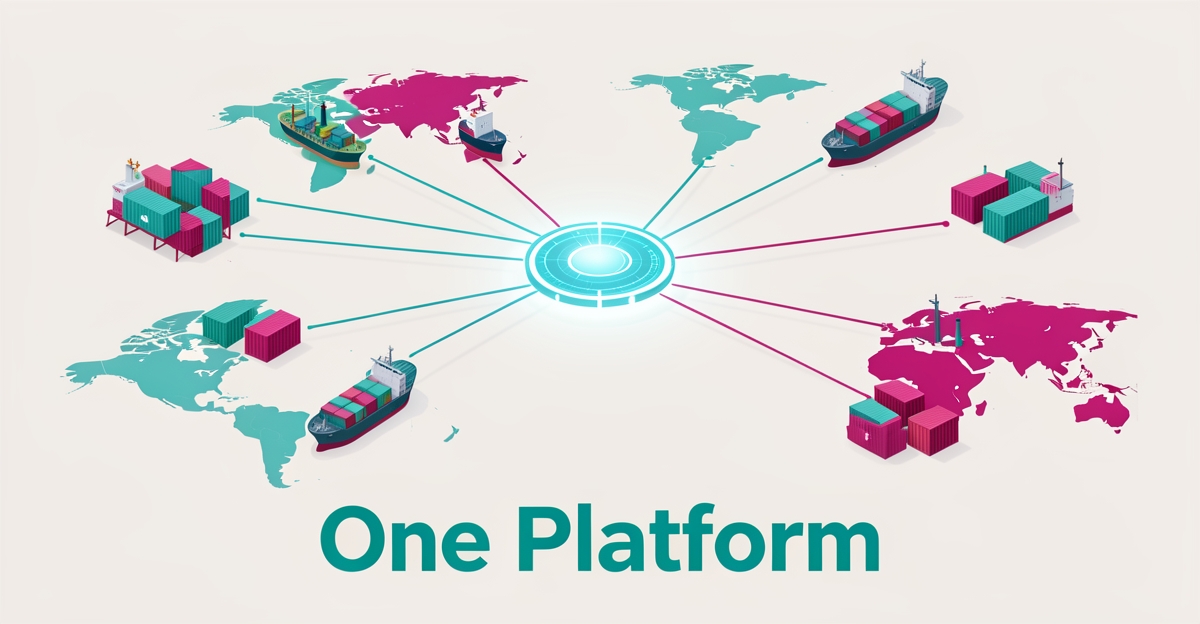
The debate between a single website and multiple regional sites for freight forwarders isn’t just about convenience—it’s about strategic alignment with how modern logistics operates. A unified platform offers a compelling path forward, especially when designed to adapt dynamically to regional needs without sacrificing efficiency or local relevance. Research indicates that digital freight forwarding is growing at 23.1% annually, far outpacing traditional methods, which underscores the urgency for platforms that can scale intelligently according to industry trends. This growth isn’t just about volume—it’s about expectation. Shippers now demand visibility, speed, and consistency, with 50% valuing online visibility as a key factor in their decision-making based on Newgate survey data. A single, AI-driven website with dynamic regional filtering can meet these expectations by centralizing operations while intelligently serving localized content—eliminating duplication of effort and ensuring brand consistency across markets.
Such a platform enhances operational efficiency by streamlining updates, analytics, and maintenance into one system, reducing the administrative burden that often fragments regional teams. Centralized platforms have already demonstrated improvements in quoting, tracking, and visibility—benefits that extend naturally to a well-designed website as noted in digital transformation insights. When combined with AI-powered content delivery, the site can automatically adjust service descriptions, compliance notes, or regional case studies based on a visitor’s location or behavior, ensuring relevance without manual, or search intent. This approach supports stronger brand trust, as a consistent digital presence builds credibility before the first booking and is tested during disruptions according to logistics branding experts. For freight forwarders, trust isn’t just earned in transit—it begins online.
AI Business Sites enables this model by building websites that don’t just inform but actively run parts of the business—answering questions, updating content, and adapting to regional nuances—all from a single, owned platform. This isn’t about replacing local insight; it’s about amplifying it through smart, scalable technology. By unifying the digital front door, freight forwarders can reduce complexity, improve responsiveness, and present a cohesive brand that resonates globally while acting locally. The result is a website that doesn’t just exist—it works.
Local business: doing this the old way?
One system replaces the whole pile.
All of it — the website, the follow-up, the content, the leads — built and run for you for $1,497 + $497/mo. Month-to-month, and you own everything.
See what your build includesImplementing a Unified Website Strategy for Freight Forwarders
Making the shift to a single dynamic website starts with accepting that your digital presence should work as hard as your operations team. Digital freight forwarding is growing at 23.1% annually, far outpacing traditional methods at 4.2%, which signals that the market rewards unified, tech-forward platforms over fragmented web properties. A centralized approach mirrors the efficiency gains shippers already expect — 50% of shippers now value online visibility when choosing a forwarder, according to industry research.
- Audit existing regional sites for duplicate content, outdated service lists, and inconsistent branding
- Map every service lane to a dynamic filtering system that surfaces the right regulations, transit times, and contacts per region
- Build a content architecture where one core service page powers dozens of location-specific variations through structured data
- Implement schema markup for logistics services, local business, and FAQ-rich content to capture voice search and AI snippets
SEO success hinges on topical authority, not domain count. When internal linking, schema, and content clusters live on one domain, every new page — whether a blog post on winter HVAC maintenance for cold-chain routes or a location page for the Port of Rotterdam — inherits the trust signals you have already earned. Our platform handles this automatically: the AI content engine researches, writes, and publishes monthly pieces grounded in your actual lanes, then links them into the existing cluster structure without manual effort. Older pages gain fresh links over time, and broken references clean themselves up.
Regional relevance does not require separate domains. Dynamic service area filtering lets a visitor in Singapore see incoterms guidance for APAC trades while a Chicago users get inland rail options — same site, same codebase, zero duplication. The AI assistant on the site answers lane-specific questions instantly using your knowledge base, and the voice agent captures after-hours quote requests with the same context. Behind the scenes, the automation builder tags leads by origin-destination pair, routes them to the right ops manager, and triggers personalized follow-ups — all from one CRM, one pipeline, one source of truth.
Trust is built before the first booking and tested during disruptions. A single, well-governed website that loads fast, ranks locally, and answers questions at 2 a.m. does more for credibility than a portfolio of microsites ever could.
Frequently Asked Questions
Why do freight forwarders struggle with multiple regional websites?
How can a unified website improve brand consistency for freight forwarders?
What operational efficiencies can a unified website offer?
How do shippers' expectations support the case for a unified website?
What are the key challenges addressed by moving to a unified website strategy?
Is there direct research supporting the single website strategy for freight forwarders?
One Digital Front Door, Every Lane Covered
The choice between a single website and multiple regional ones isn't just a technical decision — it's a strategic one. A unified, AI-driven platform with dynamic regional filtering eliminates the duplication, brand drift, and operational drag that come with managing separate sites, while still delivering the local relevance shippers expect. Digital freight forwarding is growing at 23.1% annually, and 50% of shippers now weigh online visibility heavily when choosing a forwarder. That visibility compounds when your content, authority, and trust signals live on one domain. Start by auditing your current web properties for inconsistencies, then map your service lanes to a dynamic filtering structure that serves the right regulations, transit times, and contacts per region — automatically. AI Business Sites builds websites that handle this complexity natively, so your digital presence works as hard as your operations team. Ready to consolidate without losing local relevance? Let's talk about what a single, smart website could do for your lanes.
FOR local businesss — BUILT AND RUN BY US
Your website. Your content. Your leads. Your data.
$500 starts your build. Seven days later it's live — chat, booking, follow-up, and your Google presence all set up. Then we run it, every month. You do the work you actually get paid for.