
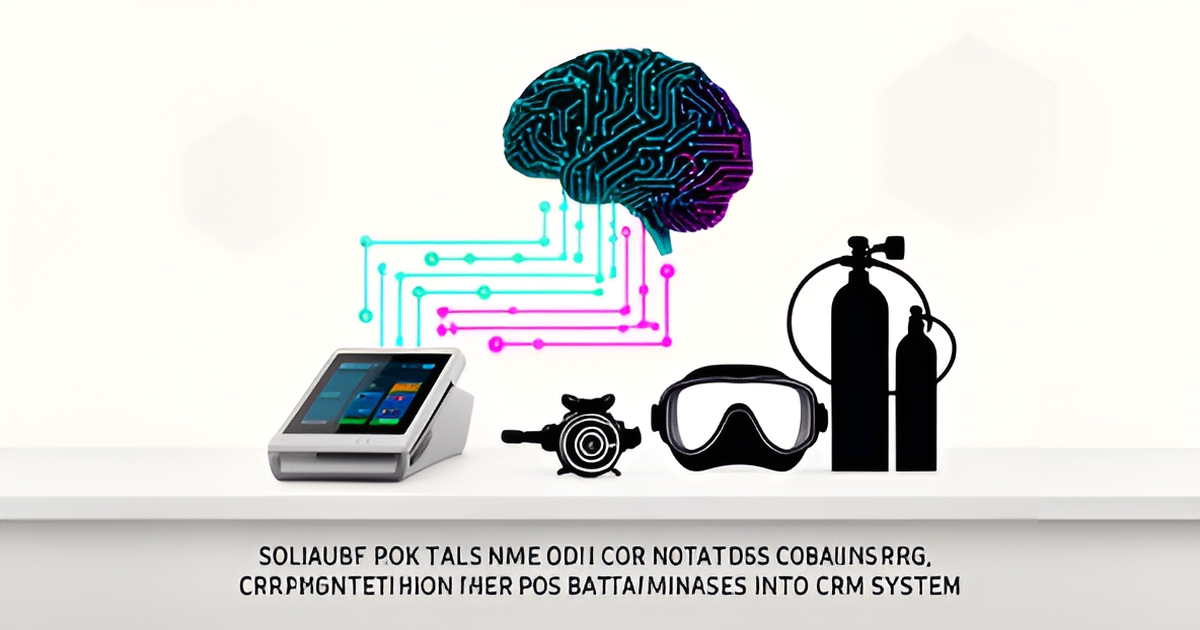
Key facts
- No dive-industry POS provider advertises any AI or AI-CRM integration — every automation on the market is rules-based, not intelligent, per industry analysis.
- Global inventory distortion — stockouts plus overstocks — costs retailers an estimated $1.7 trillion, according to buyer's-guide data.
- U.S. retail shrink alone runs about $112 billion a year, per industry survey figures.
- The Lightspeed–Shopify POS sync 'needs ongoing monitoring,' and edits on one side can cause syncing issues, per an integration comparison.
- Dive Shop 360 brings 20+ years in the market, shaped by input from 1,000+ dive experts globally, according to vendor documentation.
- DiverDash claims its automation of onboarding, payments, and course assignment saves dive shops at least 20 hours per month, per provider claims.
- A dive POS already captures exactly the fuel an AI CRM needs — purchase history, preferences, classes, and equipment servicing, per Lightspeed's scuba POS documentation.
WANT RESULTS LIKE THIS?
Imagine a system doing all of this for your local business — every day, without you.
We build local businesses a custom website with a team of AI behind it: every lead captured and followed up, new content published monthly,customers finding you on Google — live in 7 days.
- 85+ pages at launch
- Every lead followed up, automatically
- Your whole business on one screen
The Problem: Your POS Knows Everything But Tells Nobody
Your point of sale system already knows who bought a wetsuit last March, who's due for a regulator service, and which masks are about to run out. The problem is that it isn't telling anyone.
Dive shops run on workflows that generic retail software simply doesn't understand. Tracking rental gear, scheduling classes, documenting certifications, and managing equipment servicing are unique demands that standard POS systems aren't built to handle — which is why industry voices describe the POS as the "heart of your operation," the central hub where sales, stock, and customer data converge. When that heart isn't beating properly, everything downstream suffers.
For many small retailers, it isn't beating at all. Industry surveys show a large share still track inventory manually or in spreadsheets, in a retail economy where inventory distortion — the combined cost of stockouts and overstocks — runs to roughly $1.7 trillion globally, and U.S. retail shrink alone costs about $112 billion a year. As one payments guide puts it, a retail store "lives or dies on stock accuracy" — money sits on shelves, walks out in shrink, and evaporates in stockouts.
The hidden cost is the data itself. Modern dive POS platforms already capture customer profiles with purchase history, preferences, classes taken, and equipment servicing records — exactly the data that should drive follow-up emails, reorder decisions, and course promotions. Instead, it sits trapped behind the register. The customer who finished Open Water eight months ago never gets the email about Advanced Open Water. The diver whose regulator is due for annual service never gets the reminder. The spreadsheet knows; nobody acts.
A few things go wrong when this data stays locked away:
- Certification upsell windows close silently — a student who's ready for the next course never hears about it
- Service reminders depend on staff memory, so recurring revenue from regulator and BCD maintenance slips through the cracks
- Reorder decisions get made by gut feel instead of the sales history already sitting in the system
- Serial-numbered gear history — who bought which regulator, when it was serviced — lives in disconnected records
There's also a structural problem with the usual fix. Shops that try to bridge their POS to a separate marketing or inventory platform discover the stitching is fragile — integration reviews of stitched-together systems report that edits made on one side "can cause syncing issues" and the connection "needs ongoing monitoring." Notably, none of the dive-industry POS providers reviewed currently advertise any AI or AI-CRM layer at all — the automation they offer is rules-based, not intelligent. That gap is exactly where a POS add-on that syncs sales data into an AI CRM, the kind AI Business Sites builds for its clients, changes what a dive shop's register can actually do with what it knows.
What Dive POS Systems Already Do — And the AI Layer None of Them Offer
The scuba retail POS category is surprisingly mature. Dive shops have long needed more than a cash register — rental tracking, class scheduling, certification documentation, and equipment servicing are workflows that generic retail systems simply don't handle, according to industry analysis of dive shop software.
Lightspeed markets a dedicated scuba POS that combines equipment management, CRM customer profiles, scheduling, and payments, with automated reorder points and low-stock alerts built in. Dive Shop 360 — a 20-year veteran shaped by input from 1,000+ dive experts — syncs inventory and sales data across physical and digital storefronts in real time and integrates with PADI, SSI, SDI, TDI, ERDI, and PFI, so staff can import certification history and monitor student progress directly from the POS. POSIM, on the market for over 30 years, brings serialized inventory and automated purchasing; EVE adds automated service alerts and post-dive satisfaction surveys.
The automation on offer is genuinely useful:
- Automated reorder points and low-stock alerts that reduce stockouts and dead stock — a big deal when inventory distortion costs retailers an estimated $1.7 trillion globally.
- Automatic equipment service notifications for upcoming inspections and maintenance.
- Automated booking confirmations, pre-dive reminders, and course-calendar updates.
But here's the critical finding: none of these providers offer AI or AI-CRM integration. A review of the major dive POS systems found that every automation described is rules-based software — an alert fires when stock hits a threshold, a reminder goes out on a schedule. No provider in the category advertises anything that reads your data, personalizes follow-up per customer, or communicates intelligently on its own. The pattern holds across comparisons of dive shop software and vendor documentation alike.
That's the market gap. Dive POS systems already capture exactly the right fuel — purchase history, preferences, class enrollments, service records — but they can't act on it intelligently. Turning that data into personalized follow-up, smart reordering, and automated customer communication requires an AI layer that, today, has to come from outside the dive POS market. That's the problem a scuba shop can solve by pairing its POS with a platform like AI Business Sites, which syncs sales data into an AI CRM and automates the repetitive work in between.
The Fragile Middle: Why Stitched-Together Platforms Break
Every stitched-together platform stack carries the same quiet promise: the sync will hold. The research says otherwise. In a detailed comparison of Lightspeed and Shopify POS, the integration between the two is described as workable but delicate — edits made in Shopify "can cause syncing issues," and the connection "needs ongoing monitoring" (Ecommerce Partners). For a dive shop owner already juggling rentals, classes, and equipment servicing, "ongoing monitoring" is one more unpaid job.
The fragility compounds when a platform changes direction. Shopify retired its native Stocky forecasting app on August 31, 2026 — purchase orders and transfers moved into Shopify admin, but reorder suggestions and demand forecasting now require third-party inventory planning apps. A scuba shop that built its reorder routine on Stocky had to rebuild it around an outside tool, adding another connection point that can drift, duplicate, or fail.
Contrast that with what a single integrated system does by design. When the POS, CRM, and inventory live on one data model, every sale updates stock in real time, writes the customer's purchase history into their profile, and triggers reorder logic — with, as the same comparison notes, "no syncing delay, no middleware and no duplicate data entry." Nothing to babysit. Nothing to re-enter after a busy weekend of certification classes.
That matters because the failure mode of duct-taped platforms is rarely dramatic. It's the slow leak:
- Sales recorded in the register that never reach the marketing list, so follow-up goes to the wrong customers
- Inventory counts that drift between storefronts until a best-selling wetsuit size shows as in stock when it isn't
- Hours each month spent reconciling records manually — time industry analyses suggest many small retailers still spend tracking inventory in spreadsheets
- Middleware subscriptions and gap-filling apps that quietly decide the real cost of the stack
The economics back the integrated approach. Global inventory distortion — stockouts and overstocks combined — costs an estimated $1.7 trillion, and U.S. retail shrink runs around $112 billion annually. A scuba shop's margin lives in the gap between what the register says and what the stockroom holds, and every sync failure widens it.
This is the argument for an integrated POS-plus-AI-CRM approach over multi-platform stitching. When sales data flows automatically into the CRM, the AI layer has clean fuel: purchase history, class enrollments, and service records it can act on — flagging a regulator due for inspection or targeting the right customer with the right course promotion. At AI Business Sites, the POS add-on is built to feed the AI CRM and automate inventory tracking directly, so the data path is one system, not a bridge that needs watching.
The lesson from the Lightspeed–Shopify experience isn't that either platform is bad. It's that every connection between separate systems is a maintenance liability — and the fewer of them a dive shop carries, the more of the owner's week goes back to the water.
Local business: doing this the old way?
One system replaces the whole pile.
All of it — the website, the follow-up, the content, the leads — built and run for you for $1,497 + $497/mo. Month-to-month, and you own everything.
See what your build includesHow It Works: A POS Add-On That Feeds an AI CRM and Automates Inventory
Here's the thing most dive-shop owners don't realize: their POS already captures everything an AI needs to run their follow-up. Customer profiles in dive POS systems track purchase history, preferences, classes, and equipment servicing — but that data usually just sits there. The dive POS market sells rules-based automation, not AI; no provider in the industry's coverage of major systems mentions AI or AI-powered CRM features at all.
That's the gap a POS add-on tied to the AI Business Sites platform closes. The shop keeps its dive-specific POS workflows — rentals, class scheduling, certification tracking, equipment servicing — and gains an AI layer on top.
How the connection works
The add-on syncs sales data into the AI CRM through the platform's webhook ingest — a per-client URL that accepts data from external systems with deduplication, rate limiting, and branded auto-responses. Every sale at the counter creates or updates a customer record the AI can act on. No middleware duct-tape, no duplicate entry: this matters because stitched-together platforms are fragile. In one comparison of Lightspeed and Shopify POS, the sync between them "needs ongoing monitoring" and edits in one system can cause syncing issues in the other.
What the AI does with the data
Once sales flow into the CRM, the automations run themselves:
- Low-stock alerts and reorder triggers — worth the effort, given that global inventory distortion (stockouts and overstocks) costs an estimated $1.7 trillion annually.
- Service-reminder follow-ups generated from purchase history — a customer who bought a regulator two years ago is due for service, and the AI knows it.
- Certification-course promotions targeted to the right customers — someone who just bought a mask and fins is a natural Open Water candidate.
- Automated review requests sent after purchases, so reviews actually get requested instead of forgotten.
The AI drafts each follow-up; the owner approves it from their phone. Nothing goes to a customer without a human sign-off, but nothing waits on the owner remembering to write it either.
This is the layer the dive POS market doesn't sell. The category's own automation — booking confirmations, pre-dive reminders, equipment service alerts — is rules-based software doing what it was told. An AI CRM that reads the sale, understands the customer, and drafts the next right action is a different thing entirely. Dive shops don't have to replace their POS to get it; they just have to feed it.
Getting Started: Your First Week With an AI-Connected POS
The first week with an AI-connected POS isn't about flipping every switch — it's about knowing exactly what your shop does before you connect anything to anything. Dive shops have unique demands like gear rentals, class scheduling, and certification documentation that generic retail systems don't handle, so the smartest move is to audit your workflows first and connect second.
Start by mapping which POS workflows are dive-critical. Before touching a single setting, document how your shop currently handles rentals, serial-number tracking on regulators and tanks, repair and service tickets, and certification records. These workflows matter: repairs, work orders, and serial number tracking are native to some retail systems but require third-party apps on others, according to a POS comparison of leading platforms. Certification integration is a genuine differentiator too — some dive-industry systems import certification history and monitor student progress directly from the register, cutting administrative work.
Next, connect the POS to the AI CRM. The formal connection path is a per-client webhook ingest URL: every sale, customer profile, and service record flows into the CRM automatically, with deduplication built in. This matters because the data a POS already captures — purchase history, preferences, classes, and equipment servicing — is exactly the fuel an AI CRM needs to personalize follow-up and flag service reminders. Avoid the middleware trap: stitched-together platforms can be fragile, with sync issues that "need ongoing monitoring," so a single integrated flow beats duct-taping systems together.
Then turn on automations in value order. Inventory first — the economics are too big to ignore, with global inventory distortion estimated at roughly $1.7 trillion and U.S. retail shrink around $112 billion annually, while many small retailers still track stock manually or in spreadsheets. Automated reorder points and low-stock alerts are the highest-value first automation for any dive shop.
- Week 1, day 1–2: audit dive-critical workflows — rentals, serial numbers, repairs, certifications
- Day 3: connect the POS to the CRM via the webhook ingest URL and verify test sales land as CRM data
- Day 4–5: enable reorder points and low-stock alerts on your fastest-moving SKUs
- Day 6–7: layer in service reminders and course follow-ups using the synced customer data
Finally, let the AI draft customer communications with human approval. Every message — a regulator-service reminder, a follow-up to someone who finished Open Water — lands in an approval queue first. You review, edit, or approve with one click, and the drafts improve from your feedback over time. The human stays in control; the busywork disappears.
Here's the part busy shop owners appreciate most: you don't set any of this up yourself. With AI Business Sites, the build, the training, and the ongoing management are handled by the provider — the shop owner runs the shop, and the system runs the rest. If you want to see how this would work on your own store, book a free strategy call and watch it running on a real setup before you commit to anything.
Frequently Asked Questions
Do I need to replace my dive shop's POS system to add AI features?
Don't dive POS systems like Lightspeed or Dive Shop 360 already have AI built in?
What can an AI layer actually do with my POS data?
Why not just connect my POS to a separate marketing platform myself?
What's the first automation I should set up for my dive shop?
How much work is this for me as a shop owner?
Your POS Already Knows. Now Let It Say Something.
The picture from this article is simple: your dive shop's POS is already capturing everything that matters — purchase history, certification progress, equipment service dates, rental records. The gap isn't data collection; it's that no dive-industry POS vendor offers an AI layer to act on it, and stitching platforms together creates syncs that need constant babysitting. That's why the practical path forward is a single integrated flow: keep your dive-specific POS workflows, sync the sales data into an AI CRM, and turn on automations in value order — inventory first, then service reminders and course follow-ups. Given that inventory distortion costs retailers an estimated $1.7 trillion globally, the reorder points alone pay for the effort. With AI Business Sites, the connection, the setup, and the ongoing management are handled for you — you approve the drafts and run the shop. If you want to see what your register could be doing with what it already knows, book a free strategy call and watch it running on a real setup before committing to anything.
FOR local businesss — BUILT AND RUN BY US
Your website. Your content. Your leads. Your data.
$500 starts your build. Seven days later it's live — chat, booking, follow-up, and your Google presence all set up. Then we run it, every month. You do the work you actually get paid for.