
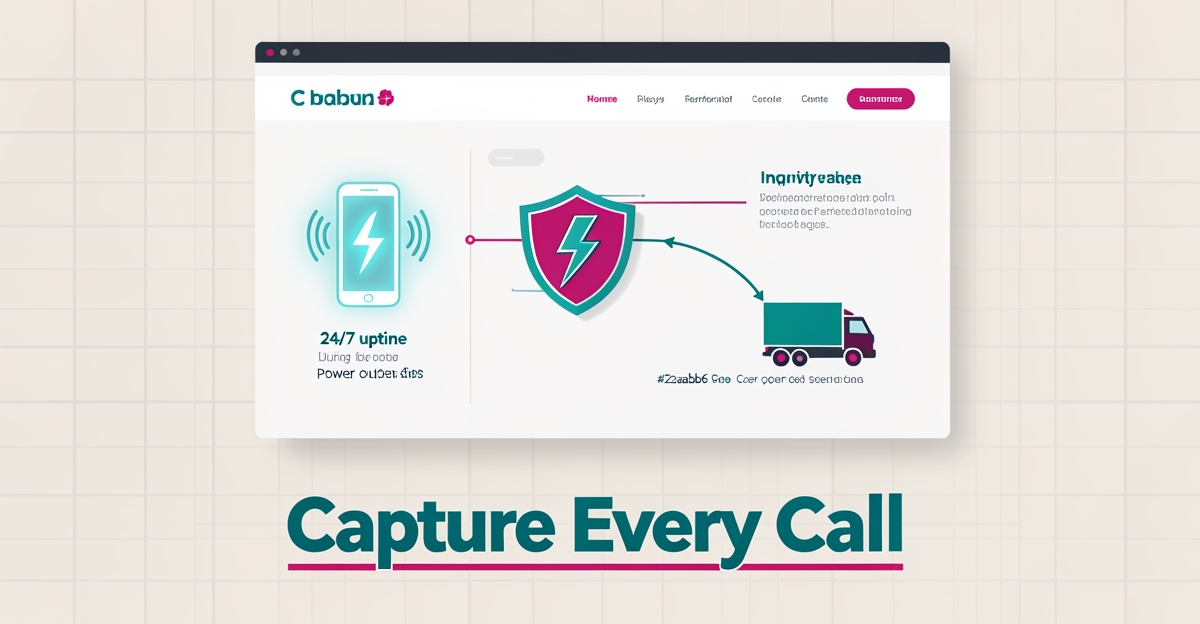
Key facts
- 51.9% of disaster restoration revenue now comes from insurance-funded work, making real-time lead capture a survival tool according to Mordor Intelligence.
- With 292,000 unfilled construction jobs in 2025, labor shortages stretch response times just as insurers fast-track claims to preferred providers reports Mordor Intelligence.
- AI-powered call transcription ensures no critical insurance adjuster details disappear into static during power outages or high-volume storms as highlighted by Mordor Intelligence.
- Real-time dispatch alerts push urgent inquiries to field crews within seconds, not hours, when technician availability is already stretched thin per Mordor Intelligence’s 2025 data.
- 75% of FEMA applicants lacked home insurance after Hurricane Michael, leaving them entirely reliant on immediate service provider responses for recovery found Howard University’s case study.
- Verisk’s $2.4 billion acquisition of AccuLynx signals insurers are digitizing claim assignments, demanding real-time lead management to stay competitive notes Mordor Intelligence.
- AI-powered websites transform into 24/7 command centers, capturing and routing urgent flood claims before mold sets in or competitors even finish writing them down.
WANT RESULTS LIKE THIS?
Imagine a system doing all of this for your local business — every day, without you.
We build local businesses a custom website with a team of AI behind it: every lead captured and followed up, new content published monthly,customers finding you on Google — live in 7 days.
- 85+ pages at launch
- Every lead followed up, automatically
- Your whole business on one screen
The Cost of Missed Calls After a Disaster
The 2025 storm season already shows no signs of slowing down. With 23 billion-dollar disasters recorded this year and another 52 forecasted by year-end, restoration businesses face a critical bottleneck: insurance-funded work now drives 51.9% of industry revenue. Every missed call in this environment isn’t just a lost opportunity—it’s a lost revenue stream that could determine whether a business survives the next quarter. The situation worsens as labor shortages leave 292,000 construction jobs unfilled, stretching response times to breaking point just as insurers fast-track claims to preferred providers.
The stakes couldn’t be higher for vulnerable populations. After Hurricane Michael, 75% of FEMA applicants lacked home insurance, leaving them entirely reliant on immediate service provider responses to begin recovery. When the website becomes the first point of contact—answering questions at 2 a.m., capturing details during power outages, or routing urgent flood claims—it transforms from a passive brochure into the first line of defense against permanent lead loss. Businesses that fail to equip their site with instant response capabilities risk surrendering these high-value claims to competitors who can answer the phone when the storm knocks out power lines.
- AI-powered call transcription turns every voicemail into a structured lead, ensuring no critical insurance adjuster details disappear into static.
- Real-time dispatch alerts push urgent inquiries to the field within seconds, not hours, when technician availability is already stretched thin.
- Auto-dialing for urgent inquiries reaches property owners before mold sets in, capturing water-damage claims before competitors even finish writing them down.
- Instant auto-response emails acknowledge every contact—even when the office is closed—preventing lead evaporation during the 72-hour response window.
The website that handles these tasks automatically isn’t just smart—it’s essential. When the next disaster hits, the businesses that keep their phones answered and their leads flowing won’t just recover faster. They’ll capture revenue that others leave on the table.
What a Post-Disaster Website Must Do Differently
In the chaotic wake of a disaster, every second counts. When homes and businesses are damaged, insurance claims pile up, and property owners scramble for repairs, the first business to respond often wins the job—and the revenue. Yet, most disaster recovery websites rely on static forms and voicemail, tools that buckle under the volume of urgent inquiries when storms, floods, or fires strike. According to industry research, 51.9% of revenue in this sector comes from insurance-funded work, making real-time lead capture non-negotiable. With insurers digitizing claim assignments—like Verisk’s $2.4 billion acquisition of AccuLynx—and labor shortages leaving 292,000 construction jobs unfilled, automated systems aren’t just efficient; they’re survival tools.
Static contact forms fail disaster scenarios where volume and speed decide wins. During high-stakes events, property owners don’t wait for callbacks. They submit forms or call—and if they hit a dead end, they’ll move to the next provider. Real-time dispatch alerts fix this by routing urgent leads to available crews instantly, ensuring no inquiry slips through the cracks. Meanwhile, auto-dialing for time-sensitive insurance claims eliminates delays, turning a missed call into an immediate opportunity. Together, these features address the core challenge: disaster rebuild businesses can’t afford to lose a single lead when every call could represent a $10,000+ claim.
Here’s what sets a post-disaster website apart:
- AI-powered call transcription that captures every inquiry 24/7, even when your team is overwhelmed by volume. This isn’t just speech-to-text—it’s a system that identifies urgency (e.g., "insurance claim," "water damage") and flags high-priority leads for instant follow-up.
- Real-time dispatch alerts that push urgent leads to your most available crews within seconds. No more manual routing or missed texts—just instant assignment based on technician location, availability, and skillset.
- Auto-dialing for time-sensitive claims that connects property owners directly to a live agent or voicemail-to-text transcript, reducing callback delays that cost businesses leads. For insurers prioritizing automated workflows, this integration ensures seamless claim-to-contractor handoffs.
The alternative—relying on voicemail or generic email alerts—guarantees lost revenue. In a market where climate-driven disasters are surging (23 billion-dollar events in 2025 alone), and insurers are shifting to real-time lead assignment, static tools aren’t just inefficient—they’re obsolete. Disaster recovery businesses need a website that acts like a 24/7 command center: capturing, prioritizing, and routing every inquiry before competitors even see it.
Integrating With Local Recovery Frameworks
When disaster strikes, the race to recover is not just about responding quickly but also about aligning with the intricacies of local recovery protocols. For disaster rebuild businesses, capturing every lead hinges on seamless integration with expedited permitting, one-stop-shop systems, and reconstruction ordinances that govern post-disaster work. According to NOAA's disaster recovery preparedness framework, businesses that sync with local protocols not only comply with regulations but also capture leads faster by being preferred partners in the recovery ecosystem source.
- Labor Shortages and Slow Responses: With 292,000 unfilled construction jobs as of December 2025, delaying responses to leads can be costly source.
- Insurance Digitization: The trend towards automated claims-to-contractor workflows, exemplified by Verisk’s $2.4B acquisition of AccuLynx, demands real-time lead management to stay competitive source.
- Vulnerable Populations: 75% of FEMA applicants lacked home insurance post-Hurricane Michael, highlighting the need for equitable lead recovery systems to ensure no potential client, especially from minority and low-income households, is lost due to systemic barriers source.
To navigate these challenges, websites must be equipped with:
- CRM Tagging for Compliance: Automatically tag leads based on local zoning regulations and insurance requirements, ensuring compliance from the outset.
- Automated Follow-Ups: Implement AI-driven follow-ups that adapt to the pace of local recovery efforts, preventing leads from getting stuck in approval bottlenecks.
- Pipeline Tracking with Real-Time Alerts: Visualize the lead pipeline in real-time, with alerts for permits approved, inspections scheduled, or changes in local ordinances.
AI Business Sites addresses these needs by providing a platform where:
- Custom-built websites are designed with local recovery frameworks in mind, ensuring seamless integration with expedited permitting processes.
- The AI assistant and CRM work in tandem to automate lead tagging, follow-ups, and pipeline tracking, minimizing manual oversight and ensuring leads move swiftly through regulatory hurdles.
- Real-time dispatch alerts and auto-dialing for urgent inquiries capture high-value leads promptly, aligning with the 51.9% of revenue driven by insurance-funded work in the disaster restoration industry source.
By harmonizing with local recovery frameworks and leveraging AI-powered tools, disaster rebuild businesses can not only capture every call but also ensure each lead is nurtured through to completion, despite the complexities of post-disaster work.
Local business: doing this the old way?
One system replaces the whole pile.
All of it — the website, the follow-up, the content, the leads — built and run for you for $1,497 + $497/mo. Month-to-month, and you own everything.
See what your build includesEquitable Lead Recovery: No Community Left Behind
As highlighted by Howard University's research, systemic inequities leave minority and low-income communities disproportionately exposed to disasters and with fewer resources for recovery. In the aftermath of a disaster, these communities are more likely to experience delayed or lost recoveries due to missed calls and slow responses from service providers. For instance, after Hurricane Michael, 75% of FEMA applicants lacked home insurance, underscoring the critical need for equitable lead recovery systems source.
AI Business Sites addresses this challenge through three key features designed to ensure no community is left behind:
- Automated Multilingual Responses:
- Why It Matters: Communities with limited English proficiency often face barriers in accessing post-disaster services.
-
How It Works: Websites equipped with AI-powered multilingual chatbots can instantly respond to inquiries in multiple languages, ensuring that language barriers do not exacerbate recovery challenges.
-
SMS Fallback for Damaged Infrastructure:
- Why It Matters: In areas where internet connectivity is compromised, SMS fallback ensures that lead capture is not reliant on stable internet.
-
How It Works: For leads submitted through voice calls or when internet services are down, the system automatically switches to SMS for follow-ups, keeping the recovery process uninterrupted.
-
Priority Tagging for Vulnerable Populations:
- Why It Matters: Identifying and prioritizing leads from vulnerable populations ensures timely assistance.
- How It Works: The CRM system can be configured with tags (e.g., "Low-Income Household," "Non-English Speaker") that prioritize these leads, ensuring immediate allocation of resources.
The principle of extending support beyond the initial 72-hour response window, as seen in healthcare continuity research, applies equally to disaster rebuild services. True recovery involves sustained engagement, not just immediate response. By leveraging automated follow-ups and personalized communication, disaster rebuild businesses can mirror the healthcare sector's approach to continuity, providing long-term support that restores communities fully source.
AI Business Sites' platform naturally supports equitable lead recovery through its:
- AI Assistant: Handles multilingual inquiries and automatically tags vulnerable population leads.
- CRM with SMS Integration: Ensures continuous communication despite infrastructure challenges.
- Custom Website Design: Can include community-specific resources and information, further facilitating equitable access to recovery services.
By bridging the gap in post-disaster lead recovery, AI Business Sites helps ensure that every community, regardless of socioeconomic status or language barriers, receives timely and effective support.
From Lead Capture to Project Completion
After a lead is captured through AI-powered call transcription or real-time dispatch alerts, the journey from inquiry to project completion must be seamless—especially in post-disaster scenarios where delays can mean lost claims and frustrated homeowners. AI Business Sites turns captured leads into managed projects through an integrated backend that eliminates the friction of juggling separate tools. Instant auto-response emails acknowledge every inquiry the moment it arrives, whether from a web form, voice call, or chat, using the business’s own knowledge base to deliver personalized, accurate replies without manual effort. Behind the scenes, a visual Kanban pipeline tracks each lead’s progress in real time, allowing owners to see at a glance which projects are in proposal, approval, or execution stages—no more guessing where things stand. When a deal is won, the system automatically generates a branded proposal using deal-specific data, which clients can review, comment on, and sign directly in a client-facing approval portal—no login required. This end-to-end flow ensures that leads don’t stall between sales and delivery, a critical advantage as the disaster restoration market grows at a 5.36% CAGR through 2031, driven by increasing insurance-funded work and climate-driven demand. As national franchises expand into secondary markets, businesses with unified systems scale faster by reducing handoff errors and accelerating response times. Ultimately, one platform replaces the need for disconnected CRM, scheduling, project management, and communications tools that don’t talk to each other—giving disaster rebuild businesses the operational clarity to capture every lead and see every project through to completion.
Frequently Asked Questions
Why do I keep missing calls after a storm, and how much is it actually costing me?
My contact form works fine normally — why isn't it enough during a disaster?
How does AI call transcription actually help me capture more insurance claims?
What happens to leads from communities with limited English or no internet after a storm?
Do I need to integrate with local permitting systems to win post-disaster work?
How do I keep leads from stalling between the first call and project completion?
Key Takeaways
{ "title": "Your Website Is the First Responder", "content": "The data is clear: with 51.9% of restoration revenue tied to insurance-funded work and 23 billion-dollar disasters already recorded this year, the businesses that capture every lead in the first 72 hours aren't just surviving—they're
FOR local businesss — BUILT AND RUN BY US
Your website. Your content. Your leads. Your data.
$500 starts your build. Seven days later it's live — chat, booking, follow-up, and your Google presence all set up. Then we run it, every month. You do the work you actually get paid for.