
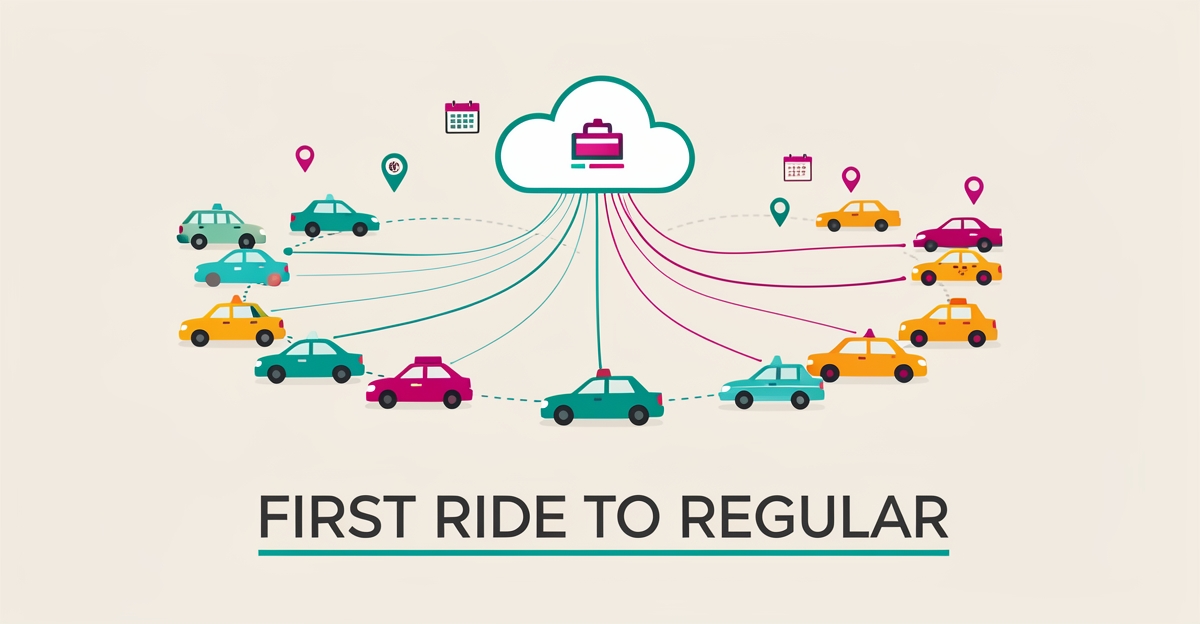
Key facts
- 67.6% of taxi bookings now happen online, driving the industry's digital shift according to IMARC Group.
- Manual dispatching costs fleets revenue through data silos and inefficiencies, per Straits Research.
- The taxi dispatch software market is projected to grow from $4.74B to $13.79B at a 12.60% CAGR by 2034 via OpenPR.
- Cloud-based CRM adoption grows at 12.1% CAGR, outpacing on-premise solutions for scalability as reported by DataIntelo.
- A 5% increase in customer retention can boost profits by 25-95%, emphasizing the need for effective CRM cited by Mobility Infotech.
- The New Energy Vehicle Taxi Market is expected to grow from $34.56B to $90.21B at a 21.15% CAGR by 2030 according to Mordor Intelligence.
- Fleets using CRM-driven segmentation see up to 40% higher rider retention within six months per Mobility Infotech's analysis.
WANT RESULTS LIKE THIS?
Imagine a system doing all of this for your local business — every day, without you.
We build local businesses a custom website with a team of AI behind it: every lead captured and followed up, new content published monthly,customers finding you on Google — live in 7 days.
- 85+ pages at launch
- Every lead followed up, automatically
- Your whole business on one screen
The Hidden Cost of Paper and Spreadsheet Dispatching
The taxi industry’s digital shift is leaving paper-based dispatching in the rearview mirror—and it’s costing operators more than they realize. While 67.6% of bookings now happen online, many fleets still cling to spreadsheets and clipboards to track passenger history, corporate accounts, and recurring routes. The result isn’t just inefficiency; it’s a hidden tax on revenue that compounds with every missed detail.
Manual dispatching creates data silos where passenger preferences, billing details, and ride history live in fragmented notes—or worse, disappear entirely. A study by Straits Research highlights how outdated systems struggle to scale as demand grows, leaving fleets unable to recognize loyal commuters or tailor services to corporate clients. Without a unified record, drivers waste time confirming details, dispatchers lose track of account credits, and managers miss opportunities to upsell repeat clients. The cost isn’t just operational; it’s the lost repeat business that slips through the cracks when history isn’t remembered.
Corporate accounts amplify the problem. Research from OpenPR shows the taxi dispatch software market growing at a 12.60% CAGR, driven by businesses demanding seamless transport management. Fleets relying on paper trails risk billing errors, unclaimed corporate credits, and missed contract renewals—all because passenger data isn’t centralized. A single misplaced spreadsheet can mean the difference between a retained client and a competitor’s new ride-sharing contract.
Businesses using AI Business Sites’s integrated platforms sidestep these pitfalls by turning passenger data into a strategic asset. Instead of digging through files for a corporate client’s preferred pickup time, teams retrieve ride history instantly. Instead of guessing when a regular commuter’s next booking should be, the system triggers automated follow-ups with personalized offers. The platform acts as a single source of truth, ensuring no lead, account, or recurring ride gets overlooked.
For fleets still tied to paper or spreadsheets, the transition to a digital system isn’t just about keeping up—it’s about reclaiming revenue lost to inefficiency. The tools exist to centralize client data, automate corporate account management, and transform first-time riders into lifelong commuters. The only question is whether operators will continue paying the hidden cost of outdated methods.
Why Cloud-Based CRM Is Becoming the Industry Standard
The days of managing passenger records on paper logs or disconnected spreadsheets are rapidly ending. As taxi operations scale, the fragmentation of data across dispatch tools, billing systems, and driver notes creates blind spots that cost both revenue and rider loyalty.
Cloud deployment has emerged as the fastest-growing model in taxi dispatch software, expanding at a 12.1% CAGR through 2034 as fleets prioritize scalability and real-time access over on-premise infrastructure. This shift mirrors the broader market trajectory, where the global taxi dispatch software market is projected to grow from USD 4.74 billion to USD 13.79 billion over the same period. At the same time, online booking now accounts for roughly 67.6% of the market, making a unified digital backbone essential rather than optional.
A centralized platform solves fragmentation by unifying three critical workflows in one system:
- Complete passenger history — every ride, preference, and feedback loop accessible instantly
- Corporate billing and account management — automated invoicing, contract terms, and usage reports for business clients
- Automated follow-ups — post-ride surveys, re-engagement campaigns, and loyalty triggers that run without manual effort
AI-driven dispatch layers amplify this foundation, using predictive analytics to match supply with demand before peak hours hit. The result is a single source of truth that turns first-time riders into regular commuters and corporate accounts into predictable revenue streams. For operators ready to move beyond reactive dispatch, the cloud-based CRM isn't just an upgrade — it's the operational standard.
Local business: doing this the old way?
One system replaces the whole pile.
All of it — the website, the follow-up, the content, the leads — built and run for you for $1,497 + $497/mo. Month-to-month, and you own everything.
See what your build includesTurning One-Time Riders Into Recurring Revenue
A taxi fleet’s most valuable asset isn’t its vehicles—it’s its riders. Research shows that just a 5% increase in customer retention can boost profits by 25% to 95%, yet most fleets focus on chasing new bookings instead of nurturing the ones they already have. The difference often comes down to how well you turn a first-time passenger into someone who books again and again, and today’s modern taxi fleets aren’t relying on memory or paper logs to make that happen—they’re using built-in CRM tools that automate the entire process from the first ride to the fifth.
Industry data reveals that around 67.6% of taxi bookings now come through online channels, giving fleets rich opportunities to collect and act on passenger data. With an integrated CRM, you can automatically categorize riders based on ride frequency, trip purpose, or even preferred pickup times. For example, passengers who book late-night airport runs might get targeted offers for return trips, while weekday commuters receive morning reminders. This kind of segmented engagement isn’t just efficient—it’s proven to increase repeat usage. A recent industry analysis found that fleets using CRM-driven segmentation see up to 40% higher rider retention within six months.
The real power, however, lies in automation that keeps your brand top of mind without adding to your workload. Instead of manually sending follow-up messages or scheduling calls, your website’s AI assistant can automatically send personalized emails after each ride, thanking passengers and offering promotions for their next trip. For corporate clients, the system can even generate branded proposals and quotes on demand—saving hours while ensuring every business account gets consistent, professional treatment. These behind-the-scenes automations free you to focus on what matters: delivering great service.
Loyalty programs are another proven lever for retention, and they don’t require complex point systems to work. Research shows that passengers who earn small rewards—like a free ride after five trips—return 30% more often than those without incentives. With a system that tracks ride counts and auto-applies discounts at checkout, you can launch a simple rewards program in minutes. It’s not just about points; it’s about showing riders that you remember them, their preferences, and their value to your fleet. In a market where customer expectations are rising, even small gestures make a lasting impression.
- Use automated ride follow-ups to turn first-time passengers into repeat riders
- Segment riders by trip type or frequency to send targeted offers
- Launch a no-frills loyalty program that rewards repeat bookings
- Let AI-generated emails and reminders handle routine communication
- Centralize business client management with automated proposals and tracking
Future-Proofing Operations With Data You Already Own
Future-Proofing Operations With Data You Already Own
As the taxi industry embarks on a transformative journey, leveraging existing client data is pivotal for future-proofing operations. By harnessing this data, taxi fleets can seamlessly navigate the adoption of Electric Vehicles (EVs), ensure regulatory compliance, and harness the power of AI analytics for smarter dispatch decisions.
Paving the Way for EV Fleet Adoption The New Energy Vehicle Taxi Market is anticipated to grow from USD 34.56 Billion to USD 90.21 Billion at a CAGR of 21.15% from 2025 to 2030, driven by government incentives and consumer demand for sustainable transportation (Source: New Energy Vehicle Taxi Market Report). By centralizing client data, taxi fleets can better understand usage patterns, plan EV deployments effectively, and cater to the growing demand for eco-friendly transportation options.
Regulatory Compliance Through Integrated Systems Regulatory requirements, especially concerning environmental standards and data privacy, are becoming more stringent. A robust, data-centric approach enables taxi fleets to automate compliance by tracking emissions, managing data securely, and generating reports as needed. This proactive stance not only avoids penalties but also enhances the fleet's reputation.
Smarter Dispatch with AI-Driven Insights AI analytics can transform client data into actionable insights, optimizing fleet management. For instance, predictive analytics can reduce idle times by up to 30% and increase the efficiency of routes (Source: Taxi Dispatch Software Market Insights). By integrating AI with their CRM, taxi fleets can:
- Personalize Services: Tailor experiences for regular commuters based on their preferences and habits.
- Optimize Fleet Utilization: Ensure the right vehicle is assigned to the right route at the right time, considering EVs and traditional vehicles.
- Enhance Customer Engagement: Automate feedback collection and response to improve satisfaction and retention.
The Core Advantage At the heart of this transformation is the ability to own and leverage client data effectively. Platforms like those offered by AI Business Sites, which integrate CRM capabilities with the website's core functionality, provide a unified view of customer interactions. This holistic approach positions taxi fleets to:
- Sustain Growth: Through targeted marketing and personalized services.
- Ensure Compliance: With automated tracking and reporting.
- Drive Innovation: By making data-driven decisions on fleet composition and operational strategies.
As the taxi industry continues to evolve, the key to success lies in harnessing the power of existing client data to inform strategic decisions, ensuring a smoother transition into a more sustainable, tech-driven future.
Frequently Asked Questions
What percentage of taxi bookings now happen online, and why is this significant for fleet management?
What is the projected growth rate of the taxi dispatch software market, and what drives this growth?
How can a unified CRM platform benefit taxi fleets in managing corporate accounts?
What is the impact of using outdated systems on taxi fleet revenue, according to Straits Research?
How does AI-driven dispatch enhance the management of taxi fleets, especially in terms of efficiency?
What is the projected growth of the New Energy Vehicle Taxi Market, and what drives this growth?
From First Ride to Loyalty: How Smart Client Management Drives Taxi Fleet Success
The shift from paper logs to digital client management isn’t just about keeping up with technology—it’s about securing revenue that’s slipping through the cracks of outdated systems. Fragmented passenger data, missed corporate account opportunities, and forgotten regular commuters aren’t just inefficiencies; they’re silent profit killers. Fleets that centralize client history, automate follow-ups, and leverage real-time insights aren’t just improving operations—they’re turning one-time riders into lifelong customers and corporate accounts into predictable revenue streams. With online bookings now dominating 67.6% of the market, those still relying on spreadsheets or manual processes are leaving growth—and dollars—on the table. The tools exist today to streamline every stage of the client journey, from instant booking confirmations to personalized loyalty rewards. Whether it’s reducing idle driver time with AI-driven dispatch or securing repeat business with automated re-engagement campaigns, the technology isn’t the challenge. The question is simple: Will your fleet stay tethered to the past, or will you harness the data you already own to future-proof your operations and drive measurable results? Start small—centralize your client records, automate a single follow-up sequence—and watch how quickly your retention and revenue reflect the change.
FOR local businesss — BUILT AND RUN BY US
Your website. Your content. Your leads. Your data.
$500 starts your build. Seven days later it's live — chat, booking, follow-up, and your Google presence all set up. Then we run it, every month. You do the work you actually get paid for.