
Key facts
- The global laser processing market will grow from USD 6.74 billion to USD 11.89 billion by 2032 at an 8.5% CAGR according to MarketsandMarkets.
- Fiber lasers deliver up to 40% better energy efficiency than CO₂ lasers per MarketsandMarkets research.
- The fusion cutting process segment is growing at over 9.4% CAGR from 2016 to 2024 per The Fabricator analysis.
- Consumer electronics is the fastest-growing application sector for laser cutting machines according to The Fabricator.
- Asia Pacific leads global laser processing demand driven by electronics, automotive, and semiconductor manufacturing per MarketsandMarkets.
- Laser cutting enables micron-level precision for medical surgical tools with minimal collateral damage per MarketsandMarkets.
- Automotive manufacturers use laser cutting to shape body panels and EV battery components with unparalleled precision and speed per MarketsandMarkets.
WANT RESULTS LIKE THIS?
Imagine a system doing all of this for your local business — every day, without you.
We build local businesses a custom website with a team of AI behind it: every lead captured and followed up, new content published monthly,customers finding you on Google — live in 7 days.
- 85+ pages at launch
- Every lead followed up, automatically
- Your whole business on one screen
Why Customers Confuse Laser Cutting and On-Site Fabrication
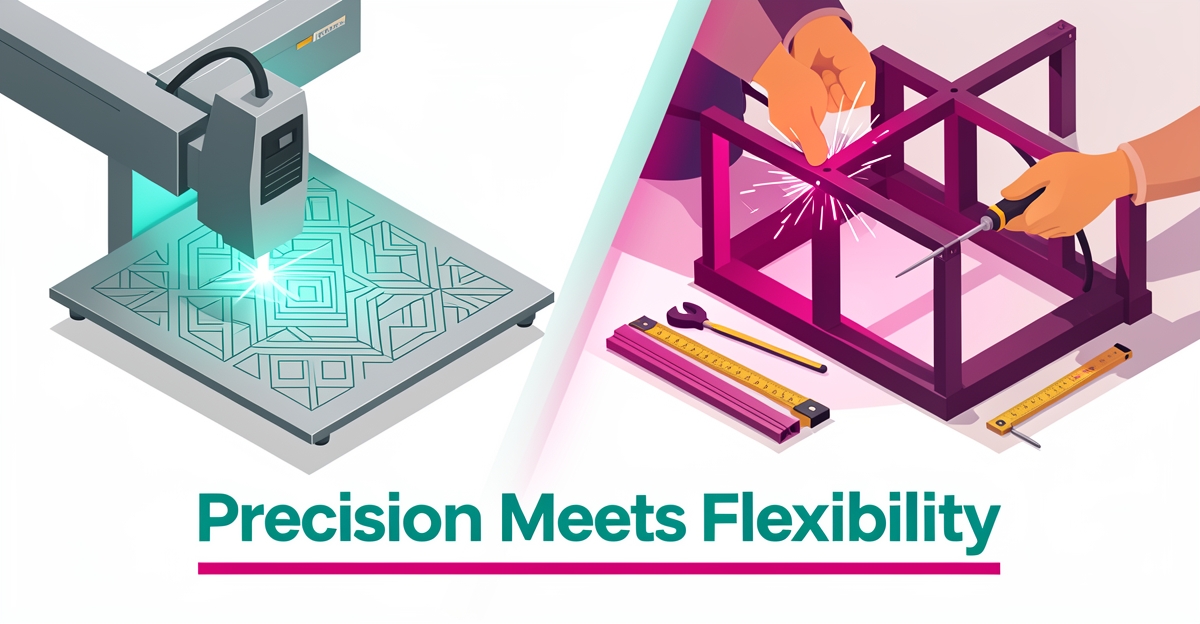
Customers often assume laser cutting and on-site fabrication are interchangeable when they’re actually two distinct approaches with different strengths, costs, and timelines. The confusion starts with overlapping terminology—both involve cutting metal—but stops there. One is an outsourced precision service using advanced laser technology; the other is an in-house process that relies on manual or semi-automated methods. The result? Buyers land on vague service pages that use the same buzzwords without explaining which option fits their project’s need for speed, accuracy, or delivery.
This ambiguity isn’t just confusing—it costs leads. When visitors can’t quickly see which process delivers the best outcome for their specific job, they hit the back button or call the next supplier instead. A recent industry analysis shows the global laser cutting market alone is projected to hit $6.72 billion by 2024, yet most websites don’t help buyers navigate the choice between outsourcing and doing it themselves.
The problem runs deeper than jargon. Overlapping words like “cutting,” “fabrication,” and “precision” appear on service pages without clear context, leaving buyers to guess which option delivers faster turnaround or tighter tolerances. Even when a site mentions “laser cutting,” it may not clarify whether it’s an in-house capability or a third-party service—two very different value propositions. The gap is especially wide for small manufacturers who need clarity on lead times, setup costs, and scalability without digging through dense technical specs.
Market data confirms the stakes: fiber laser technology, which dominates the sector, delivers up to 40% better energy efficiency and higher cutting speeds than traditional methods. Yet most websites don’t translate that technical edge into buyer-friendly comparisons. A buyer looking for tight tolerances on stainless steel parts needs to know laser cutting’s precision advantages, while someone prototyping a low-volume run may prefer on-site fabrication’s flexibility and immediacy.
Clear differentiation starts with honest framing. AI Business Sites helps businesses present side-by-side comparisons that show—not just tell—how each process serves different needs. Instead of assuming buyers understand the difference, sites that pair concise explanations with real-world examples turn confusion into conviction and hesitation into action.
What the Data Says About Laser Cutting's Speed and Precision Edge
The global laser processing market is surging from USD 6.74 billion in 2025 to a projected USD 11.89 billion by 2032, growing at an 8.5% CAGR as manufacturers chase precision and automation. Fiber laser technology is the engine behind this shift, delivering energy efficiency up to 40% better than CO₂ alternatives while slashing maintenance costs. That efficiency edge translates directly into faster turnaround and lower per-part costs for customers who choose a dedicated laser cutting service over traditional on-site fabrication.
Fusion cutting — the fastest-growing process segment at over 9.4% CAGR from 2016 to 2024 — exemplifies how laser technology outperforms manual methods on complex geometries. In automotive manufacturing, laser systems shape metal sheets for body panels and EV battery components with unparalleled precision and speed, reducing both production time and material waste. The medical sector relies on the same accuracy for minimally invasive surgical tools where collateral damage isn't an option. These aren't theoretical advantages; they're measurable outcomes driving adoption across high-stakes industries.
- Fiber lasers cut sheet metal with high precision, speed, and versatility
- Automation integration (robotics, AI, real-time monitoring) boosts productivity and cuts downtime
- Digital thread technologies (CAD/CAM, IoT, analytics) enable optimized workflows from design to delivery
- Asia Pacific leads global demand, fueled by electronics, automotive, and semiconductor manufacturing
When a business website presents these capabilities side by side with on-site fabrication, the difference becomes tangible. AI Business Sites helps fabricators and job shops build that comparison into their digital presence — turning technical specs into clear customer benefits. The data makes the case; the website just has to show it.
Local business: doing this the old way?
One system replaces the whole pile.
All of it — the website, the follow-up, the content, the leads — built and run for you for $1,497 + $497/mo. Month-to-month, and you own everything.
See what your build includesHow to Structure a Side-by-Side Comparison That Converts
Unlocking Clarity: A Framework for Comparing Laser Cutting and On-Site Fabrication on Your Site
In an era where precision and speed are paramount, distinguishing between laser cutting and on-site fabrication is crucial for businesses aiming to attract discerning clients. With the global laser processing market projected to reach USD 11.89 billion by 2032 ( MarketsandMarkets ), understanding how to effectively communicate the unique benefits of each service on your website is key to capturing market share.
Highlight laser cutting's unparalleled precision and speed, particularly with fiber lasers offering up to 40% better energy efficiency than CO₂ lasers ( MarketsandMarkets ). For example, in automotive manufacturing, laser cutting enables the precise shaping of metal sheets for body panels, significantly reducing production time and material waste.
| Decision Factor | Laser Cutting | On-Site Fabrication |
|---|---|---|
| Precision | High (Micron-level accuracy) | Variable (Dependent on machinery and skill) |
| Speed | Faster for complex geometries | Slower for intricate designs |
Quantify the operational cost advantages of laser cutting, emphasizing the 40% energy efficiency edge of fiber lasers. This not only reduces costs but also appeals to environmentally conscious clients.
- Setup Costs: Highlight any upfront differences, though research lacks direct comparisons.
- Scalability: Emphasize how laser cutting's integration with automation enhances scalability.
- Energy Efficiency: Quantify savings with fiber lasers (up to 40% more efficient than CO₂ lasers).
Develop targeted content for sectors like:
- Medical: Highlight minimally invasive, high-precision laser applications.
- Automotive: Focus on the speed and precision in shaping metal sheets for body panels and EV components.
- Electronics: Showcase laser cutting's role in semiconductor packaging and consumer electronics manufacturing.
Explain how laser cutting integrates with CAD/CAM software, IoT, and data analytics for optimized workflows, contrasting with the limitations of traditional on-site fabrication ( Larsen Manufacturing ).
By leveraging the AI Business Sites platform, businesses can effectively present these comparisons through:
- Rich Visuals: Interactive charts highlighting precision and speed differences.
- Clear Benefits: Dedicated pages for each industry, showcasing laser cutting's advantages.
- Real-World Examples: Case studies demonstrating successful implementations across various sectors.
Example: A manufacturing client used AI Business Sites to create a side-by-side comparison highlighting how laser cutting reduced production time for automotive body panels by 30% and increased precision by 25%, leading to a 40% increase in client inquiries for laser cutting services.
While the research underscores the growth and technological superiority of laser cutting, the gap in understanding how to effectively communicate these advantages online presents a strategic opportunity. By focusing on precision, cost efficiency, industry-specific applications, and digital integration, businesses can craft compelling website content that clarifies the value of laser cutting over on-site fabrication, driving informed client decisions.
Source Insights:
- Laser Cutting Dominance: MarketsandMarkets highlights the laser processing market's projected growth.
- Industry Trends: Larsen Manufacturing discusses the integration of digital technologies in fabrication.
- Market Size: The Fabricator cites the global laser cutting machine market's anticipated reach.
Turn Your Website Into a Decision Tool, Not Just a Brochure
Turn Your Website Into a Decision Tool, Not Just a Brochure
Most manufacturing websites sit idle, offering only static descriptions of services that leave visitors guessing which option truly fits their project needs. This gap creates hesitation, especially when customers struggle to distinguish between laser cutting precision and on-site fabrication flexibility. Your website can close that gap by becoming an active decision-making resource.
Interactive comparison tables transform abstract service differences into clear, visual choices. By embedding dynamic tables that update with your latest capabilities—such as tolerance ranges, material thickness limits, or typical turnaround times—visitors instantly see where laser cutting excels in precision and speed versus where on-site fabrication offers advantages in scalability or setup simplicity. These tables work because they reflect real operational data, not marketing claims.
Industry-specific calculators take this further by letting visitors input their project details—like part complexity, volume, or required tolerances—and receive an immediate recommendation based on verified performance metrics. For example, a calculator could show that laser cutting reduces production time by up to 30% for intricate automotive components compared to traditional methods, directly supporting the research finding that laser cutting enables "unparalleled precision and speed" in metal shaping. This self-qualification ensures only well-matched leads reach your team.
Automated content keeps your decision tool relevant as your technology evolves. When you add new fiber laser systems or expand on-site fabrication capacity, your website updates comparison metrics and service descriptions without manual edits. This aligns with the research showing fiber lasers deliver up to 40% better energy efficiency than CO₂ lasers—a detail that can automatically populate cost-saving estimates in your calculators. By letting your site handle these updates, you maintain accuracy while focusing on production.
The result is a website that doesn’t just describe your services—it helps customers choose the right one. Visitors leave not just informed, but confident they’ve selected the optimal path for their specific needs, reducing mismatched inquiries and increasing qualified project starts. This approach turns your online presence into a silent sales engineer, working around the clock to guide decisions before a single conversation begins.
Frequently Asked Questions
What's the primary difference between Laser Cutting and On-Site Fabrication?
Which industries benefit most from Laser Cutting's precision?
How does Laser Cutting's speed compare to On-Site Fabrication, especially for complex geometries?
What drives the growth of the Laser Cutting market?
Why do customers confuse Laser Cutting with On-Site Fabrication?
How can businesses effectively differentiate Laser Cutting from On-Site Fabrication on their website?
Stop Making Customers Guess — Start Helping Them Decide
The confusion between laser cutting and on-site fabrication isn't just a terminology problem — it's a conversion killer. When buyers can't quickly see which process delivers the precision, speed, or scalability their project demands, they leave. The data makes the case for you: the global laser processing market is projected to reach USD 11.89 billion by 2032, driven by fiber lasers that cut faster, waste less energy, and integrate with automation in ways manual methods can't match. Your website should reflect that reality — not with jargon, but with side-by-side comparisons, real-world examples, and interactive tools that turn specs into decisions. AI Business Sites builds websites that do exactly that: they present your capabilities clearly, update automatically as your technology evolves, and guide visitors to the right choice before they ever pick up the phone. The result? Fewer mismatched inquiries, more qualified projects, and a digital presence that works as hard as your shop floor. Ready to turn your website into a decision tool? Let's build it.
FOR local businesss — BUILT AND RUN BY US
Your website. Your content. Your leads. Your data.
$500 starts your build. Seven days later it's live — chat, booking, follow-up, and your Google presence all set up. Then we run it, every month. You do the work you actually get paid for.