
Key facts
- 44% of small business owners identify their website as their #1 influential marketing channel, yet only 17% use SEO to improve visibility according to SimpleTexting research
- Responding to leads within 5 minutes increases conversion rates by 9x, but only 20% of sales-qualified leads receive proper follow-up per lead generation statistics
- Nurtured leads make 47% larger purchases than non-nurtured ones, and companies excelling at nurturing generate 50% more sales-ready leads at 33% lower cost according to Salesgenie data
- Marketers using automation drive 451% more leads, yet 80% of new leads never convert without proper nurturing infrastructure per marketing automation research
- 63% of consumers prefer mobile for brand research, making mobile-first design essential for fleet tracking websites according to HubSpot marketing statistics
- Small businesses incorporating AI into marketing strategy are 5.7x more likely to report greater marketing success per SimpleTexting survey data
- Nearly 30% of marketers report declining traditional search traffic as prospects shift to AI-powered tools, while 92%+ plan to optimize for both per HubSpot's 2026 State of Marketing Report
WANT RESULTS LIKE THIS?
Imagine a system doing all of this for your local business — every day, without you.
We build local businesses a custom website with a team of AI behind it: every lead captured and followed up, new content published monthly,customers finding you on Google — live in 7 days.
- 85+ pages at launch
- Every lead followed up, automatically
- Your whole business on one screen
The Hidden Liability: Why Most Fleet Tracking Websites Fail to Scale
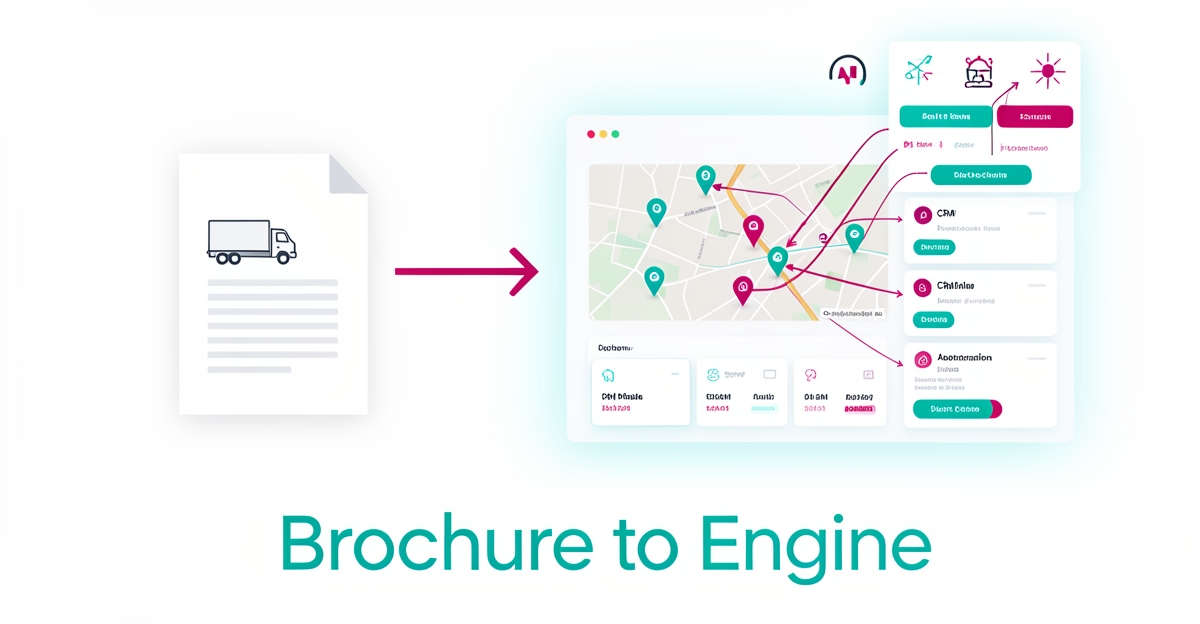
Most fleet tracking websites look professional on the surface — clean navigation, service pages, maybe a contact form — but underneath, they function like static brochures. They wait for visitors to take action instead of initiating the conversation, and that passivity comes with a measurable cost.
The data reveals a stark disconnect: 44% of small business owners identify their website as their #1 influential marketing channel, yet only 17% actually use SEO to improve visibility. For fleet operators, this gap means decision-makers searching for solutions simply never find you. Meanwhile, 80% of new leads never convert to sales without proper nurturing, and only 20% of sales-qualified leads receive correct follow-up. A brochure site has no mechanism to close that gap.
- No instant response system — responding within 5 minutes increases conversion by 9x
- No lead nurturing infrastructure — nurtured leads make 47% larger purchases
- No automation — marketers drive 451% more leads with automation
- No integrated CRM — leads scatter across inboxes, voicemails, and spreadsheets
- No content engine — SEO and local search presence stagnate after launch
These aren't missing features. They're missing revenue. AI Business Sites builds websites that handle the busywork automatically — capturing every lead from forms, calls, and chat, responding instantly with personalized follow-up, tagging and routing contacts through a visual pipeline, and publishing fresh SEO content monthly. The site becomes a growth engine that scales from ten to a thousand clients without adding headcount, because the follow-up, nurturing, and content systems run themselves.
Turning the Tides: Integrating CRM and Automated Lead Follow-Up for Scalability
The gap between a website that sits there and one that sells is rarely design — it's what happens after someone fills out a form. Research shows that 80% of new leads never convert to sales without proper nurturing, yet only 20% of sales-qualified leads receive correct follow-up. The difference isn't effort; it's infrastructure. When your website, CRM, and follow-up sequences live in the same system, every lead gets an instant, personalized response — whether it comes through a form, a chat, or a phone call — without you lifting a finger.
Speed-to-lead isn't a nice-to-have. Responding within five minutes increases conversion rates by 9x, but most small businesses can't maintain that pace manually. An integrated platform closes that gap automatically: new leads enter the pipeline, get tagged by source, and trigger the right nurture sequence immediately. Meanwhile, the business owner only gets alerted when a deal actually needs human judgment. This is how you scale from ten clients to a thousand without adding headcount — the system handles the volume, you handle the exceptions.
- Instant, source-specific auto-responses on every lead — web, chat, voice, or booking
- Visual automation builder that tags, routes, and nurtures leads through custom pipelines
- Two-way email conversations tracked per contact and deal in one shared inbox
- AI assistant that drafts proposals, schedules follow-ups, and summarizes activity on command
- Automated reports delivered daily or weekly with AI-generated recommendations
Companies that excel at lead nurturing generate 50% more sales-ready leads at 33% lower cost, and nurtured leads make 47% larger purchases than non-nurtured ones. The math only works when the follow-up happens automatically, every time. AI Business Sites builds this integration into the website itself — not as a bolt-on, but as the operating system underneath. Your site captures the lead, your CRM organizes it, and your automation follows up — all from one place you already log into.
Practical Steps to Transform Your Fleet Tracking Website into a Growth Engine
The gap between a brochure website and a growth engine isn't design — it's what happens after a visitor clicks "contact." Research shows that responding within five minutes increases conversion rates by 9x, yet only 20% of sales-qualified leads receive proper follow-up. For fleet tracking businesses managing complex B2B sales cycles, that delay costs contracts. The solution isn't hiring more sales reps; it's building the response mechanism directly into your website's architecture so every lead — whether from a form, a call, or a chat — gets an instant, personalized reply before the prospect moves to the next tab.
- Deploy instant lead response automation that triggers personalized emails the moment a form is submitted or a call ends
- Consolidate CRM, email automation, scheduling, and project tracking into one platform so lead data never falls through the cracks between tools
- Build mobile-first, local-SEO-optimized pages that capture high-intent traffic from fleet managers searching on-site or between jobs
- Automate nurturing sequences that tag leads, advance pipeline stages, and alert your team only when human judgment is actually needed
- Publish ongoing, location-specific content that compounds search visibility over time without manual link building
This is exactly the approach AI Business Sites takes: the website is the business platform. Hand-built on Next.js for speed and search performance, each site launches with 25–30 core pages plus 60 SEO pages, a full CRM, visual automation builder, AI content engine, and Google Business Profile optimization — all running together from day one. When a lead comes in, the system responds instantly, tags the contact, starts a nurture sequence, and notifies the right person. No duct-taped stack of Mailchimp, Calendly, HubSpot, and a separate web agency. Just one system that scales from ten clients to a thousand without adding headcount.
Local business: doing this the old way?
One system replaces the whole pile.
All of it — the website, the follow-up, the content, the leads — built and run for you for $1,497 + $497/mo. Month-to-month, and you own everything.
See what your build includesMeasuring Success: Key Metrics and Continuous Improvement for Scalable Websites
Measuring Success: Key Metrics and Continuous Improvement for Scalable Websites
A scalable website isn't just about handling increased traffic; it's about converting visitors into leads and nurturing them into customers efficiently. To gauge if your fleet tracking website is truly built for scale, you must track the right metrics and make data-driven adjustments.
The Speed-to-Lead Advantage Responding to leads within 5 minutes increases conversion rates by 9x source. Yet, only 20% of sales-qualified leads receive proper follow-up source. Implementing instant lead response automation directly into your website structure can bridge this gap, ensuring every lead—regardless of source—receives a personalized, immediate response.
Key Metrics for Scalable Websites:
- Conversion Rate Optimization (CRO): Track how often visitors complete desired actions (e.g., form submissions, calls). A mere 2.35% median conversion rate for landing pages highlights the need for optimization source.
- Lead Nurturing Engagement: Measure the interaction with nurturing emails and content. Nurtured leads make 47% larger purchases than non-nurtured ones source.
- Speed-to-Lead Response Time: Monitor the time between lead generation and the first response. 79% of leads** never convert without nurturing source.
Framework for Continuous Improvement:
-
Monthly Website Performance Reports: Utilize privacy-first analytics (like Umami) to review pageviews, traffic sources, and device usage. 63% of consumers prefer mobile for brand research, emphasizing the need for a mobile-first design source.
-
A/B Testing and CRO: Regularly test elements like CTAs and forms. A/B testing can improve conversions by up to 300% source.
-
AI-Powered Content Audits: Leverage AI to analyze and enhance content performance, ensuring alignment with SEO best practices. Small businesses are 23% more likely to see ROI from blog posts source.
-
Lead Funnel Analysis: Identify and fix bottlenecks in your lead nurturing pipeline. Marketers using automation drive 451% more leads source.
By focusing on these metrics and adopting a culture of continuous improvement, your fleet tracking website can evolve from a static brochure into a dynamic, scalable growth engine, capable of supporting expansion from 10 to 1,000 clients without proportional increases in headcount.
Future-Proofing: Navigating AI, Voice Search, and Emerging Trends in Fleet Tracking Websites
The fleet tracking companies pulling ahead aren't just optimizing for today's search algorithms — they're building for how buyers will actually search tomorrow. Nearly 30% of marketers already report declining traditional search traffic as prospects shift toward AI-powered tools, yet over 92% plan to optimize for both traditional and AI-driven search engines according to HubSpot's 2026 State of Marketing Report. This divergence creates a clear competitive moat for businesses that adapt early.
Voice search represents another widening gap. While 73.7% of marketers plan to maintain or increase voice search investment, fewer than 10% currently leverage it per HubSpot's research — and predicted U.S. voice assistant users will exceed 157 million by 2026. Fleet managers researching solutions on job sites or between meetings increasingly use conversational queries like "best GPS tracking for 50-truck fleet near me" rather than typed keywords. Websites structured with FAQ-rich content and natural language patterns capture this traffic automatically.
- AI search optimization that structures content for both traditional crawlers and LLM-based discovery
- Voice-ready page architecture using conversational headers and schema markup
- Automated content refresh cycles that keep service and location pages current without manual rewrites
- Internal linking that self-improves as new pages publish, building topical authority over time
The businesses treating their website as a living system — not a launch-and-leave project — are the ones converting early adopter attention into pipeline. Small businesses incorporating AI into marketing strategy are 5.7 times more likely to report greater marketing success, and those with a documented marketing plan are 6.7 times more likely to succeed. AI Business Sites builds this adaptability into the foundation: an AI content engine that researches, writes, and publishes monthly SEO pages grounded in your actual services, while automatic internal linking strengthens topical clusters without manual effort. The result is a website that doesn't just survive algorithm shifts — it compounds value through them.
Frequently Asked Questions
Why do most fleet tracking websites fail to scale?
What's the impact of responding to leads within 5 minutes?
How does integrating CRM and automated lead follow-up benefit fleet tracking businesses?
What key metrics should a scalable fleet tracking website track?
How does AI impact the future of fleet tracking websites?
Why is mobile optimization crucial for fleet tracking websites?
Key Takeaways
{ "title": "From Brochure to Growth Engine: Unlocking Your Fleet Tracking Website's True Potential", "content": "Your fleet tracking website should be more than just a digital brochure—it should be a self-propelled growth engine. As uncovered, most websites fail to scale due to passive design,
FOR local businesss — BUILT AND RUN BY US
Your website. Your content. Your leads. Your data.
$500 starts your build. Seven days later it's live — chat, booking, follow-up, and your Google presence all set up. Then we run it, every month. You do the work you actually get paid for.